 Skip to content

It’s been a while since I posted, so I thought a YouTube vlog update was needed on what I’ve been up to as well as what’s coming up.
The summer holidays are always difficult, as family time will always come before work in the majority of cases.
During the latter half of the year, there are a number of things coming up, such as Ireland, editorial photography in the form of the Paris Tours cycle race and the Dolomites.
The gap after Provence came down to one thing: a packed schedule. As soon as I got back, I barely had time to breathe before heading off again.
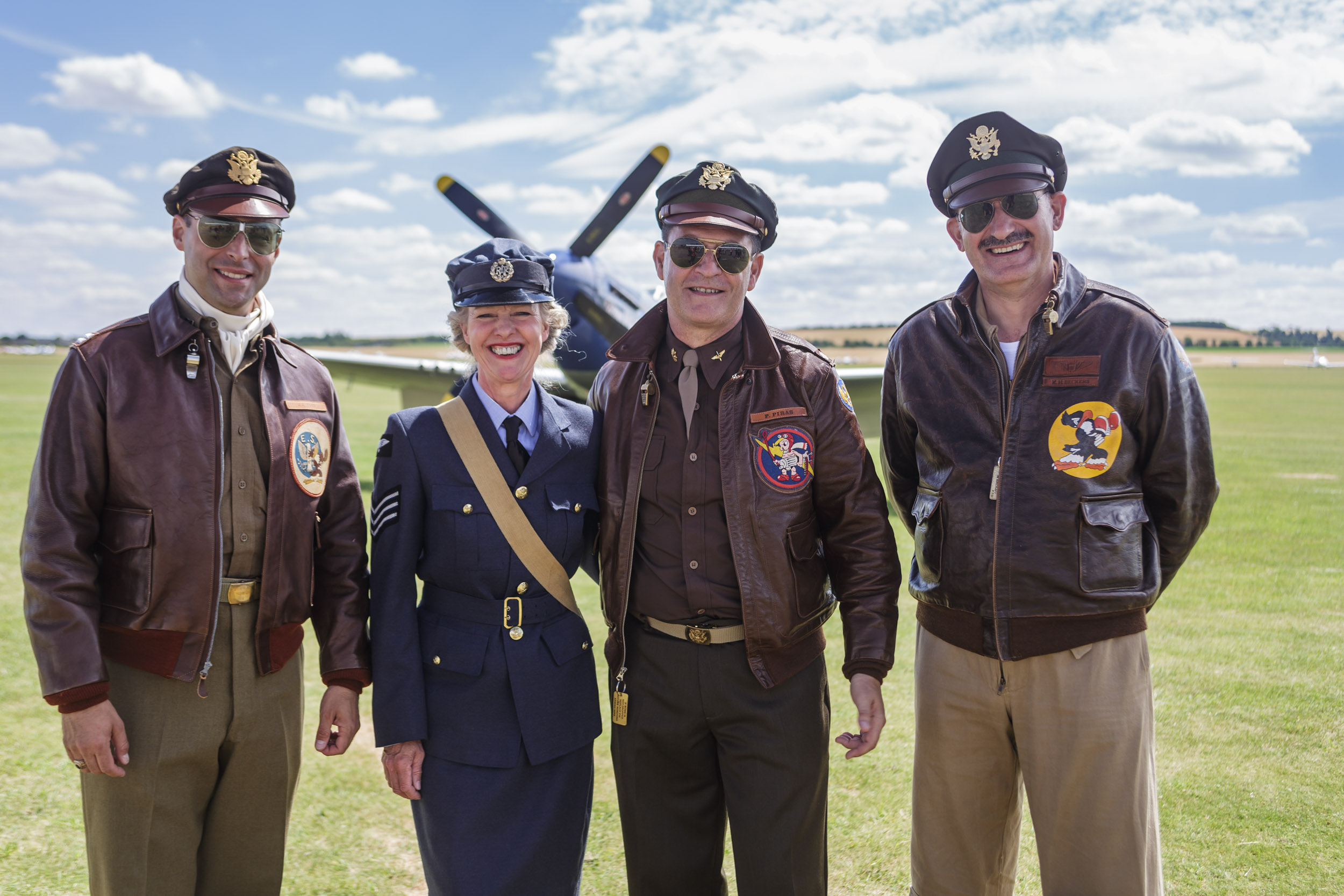
Straight after Provence, I covered the Duxford Flying Legends air show in the UK. I had one night at home, then it was a drive to Calais, the ferry across, and on into England. I had a spare day in Cambridge before the event itself, which was a nice break in the middle of the rush. Flying Legends was excellent, very well organised, and one of those events that reminds me how enjoyable aviation photography can be when everything is run properly.
After that, I rolled straight into a family holiday. During that time, I also had a bit of client work in London, although I can’t show any of that because it was private work. Then August arrived, and as many parents will know, family visits and school holidays have a way of taking over the calendar. The weeks disappear before you know it, and suddenly, you’ve not picked up the camera for a vlog once.
The one proper photographic outing I did manage in August was at Chateau de Chinon. They were holding an evening event with the castle lit up at night, and the public were due in around 9.30 pm. I was lucky enough to be allowed in at 8.30 pm, before the crowds arrived. That gave me rare access to photograph the castle at sunset with almost nobody around, apart from a few people working there. I was delighted with that, and very grateful to the team for letting me do it.
That evening reminded me how much difference access and timing can make. A place can be beautiful at any hour, but a quiet hour with the right light is something else.
While I haven’t been filming much, I have been reading the comments. A lot of people have asked thoughtful questions, and I like that. I want people to interact with what I’m doing, because those questions often get to the heart of how I work.
Some of the same topics keep coming up, so it made sense to answer them properly here.
The main stock agency I work with is Getty Images. That’s the biggest one for me, and they have sold my work all over the world, which is great. Getty is also very well known for editorial photography, things like politics, sport and current affairs, although that isn’t the side of the business I shoot for.
I also work with Robert Harding, who have always done a very good job with my images.
People often ask about my tilt-shift lens, and I understand the interest. It gives a very clean look to architecture and city work, and I use it regularly in my day-to-day photography. I do plan to put together a tutorial around it, because showing how it works in practice is far more useful than talking about it in theory.
The other question that comes up all the time is location. In city photography, that can be a difficult one to answer.
A lot of the rooftops and elevated places I shoot from are on private property. I arrange access directly with the owners or managers, and in some cases, security is involved too. Some buildings are happy for me to work there, but they don’t want photographers constantly coming and going on the roof. That’s fair enough. So when someone asks where a certain rooftop in London is, I often can’t say.
With landscape locations, I’m usually more open. Still, even there, I’ve become more careful than I used to be. In Provence, for example, I saw how quickly a beautiful place can turn into a circus. I have one image from a lavender field where there were around 30 or 40 people spread through the scene. That changes everything, both for the experience and for the picture.
I also saw behaviour that was simply rude. While I was working with David Clapp, a photographer was composing an image of a lavender field with two trees. Another photographer looked at the back of her camera, walked over, and planted his tripod right in front of her. That sort of thing says a lot about why some professionals have become more guarded.
I don’t want photography to turn into a free-for-all where everyone is standing on top of each other for the same frame.
When I keep some locations to myself, it isn’t about being awkward. It’s about respecting access, protecting working relationships, and avoiding the worst kind of crowding.
Another regular question is why I don’t shoot more in bad weather. The simple answer is that I look for a certain quality of light.
I want my images to look as good as I can make them. If the weather is poor, there has to be something special about it that makes it worth photographing. I’m not against dramatic conditions at all, but I need a reason beyond “the weather is bad”.
A good example came in Provence. On the first night, there was a lightning storm, and I happened to capture a bolt of lightning over a lavender field. That was pure luck. I clicked the shutter at the right moment and got the frame. I couldn’t believe it when I saw it.
Interiors work in much the same way. People sometimes say I should photograph churches, cathedrals or other indoor spaces when the weather outside is flat. But interior light can be poor as well. What I really want is sunlight streaming through the windows, maybe candlelight glowing in darker corners, and perhaps a little smoke or haze in the air. When those elements come together, the scene gains depth and atmosphere. Flat light doesn’t give me that.
So I don’t go around firing off frames everywhere in the hope that something will do. I wait for a particular look.
I only press the shutter when the light gives me something worth keeping.
That approach suits the kind of stock photography I want to produce. I’d rather come back with fewer strong images than lots of ordinary ones.
People are often surprised that I still use a Canon 5D Mark II. The reason is simple: it still works, and it still produces strong images. Yes, it has its limits, and dynamic range isn’t its strongest point, so I keep another body for situations where I need a bit more flexibility. Even so, the 5D Mark II remains a camera I trust.
There is also a practical side to this. I work full-time as a photographer, but I also have a home, a family and a mortgage. New camera bodies are expensive. As much as I may like the idea of the newest model, life doesn’t stop because Canon brings out something shiny.
That balance is part of the job. A lot of people imagine professional photography as an endless cycle of upgrades, but it often comes down to using what you have well and replacing equipment only when it genuinely makes sense.
Graduated filters come up often, too. I already have a tutorial on using grads, and it has had a lot of attention, which I’m pleased about. People have also asked why I don’t always blend exposures. The honest answer is that I use the approach that suits the picture in front of me. Over the next few months, I want to put together more tutorial videos around graduated filters and blending, because that subject clearly interests a lot of people.
My processing is fairly restrained. People have said they like the clean, minimalist feel of my work, and there is a reason for that.
When I submit images to stock libraries, many clients want room to finish the image themselves. If I push the file too far, I may make it less useful to them. So my aim is to make the photograph look as good as possible without going over the top.
My workflow usually starts in Adobe Lightroom and then moves into Adobe Photoshop. That’s the basic path for most of my stills work. I also shoot time-lapse, and I may show that workflow at some point as well, because it adds a few extra steps that people may find useful.
On the subject of permissions, a lot of people ask how I get access to certain places and how property releases or model releases fit into the process. In most cases, permission and release go hand in hand. If someone gives me permission to photograph on their property, the paperwork often follows naturally. The same is true when photographing a person for commercial use.
What I won’t do is explain every part of how I secure access. Some of that is the business side of my work, and I keep it that way. Any working photographer has methods, contacts and relationships that take time to build.
After a quiet spell on the vlog front, the diary starts to fill up again. A lot of what follows may end up on film, although some of it may not. Either way, there’s plenty ahead.
One of the biggest things on the horizon is a pair of photography tours that I’m running with David Clapp. We have a Tuscany tour in May 2018 and a Provence tour from 1 to 7 July 2018. At the time of this update, both tours have only a couple of places left.
I’m looking forward to both for obvious reasons. Tuscany has that mix of rolling ground, mist, trees and hill towns that works so well at the right time of year. Provence, of course, has the lavender, but it also has much more than that if you know where and when to look.
Weather is the one thing nobody can promise, and I won’t pretend otherwise. What I can say is that we’ll work hard to give people the best chance of coming home with strong images and a memorable week. For anyone interested in joining me further down the line, my current photography tours and workshops give a clear picture of the destinations and style of trips I run.
The next trip on the calendar is to the Republic of Ireland. I’m travelling with photographer David Speight, and the purpose is to recce the north-west of the country for a future workshop. David runs a lot of workshops around the Yorkshire Dales and the North York Moors, so it will be good to work together and see what we can build.
We’re hoping to run that Ireland workshop around September or October the following year. Of course, being in Ireland and being exposed to Atlantic weather, we could get almost anything. That’s part of the appeal and part of the challenge.
We also have a few other ideas in mind. One of them is north-west Scotland in December 2018, and not in the usual places people always talk about. We have been discussing going farther north rather than doing the obvious route.
Once Ireland is done, I head back to the UK for the Duxford Battle of Britain air show. I’ll be there for two days as an accredited news photographer. After that, I may try to squeeze in a bit of time in London, or perhaps get out for some landscape work before heading home.
Then, at the end of October, I go to the Dolomites. I was meant to work there in April with David Clapp, but bad weather cut short what we wanted to do. This autumn trip is about creating the images needed to support a possible workshop in autumn 2018. The Dolomites should have good colour at that time of year, so I’m keen to see what I can come back with.
Alongside the trips above, I’m also starting to run my own workshops again. The first one currently lined up is Glencoe from 15 to 19 January 2018.
I’ve secured hotel accommodation, and that includes breakfast and dinner. I’ll also handle transport during the tour, so the practical side is covered once people are there. In terms of locations, the focus is around Glencoe and Rannoch Moor, with plenty to work with in that part of Scotland during winter.
Glen Etive is a possible option in theory, but only if conditions allow it. If it turns icy, getting in and out of there can become awkward quite quickly, and I don’t want to promise something that may not be sensible on the day. The good thing is that Glencoe has no shortage of strong locations, so there is always plenty to photograph.
Beyond that, I have a few ideas in mind that are not fixed yet. Paris is one possibility. Another trip to Scotland near the end of the year could happen, too, and I also have a London shoot in my head that I’d like to make happen if time allows.
The common thread through all of this is simple. Family still comes first, and work has to fit around real life. Even so, the next few months look far more active, and that feels good.
The last couple of months have reminded me that silence online doesn’t mean nothing is happening. Sometimes it means the work, the travel and the planning are taking place off camera.
What matters most to me is still the same: good light, strong access, and photographs that are worth waiting for. With four months left in 2017 at the time of this update, I had plenty ahead, and I was glad to be moving again.