 Skip to content
Join me for an unforgettable Vietnam photography tour and workshop. I run various photo tours throughout the year in this stunning south-east Asian country which normally start in Hanoi.
Vietnam is a country full of culture, breathtaking landscapes as well as a captivating history. It’s no wonder it is fast become one of the most sought-after destinations for photographers around the world.
Whether you’re looking to capture the bustling streets of Hanoi; the serene beauty of Ha Long Bay or stunning rice terraces, my Vietnam photo tours and workshops will help you get the best out of the country. So join me on an unforgettable journey through this stunning country as we explore its hidden gems and hone our travel photography skills along the way!
Max 5
Various from 11 to 15 days
6495€ to 7995€
Low to Medium
4 star hotels
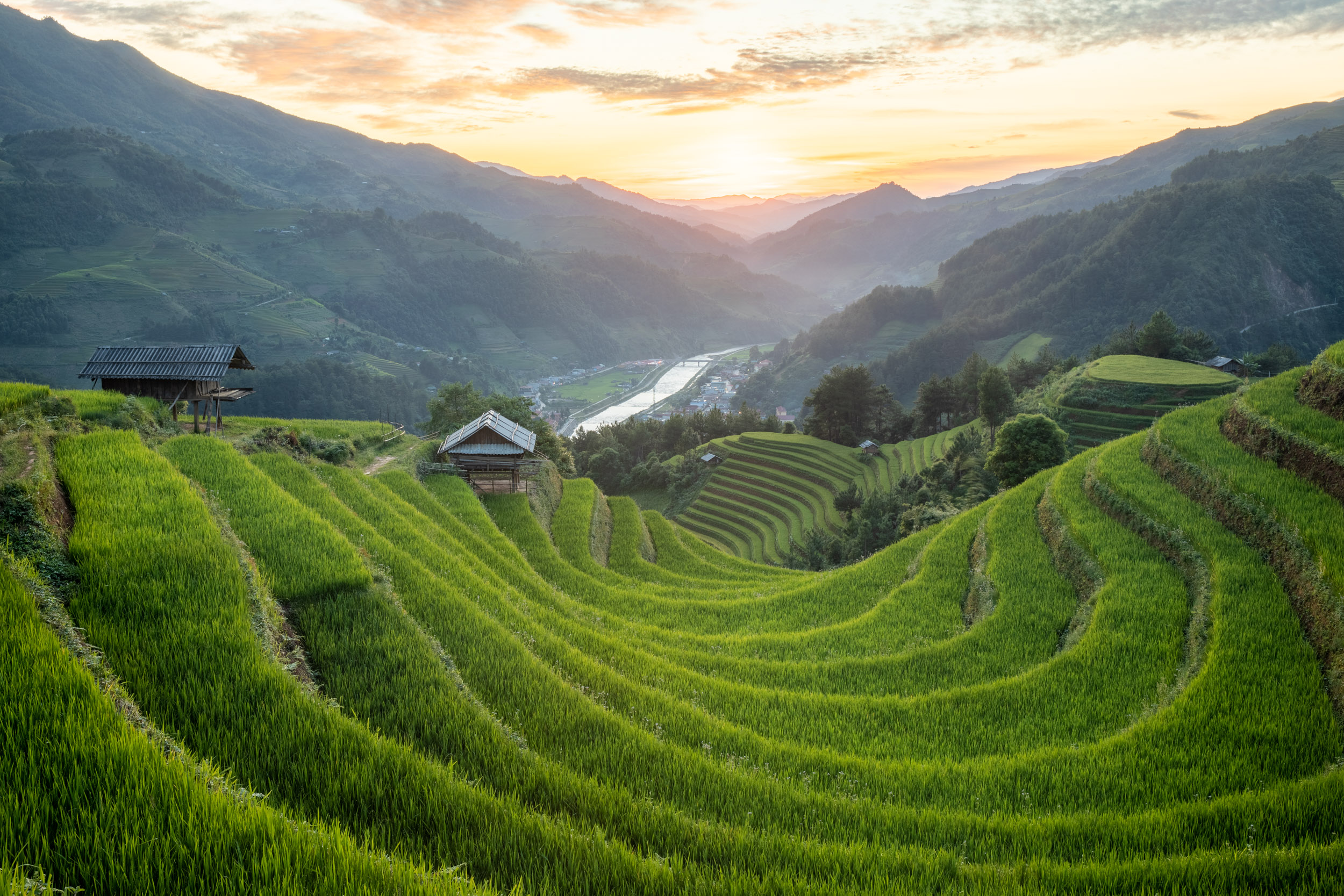
In the northern Vietnamese provinces of Yen Bai and Lao Cai sit the stunning rice terraces of Mu Cang Chai and Sa Pa. These steep rice fields are carved out by the local minority people, such as the Hmong, Red Dzao and Tay.
Further afield, there are lesser-known areas of rice terraces in places such as Cao Bang and Huang Su Phi, which offer opportunities for more intimate shooting.
In June, the rice terraces start to be filled with water, ready for the planting season, whereas in mid to late September, the lush green crop of rice starts turning a golden yellow, providing a stunning backdrop for landscape photography in the mountain valleys.
My Vietnam photo tour pays visits to these stunning areas of Northern Vietnam in June and September.
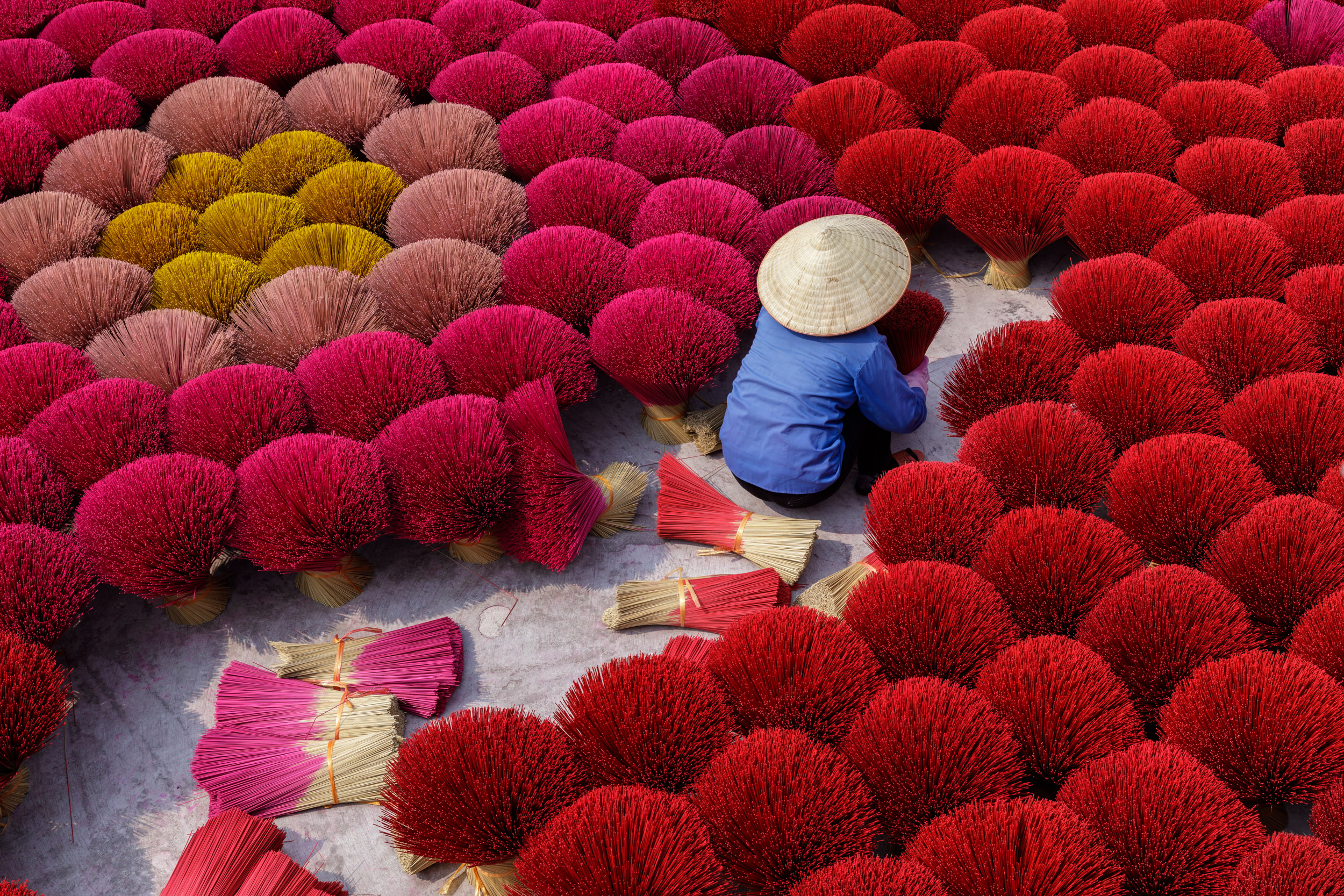
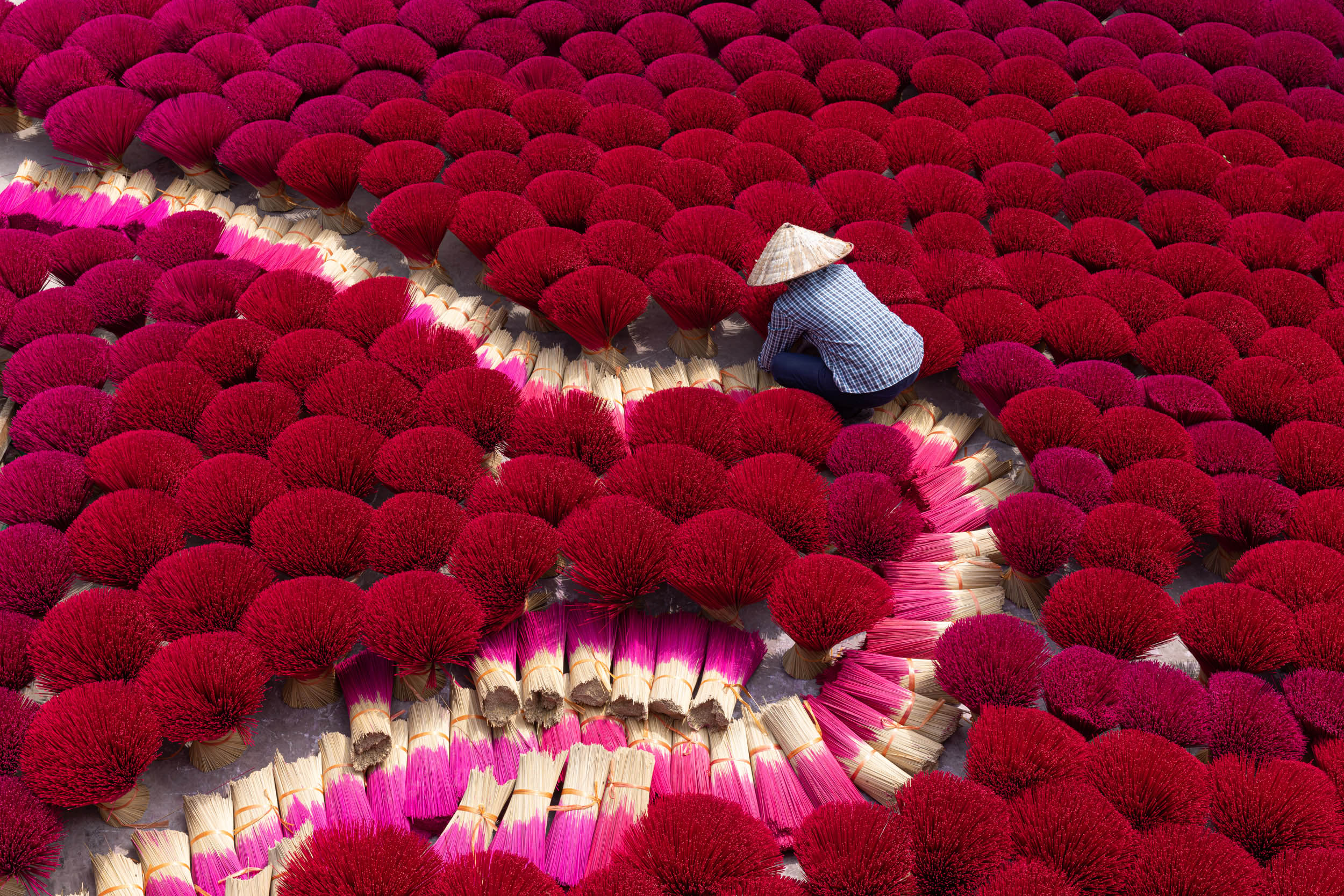
Across Vietnam, there are several villages that make incense sticks year-round. These villages make a myriad of incense sticks with vibrant reds, greens and yellows. They have become a magnet for photographers as they create an endless sea of colour.
The most famous of these incense villages by far is that of Quang Phu Cau, south of Hanoi.
The workers will typically wear the traditional non-la conical hat whilst working away amongst the sticks as they arrange them in enchanting flower-shaped bundles.
We’ll capture the workers either up close or use a drone to get a higher angle for a more graphic composition.
If you’re looking to capture the workers amongst endless vibrant incense sticks, then choose a Vietnam photo tour in June or September to visit the incense village.
The ao dai, literally meaning long tunic, has come to be a symbol of elegance for both Vietnamese men and women.
Taking its current form from the 1940s and 50s, there is nothing more captivating than capturing a professional model wearing the ao dai in a temple or the Imperial City of Hue.
No Vietnam photo tour would be complete without devoting some time to capturing a beautiful Vietnamese woman wearing the ao dai.
Each Vietnam photo tour has time spent with professional models wearing the ao dai, where you’ll learn to create magazine-quality images.


Most people who live in Vietnam are known as the Viet or Kinh people. But across Vietnam, there are 53 officially recognised minority groups of people that reside across the country.
These ethnic minority groups have both their own language and traditional clothing, which help to create stunning visuals for any photographer who’s interested in travel photography portraiture.
Having visited some of these minority people many times, I’m lucky to be able to call them friends, which helps immensely when you’re looking to get up close for your portrait shots.
Any Vietnam photo tour you choose to go on with me will have an opportunity to meet some of the people from the minority groups.
Vietnam’s coastline spans over 3,260 kilometres (roughly 2,025 miles) from Mong Cai in the North to Ha Tien in the Southwest.
Along such a huge area, local communities have inevitably devised a variety of methods to fish the surrounding waters.
In central Vietnam, we will look to capture local fishermen utilising a method known as Rớ chồ.
The fishermen use a large net suspended over the water, which is lowered and raised at various times of the day.
Having lived in Quang Nam province for over 2 years, I have photographed the fishermen countless times, and I am well versed in helping you get the best out of these scenes.
As a near bona fide local, I’ve got to know 4 different fishermen who help my groups get stunning travel portraiture images at sunrise. In fact, it was images of these fishermen that secured me a place as a finalist in the Travel Photographer of the Year.
Each Vietnam photo tour that I run has an opportunity to capture these mesmerising scenes.


As a country, Vietnam stretches over 1,600 kilometres from north to south, creating a remarkable variety of landscapes. In the far north, dramatic mountain ranges, rice and tea terraces dominate the scenery.
To the northeast, thousands of limestone karsts rise from the emerald waters of the sea, creating one of the country’s most iconic seascapes.
Moving south, the Red River Delta surrounds the capital of Hanoi, with its flat plains and fertile farmland.
Central Vietnam plays host to a narrow coastal strip backed by the Annamite Mountains, with long sandy beaches punctuating hidden fishing villages.
Further south, the Vietnamese landscape opens out into the vast Mekong Delta, where winding rivers, floating markets, and lush tropical fields define the scene.
Choose a Vietnam photo tour in June or September to see the landscapes from the north to the south. Whereas in February, the tour is based mainly in southern and central Vietnam.
Vietnam is well-known amongst travel photographers for keeping many traditional crafts alive throughout the country.
From harvesting silk and creating bamboo fish traps by hand to soya and fish sauce factories, these places offer discerning travel photographers endless opportunities for creating mesmerising imagery that wouldn’t look out of place in the pages of National Geographic.
Depending on which Vietnam photo tour you’re on will depend on which traditional craft we’ll see. But have no doubts, on each of my tours, we’ll get to visit places where you can see these traditions still being kept alive and have the opportunity to capture them for yourself.


I make a point of helping people get great travel portraiture on each Vietnam photo tour that I run.
Very often, people are wary of getting close to the locals for fear of rejection. But in Vietnam and Southeast Asia in general, you’ll find that people are more open to having their photo taken.
All of my Vietnam photo tours are accompanied by a local Vietnamese guide, and I’m also able to speak some Vietnamese to help get us those more intimate portraits of local people.
When we visit Hoi An, there is also the possibility of photographing a lady named Mrs Song, who was once voted Vietnam’s most beautiful woman.
Vietnam’s markets are rightly famous as a riot of colour. Each Vietnam photo tour that I run in February, June and September visits local markets where you can get up close and capture the locals at work as they sell their wares.
From a huge variety of colourful fruits and vegetables to fish and meat, it’s all there, along with the endless portraits that can be had.


Each Vietnam photo tour that I run has stays in the large cities. Although only for a maximum of two nights, there are still opportunities to capture the cityscapes that dominate both Hanoi and Ho Chi Minh/ Saigon city.
In Hanoi, we’ll explore the small streets of the old quarter, whereas in Ho Chi Minh city we’ll look to capture the modern skyline that has come to dominate the financial centre of Vietnam.
My Vietnam photo tours use a registered ground agent in Hanoi who can arrange for the group to have drone permits.
The ability to get up above a scene and capture the bird’s eye view gives even more opportunity to get outstanding images of Vietynam.
If you want the reassurance of being able to fly your drone in Vietnam without having to worry, then get in touch to ask about the specifics.

For each Vietnam photo tour, we are based in 4-star hotels and, if necessary, homestays. Homestays are the Vietnamese equivalent of a bed and breakfast, and these will be used if there is no hotel in the area.
Double rooms, where possible, are provided on a single-occupancy (no single supplement charge) basis, along with breakfast, lunch and dinner, where we can (drinks excluded).
Authentic Local Experiences
My Vietnam Photo Tours will help you get off the typical tourist trails and help you discover the authentic Vietnam.
We’ll explore ethnic minority villages in the north nestled amongst the stunning landscapes such as the famous rice terraces to local markets that are bustling with local people at work where you can get up close for more intimate images.
My tours of Vietnam are designed to immerse you in the local cultures and traditions of this stunning south-east Asian culture that help make it unique.
I have many connections with local people, which will allow you to capture images that you will treasure.
I have been a professional travel photographer since late 2010. Having travelled in 40 countries and counting, I have extensive experience of the genre in a variety of situations.
You’re in good hands, and I’m here to help you get the most out of your Vietnam photo tour.
This is a very broad question because so much depends on what you want to see and do.
For example, in central Vietnam the fishing season tends to run from February to late August and outside of those times you’re not likely to catch the traditional fishermen at work.
In Northern Vietnam, the rice terraces turn yellow around mid-September so if you go in November expecting to see golden landscapes, then you’ll be out of luck.
All of my Vietnam photo tours are designed to capture various places at the optimum time of year so you get the images that you want.
Again, this depends on the times of year that a specific photo tour is being run. Please feel to look at the itinerary of the individual tours in February, June or September to get a feel of what you’re likely to see.
You can of course contact me for more information on specific tours and I’ll be happy to help you.
Absolutely! The Vietnam photo tour in February is more focussed towards the travel portraiture side of things whereas in June and September you’ll get a variety of subjects from landscapes to street photography.
We sure can! In fact in Northern Vietnam I have connections with some of the local people going back several years which help us get much more intimate portrait sessions with them.
Every community and culture has its own cultural customs and etiquette. Our guide will always be on hand to help us navigate each scenario we find ourselves in so you’ll always be in safe hands.
Where a subject demands it then yes, we will be up for sunrise or out for sunset photo shoots.
For example, in central Vietnam one of the subjects that we will be capturing is a local fisherman raising his net in the morning. We start with the pre-dawn light before capturing the raising sun as it hits his net. You’ll be glad of the early start and get back to the hotel enthralled at what you have seen at the crack of dawn.
Some areas of the north do require specific permits for tourists to go there. Our ground agent will arrange all of this so you will have a hassle free experience on your tour.
Vietnam is a very safe country. In all the years that I have been travelling here I have never felt unsafe when travelling around either in cities such as Hanoi or Ho Chi Minh city or out in the countryside.
Of course, you should always exercise the usual cautions wherever you go and never assume you can just leave your precious camera gear lying around.
On a Vietnam photography tour you could quite happily have two lenses with you and capture everything you see.
Ideally, if you had the 24-105mm and a 100-400mm focal lengths, then you wouldn’t struggle to be capturing images. Very rarely do I go wider than 24mm and I don’t think I’ve ever gone beyond 400mm.
Outside of this, a good sturdy tripod will serve you well if shooting the landscape and sunrise or sunset.
All of my Vietnam photo tours are assisted by a local guide who will help us converse with the locals where needed.
All of your accommodation and meals are provided on my Vietnam photography tours. Alcohol is not included and is at your own expense.
Personally, I am a vegetarian and have never experienced any issues with eating here.
You can expect a variety of foods depending on where you are in Vietnam. Each region has its own specialities so you’ll be getting the chance to eat a huge variety of dishes if you wish.
All accommodation is provided on a single occupancy basis so you won’t be sharing with a stranger or be paying extra just because you’re solo traveler. Unlike other companies, I don’t charge a single supplement. The price you see is the price you pay.
From the time of your arrival to the time of your departure, all of your transportation during the Vietnam photo tour will be taken care of.
We will pick you up at the airport and transport you to the first hotel, and upon departure, so you can have no worries about getting to and from where we are staying.
There are no strenuous walks during the Vietnam photography tour so you don’t have to be supremely fit to join.
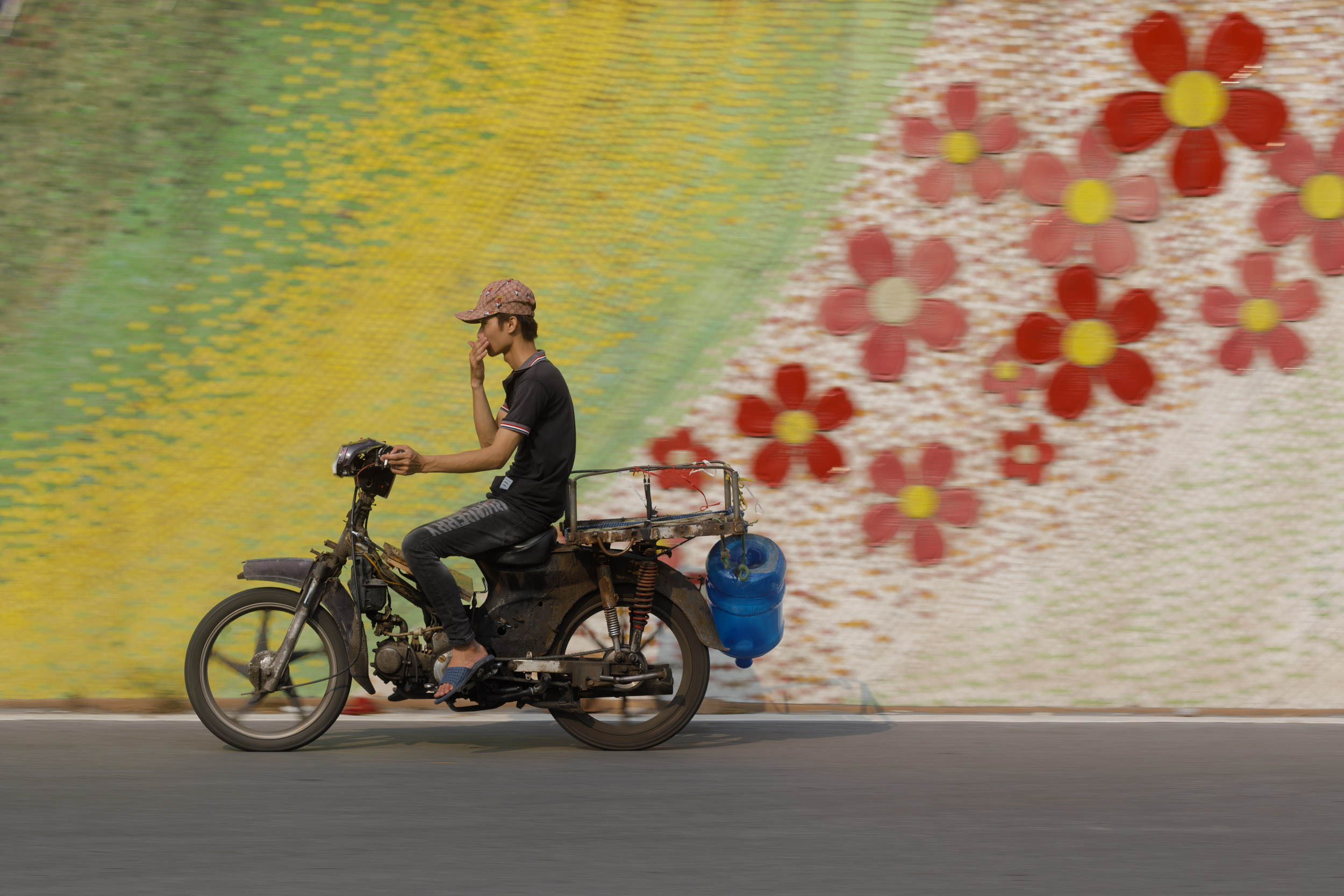
If we are in the rice terraces of Mu Cang Chai then we use the help of local people to transport us up to the various viewpoints on the back of a motorcycle. This saves us a good hour or so of walking in some cases.
Throughout the photo tour there are opportunities for free time. If we are getting up early everyday or having to travel then it can be demanding on the body. So there are certainly times when you will be free to explore some of the local area we are in in your own.
All of my photo tours are open to beginners and advanced photographers alike.
Some people just want to be taken to a location and left to their own devices whereas some people want tuition when we are out. In either situation, I’m happy to help you where you need it.
The aim of my photography tours are to ensure you have a great time and go back home with images you can be proud of?
Packing for a photo tour of Vietnam depends on when you are looking to go.
In February, the weather tends to be mild with temperatures floating around 20°c or 68°f. Whereas in June temperatures could be in the mid-30s or so with high humidity.
The best advice is light clothing along with a rain jacket or poncho. If we are in the rice terraces early in the morning, there is the possibility it could be a little chilly, so you can always pack a light fleece with you.
Vietnam offers travellers from countries such as the UK, France and Germany a 45 day visa-free entry into its territory.
Travellers from countries such as the USA are required to apply for a visa.
To book a spot on one of my Vietnam photo tours, then please feel free to visit the specific page of the dates that you are wanting to go.
There is the usual checkout process that you find on websites.
Payments are securely processed using WooCommerce and Stripe so your credit card details are safe at all times.
You can either pay a deposit to secure your place or you can pay the whole amount upfront if you choose.
My website is set up to take transactions in Euros, US Dollars and GBP.
We noticed you're visiting from United Kingdom (UK). We've updated our prices to Pound sterling for your shopping convenience. Use Euro instead. Dismiss