 Skip to content
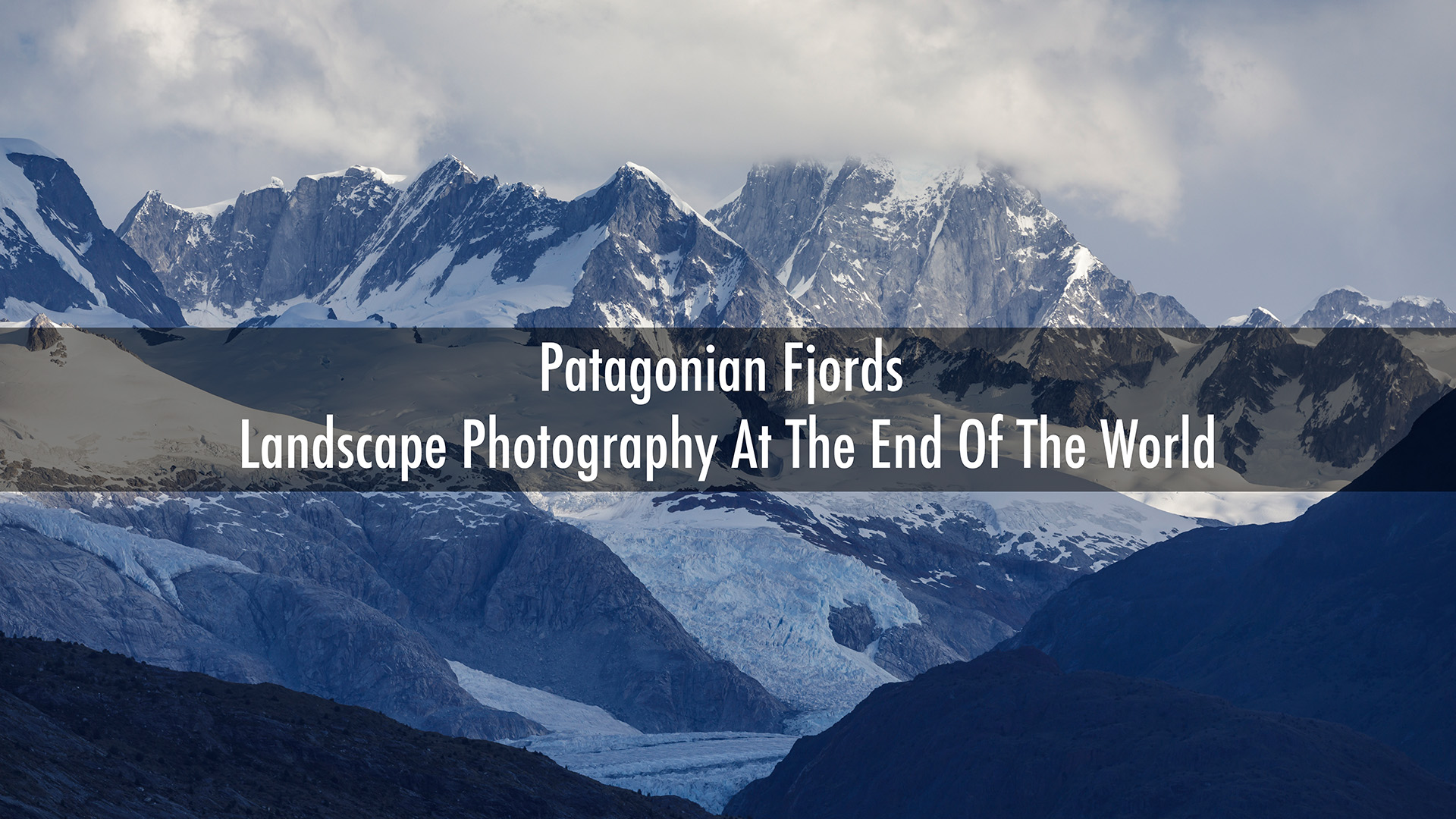

My latest YouTube vlog takes you on a trip through the Patagonian Fjords as I show you some beautiful landscape photography at the end of the world. The vlog shows you some of my work in this stunning area of southern Chile.
This beautiful part of the world is seen by only certain cruise ships, and I was lucky enough to be invited back down there to capture it in all its glory.
Starting and ending in Punta Arenas, the cruise went to various glaciers as well as down to Cape Horn, where, despite wind speeds of 50 knots, we were able to disembark.
So strap yourselves in and admire this beautiful area of the world.
And if you’re interested, I offer photography tours and workshops in a variety of destinations around the world. If you’re interested in learning more from me to help you get the best out of your photography, then get in touch.
My YouTube channel is dedicated to all things landscape and travel photography so if that’s your thing then I’d love to have you come along for the ride.
I started in Punta Arenas after spending a couple of days in Santiago. Standing on the shore with the city behind me and the Strait of Magellan in front of me, it felt as though the trip had properly begun.
I made one of my first photographs beside an old pier. It was a simple scene, but it had that quiet, southern light that makes you stop. I went for a long exposure to smooth the water and simplify the frame.
The settings were straightforward:
The polariser helped take some of the shine off the water, which made the scene cleaner and calmer. It also suited the weather, because the sun was starting to break through and the surface had that shifting metallic look you often get by the sea.
There was wildlife around, too. I could see birds nearby, and I suspected there might be penguins in the area, so I planned to swap to a longer lens and edge closer when I had the chance. In places like this, the line between a landscape day and a wildlife day can disappear quickly.
One thing that caught my attention straight away was the sun path. In the southern hemisphere summer, the sun still rises in the north-east and sets in the north-west, but the arc feels reversed if you’re used to the northern hemisphere. If you spend a lot of time planning shoots in Europe, it takes a moment to get your head around.
This was always going to be the first part of a bigger Chile trip. After the fjords, I was heading north to Torres del Paine, a name I heard corrected more than once on the journey. It was a good reminder that even before the photography starts, travel keeps you learning.
Once aboard, the trip changed pace. I woke to steep mountain walls, broken cloud and the kind of cold, clean air that makes every view feel sharpened. This was my second time in this area and my third voyage on a cruise through these waters, so I already knew how special the Patagonian fjords are. Even so, the first morning on deck still stopped me in my tracks.
I was there on assignment, photographing the voyage for clients and magazine work. That meant I had a job to do, but it also meant I could spend long stretches outside with the camera, watching the scenery shift as the ship moved between channels, glaciers and open stretches of water. One of the places ahead of us was Parry Fjord, and that alone was enough to keep me glued to the rail.
The biggest challenge with photography from a ship is obvious: you are moving all the time. On land, you can usually plant your feet, settle into a composition and wait for the subject to do something interesting. On a ship, the subject moves, the light moves, and you move with it. That changes how you think.
I found myself working with those limits rather than fighting them. Sometimes that meant reacting faster. Sometimes it meant using a longer lens to isolate mountain forms and layers of weather, because a wide view could become too unstable if the vessel pitched or rolled.
One of the most useful changes I made on this trip was turning on the GPS in my camera. I had wondered if it would even work this far south, in places that feel so remote you sign waivers before you go. It did work, and I was glad of it. People often ask where a particular image was made, and in the past, I could only give them a rough answer. This time, I could track it properly.
That mattered because this corner of Chile is not easy to describe with precision once the trip is over. The fjords fold into one another, glaciers sit in hidden inlets, and the ship can cover a surprising distance while the view still feels untouched. Having the location data gave me a much clearer record of the journey.
There was another advantage, too. I knew some of the crew from an earlier voyage, and that makes life easier when you’re working. The head guide understood what I needed as a photographer, and that kind of familiarity helps when you’re trying to be in the right place at the right time.
By the second day, Patagonia had started to show its full range. The previous evening had been superb, with shafts of light breaking through and striking the mountains in patches. Those moments never last long, so I spent a lot of time with my 100-400mm lens, pulling distant details out of the scene and looking for contrast between lit rock, dark slopes and rain bands.
That long lens became one of my most useful tools on the voyage. In weather like this, a telephoto helps me simplify what can otherwise become a messy frame. Instead of trying to show every mountain, every cloud and every strip of water, I could compress the scene and focus on one shape or one seam of light.
Still, the changeable weather is the real story of the Patagonian fjords. People sometimes look at images from down here and say the place seems grey or dreary. The truth is that this is often what it looks like. Even in summer, rain sweeps through, mist drops over the slopes, and the sky closes in without warning.
If I came down here expecting blue skies every day, I’d miss what makes the place feel real.
On that morning, it was wet, windy and hard on the gear. I wasn’t thinking about making pretty pictures then. I was thinking about keeping the camera dry and watching what the weather might do next. The best light in Patagonia often comes right on the edge of a storm, so patience matters as much as timing.
The night before had also reminded me how exposed these waters can be. At about 4.30 in the morning, I woke to the boat rolling hard from side to side, with waves thudding into the hull. We had moved out of the shelter of the channels, edged into the Pacific and then came back in again. You feel that change immediately, even half-asleep in a cabin.
That rough crossing put Cape Horn into sharper focus. It wasn’t some distant name on a route map anymore. It was the next serious stretch of water.
Cape Horn has a weight to it before you even arrive. Sailors have known that for centuries, and once I was up on deck in the wind, I felt it as well. The gusts were so strong that speaking into the camera was a struggle, and getting up to the top deck was difficult enough on its own.
This was my third visit to Cape Horn, which still feels slightly unreal when I say it. Even after coming here before, it hasn’t become ordinary. If anything, repeat visits make the place more serious, because I understand better what its reputation is built on.
The figures we were given on board were stark:
That history hangs over the place. Cape Horn is extremely dangerous, and the weather never lets you forget it. On this occasion, the wind was already wild, and we still did not know if we would be able to land.
We managed it. We got onto the Isle of Horn, and that alone felt like a privilege. The wind on land was fierce, somewhere around 60 km/h where we were, and it felt stronger when it funnelled over the higher ground. By the time I reached the viewpoint, I knew exactly why this place has such a hold on people.
Above us stood the lighthouse, occupied by a Chilean naval officer and his family. I was told they spend around three months a year there. Looking at the bare rock, the open sea and the complete lack of shelter, it was hard to imagine daily life in such an isolated place. Desolate is the right word, but beautiful still fits.
Photographically, Cape Horn is difficult. The wind shakes you, the light changes fast, and composition becomes a battle between what you want and what the conditions allow. I got some photographs, but it was one of those times when the experience stayed with me as strongly as the images.
Once we left, the weather swung again. After a spell of sun, the sea turned rough and dark. Back on the ship, I watched waves strike the hull and spray across the windows. The captain had warned us about an incoming storm, and out there, that warning never sounded dramatic. It sounded practical.
From Cape Horn, we moved into the Beagle Channel and towards Glacier Alley, and the contrast was striking. The wind was still there, but the scenery softened into mountain walls, layered cloud and long, cold water. It was one of those evenings when even a difficult day starts to feel generous again.
I had passed through this area before, but not at that time of day. The light was lower, the clouds had more shape, and the mountains kept appearing in gaps between the gusts and rain. I spent a lot of time trying to find shelter so I could keep working. Sometimes that meant tucking in under the stairs on deck or staying close to the ship’s structure where the wind broke a little. Going fully exposed on the top deck was pointless.
That kind of improvisation is part of photography at sea. You don’t always choose the perfect position. Often, you choose the position where you can still stand still enough to make the photograph.
Even with the weather pushing hard down the channel, the beauty of the place came through. Dark peaks rose above the water, clouds dragged across their tops, and the shoreline kept changing shape as we moved. The Beagle Channel has that same sense of scale you get in the rest of the Patagonian fjords, but it also feels more intimate in places, as though the mountains are closing in around the ship.
I found myself drawn to the meeting point between weather and land. A mountain with a clean summit is lovely, but a mountain half-hidden by shifting cloud in southern Chile says more about the place. It tells the truth about where you are.
Later in the voyage, we headed for Aguila Glacier, one of the spots I had most looked forward to revisiting. I knew the route well enough to know that the approach would be full of strong mountain scenery, and it didn’t disappoint. The coastline there always reminds me a little of north-west Scotland, only on a larger and harsher scale, with mountains dropping straight towards the sea.
By the time I reached the shore near the glacier, I had one of the best office views I could ask for. The Darwin Range stood beyond the inlet, and Aguila Glacier sat ahead of me in that cold, blue-white stillness that glaciers have. It looked almost unreal, as though it had been placed there rather than formed there.
I had missed a reflection earlier across the fjord, which was frustrating, but that is part of working outdoors. Light offers a chance, then takes it away. Rather than dwell on that, I started building other photographs. I made a panorama to hold the breadth of the scene, then turned to smaller details, textures in the ice, folds in the glacier face and the relationship between the glacier and the mountain line behind it.
There were tourists arriving on the beach as well, so I had to work around them. In some frames, I avoided them. In others, I accepted that they were part of the place and included them. That is often the better answer when you’re photographing a real travel environment rather than a private expedition.
This area remains my favourite part of the Patagonian fjords. For anyone who loves mountain photography, travel photography, or simply being out in nature, it is hard to beat. The scale is huge, but the detail is just as good. Every turn seems to offer another line, another shift in cloud or another patch of light.
When we left what the crew often called Aguila Bay, the evening light across the mountain ranges became extraordinary. I carried on working until about 9 pm while most other people went in for dinner. I couldn’t stop. The light was too good, and in a place like this, you don’t walk away from that.
As the voyage drew towards its end, we were due to pass Magdalena Island, home to Magellanic penguins. That gave the final morning a different mood. After glaciers, storms and Cape Horn, there was something lighter about the thought of standing amongst penguins near Punta Arenas.
I still didn’t know if the sunrise would amount to much. There was a break in the sky, but Patagonia has a way of changing its mind quickly. Even so, that uncertainty is part of why I enjoy working here. The trip never feels fixed. It keeps moving, and I have to move with it.
This first stretch through southern Chile gave me everything I hoped for in a photographic journey: difficult weather, rare access, changing light and places that still feel far from easy reach. It also set up the next chapter, because after returning from the fjords, I was heading on to Torres del Paine, one of the great names in Patagonian photography.
For anyone who wants to keep up with my work, I share new films and updates on my YouTube channel, and I also post on my website, Instagram and Facebook.
The strongest memory I carried out of this trip was not one single glacier or one dramatic burst of light. It was the feeling of being in a place where weather, sea and mountain still set the terms. That is what gives the Patagonian fjords their power.
For me, southern Chile works best when I stop expecting neat conditions and let the place be what it is. The best photographs came when I paid attention, stayed patient and kept working through the rougher moments. That’s what this voyage kept teaching me, from Punta Arenas to Cape Horn and back through the fjords.
We noticed you're visiting from United Kingdom (UK). We've updated our prices to Pound sterling for your shopping convenience. Use Euro instead. Dismiss