 Skip to content
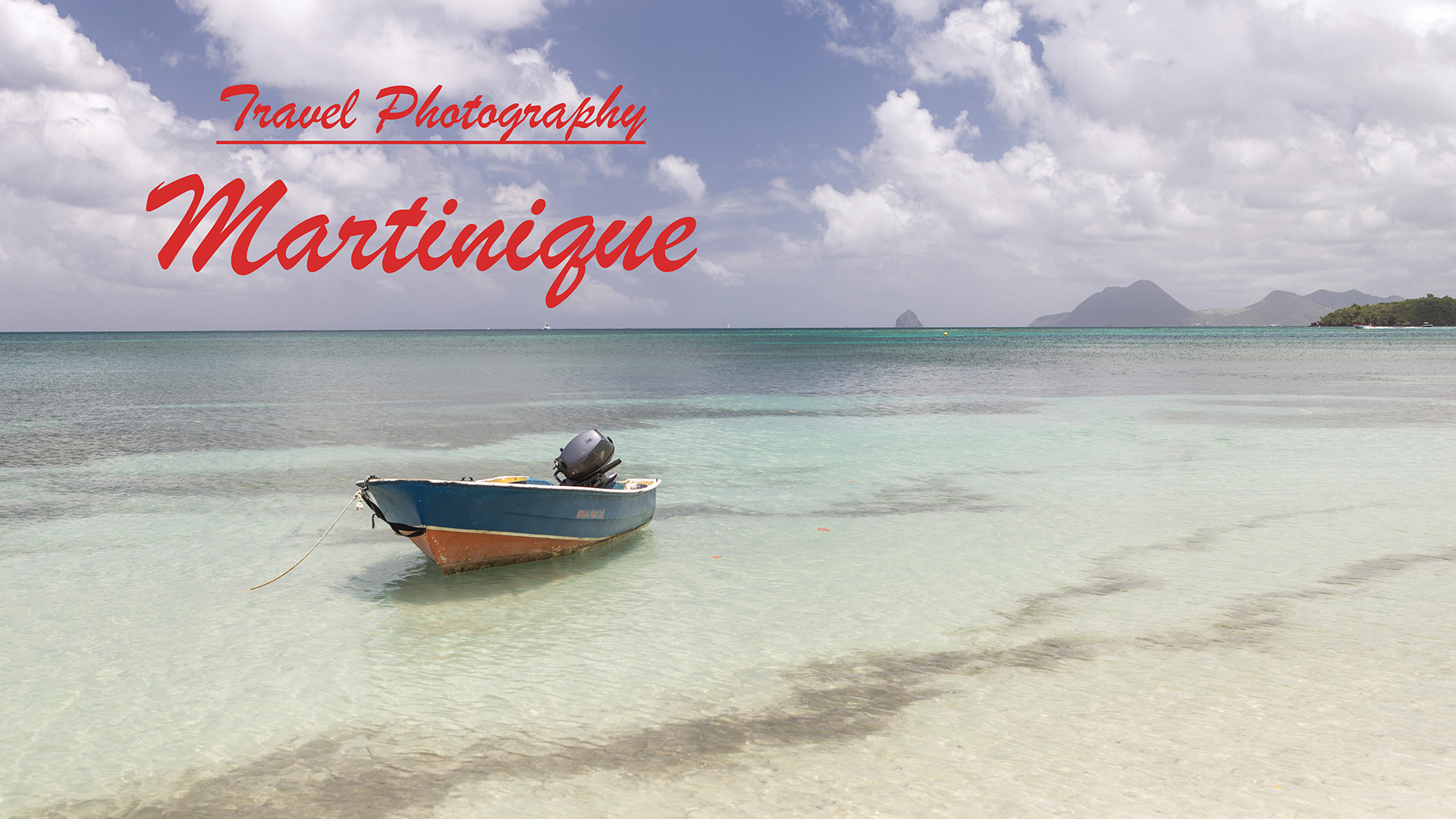

For 11 nights at the end of May 2018, I headed over to the island of Martinique, which lies between the Atlantic Ocean and the Caribbean Sea.
A French overseas department, Martinique is perhaps more known amongst the francophone world than the anglophone world. However, this shouldn’t take anything away from the beautiful island and its beaches.
Late May is an ideal time to visit as the school holidays are over in France and the hurricane season is still a few months away. This leaves the island feeling relatively calm and relaxed.
There are a number of things to photograph on the island, from vistas to small villages. Of course, the coastline is stunning with beautiful beaches, and if you fancy getting beneath the waves, then you won’t be disappointed with the various colourful fish that can be found here. And if you’re lucky, you can also see turtles!
Join me on my latest travel photography adventure, and please feel free to comment over on my YouTube channel!
And if you’re interested, I offer photography tours and workshops in a variety of destinations around the world. If you’re interested in learning more from me to help you get the best out of your photography, then get in touch.
Martinique has that rare mix photographers always hope for. The weather is tropical, the coast changes character quickly, and the island gives you two very different seas to work with. On one side, you have the Atlantic. On the other, the Caribbean. That split shapes the feel of the place, and it gives you a lot of variety in a short space of time.
Most people nearby know Saint Lucia, which sits roughly 20 miles to the south. Martinique, though, still feels less familiar to many English speakers. That surprised me because it has all the ingredients people usually talk about when they dream of a Caribbean break: warm water, lush hills, beaches, fishing villages, volcanic history, and light that can be spectacular when it finally behaves.
I had already been on the island for a few days before I started properly filming and photographing what I wanted to share. Part of that was practical. I needed to get my bearings again, drive some roads, revisit places, and work out what was possible. Martinique looks easy at first glance, but the best viewpoints are not always obvious, and the weather can change your plans in minutes.
That mix of beauty and uncertainty is part of what kept me engaged. I wasn’t there only to collect postcard scenes. I wanted to see how the island worked photographically, morning to evening, above the water and below it.
One of the main reasons this trip felt different was the chance to try underwater photography with my DSLR. EWA Marine in Germany kindly lent me an underwater housing, and that opened up a side of Martinique I had wanted to explore for a long time.
I spent time on the beach and in the waves, shooting both at the waterline and underneath it. I also used a GoPro, which made life easier in situations where I wanted to move quickly or didn’t want to risk fumbling with more gear than necessary. Even so, I wanted to see what kind of files I could make with the larger camera.
There were a few frustrations with the housing, at least for me. Some of that came down to personal preference and the way I work, so I wouldn’t assume the same problems would bother everyone. Because I was on my own, I couldn’t easily show the setup in use at the time, so I made a note to review it properly once I was back home in France.
Still, the important part was that it worked well enough to get me started. That mattered because underwater photography changes your pace. On land, you can stop, rethink, move a tripod, and wait. In the sea, everything becomes more fluid. Your position shifts. The light changes in a different way. Sand moves. Waves push you off line. Fish never care that you’ve nearly got the frame sorted.
That first taste was enough to convince me that there was something worth pursuing here. Martinique is beautiful from the shore, but there is another world under the surface, and it deserves a camera too.
Some of my best time on the island came at dawn, even when dawn didn’t cooperate. One morning, I headed out to a lighthouse viewpoint after parking the car and walking for about 30 minutes. It wasn’t a place I had planned to be at first. The previous evening, I had been driving around in the rain, trying to judge whether a road might lead somewhere useful. By morning, I found myself high above the coast with the Atlantic on one side and the Caribbean behind me.
The scene still wasn’t straightforward. Rain clouds were lingering, and I had to watch the sky carefully to see if the light would break. When it did, it came in sideways and lit the trees in front of me exactly as I had hoped. That was the sort of light I wanted for Martinique, the sort that makes the island feel warm, textured, and alive.
Because the cloud was shifting as the sun rose, I also set up a time-lapse. I had already made a few time-lapses elsewhere on the island, but this spot felt like a one-off. I didn’t expect to come back to that exact viewpoint, so it made sense to capture the movement whilst I had the chance.
In travel photography, patience matters as much as gear. Ten minutes can turn a flat scene into the picture you came for.
That was true over and over again in Martinique. I spent a lot of time looking at skies that seemed hopeless, only for a gap in the cloud to change the whole mood of a place.
Not every dawn worked. In fact, quite a few were poor. I had mornings when rain hit the front element of the lens, when low cloud blocked the first light, and when I drove back to a promising spot from the night before, only to spend too long finding it in the dark.
That happened more than once. I would scout somewhere late in the day, think I had a strong position, and then discover how different a road feels before sunrise when you barely know the area. One morning, I reached a viewpoint in time to get something usable, but the light had already peaked a little before I was fully ready.
Later, after buying proper maps, I found another viewpoint that had not shown up on the tourist map at all. It looked down towards the coast, and I knew straight away it was a place I wanted to revisit at dawn. I was staying on the Presqu’ile de la Caravelle at the time, so distance mattered. That became part of the process too, working out not only whether a location was good, but whether I could realistically get there in the dark and arrive calm enough to shoot.
I often found myself wrestling with a basic problem. Moody weather can make a strong image, but it wasn’t the side of Martinique I most wanted to show. If I were trying to present the island as a place for warmth, colour, and a beach holiday, endless grey skies were not helping. So I kept going out, kept waiting, and kept hoping the cloud bank on the horizon would lift at the right moment.
When it finally happened, the relief was instant. One dawn began with me muttering about another failed morning. Then the sun climbed above the cloud and poured sidelight across the coast. Within minutes, frustration turned into the kind of quiet happiness that only comes when the picture starts to come together in front of you.
One of the most useful things I did in Martinique had nothing to do with cameras. It was buying better maps.
The road map that came with the hire car was fine for broad directions, but it was poor for photography. Too many roads were vague, too many viewpoints were missing, and some tracks I used were not even showing up properly online. After a while, that got tiring. I knew the island had more to offer, but I was wasting time trying to guess where roads went and whether a promising turn-off led anywhere worthwhile.
So I went looking for IGN maps, the French equivalent of Ordnance Survey mapping. That turned into a small adventure of its own. A few village shops looked at me with mild amusement when I asked, and I eventually had to drive to the capital, Fort-de-France, to buy the right sheets.
It was worth the effort. Once I had the 1:25,000 maps in hand, the island opened up. I could see marked viewpoints, secondary roads, and ground that made more sense photographically. I stopped relying on the broad tourist version of Martinique and started working with a map that showed the island in proper detail.
That shift helped in a very practical way. I could now scout more confidently, return to places with less guesswork, and notice viewpoints I would have missed completely. For travel photography, that matters. A good map won’t give you the light, but it will give you a much better chance of being in the right place when the light arrives.
The north-west of Martinique has a different mood. Saint-Pierre carries the shadow of Mont Pelee, the active volcano above it, and I spent time trying to work both into the story of the island. From one viewpoint, I looked down over Saint-Pierre with the volcano hidden in cloud behind me. Rain moved across the town, so I set up another time-lapse and let the weather become part of the picture.
Saint-Pierre is famous because it was destroyed in 1902 by the eruption of Mont Pelee. That history gives the area a weight that feels different from the beach scenes elsewhere on the island. Even when the summit stayed hidden, the presence of the volcano shaped how I saw the place.
I kept hoping for a cleaner view of Mont Pelee itself. Some days, the cloud simply refused to lift enough, and that was a familiar Martinique pattern. The island gave me a lot, but it also made me work for it.
Further south, Morne Gommier gave me one of the broadest views on the island. From up there, I could see a huge sweep of Martinique and build panoramic images that felt more open than the tighter coastal frames I had been making elsewhere.
I went back more than once because the light changed the result so much. On one visit, it was near the end of the day, and I hoped the passing cloud would reveal the sun at the right moment. On another, the light was harsher because it was early afternoon, yet the view still worked well for time-lapse. Sometimes a place is strong enough that you can use it more than once, as long as you adapt your approach.
The owner of Morne Gommier was generous with his time and explained the viewpoint to me, which I appreciated. Encounters like that help on a trip like this because they ground the pictures in real places and real people, not only in compositions.
A question I get asked a lot is whether I use ND grads for the images I make. The honest answer is simple. Sometimes I do, and sometimes they are the wrong tool.
Martinique gave me a good example of why that decision matters. I was photographing towards the sun, not directly into it, but close enough that the brightness range in the scene was awkward. I tried a graduated filter, and it didn’t solve the problem. The balance across the frame was too uneven, and if I kept stacking more grads, I started to darken the upper part of the sky too much. Reverse grads can help in some situations, but they can also create a result that looks wrong.
So I chose to blend exposures later. For that frame, I worked through the scene in stages:
Whilst doing that, I checked the histogram and watched for flare. That kind of scene demands attention because one setting fixes the foreground and ruins the sky, whilst another protects the highlights and leaves the land too dark.
This is why I never treat filters as a fixed rule. Some scenes suit them. Others ask for bracketing and blending. Martinique pushed me to make those choices carefully, especially from high viewpoints where sea, land, cloud, and direct light all sat in one frame.
The biggest surprise of the trip came below the surface. I went to the south-west of the island for a scuba diving baptism and spent around 20 to 25 minutes underwater, guided by an instructor to a depth of roughly 6 metres.
That first dive changed how I thought about Martinique almost at once. The water was clear, blue, and full of life. Even without a camera in hand, it was obvious that the island had another side that most photographers barely touch. Once you’re under the water, the noise and rush of the shore disappear. What replaces them is colour, movement, and a strange calm that feels completely separate from the world above.
I would recommend that experience to almost anyone who is curious about the sea. Martinique is a wonderful place to try it, but the same idea applies closer to home, too. If you’re in southern Europe, for example, the Mediterranean can give you the same sense of discovery.
After that first dive, I went back and started a Level 1 scuba course with Mada Plongee. David and his team gave me the basics I needed, and that made a huge difference because I wasn’t only trying diving for fun. I wanted to become comfortable enough underwater to start photographing properly.
They helped me build confidence step by step. Xavier showed me how to put the scuba bottle together and sort the jacket and setup. Margaux led my baptism dive, which was an unforgettable first experience. Later, during another dive, we went out hoping to find turtles and ended up spotting a baby shark as well. That sort of moment stays with you.
On one of the boat outings, there were around ten of us heading out together, and I could feel the trip shifting from simple travel photography into something wider. I was still thinking about viewpoints, dawn light, and beaches, but I was also learning how to move calmly underwater and how to prepare for taking either the GoPro or the housed DSLR below the surface.
I was also told about a bay with calm, shallow, very clear water and plenty of fish. That sounded ideal for an early-morning return with a camera once the timing lined up. Martinique kept doing that to me. Every time I thought I had seen enough, another possibility appeared.
The team at Mada Plongee gave me far more than a short activity on holiday. They gave my photography a new direction.
For all the effort I put into viewpoints and diving, some of my favourite moments in Martinique were simpler. After one dawn shoot, I went back to my accommodation, rested for a bit, and then headed down to one of the most beautiful beaches I had seen on the island.
The scene wasn’t complicated, but it still needed time. There was a boat in the frame that I wanted in a specific position, and I waited roughly 30 to 45 minutes for it to drift slowly into the composition that felt right. That sort of patience rarely looks dramatic from the outside. You stand there, watch, and do very little. Yet that is often the difference between an ordinary beach photograph and one that feels balanced.
I kept returning to time-lapse work as well. On the west coast, from clifftop viewpoints, at Morne Gommier, and from spots I found by chance, I liked recording the movement of the weather across the island. Martinique’s sky has a habit of building tension. Clouds gather, light breaks through, rain passes, then a hill or line of trees catches the sun for a few minutes. Time-lapse lets that rhythm show in a way a single frame cannot.
I was grateful, too, for the local advice I received. The Martinique tourism committee pointed me towards places worth seeing, and those tips helped me use my time better. On a short trip, that matters.
Martinique gave me two trips in one. Above the surface, I spent my days chasing light, studying weather, and trying to do justice to beaches, viewpoints, Saint-Pierre, and the slopes below Mont Pelee. Below the surface, I found a new photographic direction that I want to keep pushing.
The last dawn before my flight was grey and unhelpful, but that felt honest. Travel photography isn’t a run of perfect sunrises. It is early starts, missed chances, changing plans, and the odd morning when the light finally comes good after days of waiting.
What stayed with me most was the island’s range. Martinique is beautiful on the coast, strong from the hills, and full of life underwater. If I ever needed a reminder that patience still matters more than comfort, this trip gave it to me.
We noticed you're visiting from United Kingdom (UK). We've updated our prices to Pound sterling for your shopping convenience. Use Euro instead. Dismiss