 Skip to content
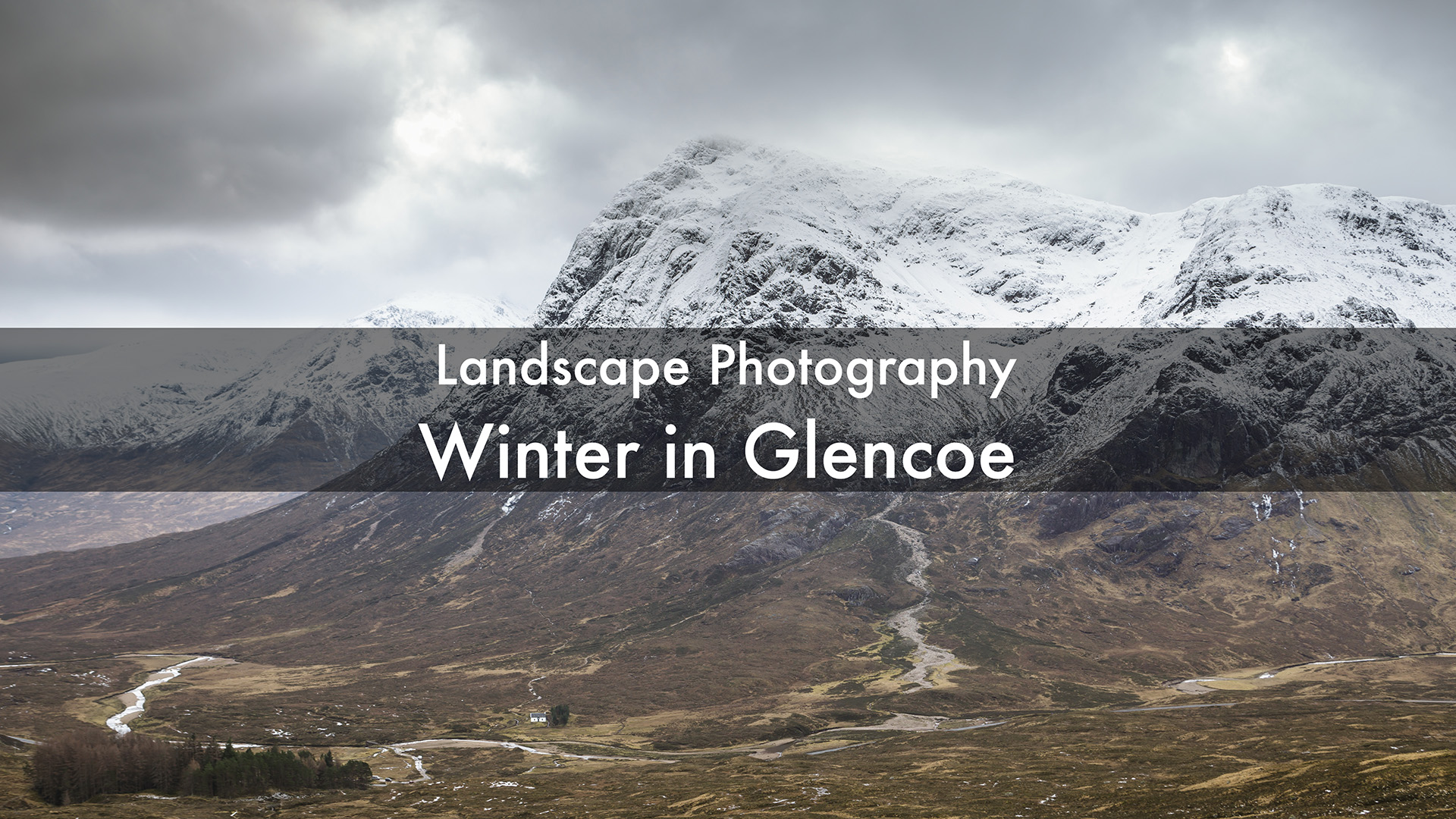

In the early part of January 2018, I was due to arrive in Scotland to run a photography workshop in the Glencoe area. The workshop itself was due to start on the 15th January, but I needed some time beforehand to reacquaint myself with the area.
Glencoe and Rannoch Moor offer up numerous views that you can capture by the side of the road, but I wanted something different for the photo workshop. Roadside is all very well, but I really wanted to get underneath the skin of the place and to get a more intimate knowledge of the area.
When I first arrived during the evening of the 11th January, it was evident that there was snow on the high ground, and this had been confirmed during my voyage over by keeping an eye on the Glencoe Mountain Resort webcam. Two years previous, I was very fortunate that there had been good snowfall and was able to capture some of the iconic scenes under the white stuff.
But in this case, it didn’t matter too much, as without the snow, it meant that getting around was a lot easier than trying to get a car to go across the inevitable black ice.
Filmed over 3 days, the latest YouTube vlog, Winter in Glenco,e shows the trials and tribulations of trying to photograph the area. From low and heavy cloud to driving rain that forces play to stop. It’s all part of the experience of being in the Scottish Highlands during the Winter months.
So enjoy this latest episode of my travels up to the Scottish Highlands.
When I head up to Glencoe and the western Highlands to run a workshop, I like to arrive early if I can. Those extra days matter because they let me settle back into the place, check access, test timings, and see what the weather is doing in real time. In winter, that matters even more, because one morning can look nothing like the next.
I started on Rannoch Moor at dawn. It was cold, windy, and bleak, which sounds miserable to some people, but this is the kind of weather I enjoy photographing. A lot of viewers assume I only work in warm sunrise light with the sun kissing the horizon. I do love that light, of course, but the west of Scotland doesn’t need it to look good. In fact, some scenes are better without it.
For me, moody skies work here because:
My first stop was a loch on Rannoch Moor that I always think about when I come back here. Although it’s close to the road, the viewpoint itself takes a bit of a walk, so it still feels separate from the traffic. I could hear cars passing, yet in front of me the loch sat under cold dawn light and thick cloud, with all the quiet weight that makes this part of Scotland so special.
I also had an image in my head that I still want to make there one day. It needs a lens I didn’t have with me, a Canon 50mm TS-E tilt-shift lens that would let me frame it exactly as I see it. That happens often enough in photography. A place can stay with me for years because I know there’s still one picture left in it.
After leaving Rannoch Moor, I drove south and kept an eye on the river as it ran down towards Glencoe. From the road, I could see patches of ice, so I found somewhere to pull over and walked down to the bank. Straight away, I knew there was a photograph there.
The river had a skin of ice in places, about 5 cm thick. I know that because I put my foot through it. Thankfully, I was quick enough to pull back before I soaked myself. I had wanted to get into the water for a lower angle, but I hadn’t packed wellies or waders. There wasn’t enough room in the suitcase, and that choice always catches up with me at some point.
Still, the scene worked. The half-frozen water, dark stones, and low cloud all held together. This sort of weather suits the Highlands far more than flat, grey or harsh sun. If the sky is blank, the mood falls away. When the cloud has shape and weight, the whole scene starts to breathe.
Later, I climbed to around 200 metres for a higher view and stopped there. The path was icy, and I was on winter ground with no reason to push any further.
In winter, knowing when to stop matters as much as knowing where to stand.
That rule matters to me every time I’m out with a camera in the hills. A photograph is never worth pretending the conditions are safer than they are.
The next morning took me back to Rannoch Moor. It was still windy, which is hardly a surprise there, but it wasn’t as cold as I expected. The edge of the loch had frozen, yet there was no real frost across the wider ground and no snow in sight.
That was frustrating, because the snow was exactly what I wanted. I had timed this trip and the photography workshop around the hope of winter conditions. The forecast suggested it would arrive soon, and I kept checking it with one eye on the sky and the other on the road.
The weather update looked like this:
So I waited, watched, and worked with what was there. For a few minutes, there was a touch of colour near sunrise, but it faded quickly behind a bank of cloud. That didn’t bother me too much. I liked the scene more once the light flattened and the sky turned heavy again. The cloud had shape, the horizon felt threatening, and the moor looked like itself.
This is why I came, snow on the way or not. Winter in Glencoe and across the western Highlands isn’t only about what lands on the mountains. It’s also about atmosphere, tension, and the sense that the weather could turn at any minute.
From Ballachulish, I drove about an hour to Loch Awe to check the timing for later in the week. I wanted to know how long it would take to get clients there without guesswork, and I also wanted to see what the ground was like underfoot. That kind of scouting is part of the job, and it makes a big difference when a workshop starts.
Kilchurn Castle looked superb, even without much snow on the surrounding hills. The whole setting opened out into a wide, calm panorama, with the castle sitting low against the loch and mountains beyond. It is one of those places that works in several ways at once. A single frame can be enough, but panoramas make sense there too, and it would also lend itself well to time-lapse if the weather began to move.
One thing mattered straight away, though: waterproof boots or wellingtons are essential. The ground was boggy, and it would have been easy to end up with wet feet before I had even set up the tripod. In Scotland, access is often simple until the final few metres, then the ground reminds you who’s in charge.
This kind of recce is a big part of how I run my Scottish Highlands photography workshops. A good location isn’t only about the view. It is also about timing, footing, weather, and knowing how a place works when you arrive with other photographers.
Later on, I stopped at one of the well-known white cottages on Rannoch Moor. It is a classic subject, and for good reason. The shape is simple, the setting is open, and the cottage sits well against the bare sweep of the moor and hills.
Parking can be easy there or awkward, depending on the day. This time, there was space, so I could have a quick scout before the rain started. On other visits, it can be much tighter, and that changes how relaxed you can be when working the scene.
The nice thing about the cottage is that it offers more than one option. You can photograph it from near the road, move around the side for a cleaner angle, or work it from higher ground. A couple of days earlier, I had looked towards it from up near the Devil’s Staircase, and that gave it a different feel again. Even with a familiar subject, a small shift in height or distance can make the picture feel new.
From Rannoch Moor, I carried on down into Glencoe itself and stopped at the roadside. Then I crossed a fence and walked down to a waterfall that stays hidden unless you already know it’s there. Drivers pass it all the time without realising what sits only a short distance away.
What caught my eye first was the line of the water as it bent through the foreground and led back towards two of the Three Sisters. That gave me a natural route through the frame. The waterfall mattered, but the shape of the water mattered just as much. Without that curve, the scene would have felt much flatter.
I tried the composition in both portrait and landscape formats. Each had something to offer, but I liked the way the portrait frame carried the eye more directly from the water to the mountains. If I’d had wellies or waders with me, I would have gone lower and closer to the stream, because that would have strengthened the curve even more.
Instead, I changed the picture by raising the camera slightly. That helped the foreground elements sit together better, especially one rock near the edge of the frame. When I stayed too low, parts of the scene overlapped awkwardly. As soon as I lifted the viewpoint a little, the lines settled down, and the river read more clearly.
That is one of the simplest changes I make on location. If something in the foreground feels messy, I don’t always move left or right first. Sometimes I only need to go higher.
When I teach composition on location, I often say, “Tell me what you’re thinking.” I don’t ask that for effect. I ask because the choices behind a frame matter as much as the settings. Once I know what someone is trying to do, I can usually see where the image is working and where it starts to fall apart.
This was my thought process with the waterfall scene:
That last part matters more than people sometimes realise. Corners are easy to ignore when a big mountain is in front of you. Yet a weak corner can drain the life out of a strong scene.
I kept exploring the little cascade after making that frame. It wasn’t perfect, but it had enough shape and enough balance to hold my attention. In Glencoe, that often happens. A scene doesn’t need to be grand to be worth time. Sometimes a bend in the water and the weight of the sky are enough.
Before finishing for the day, I had one more photograph in mind. I wanted to look down the pass towards the Three Sisters and watch the road for traffic, mainly to judge how long it took for cars and lorries to move through the frame. That would tell me what kind of exposure I needed if I wanted light trails later.
I had barely started setting up when the rain arrived. It came down hard, fast enough that the view out of the car almost disappeared. Within minutes, the mountains had gone.
That is Glencoe in winter. You can have a workable scene one moment and a wall of weather the next. It is fickle, but that unpredictability is part of why I keep coming back.
The snow did arrive after this, during the workshop itself, but I didn’t film it because my attention had to shift to the group and the work in front of me.
My kit for this spell in the Highlands was straightforward and familiar:
I didn’t need anything unusual. What mattered more was knowing when each lens made sense, and when the conditions were better than the light people usually wait for.
I was grateful to everyone who had subscribed and kept following along through that winter period. Support like that always means a lot, especially when the weather turns rough and the days don’t go to plan.
I share regular photographs and updates on Instagram and Facebook. Those are the easiest places to keep up with what I’m shooting and where I’m heading next.
What stayed with me from those days was the mood more than any single frame. Winter in Glencoe asks for patience, good judgment, and a willingness to work with the weather you have, not the weather you hoped for.
Some mornings gave me frozen water, some gave me low cloud, and one ended in hard rain with the mountains wiped out. Even so, every stop taught me something useful, either for my own photography or for the workshop that followed.
That is why I keep returning. Glencoe rarely gives me the same day twice, and that is exactly what makes it worth photographing.
We noticed you're visiting from United Kingdom (UK). We've updated our prices to Pound sterling for your shopping convenience. Use Euro instead. Dismiss