 Skip to content
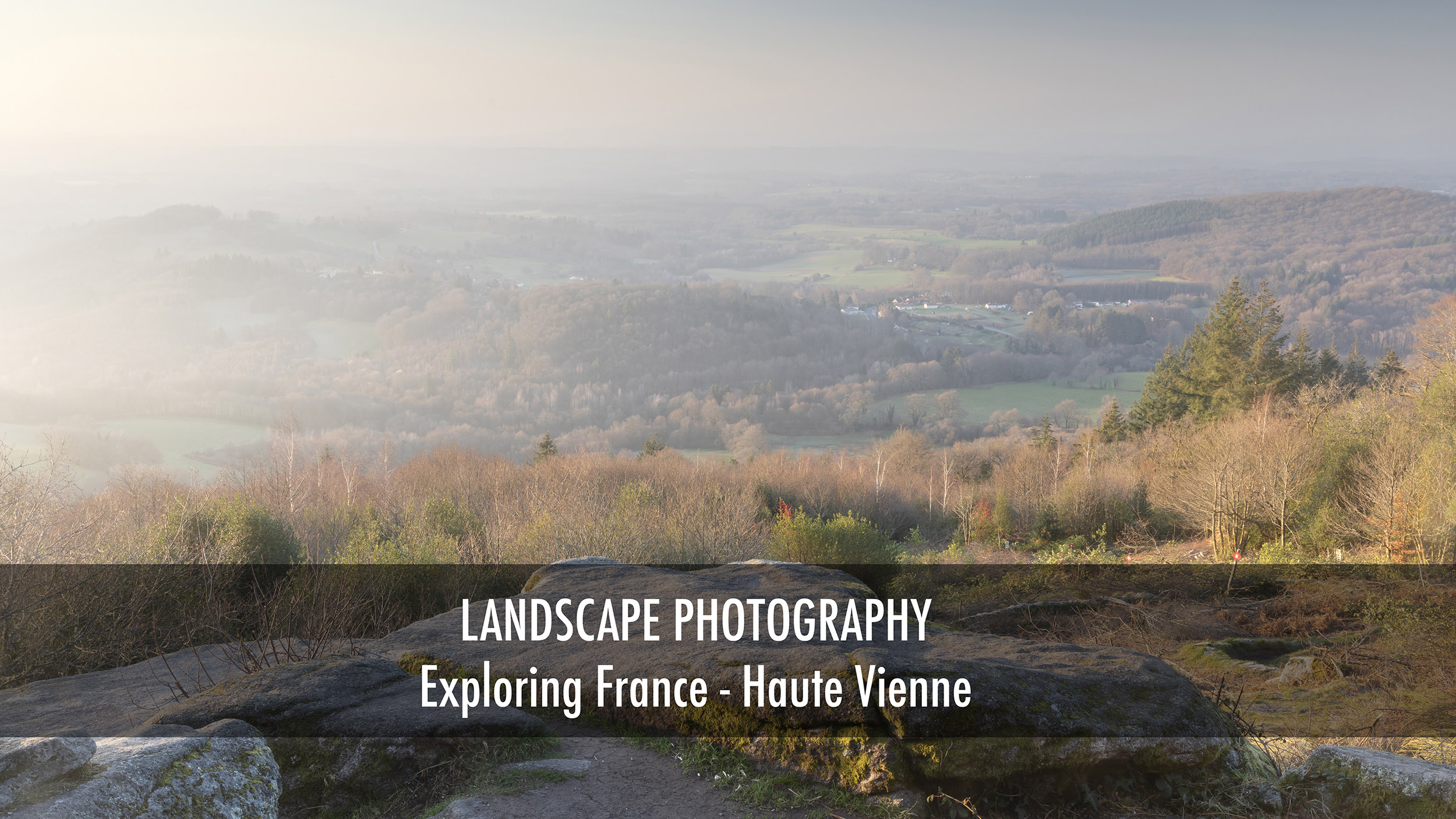

For this week’s YouTube vlog of Landscape Photography Exploring France, it’s the time of Haute-Vienne in south-central France.
This beautiful area of France has so much to do that it is a sure thing that I’m going to get back again at some point. From castles to ruined churches to the stunning cathedral in Limoges. But also let’s not forget the sweeping landscapes, too, as they are a must.
Now, speaking of Limoges Cathedral, I was given some special access to a level above the nave, allowing me to see this beautiful work of Gothic architecture from a different point of view. So I am extremely grateful to the guy who gave that to me.
I wanted to vlog more of what I did, but I didn’t get enough time between working and vlogging.
And if you’re interested, I offer photography tours and workshops in a variety of destinations around the world. If you’re interested in learning more from me to help you get the best out of your photography, then get in touch.
I began the morning in the department of Haute-Vienne at a high viewpoint, around 1,000 metres up. That height mattered. The air felt clearer, the horizon opened out, and the first light had room to move across the land in a slow, gentle way.
When I arrived, I still had pre-dawn light. There was a touch of pink off to one side and a bit of haze low on the horizon, but the main thing I wanted was side light. I could already see how the first sun would skim across the folds of the country below. That sort of light gives shape to everything. Fields stop looking flat, woodland edges gain depth, and even a simple view starts to feel layered.
A few things stood out right away:
For the shot, I worked with a 24-70mm lens, around 70mm, which suited the scene better than a much longer focal length. From a distance, you might expect a telephoto to be the answer, but this was one of those moments where the mid-range gave me exactly the balance I wanted. I also knew I would blend two exposures for the final image, because the tonal range between the brightening sky and the darker ground needed a bit more control.
I always enjoy this part of the day, because the picture is still forming in front of me. You can see what it might become, but you still have to wait for the sun to kiss the land in the right place.
By the time I reached Limoges, I had one view firmly in mind. I wanted the old bridge, the river below it, and the cathedral rising on the hillside beyond. It is one of those classic city views that feels simple until you try to photograph it.
The first challenge was access to the view. Standing by the river, it looks open enough, but the trees along the bank block a lot more than you expect. I had to search for a large enough gap to look through, then work out how to frame the bridge and the cathedral without the branches becoming the main subject.
I wanted both portrait and landscape versions, and I managed both, but it took more effort than the final frame suggests. That is often the case with urban viewpoints that people assume are easy. The location is obvious, yet the clean composition is not.
I believe the river there is the Vienne, though my focus was far more on the line of the bridge and the pull of the cathedral above it. Even without a cloud in the sky, the scene had plenty of presence.
The light had already become quite bright by then, so I made the call to head up to Limoges Cathedral and photograph inside. That shift made sense. The outside view had given me what I wanted, and the stronger daylight would be more useful in the cathedral than along the river.
I had wanted to see this cathedral for a long time, and the moment I stood near it, I knew it was worth the trip. From below, it already had that solid Gothic weight. From inside, it turned into something else.
The cathedral was one of the high points of the day, and not only because of the architecture itself. I was given access above the nave, higher than the public normally goes, and that changed the whole experience.
From that level, I could look down the length of the nave and see the geometry of the building in a different way. The lines became stronger. The spacing of the columns, the rhythm of the arches, and the way the light moved through the interior all made more sense from above. Gothic architecture can feel overwhelming from the floor because there is so much to take in at once. From a raised viewpoint, the structure becomes easier to read.
I spent about three hours there, which was double what I had planned. Still, once that kind of access appears, I take it. Time on the schedule matters less when you are standing somewhere that opens up a photograph you cannot usually make.
If a rare bit of access comes along, I take it. Some opportunities are too good to leave on the table.
There was also a story attached to the place that stayed with me. A man I met there told me that people had broken in, got onto the roof, had a barbecue up there, and destroyed about half a dozen stained glass windows. The replacement cost was around 3 million euros, and they are now having to pay for that damage themselves.
That story is hard to forget, partly because the cathedral is so beautiful inside. The stained glass, the height of the nave, and the sheer amount of work in the stone make that sort of damage feel even more senseless. I left grateful for the access, but also more aware of how fragile these places can be when people treat them carelessly.
Later in the day I moved out into the hills of Haute-Vienne again, to a place that sounded like Montgomery when I heard the name. I had been waiting for cloud for quite a while by then. One side of the sky was blue, but heavier cloud sat in the other direction and threatened to do something useful. Whether it would or not was another matter.
I had already made the photographs I wanted there. One of them was a drone image, which mattered to me, although the shadow I had hoped for disappeared almost as soon as I made the shot. That is how it goes sometimes. You get the picture, but the best version of it only hangs around for a few seconds.
On the ground, I set the camera to 50mm and worked with heather in the foreground and an old ruined church behind it. The wider setting did not feel right for that frame. The tighter view let me simplify things and pull the ruin into the composition without losing the shape of the foreground.
What struck me most there was the openness of the place. The views stretched in every direction, a full 360-degree sweep across Haute-Vienne. In summer, I suspect it would be magnificent. My first thought was that it might look a bit like the Peak District, only with a French ruin dropped into the middle of it.
I did not film as much as I would have liked at that stop. It was my first time there, I was trying to work quickly, and photography had to come first. That balance is part of the job. I always want to show the process, but I also need to come away with the pictures.
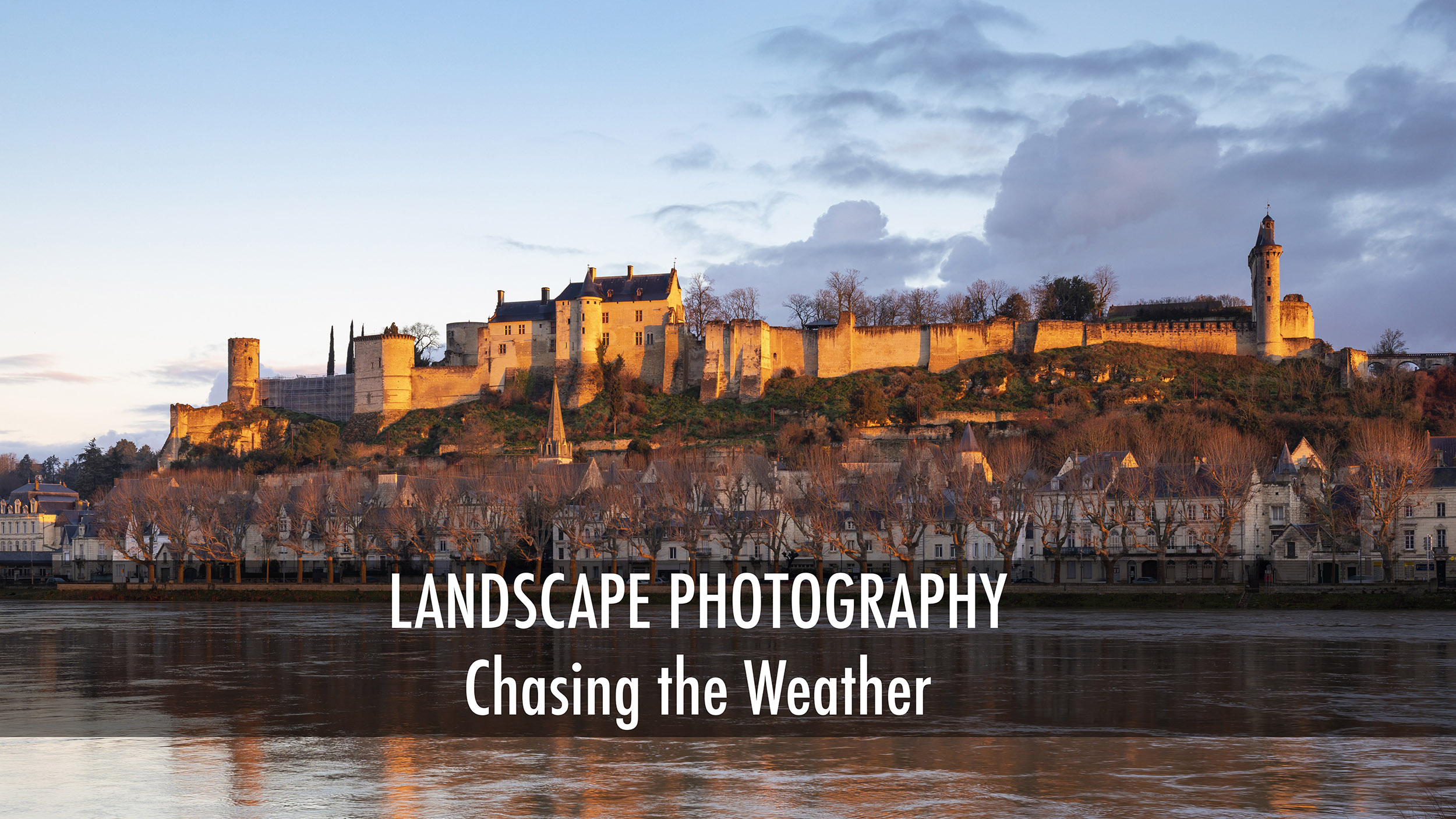
The final stop in Haute-Vienne was a castle, with water in front of it and a weir rather than a proper waterfall. I had passed two other places on the way, but there was no chance of fitting them in. By then, the day had narrowed into one last location and one last chance of good light.
At one stage, I had thought this might work better at sunrise, but that morning had been too clear. In the evening, the sky gave me more to work with. There were breaks in the cloud overhead and more gaps opening in the direction the cloud was moving. I could not see the sun directly, so I had to judge whether it was high enough to light the cloud, and maybe the castle, before it dropped too low.
This was the key compositional problem I faced:
That sort of decision can hold me in place for a while. The tighter frame gave the building more weight, but the wider one let the sky play a bigger role. Since the cloud was improving by the minute, I leaned towards the wider view and let the sky do more of the work.
The reflection helped that choice. At 24mm, I could pull in the full shape of the castle and its mirror image, which gave the picture a calmer structure. The weir itself did not add much, so the success of the image depended on the building, the water and the cloud all working together.
I had already taken the photo before I spoke much about it, because that is how I tend to work. I get the frame first, then I explain the thinking once I know the shot is safe. If I had waited too long, the cloud could easily have changed again.
There was also the simple fact of distance in the back of my mind. I still had a three-hour drive back to the Loire Valley from Haute-Vienne ahead of me. Was it a bit mad to come down to Haute-Vienne for one day? Probably. Was it worth it? Yes, because places like this reward the effort, even when the light only half does what you hoped.
This trip made one thing clear. Haute-Vienne has far more in it than I could cover in a single day. I barely scratched the surface, and even so I moved through high viewpoints, Limoges Cathedral, ruined stonework in the hills, and a castle at dusk.
That range is what makes the area so enjoyable to photograph. You can start with broad dawn views, move into city architecture, then finish with old rural France in the evening. For anyone who loves photographing France, that mix is hard to ignore.
I also came away reminded that some of the best parts of a day are the ones you cannot plan. The access above the nave in Limoges changed my time there. The shifting cloud at the castle kept the evening alive. Even the awkward gaps in the trees by the river forced me to work harder for the frame.
I know I will be back at some point to Haute-Vienne. There is more to see, more to photograph, and more to understand about how this part of central France changes from one season to the next.
Haute-Vienne gave me one of those long working days that leaves a clear memory behind. I remember the first side light at 1,000 metres, the view down the nave in Limoges, and the final minutes by the castle when the cloud began to break.
If there is one thing this day confirmed, it is that Haute-Vienne is far richer than many people expect. Give it time, and it gives plenty back.
We noticed you're visiting from United Kingdom (UK). We've updated our prices to Pound sterling for your shopping convenience. Use Euro instead. Dismiss