 Skip to content
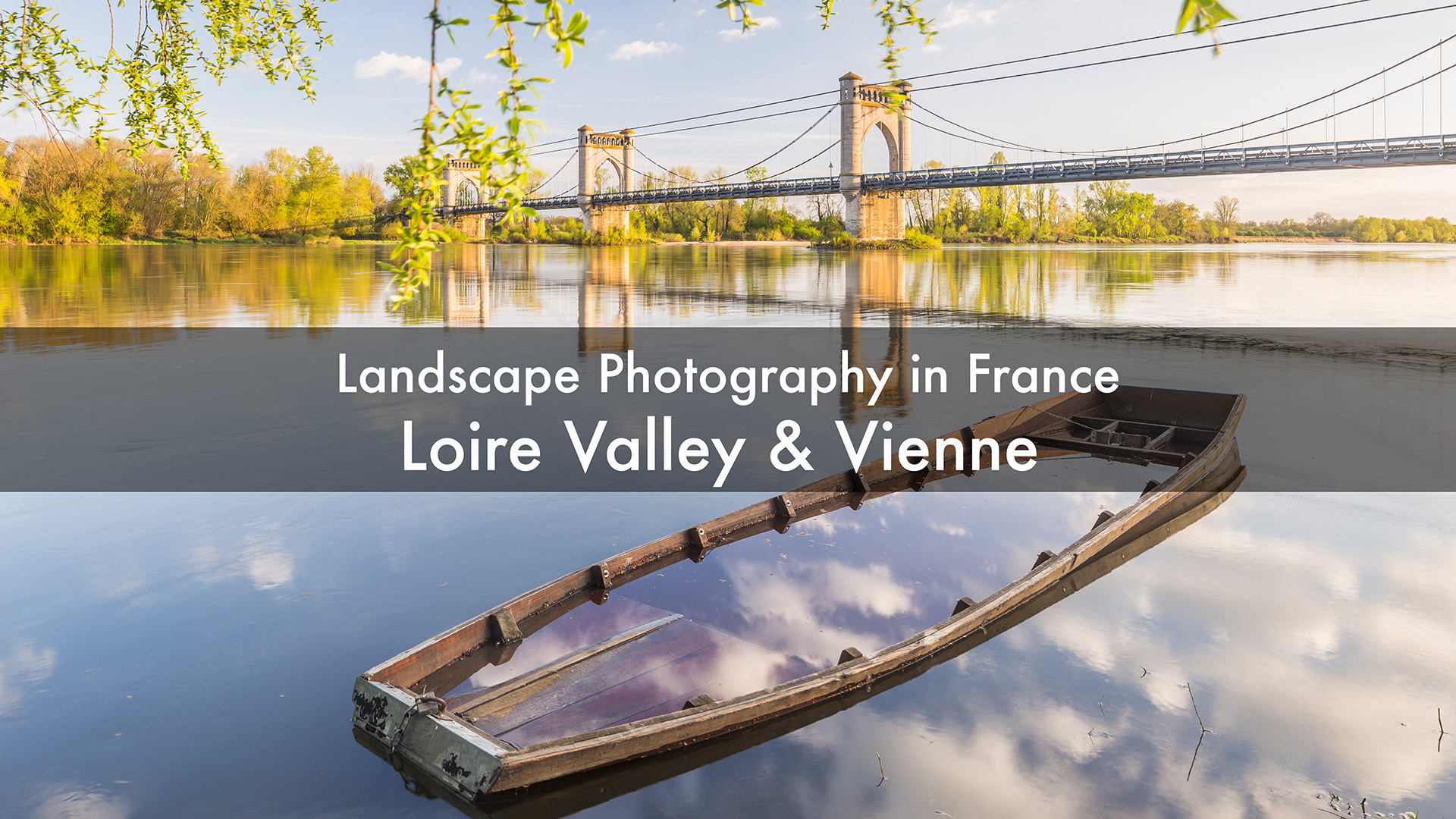

On Wednesday 5th April 2017, my photography took me to the department of Vienne, as well as ending the day in the Loire Valley in central France.
Vienne is a department with a number of hidden gems, such as the river valley of the Gartempe. It is notable for the main city of Poitiers, but outside of here, there are countless things to shoot, including small villages, landscapes and beautiful architecture protected as UNESCO World Heritage Sites.
In addition to the Vienne my day had to end up in the Loire Valley where I live. This part of the vlog was concentrated around Langeais.
First thing in the morning, I stopped off at Bourg-Archambault and its gorgeous castle before discovering the countryside and then going into the UNESCO World Heritage Site of Saint Savin Abbey.
The day ends with gorgeous light near where I live. The banks of the Loire and the city of Langeais.
And if you’re interested in discovering more of this area with a camera, then do check out my annual Loire Valley photo tour in May.
*Note that the next vlog will be around 20 April 2017.
My first stop of the day was Bourg-Archambault, with its striking château sitting behind a stretch of water. I had hoped for a soft dawn and a bit of atmosphere, but the sky had other ideas. It was the only day I could get out that week because of family commitments, and after several forecasts hinted at better conditions, I arrived to a wall of grey cloud.
That is part of the job. When I plan a shoot over several days and the weather closes in at the last moment, there is no trick that fixes it. I can’t order better light. I can only carry on, look harder, and work with what is there.
Even under dull light, the château had presence. Some of the windows looked blanked out, and there was no sign of life around it, so I found myself wondering if it was even occupied. The setting still had character, though, especially with the water in front of it. The only thing that fought against the calm was the traffic. I had expected a quiet village scene, but it felt closer to Piccadilly Circus.
Bad weather doesn’t cancel the day, it changes the sort of photographs I go looking for.
For this opening image, I kept the setup simple:
The polariser helped more than anything else at that point. There was a light breeze on the water, so a slightly longer exposure gave me a smoother surface and a cleaner foreground. It was never going to be a dramatic dawn shot, but it was still worth making.
From Bourg-Archambault, I headed towards Saint-Savin. On the way, I ignored the sat-nav and took a small country road instead. That decision gave me one of my favourite finds of the day.
Out of the corner of my eye, I caught a quick glimpse of an avenue of trees. It was one of those scenes you nearly miss, then spend the next mile thinking about. I turned the car around, went back, and had a proper look. The light was poor at that stage, so I knew it was not the finished version of the photograph I wanted. Even so, I could see the potential straight away.
With side light, more leaves on the branches, and a bit more colour in the field, it could be a lovely scene. In autumn, it would probably be far stronger. In spring, once the trees filled out, it would also have more weight. So I made the image, took note of the place, and filed it away in my head for another day.
That is one of the best parts of travelling with a camera. The map takes you somewhere, but the small roads often give you the picture.
Further on, I reached Saint-Savin. The village itself had a gentle charm, and from where I stood, I could see the abbey in the distance. A 13th-century bridge helped tie the scene together and gave the view some structure. There was one ugly distraction behind the abbey, what looked like an industrial building or factory, and that did spoil the clean look of it from certain angles. Still, the place had far more going for it than against it.
What stood out to me throughout this first part of the day was the architecture in Vienne. The rooflines and church details felt different from what I am used to farther north in the Loire Valley. Some of the buildings already hinted at a more southern, almost Mediterranean touch. It was subtle, but it was there, and it gave this part of France its own identity.
Once I arrived at Saint-Savin Abbey, I asked at the information desk if I could film and photograph inside. They kindly gave me permission, which made a huge difference. I was grateful for that, because the interior is stunning.
From the outside, the abbey does not prepare you for what is waiting indoors. It is not enormous, yet it has an intensity that hits at once. The columns are painted, the ceiling is covered in frescoes, and every part of the space seems to reward careful looking. I pointed my camera straight up more than once because the ceiling demanded it.
The wide-angle lens earned its keep here. I wanted to show the scale of the nave, but I also wanted to isolate details from above. Moving through the building, I kept changing between those two approaches, broad views that described the whole church, and tighter compositions that focused on the painting and decoration.
Two things mattered most when I photographed the abbey:
You do not need to be religious to appreciate a place like this. The craft alone is enough reason to stand there and look. The work on the ceiling and walls is extraordinary, and the whole building feels carefully made rather than merely impressive in size.
I came away thankful not only for the photographs but also for the welcome. Access matters when you are travelling and working quickly, and on this day, it made one of the strongest parts of the trip possible.
After Saint-Savin, I moved on to Chauvigny, another place that had been on my list for the day. It is known for the group of châteaux on the hill, something that is said to be quite rare in Europe, and that alone makes it worth the stop.
I spent a little time around the church of St Pierre. What interested me there was not only the building itself, but the way it reinforced the shift in style I had been noticing all day. The farther south I travelled through Vienne, the more the architecture seemed to soften and change. Roofs, colours, and church interiors all felt slightly different from the Loire Valley look that I know so well.
Inside St Pierre, I found a painted nave that reminded me of Saint-Savin, though on a smaller scale. I made a few simple images looking down the church interior because that was enough to show the character of the place. It was not a long stop, but it helped complete the picture of the region.
Later in the afternoon, I drove back to the avenue of trees I had spotted in the morning. This time, the light had changed completely.
At around half past three, the sun was side-lighting the avenue in exactly the way I had hoped for earlier. The scene finally came together. The yellow flowers in the field added colour, the trunks had shape, and the whole view had far more depth than it had under flat cloud. The only thing missing was foliage on the trees, and that is me being picky, because the photograph still worked far better than it had done before.
That second visit gave me something else as well, timing. I now knew what part of the day suited the location, and that matters if I want to return in another season. A place becomes much more useful once I understand how the light moves through it.
There was also one of those small encounters that make travelling in France a pleasure. The owner drove by, stopped, and told me that if I wanted to come back another time and photograph around his place, I would be welcome. I had already had a kind response at Saint-Savin earlier in the day, so it felt like another reminder that people often make a trip as much as the scenery does.
From there, I began the drive back north to the Loire Valley, with a short stop before heading out again for the evening.
By early evening, I was back near home territory, on the banks of the Loire not far from Langeais. I had planned to go farther east at first, but I changed that after scouting the area earlier in the week. I had already tried the opposite side of the river, and it did not work for me, so I wanted to test this side instead.
It worked far better.
When I first arrived, the light was a bit harsh, but as the sun dropped, it began to soften. The location looked like one that could work in spring, summer, or autumn, and for both sunrise and sunset, depending on the angle. That is always useful to know, because one successful visit often turns into several more over the year.
I did not linger there long because I had another subject in mind at Langeais itself, the old wooden boats on the riverbank and then, if the timing held, the château above the town.
I had been back to this boat scene half a dozen times over the previous week, trying to work out when the setting sun would hit it properly. The timing mattered because the boat sat in shadow for much of the afternoon, and if I arrived too late, the effect was gone.
For this image, I used:
The composition relied on a diagonal. The boat ran up through the frame while the suspension bridge sat across the upper third. I also had to leave enough space at the top so the image felt balanced, even with a tree overhanging the scene.
The awkward part was the movement. The boat shifted all the time, so I had to watch my exposure length carefully. Too long, and the front of the boat would blur. That is the sort of small problem that can ruin a photograph if I stop paying attention.
Once I had the riverbank shot, I had about ten minutes to get up to a viewpoint over the town and château. It was a quick climb and a bit of a rush, but I made it in time to set up.
By then, I had missed most of the direct sunlight on the château itself. Oddly, I did not mind. White stone in strong low sun can be awkward to photograph because it pushes the camera hard and often leads to extra blending work later. Softer light can be easier to manage and often feels more natural.
I had tried a similar photograph weeks earlier in poor weather and come away disappointed, so it felt good to be back with better conditions and a clearer idea of what I wanted.
The biggest frustration at the viewpoint was a house roof creeping into the frame. I could not go much lower without losing too much of the château, so I accepted it as part of the compromise. Compared with an earlier attempt, I had at least managed to exclude a church tower that felt too dominant in the composition.
Even with those limits, I was pleased with the result. It was one of the better views I had found over Langeais, and after several attempts in different weather, I was glad to come away with a photograph that felt settled.
Across the whole trip, I relied on a familiar kit:
None of that gear fixed the weather, of course. What it did give me was flexibility. I could move from château reflections to abbey interiors, then on to long-lens evening views over the Loire Valley without changing the way I like to work.
What stayed with me from this trip was not one perfect moment of light. It was the way the day kept changing and still produced photographs worth making. Vienne gave me architecture, hidden corners, and one superb abbey interior. The Loire Valley gave me the finish I had hoped for, with the river, the boat, and the view over Langeais.
I was also left looking ahead. There might not be a vlog the following week, but the next definite outing was set to be Burgundy, a part of France I never tire of. There used to be a poster in Paris that said, “Come to Burgundy, there are no tourists”, and there is some truth in that. People pass through it too quickly.
Days like this are why I keep going back out, even when the forecast looks poor. Light changes, plans shift, and France nearly always gives me something worth seeing if I stay out long enough.
We noticed you're visiting from United Kingdom (UK). We've updated our prices to Pound sterling for your shopping convenience. Use Euro instead. Dismiss