 Skip to content
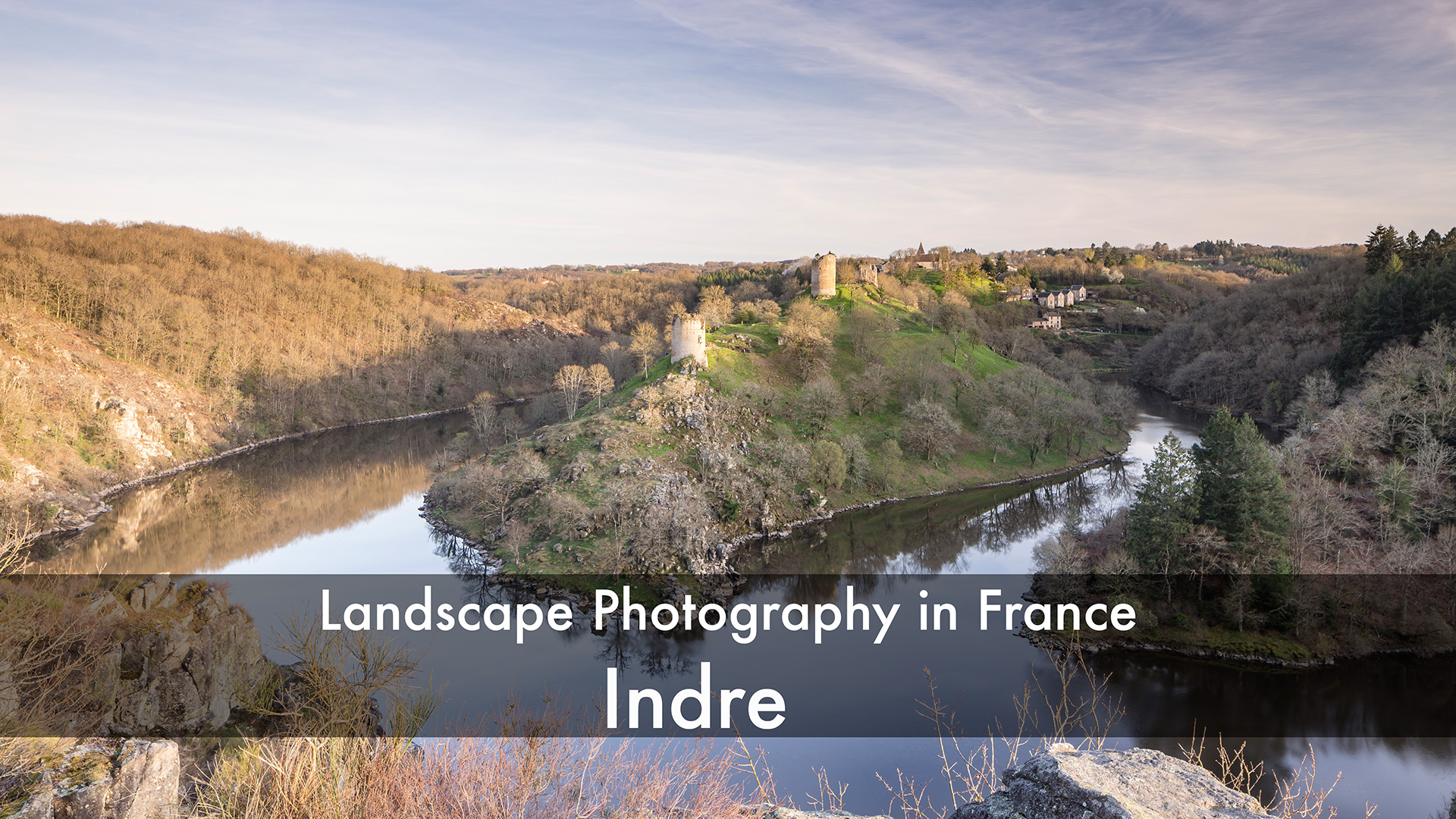

On Wednesday, 29th March 2017, my travel photography took me to the department of Indre in central France.
The department is one of those places with some hidden gems, such as the river valley of the Creuse. The Beaux Villages de France of Gargilesse Dampierre is notable for the famous 19th century writer George Sand, who lived there.
In addition to the southern tip of Indre, I did try my best with the neighbouring department of Creuse, but just didn’t feel happy capturing any of this on film.
First thing in the morning, I stopped off at Argenton-sur-Creuse before heading into the countryside.
Join me as I try to capture in the best way that I can the river Creuse valley area of Indre.
And if you’re interested, I offer photography tours and workshops in a variety of destinations around the world. If you’re interested in learning more from me to help you get the best out of your photography, then get in touch.
*Note that the next YouTube vlog will be around 7 April 2017.
I began the day looking out over Argenton-sur-Creuse, in the department of Indre, still very much part of central France. I had come for one reason: the dawn view over the town. I had found a viewpoint that looked across the rooftops and the river, and it felt like the right way to start the day.
Before sunrise, the scene already had something going for it. The sky had started to pick up a little colour, and that softer pre-dawn light gave me a photograph I was happy with. Once the sun rose higher, though, the problem became obvious. I was almost shooting straight into it, and the contrast was building fast. The town below still sat in lower light while the sky brightened by the minute, so I knew the actual sunrise image might not be the strongest frame of the morning.
That is often how these starts go. The moment you imagine from a map or a recce does not always line up with the light you get on the day. Still, I had an image in the bag, and that’s all that matters. It gave me a good start and set the tone for the rest of the outing.
My setup was straightforward and built for contrast control:
On the back of the camera, the histogram was already pushing to the right as the sun crept up. Those filters helped hold back the brightness in the sky and keep the balance usable. Without them, the scene would have run away quickly.
Spring also felt present from the start. Leaves were coming back on the trees, blossom had appeared in places, and I hoped that those first signs of the season would give the countryside a bit of life as I moved on from town into the valley.
From Argenton-sur-Creuse, I headed south to explore more of Indre before crossing into neighbouring Creuse. The plan was simple enough on paper. I wanted to find small scenes, hidden corners, and if things worked out, finish the day at a river meander overlooked by an old castle.
That kind of plan sounds tidy at breakfast. By mid-morning, it usually becomes far less tidy.
Still, this area has a lot going for it. The southern part of Indre feels full of small discoveries, especially if you like river valleys, old stone villages, and the kind of roads that lead you into places you would miss if you were in a hurry. The Creuse valley, in particular, has a quiet beauty that suits patient photography.
In places like this, the day is rarely about one famous view. It is about following the land, reading the light, and seeing what holds up when you finally stand there with a camera.
That sense of discovery was a big part of the day. Some locations I already knew. Others were little marks on a map that looked promising enough to chase. A few worked. Quite a few did not.
After the dawn shoot, I went down to a spot near Gargilesse-Dampierre, one of the prettiest corners of this part of France. The viewpoint looked over a meander in the river Creuse, and I knew the area from a visit several years earlier. I had photographed it in autumn then, and although I had made a decent frame, I had always wanted to come back and see if I could do something better.
Access was easy enough. There was a car park nearby, and from the roadside pavement I could look down into the gorge. The view had depth straight away, with the river curving through the landscape and a house in the distance giving the eye a point to settle on.
The light had changed since dawn. The sun was now higher and beginning to sidelight parts of the scene. That gave more shape to the valley, but it also brought new problems. Deep shadows still sat in the gorge, while the sky stayed bright. I could feel the image improving as the sun climbed, so I made one frame and then stayed on for another as the light shifted.
For this location, I switched to my tilt-shift lens. I did not absolutely need it to correct the scene, but I like what that lens gives me in a view like this. It is extremely sharp, and it lets me keep the geometry tidy, especially with buildings in the frame.
My setup here was:
The polariser helped bring back some blue in the sky, although the view had one irritating flaw that I could not do much about. Contrails were hanging overhead, probably from flights heading towards Paris. They were not enough to ruin the scene, but they were there, and once you notice them, it is hard to ignore them.
I also knew this might be better later in the day from a different angle. That thought stayed with me and eventually pulled me back in the afternoon.
After that meander, I crossed to the other side of the river to look at another viewpoint. It was all right, though it did not feel quite right at that time of day. Then I noticed that an old castle was marked only about a kilometre down the road, so I went to have a look.
The castle itself was not in great condition. It looked overgrown, a little neglected, and not especially photogenic in the light I had. It seemed as though some restoration might have been going on, but the place felt untidy rather than dramatic.
Still, I never count that sort of detour as wasted time. Looking at maps and checking these small places is part of the job when I am travelling through rural France. Now and then, a vague symbol on a map turns into a real gem. On this occasion, it did not, but the habit is still worth keeping.
The trouble was that this part of the day started to lose momentum. I spent much of the late morning ambling through the countryside, trying places that looked as though they might offer something, only to find they did not. Some marked locations led nowhere useful. Others simply failed to match what I had imagined when I first saw them on the map.
That creeping frustration is familiar. You feel as though the day should be producing more than it is.
By midday, I changed tack and went to scout the place I hoped would give me the final image of the day. It was another river meander on the Creuse, with a ruined castle nearby, and I had known about the general area for some time. I had tried to find the viewpoint before, but on earlier visits, I had not had enough time.
This time I did. So instead of waiting until the evening and risking a scramble in failing light, I went there in the harsh middle of the day and treated it as a recce.
That decision mattered because the ground was awkward. The area was rocky, the drop below was steep, and I needed to know my route in and out before sunset. I had a torch with me in case it got dark on the walk back, but a torch is no substitute for knowing where your feet are going.
The scene had promise. The river bent away through the valley, the castle sat beyond, and the foreground rocks gave me material to work with. A fissure running through the stone formed a natural leading line into the frame, which immediately caught my eye.
There was also one annoying bush in the composition. It still looked skeletal at this time of year, with only the first buds starting to show. It was not ideal, but I was not about to start hacking at the landscape with garden shears simply to tidy the frame. Sometimes you accept what the season gives you and work around it.
To test the composition, I put on the 24mm tilt-shift again and started refining the shot:
The midday light was awful for a final image, of course. It was hard, bright, and flat in all the wrong places. Yet a recce is not about making a masterpiece there and then. It is about knowing where to stand when the light becomes worth having.
The awkward truth is that much of the afternoon did not go well.
I spent a lot of it driving around Creuse, chasing possibilities that never turned into photographs I cared about. I had thought I had planned a good day, but it started to feel unfocused. Place after place failed to match what I had pictured in my head. By that point, I was wondering whether I should have gone to Normandy instead, because I had seen things there that might have worked better.
That is the side of photography that people do not always see. The good frames often come wrapped in a lot of dead ends, wrong turns, and small disappointments. A day can feel messy even when it produces a couple of decent pictures.
Sometimes the best skill on a frustrating day is carrying on without forcing a bad photograph.
So I went back to one of the locations that had at least shown real promise earlier on.
Later in the day, I returned to the meander near Gargilesse-Dampierre, but this time I worked from the opposite side of the river. There was a church near the path, and from there I could walk down and get a broader panorama over the Creuse.
This angle suited a wider treatment. The shape of the meander was simply too good to crop into a smaller frame, so I decided to build a panorama rather than settle for only part of it. To do that, I mounted the camera vertically and used the shift function on the tilt-shift lens to move across the scene.
That gave me more width without relying on a much wider lens, and it helped preserve the natural feel of the river’s curve. I also had to make a slight turn with the camera axis on one side, though only a little, and I felt that would still stitch together cleanly enough.
The full sweep of the river mattered here. I wanted the viewer to follow the bend from one side of the frame all the way through as it disappeared from sight. A partial crop would have weakened the whole idea.
There was also another possible image from this area, using a longer lens towards the village across the river. I considered it, but the panorama was the stronger expression of the place at that moment, so that was the priority.
By the end of the day, I was back at the final location overlooking the river. I will leave the exact spot unnamed, but what mattered was the geography. The river below marked the line between Indre and Creuse, with one department on one bank and the other opposite.
I had already taken the main shot by then. The light I wanted had come through, and I had the image safely in the bag. The low sun had dropped where I needed it to, and the side-light across the scene gave shape to the land and foreground rock. Once that was done, all that remained was to wait and see whether the sky would produce a little extra colour after sunset.
Sometimes it does, and sometimes it does not. Yet when I have already made the main frame, I do not mind waiting another half hour. There is little to lose, and the quiet after sunset often feels like the best part of the whole outing.
The day had not been smooth. It had not even been especially efficient. Still, standing there above the river with one good image made, the frustration had eased. That is often enough.
Most of the day came down to a small set of tools I trust when light is difficult, and compositions need care.
| Gear | What I used it for |
|---|---|
| Canon 6D | My main body for dawn, daytime, and evening work |
| Canon 24mm TS-E Mark II | Controlling perspective and fine-tuning focus through the scene |
| Canon 70-200mm f/4 L | Compressing the dawn view over Argenton-sur-Creuse |
| Lee graduated filters | Holding back bright skies at dawn and in the valley |
| Heliopan polariser | Bringing back blue sky and controlling glare |
| Manfrotto carbon fibre tripod | Stability on uneven ground |
| Manfrotto 410 geared head | Precise framing, especially for the recce and panorama work |
The tilt-shift lens was the key piece for me on this outing. It helped keep buildings upright, let me work the plane of focus carefully, and gave me a level of control that suited these valley scenes.
What stays with me from this trip is not a sense of perfection. It is the feeling of a real day out photographing France, with the highs and the rough edges left in.
I started strong above Argenton-sur-Creuse, found a few worthwhile views along the Creuse, struggled through hours that did not give me much, and still finished with a photograph I wanted. That feels honest, and it is often how this work goes.
If you want to follow more of my photography, you can find me on Facebook, and on Instagram. The best days in France are not always the easiest ones, but they are usually the ones I remember.