 Skip to content
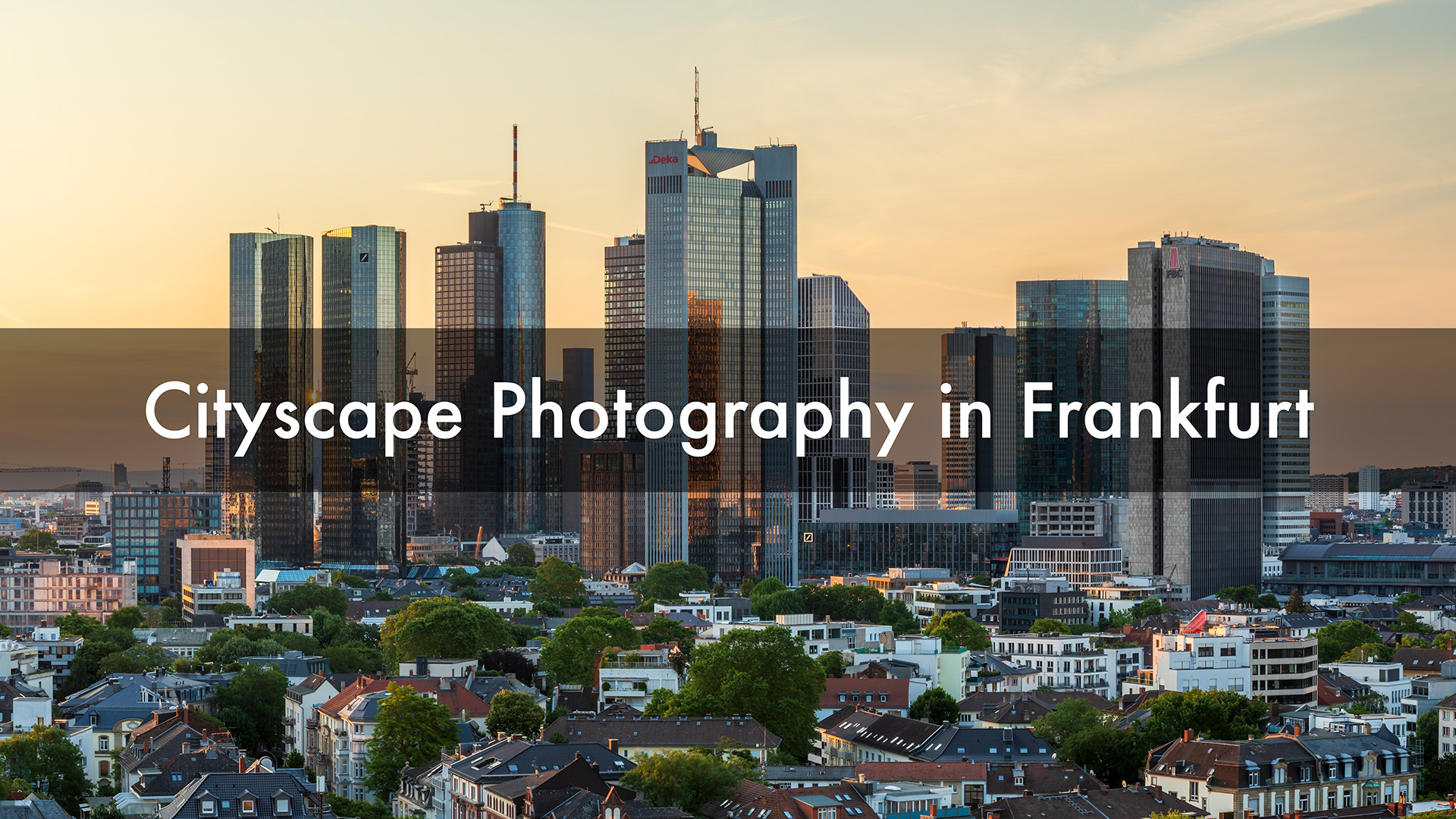

My latest YouTube video, Cityscape Photography in Frankfurt, shows some of what I got up to back in late May this year on a visit to the city.
I’m not always in favour of vlogging in cities as I have to keep a very watchful eye on my gear. But this time, I decided that there were enough moments to give you an idea as to what I do when I’m in a city like Frankfurt.
It’s been a long time since I’ve uploaded anything, and it’s purely been down to time and work commitments.
My YouTube channel is dedicated to all things landscape and travel photography, so if that’s your thing, then I’d love to have you come along for the ride.
And if you’re interested, I offer photography tours and workshops in a variety of destinations around the world. If you’re interested in learning more from me to help you get the best out of your photography, then get in touch.
I arrived in Frankfurt on Friday, 27 May, nearly three hours late. Because of that, and because I was there for a business conference, I did not get much chance to film at first. I had already been in the city for a couple of days before I found a proper moment to pick up the camera and record what I was doing.
That slow start suited the way I feel about filming in cities anyway. I don’t love vlogging in urban locations when I’m on my own. It isn’t about Frankfurt feeling unsafe. It’s more that city shoots demand constant attention, especially when I’m carrying a lot of kit and trying to run more than one camera at the same time.
With landscape work in a remote place, I can often settle into the scene. In a city, I can’t switch off in the same way. I’m checking bags, tripod legs, traffic, people moving through the frame, and whether one camera is doing something I did not expect. It feels as though I need six pairs of eyes.
That isn’t unique to Frankfurt. It applies to any city shoot when I’m working solo. Still, Frankfurt gave me plenty to work with, and the skyline was the clear draw. The towers, the open views across the River Main, and the chance of good light at either end of the day made it worth the effort.
For most of this trip, I worked with a two-camera setup. One body handled stills and panoramas, whilst the other dealt with time-lapse sequences. That sounds simple on paper. In practice, it meant juggling two tripods, two exposures, changing light, and my camera bag at the same time.
At one stage, the 5D Mark IV carried my wide tilt-shift lens for skyline stills and panos, whilst the 6D ran a night-to-day time-lapse. Later, I swapped those roles around. That change came out of necessity more than planning, because one piece of kit let me down at the worst possible time.
The hard part with a dawn or dusk time-lapse is exposure drift. As the light changes, the histogram slowly walks to the right. If I don’t watch it, highlights creep towards overexposure. So whilst one camera is clicking away every few seconds, I’m still trying to shoot single frames on the other body.
The final image might look calm and clean, but the process behind it is constant management.
That balance is what I find so interesting about cityscape photography. I’m not only reacting to the scene. I’m also managing a small moving system of cameras, intervals, exposure, light, and access.
One of my first proper shoots in Frankfurt was from a bridge. On paper, it looked ideal. I had a clear view towards the skyline, enough room to set up, and the morning light was beginning to build. Once I got into position, the weak points of the location became obvious.
Traffic crossed the bridge, and there was a joint in the structure that made things less stable than I wanted. For the panoramas I had in mind, the best place to stand was just beyond a wall. I could work there to a point, but only if I stayed on top of everything else happening around me.
Meanwhile, sunrise colour was starting to appear in one direction, but that was not the part of the scene that interested me most. I wasn’t in Frankfurt to make a generic sunrise frame with a hint of skyline off to one side. The buildings were the subject, and I wanted the city to hold the frame.
That choice shaped the whole morning. Rather than chase the brightest patch of sky, I kept my attention on the skyline itself and waited for a bit of colour to support it. There was enough happening in the atmosphere to keep me hopeful, but not enough to relax.
A cityscape shoot like that is a steady sequence of small decisions. Do I move for a better pano line? Do I leave the time-lapse running? Do I protect the bag or go after one more still frame? When I’m on my own, each decision costs time, and time is the one thing dawn never gives back.
By the middle of the trip, I had finished the appointments I needed to attend and made my way to a much higher viewpoint over the city. The view was superb. If you’ve ever searched for Frankfurt online, there’s a good chance you’ve seen something similar. It is one of those skyline angles that instantly reads as the city.
It took a bit of thought to work out where it was, and it wasn’t a simple public viewpoint. It was private, which matters because access shaped the whole shoot. Once I was up there, I set up both cameras again and prepared for a time-lapse across the city.
Then the intervalometer failed.
At first, it looked like a dead battery. There had been no warning, no fading screen, and no signs it was about to stop. It simply died. That was frustrating enough, but the real nuisance was timing. I was in the middle of a strong opportunity, and I wanted the sequence, not a half-finished version of it.
So I did the only thing I could do. I tried to build the time-lapse manually by pressing the trigger every few seconds. It was clumsy, far from ideal, and nowhere near as reliable as a working intervalometer, but it gave me a chance of bringing something home.
Later, after running around looking for replacements, I finally found batteries at a petrol station. That felt like a small victory. I thought the problem was solved.
I returned to the same view at about five in the morning. I was tired because only a few hours earlier, I had been standing in that exact spot trying to rescue the previous shoot. The city still looked magnificent, and the remains of the night gave me some lovely in-between light, the sort of frames that sit between full darkness and proper dawn.
The fresh batteries did not solve the intervalometer problem.
That was the moment I knew the fault was not the batteries at all. The unit itself had packed in. Years ago, I used to carry two intervalometers for this exact reason, but on this trip, I only had one. When a single piece of gear fails, every workaround becomes slower and less tidy.
I switched the system around. This time, the 5D Mark IV took on the time-lapse job, whilst the 6D handled stills. The light was building, and I wanted to keep moving rather than waste the morning on frustration.
There was another snag as well. In the Canon time-lapse mode on the 5D Mark IV, I found that I couldn’t use the image preview in the way I needed. Normally, I would check exposure on the fly, especially during a night-to-day sequence. Here, that seemed to be locked out. For this kind of work, that is a proper weakness in the system.
I was left with a simple problem. The scene was getting brighter, the camera was firing away, and I could not check the exposure as smoothly as I wanted. So I had to stop, inspect, adjust, and restart when needed. That breaks the flow and adds stress right when the light is changing fastest.
Still, the view was so good that I kept going. There was cloud on the horizon, and I couldn’t fully read how it was moving. That meant I had no clear sense of whether I would get a strong sunrise colour. I didn’t care too much by that point. With a skyline like that, even the quieter light had enough character.
My last morning in Frankfurt gave me the cleanest run of the trip. I had been granted early access to a viewpoint that was publicly accessible, and because I had already been there on previous evenings, I knew what the scene could offer.
I had checked the sunrise position beforehand, so I already had a fair sense of where the light would appear. Even so, there is always something reassuring about standing on location and seeing the first hint of the day exactly where you expected it.
The 5D Mark IV was set for a wider shot with a two-second interval. The 6D framed a tighter view of the skyline, roughly around the 50mm mark. Because the light was already building in the sky, I had to keep a close eye on exposure and pull it down when the bright areas started to clip.
That session felt different from the earlier ones. Some of the pressure had gone. I knew the view. I knew the light direction. I had a working plan, even if one part of the kit had already let me down on the trip.
The weather helped as well. After a good week in Frankfurt, this final morning gave me colour in the sky and the sort of conditions that make an elevated city view sing. The tops of the buildings caught the changing light, the sky went red, and the whole scene had the clean structure I always hope for in a skyline photograph.
What I love about this kind of work is the mix of control and uncertainty. I can choose the viewpoint, the lens, the interval, and the framing. I cannot choose the clouds, the exact quality of dawn, or whether a bit of gear decides to stop cooperating. That tension is built into the process, and it is part of why the successful mornings stay with me.
Cityscape photography asks for a different mindset from the work I do in quieter places. The pace is tighter. The margin for error feels smaller. Access matters more, timing matters more, and gear problems seem louder when there are buildings, people, roads, and security concerns all around me.
Yet that is also what makes it satisfying. I love finding a high viewpoint at either end of the day. I love working out how the skyline sits together, where the strongest lines are, and how a small change in height or focal length can reshape the whole frame. Frankfurt gave me plenty of that.
This trip also showed the less polished side of the work. Delayed travel, limited time, private access, failed accessories, changing roles between cameras, and early starts all sat behind the finished images. None of that is glamorous, but it is real, and it is a large part of what city photography looks like when I am working alone.
By the time I finished that final dawn shoot, I still had a flight to catch several hours later. First came breakfast, then a bit of sleep, then one more stop before heading out. The photographs may look settled, but the schedule rarely is.
Frankfurt gave me what I had hoped for, strong skyline views, changing light, and a few mornings that reminded me why I enjoy cityscape photography so much. It also gave me the usual mix of small setbacks that come with shooting alone in a city.
What stayed with me most was the balance between persistence and flexibility. Some viewpoints worked better than expected, some gear did not, and the best results came when I adapted quickly and kept shooting.
That is often what a good city shoot comes down to. The skyline may be fixed, but everything around it keeps moving.
We noticed you're visiting from United Kingdom (UK). We've updated our prices to Pound sterling for your shopping convenience. Use Euro instead. Dismiss