 Skip to content
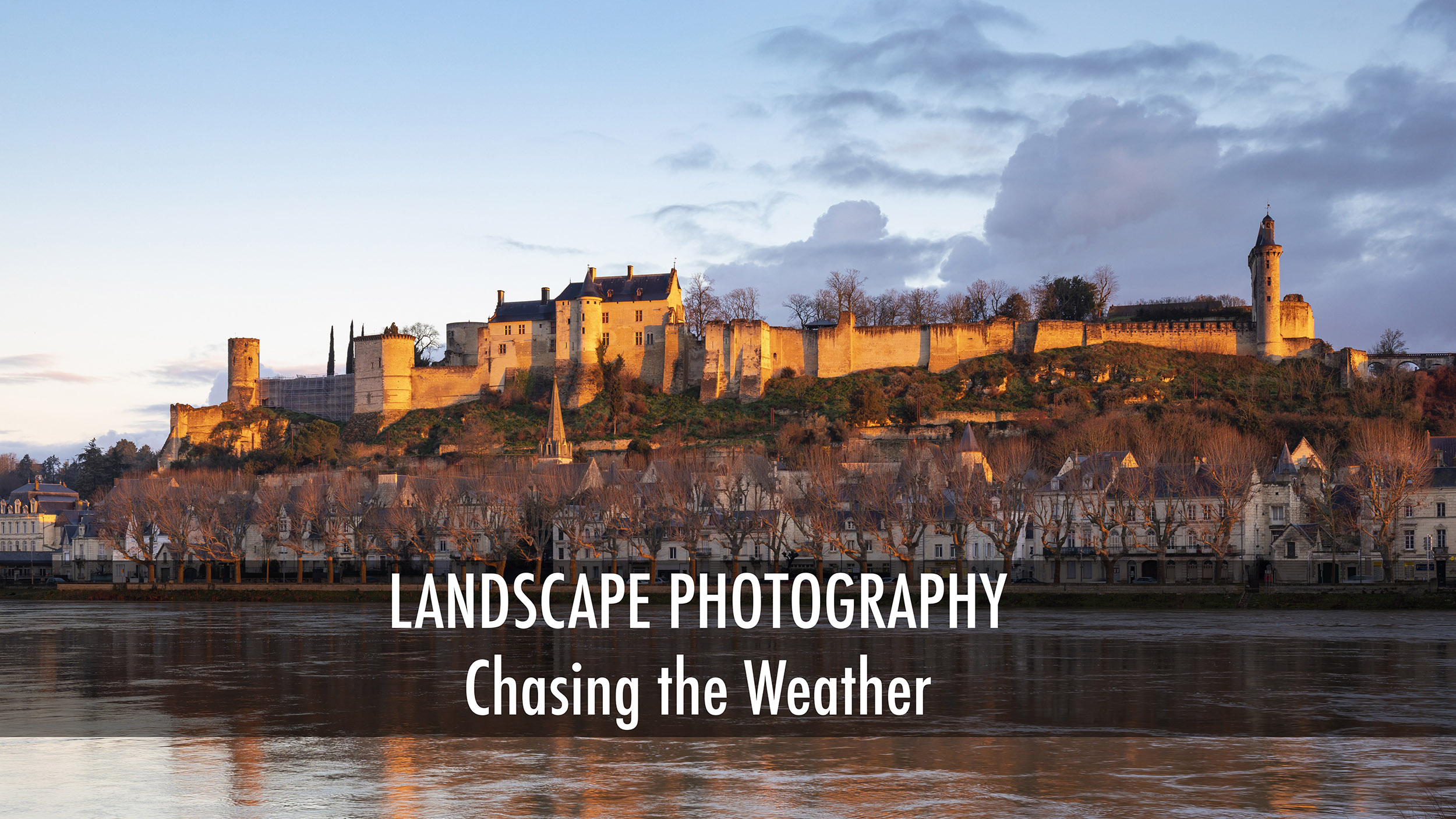

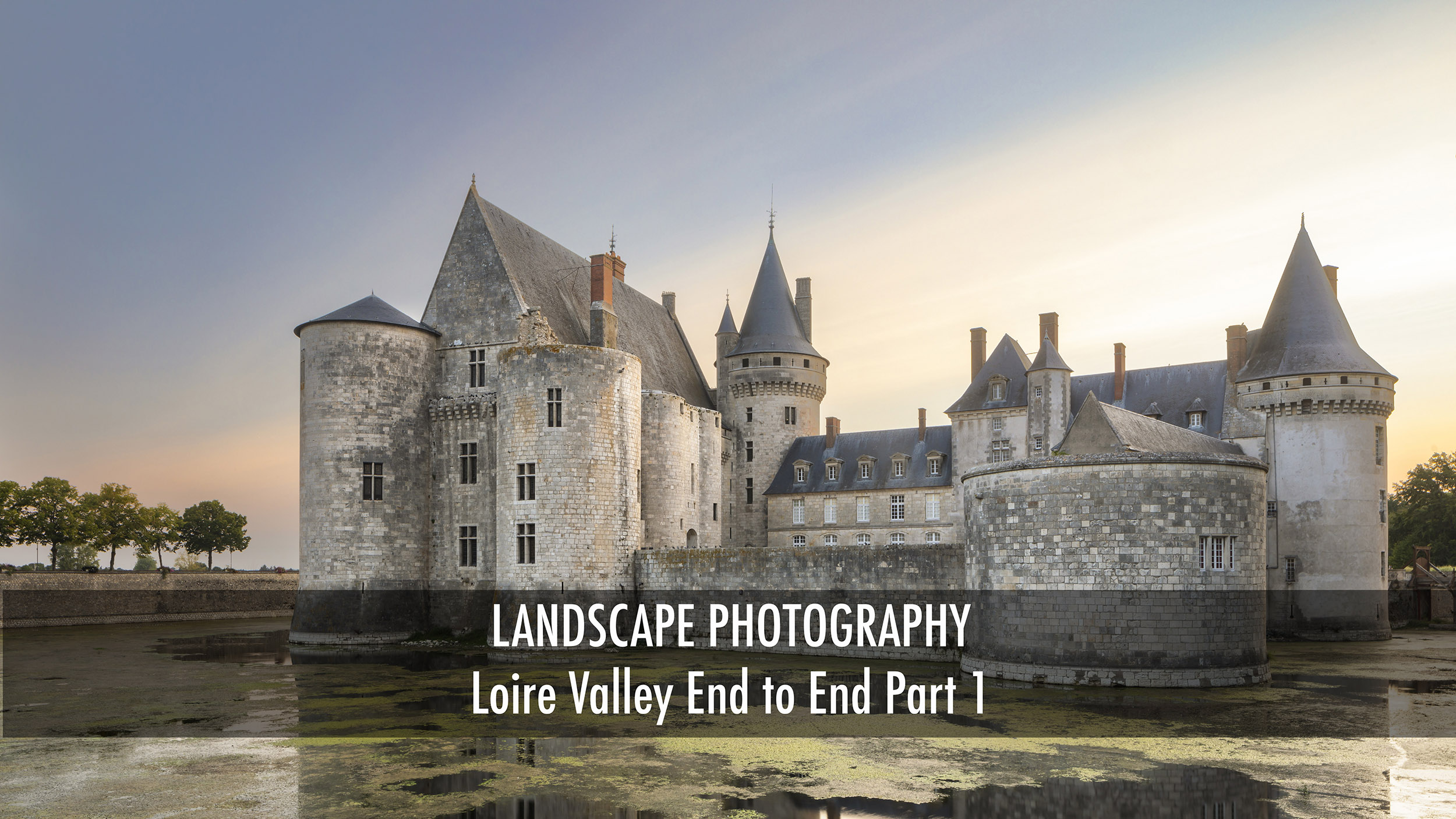
For my YouTube vlog on Sunday, 7 February 2021, I make my way down to Chinon. The stunning castle that stands guard over the town below was the main reason for my dawn shoot.
During a time-lapse, the castle was lit up briefly by the rising sun. Against the dark, brooding sky behind to the northeast, it was a nice, moody backdrop.
The rest of the day, I was hoping for some nice changeable weather, but eventually I felt like I was chasing the weather. But you know what, that’s fine by me as I had my dawn shot.
And if you’re interested in discovering the Loire Valley with a camera, then do check out my annual Loire Valley photo tour in May.
I arrived in Chinon to find a town that was soaked and swollen with water. Parts of the area had been hit hard for days, and I could see how serious it had been. Near where I was standing, there was a campsite closed for the season, which was fortunate because it would have been a poor time to pitch a tent. I was told that a week earlier, the whole area had been under water.
My main reason for going there was the castle. Before the day had properly started, I had already made a pre-dawn image, one that sat somewhere between a night shot and first light. I had also set up a time-lapse for a client. That work came first, and it gave me a strong start before I turned my attention to the shifting weather around me.
The best part of that morning was brief. The rising sun broke through enough to light the castle while dark clouds sat behind it. That contrast gave the scene weight. The castle held the light, while the sky stayed brooding and grey. I had never photographed that view at first light before, so it felt worth waiting for.
“The castle was lit up briefly by the rising sun against the dark, brooding sky.”
That sort of moment is why I keep going out in poor weather. A flat morning can leave a subject dead on the frame. A short break in the cloud can change the whole image. In Chinon, I already had the shot I wanted, so the rest of the day became more open. I could react to what the weather was doing and chase other scenes shaped by the floods.
One of the big themes of the day was simple. I was chasing the weather, but I was also chasing dimension. Broken cloud gave me that over and over again.
When light comes and goes, it creates shape. A patch of sun from one side brings out texture, separates foreground from background, and gives the eye a path through the image. That mattered more to me than bright sunshine. I wanted light with direction.
After leaving Chinon, I expected the day might turn into a recce. Instead, it became a good shooting day because the cloud kept moving. Light broke through in short windows, then disappeared again, and that rhythm worked well for the subjects I had already marked out.
One of them was a long avenue of trees that I had found the week before during a spell of bad weather. It was one of those roadside scenes that you can easily drive past, yet it becomes striking when the light arrives at the right angle. The sun was about to come across the scene from the side, so I set up quickly.
I had a 24-70mm on the camera and zoomed to 70mm. Because the trees were tall and the avenue rose strongly through the frame, I chose portrait orientation. That helped me keep the height of the trees, the sweep of the road, and the patches of blue sky behind. What interested me most were the shadows cutting across the road. They gave the image rhythm and depth.
That moment also reminded me why pre-scouting matters. I had seen the place before, banked it in my mind, and returned when the conditions matched the idea. When the weather is unsettled, that bit of planning gives you options.
Another place I had noted the previous week turned out to be more than I first thought. From the road, I had spotted what seemed to be a tower. On returning, I found an abandoned church with an old bell tower and a graveyard in front of it. The door was open, but the inside was so overgrown that I could not work with the interior.
The view from the graveyard was stronger anyway. Side light came across the graves, and the path, and those lines led straight towards the tower. I framed it in portrait orientation because the vertical shape of the tower and the path suited that format better than a wide frame. A landscape crop might have worked, but portrait orientation felt right at first glance.
What made the picture was not the church on its own. It was the combination of light and shadow. The graves were lit along one side, the tower held a shadow of its own, and the path pulled the eye into the scene. That is what I look for all the time. I do not want a subject to sit flat on the page. I want it to have form.
Three things mattered there:
The same idea had worked in Chinon. The castle caught light, while the sky behind stayed dark. Different place, same principle.
Good scenes do not always come with a good place to stand. A lot of the middle part of the day was about adapting to that.
Sometimes the land is inaccessible. Sometimes flood water blocks the clean foreground you want. Sometimes the best viewpoint is a compromise, and you have to make the frame work anyway. That happened twice.
Last week, before I found the abandoned church, I had also seen a vineyard composition I wanted to return to. The rows of vines ran towards a church at the end, which made a strong focal point. When I got back there, the main problem was height. The vines were not low enough to look neatly down the rows from a normal standing position.
So I improvised. I put the camera on top of the car to gain a bit more elevation and get more definition through the vineyard. I was right on the edge of the vines, and it may well have been private land, so I stayed careful and kept it simple.
For that image, I used the 100-400mm at 100mm. Even at that focal length, the lens compressed the scene nicely. The church sat well against grey cloud, and the sun kept appearing and vanishing. I made the shot in portrait orientation because the structure of the vines pulled the eye upward through the frame.
I considered a time-lapse, but the scene felt too wide and too slight for it to work well. Sometimes the still frame says more. This was one of those times.
One of the scenes I most wanted was a flooded plantation of evenly spaced trees. I had passed it the week before and hoped the water would still be there. It was, and it looked superb. The rows of trunks, the standing water, and the reflections all gave the place an almost abstract feel.
The trouble sat between me and the water. There was scrub, nettles, and general growth along the edge, so I could not get down to the waterline. That ruled out the clean reflection shot I had in mind. Instead, I had to work from farther back with a long lens.
Even with that limitation, the place had a lot going for it. A patch of blue sky reflected in the water would have been ideal, but in some ways flatter light suited the scene better. Strong side light can pull too much attention to itself in a reflective woodland. Softer light lets the pattern of trunks and mirrored shapes do more of the work.
I loved the look of it. Flooding is hard on the people who live with it, and I do not forget that, but for photography, it can create scenes that only last a short time. This plantation had that quality. It was by the main road, ordinary in one sense, but transformed by water.
By late afternoon, the better light had faded. The cloud thickened, and I had to stop looking for grand scenes lit by breaks in the sky. That is often the point when a day slips away. I prefer to keep looking.
On an old route not far from the Loire Valley, I came across another abandoned church that I had not visited for quite some time. While using my phone near the doorway for something unrelated, I noticed a pattern in the wood. At a certain angle, it looked like a face. Once I saw it, I could not ignore it.
I switched to the proper camera and used the 24-70mm, which focused close enough for the detail. Cropped in tightly, the old wooden door became something eerie. I could see an eye, a mouth, another eye, and a shape that worked like a nose. It had the distorted look of an old horror cover. When I zoomed back out, the face vanished, and the door became only a door again.
That was the whole point of the image. It depended on seeing closely and framing carefully. No dramatic light was needed. The weather was grey and dim by then, but that did not matter. Some subjects ask for side light and shadow. Others ask for attention and a tighter crop.
That church was Romanesque in style, old and weathered, and the door carried enough age and texture to hold the frame on its own. It also tied into another part of the day, because I had planned to do a bit of recce work for a book project. Even when the main conditions fall away, small discoveries can rescue the day.
I had hoped to finish with a château near the Loire, most likely at Montsoreau, if the cloud broke in the right place. That never happened. The weather closed in, and the better light stayed away from the subject I wanted.
On the drive back, the scale of the flooding hit me again. Roads were blocked, and one route to a familiar viewpoint was closed because the Loire had risen so high. Water had reached the roadside. The river itself sat some distance away, yet the flood had spread far beyond its normal line. It gave a clear sense of how much water was moving through the valley.
I did not make any drone images that day. The conditions were not what I wanted for that, and I had spent most of my attention on the ground-based work anyway. I did not mind too much. By then, I already had the morning castle images, a couple of time-lapses, the avenue of trees, the graveyard church, the vineyard frame, the flooded plantation, and the strange face in the church door.
Days like this are one reason I enjoy running Loire Valley photography tours. The region gives me castles, vineyards, river weather, old churches, and constant change. Even when a plan fails, there is usually another picture nearby.
I also had product tests from Spyder waiting for another day, but that could wait. The weather had given me enough to think about.
A day chasing the weather sharpens the basics. Gear matters, and planning matters, but the main lesson was still about how I respond to conditions.
When I am chasing the weather, I am not hunting sunshine. I am watching for change. Broken cloud can do more for a scene than a clear blue sky. Flood water can turn a plain place into something memorable. A road closure can stop one plan and push me towards another frame I would not have found otherwise.
A few things stood out:
Good photography days are not always tidy. Sometimes they are wet, blocked, awkward, and far better than expected.
That is why I like working in winter in France so much. The Loire Valley can shift within minutes. One patch of sun will light a tower. Ten minutes later, a tree plantation sits under flat grey and becomes a study of reflection. Then the evening closes down, and an old church door turns into a close-up full of character.
The strongest image of the day still came back to one simple thing: light on the subject and dark cloud behind it. That mix gave the castle in Chinon the mood I had hoped for, and the same search for dimension carried me through every other stop.
Floods, roadblocks, and fading light changed the route, but they did not ruin the day. They shaped it. When I keep looking and stay patient, the weather often gives me more than the original plan ever could.
We noticed you're visiting from United Kingdom (UK). We've updated our prices to Pound sterling for your shopping convenience. Use Euro instead. Dismiss