 Skip to content
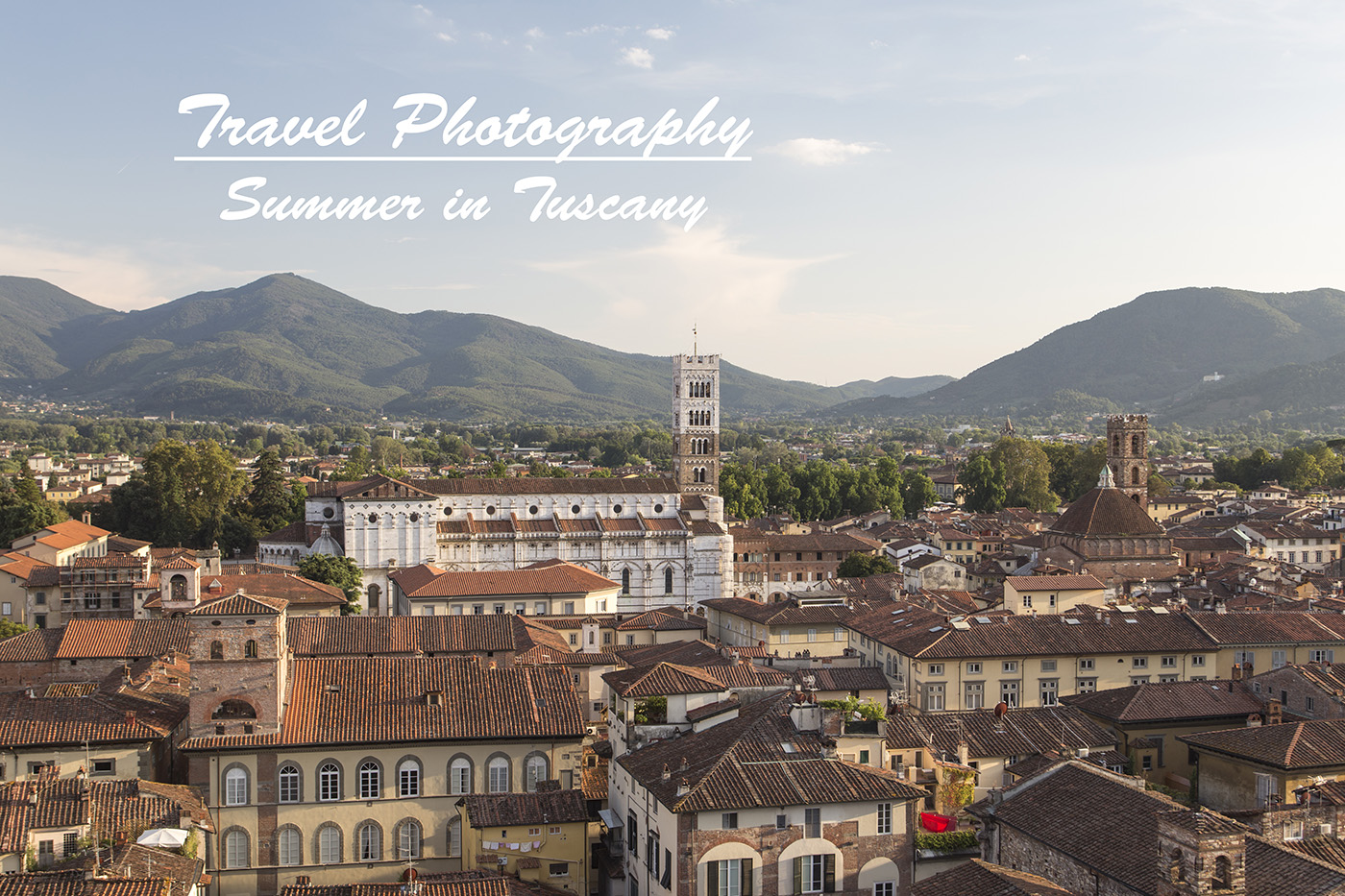

After the Dolomites came Summer in Tuscany. But not the famous area of the Val d’Orcia or even Siena and Florence. Nope, we decided to head to the coastline, staying near Pisa.
Tuscany is, of course, famous for the aforementioned Val d’Orcia and cities such as Florence, but there are other places to see.
Pisa is renowned for its leaning tower, and Piazza Miracoli is jammed with people doing selfies where they appear to be holding up the tower. But again, if you get away from these day-trippers and start scratching below the surface, you’ll find a city that hides many other wonderful pieces of architecture as well as an amazing fresco hidden in one of the churches.
To the northeast of Pisa lies the city of Lucca. This UNESCO World Heritage Site-protected city is famous for its Renaissance walls and also has a stupendous duomo at its heart. Small streets and alleyways abound and will keep any photographer or tourist happy for hours on end.
Then there is Livorno to the southwest of Pisa. This bustling port city was heavily damaged during the war, but again, if you start to scratch away, you can find many things to train your lens on. And speaking of which, you’ll hear during the vlog I wasn’t exactly enamoured with the city, but on reflection, it is definitely worth a second visit, as I remember driving back to the house we had rented and seeing some cracking shots.
Sit back and take a look at Summer in Tuscany and an alternative side of Tuscany.
And if you’re interested, I offer photography tours and workshops in a variety of destinations around the world, including Tuscany. If you’re interested in learning more from me to help you get the best out of your photography, then get in touch.
When I think back to that trip, what stays with me is how different each stop felt. Pietrasanta gave me old stone, a cathedral and an art-filled centre. Pisa reminded me that famous cities often hide their better moments away from the main square. Livorno never quite landed for me, although it had its corners. Lucca was the one that left me wanting another full day, perhaps two.
That contrast is part of what made the trip memorable. I wasn’t chasing a strict shot list. I was travelling with my family, trying to enjoy the holiday, keep the children amused and still make time for photographs whenever the place in front of me demanded it.
This quick summary captures the feel of each stop:
| Place | What caught my eye | My feeling there |
|---|---|---|
| Pietrasanta | Cathedral, old streets, art exhibition | Rich with subjects |
| Pisa | The city beyond the Leaning Tower | Better away from the crowds |
| Livorno | Seafront and promenade | Mixed, and not a favourite |
| Lucca | Walls, rooftops, cathedral bell tower | Beautiful, but too rushed |
I travelled with the gear I knew well: a Canon 6D, Canon 28-70mm f/2.8 L, Canon 24mm TS-E Mark II, Canon 100-400 Mark II, Lee Filters, a Manfrotto carbon fibre tripod and a Manfrotto 410 geared head. I didn’t need all of it every minute, but having that mix gave me room to work around street scenes, architectural details and longer views.
If you’re curious about the kind of trips I run when I am working, my Tuscany workshops for photographers give a good sense of the places and pace that suit photography in Italy.
I opened this part of the trip with a simple thought: Tuscany is far more than Florence and the Val d’Orcia. Pietrasanta proved that straight away. For a photographer, it had that rare quality of offering several different subjects within a small area, so I didn’t need to force anything or go hunting for interest.
The town had an old cathedral, which immediately drew me in. I always enjoy photographing churches and cathedral buildings, especially when the stone, age and setting all work together. Around it, the streets had the kind of character that makes slow walking worthwhile. Old facades, narrow lanes and worn textures kept catching my eye.
What made it even better on the day was the art exhibition set up in the centre of town. That extra layer gave the place a different energy. It wasn’t only about historic architecture. There was also contemporary work sitting amongst the older surroundings, which made the visual mix stronger.
Pietrasanta felt like a gold mine, with photographs waiting in every turn of the street.
I kept returning to a few simple subjects:
What I liked most was the variety. In one short walk, I could move from a wider architectural frame to a tighter street scene, then to something shaped by the exhibition itself. That kind of place is a gift on a family trip, because I didn’t need to drag everyone across long distances to find the next picture.
Summer also added its own look. The light was bright, the streets were lively, and the old stone held the warmth of the day. Even before I reached the more famous cities, Pietrasanta had already reminded me that smaller Tuscan towns can reward photographers far more than their reputation suggests.
By our second full day in Tuscany, we had made it to Pisa. Of course, Pisa is famous for the Leaning Tower and the Piazza dei Miracoli. It would have been strange not to go and see that area, being so close to it. Still, what struck me most was how much the city changes once you walk away from the postcard view.
That was the real point for me. The famous square is important, but it can dominate how people see the place. If you only stay there, you miss the rest of the city. I found Pisa much more interesting when I treated the tower as a starting point rather than the whole destination.
We were there around half past one or two in the afternoon, and the sun was hammering down. Anyone who has photographed Italy in high summer will know that feeling. The heat can flatten your energy long before it flattens your pictures.
So instead of fighting it, we did the sensible thing and went into the botanical gardens for a break. That gave us shade, a slower pace and a chance to rest before wandering more of the city. It wasn’t perfect, though. The mosquitoes were out in force, and they were hard to ignore.
There are days when photography isn’t about squeezing every minute out of the light. Sometimes it’s about knowing when to pause, especially when you’re travelling with family in strong summer heat. Pisa was one of those days.
Even so, I still felt the city rewarded a bit of patience. Once I got away from the landmark and stopped trying to force a classic view, the visit became less about ticking a box and more about noticing the place itself. That’s usually when a city starts to open up.
From Pisa we went to Livorno, on the Tuscan coast. My wife had suggested going to see what it was like, and for me, it was one of the last big cities in Tuscany that I hadn’t yet visited. I was curious because sometimes the places with less hype turn out to be the most enjoyable.
That wasn’t how I felt here.
I can see why Livorno doesn’t dominate guidebooks in the same way as other Tuscan cities. It had some pleasant corners, and I don’t want to be unfair to it, but I couldn’t see myself falling in love with it. It simply wasn’t my sort of place.
The best-known spot on that stretch is the seafront promenade, especially the tiled area people often photograph. Looking at images beforehand, I had expected the black-and-white pattern to feel stronger in person. Instead, some of the pictures I’d seen seemed over-processed, because the tiles didn’t look nearly as dramatic when I stood there myself.
I only made a handful of images in Livorno, perhaps two to four frames that felt worth keeping. That’s not a disaster. Travel photography isn’t about pretending every location is brilliant. Sometimes honesty matters more than quantity.
Cloud rolled in later, and that changed the feel of the place. On one hand, I welcomed it because the temperature dropped after days of heat in the mid-30s. On the other hand, it made sunset less certain, and the evening light I had hoped for on the promenade never quite looked likely.
I had considered staying until sunset to see whether the seafront might come alive in softer light. In the end, my attention had already shifted to the next day, because I knew Lucca would suit me more.
Our last day in Tuscany took us to Lucca, and almost immediately, I felt the difference. This is a city with a strong sense of shape and history, held together by its walls and its old centre. I had first visited about four years earlier, when my son was around one year old. Returning with him, older and able to walk the walls himself, gave the visit a personal pull as well.
That family side mattered. Places change when you revisit them with children who have grown. The city I remembered was still there, but my experience of it had shifted. Instead of carrying a small child through the streets, I was now watching him move through the place on his own feet. That always alters the rhythm of a visit.
We reached Lucca at around five in the afternoon, so we were never going to see everything. A lot of places were already closing, which is one of the realities of Italy in summer. That timing was a shame, because Lucca deserved more than the few hours I could give it.
Still, even in that shorter window, the city had plenty to offer. The walls give Lucca its shape, and walking them gives a good sense of the whole place. From there, the rooftops, towers and church buildings begin to relate to each other in a way you don’t always feel from street level.
I also went up the bell tower of the cathedral in Lucca for a very simple reason. The front facade of the cathedral was covered in scaffolding, and that was a hard one to take. After waiting about four years to return, I had hoped to photograph the facade properly, because it is a beautiful piece of architecture.
What made it worse was knowing the scaffolding was due to come down about a month later. That’s photography sometimes. Timing doesn’t always line up, no matter how long you’ve waited.
From the top of the bell tower, there was still a fine view across the rooftops. One problem remained, though. A metal grill stood between the viewer and the city. Fortunately, that didn’t ruin the photographs.
I worked around it in a simple way. I put the lens right up against the grill and used a wide aperture. With a decent lens, that was enough to keep the focus on the city beyond and soften the barrier in front. The result gave me the rooftop shots I wanted, even if they weren’t the cathedral facade images I’d hoped to make.
That small workaround is useful in all sorts of historic sites. Barriers, railings and protective screens are common, especially in towers and church buildings. They can be annoying, but they don’t always end the photograph.
Photographing Tuscany in summer isn’t only about location. The season itself shapes what you can do, how long you can stay out and how patient you need to be.
A few things stood out during this trip:
I also came away thinking that flexibility matters more than perfect planning. Pisa improved when I stepped away from the main square. Pietrasanta worked because I stayed open to what was in front of me. Livorno reminded me that not every stop has to become a favourite. Lucca showed me that even a short visit can leave a strong mark if the place has real character.
There was also the simple matter of sun exposure. By that stage of the trip, after days out and time on the coast, we had to be careful. You can burn quickly in this heat, and that affects both the day and the photographs. Pacing yourself isn’t glamorous, but it keeps the trip enjoyable.
At that point, the calendar wasn’t slowing down. A job in Krakow was coming up next, followed by a talk for Globetrotters in London on 1 September. After that, I was due to head to Mongolia on 6 September for three weeks.
That pace was normal for me then, with family time, commissioned work and travel all crossing over. Even so, this Tuscan trip had a different feel because it wasn’t built around a formal assignment. I had gone away for a holiday and still found myself responding to places as a photographer at every turn.
That may be why the memories of this trip feel so clear. The photographs came from real pauses in a family week away, not from a schedule built around shooting alone.
What I remember most from this summer in Tuscany is that the quieter places often gave me the strongest feelings. Pietrasanta surprised me, Pisa improved once I ignored its most famous view, Livorno kept me honest, and Lucca made me wish I had planned more time.
That’s a useful reminder whenever I travel with a camera. Tuscany doesn’t run out after the famous names. If I give a place time, stay patient with the heat and keep my eyes open beyond the obvious scene, the photographs usually come.
We noticed you're visiting from United Kingdom (UK). We've updated our prices to Pound sterling for your shopping convenience. Use Euro instead. Dismiss