 Skip to content
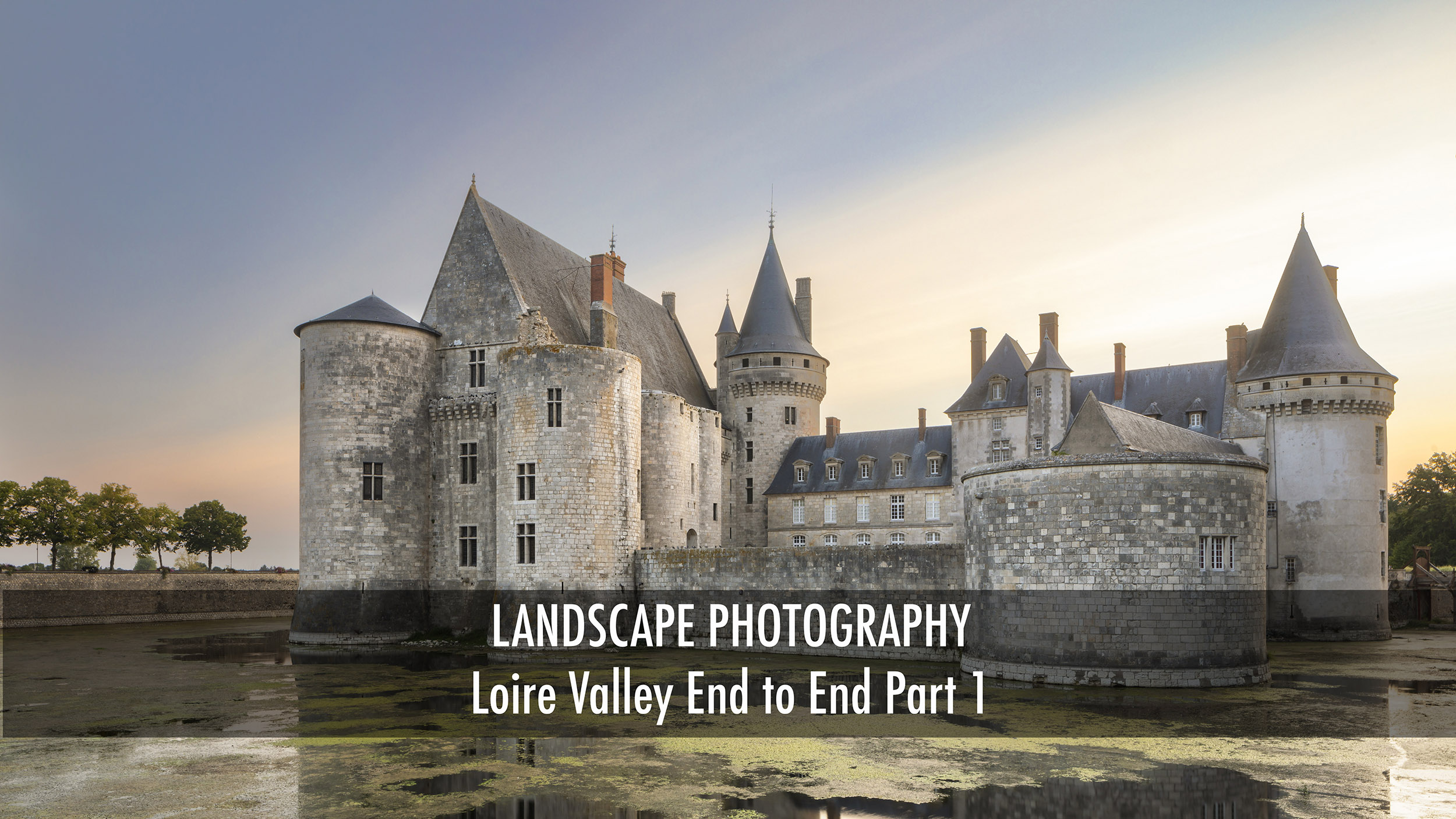

Landscape Photography Loire Valley End to End Part 1 is the start of a YouTube series taking you, the viewer, through some of what there is here in the designated Val de Loire UNESCO World Heritage Site.
Starting with the Château de Sully-sur-Loire, you’re going to get a very good idea as to why UNESCO made this area of central France a World Heritage Site.
And if you’re interested in discovering central France with a camera, then do check out my annual Loire Valley photo tour in May.
Sully-sur-Loire is where this journey begins, both geographically and visually. Standing there in the morning, with the chateau rising beside the river, I could see why UNESCO gave this part of central France its status in the first place. The designated area has also grown since the original inscription, so this opening section of the Val de Loire carries real weight.
The scene has immediate presence. You have the castle, the water, the bridges, the trees, and enough space around it to build several different photographs without forcing anything. That matters because some places offer one obvious frame and then run out of ideas. Sully-sur-Loire isn’t like that. Even on a short first visit, I could see that it would reward repeat trips.
I also had useful help before I even arrived. The Val de Loire organisation provided the official boundary data for the UNESCO site, which is important for a project like this. If I’m going to work across the full area properly, I need to know exactly where it begins and ends, not rely on rough assumptions or tourist shorthand.
What struck me most that morning was the sense that this wasn’t a one-off stop. It was the beginning of something much larger, and the location had enough strength to carry that feeling.
This first outing wasn’t only about taking a few finished images. I was also gathering information for a future publication, which means thinking beyond the photograph in front of me. I need to know how a place works across the year, not only how it looks for ten minutes at sunrise.
So I walked, looked, and made notes. I kept a notebook with me because memory isn’t enough once a project starts growing. I already had around 80 locations marked to assess, and every one of them will need the same level of attention.
The notes I was making were simple, but they mattered:
Sully-sur-Loire will almost certainly need a dozen visits across different seasons. I want it in soft spring growth, in the harder light of summer, in autumn colour, and with the cleaner structure winter can bring. A place this strong deserves more than one pass.
For the first main composition, I had my Canon 24mm tilt-shift on the camera. For this view, it was the right tool. The chateau is large, the setting is open, and I wanted to keep the building upright without the usual wide-angle distortion that can make towers lean backwards.
That lens gave me the width I needed, but it also brought problems at the frame edges. A tree line was pushing in on one side, and more branches were creeping down on the other. Because 24mm sees a lot, those edge details become important fast. A strong subject can lose its impact if the border of the frame starts to feel messy.
I also had a polariser on the front. It wasn’t transforming the scene, but it was helping with the sheen on the water, which made the reflection and surface feel cleaner. Sometimes a filter does a big job. Sometimes it only trims away a distraction. On that morning, that small improvement was enough.
Exposure was the other concern. The foreground had good light, but the sky was close to clipping, especially in the red channel. I checked the histogram and adjusted my auto exposure bracketing so one of the darker frames sat around 2 2/3 stops below my base exposure. That gave me a clean option for the sky and another for the brighter foreground, which I could later blend in Lightroom if needed.
If the sky is close to burning out, I would rather bracket properly than hope I can rescue it later.
That first frame gave me a solid start, and more importantly, it confirmed that Sully-sur-Loire could hold several different compositions.
After that wider view, I turned to a tighter vertical frame at about 50mm. This one had a different feel. Instead of showing the whole setting, I could focus on the structure of the chateau, the towers, and the bridge, with the morning light bringing shape to the stone.
I kept an eye on the grid lines and used them to place the towers near the thirds. Small adjustments mattered here. If I moved too far one way, I picked up an ugly, bright highlight near the edge. If I shifted too far the other way, I dragged in a tree that didn’t belong. I also wanted a couple of arches from the bridge in the frame, because they helped anchor the lower part of the composition and gave the eye a way into the scene.
This was also the point where I started thinking, again, about the Canon 50mm tilt-shift lens. I didn’t need it to make the shot work, but with a lens like that, I could have corrected the slight converging verticals even more precisely. Still, the image held together well, and the small amount of convergence didn’t bother me enough to reject it.
I pulled the exposure down a touch to protect the highlights, checked that the top details of the towers were still safely inside the frame, and then gave the image a five-star mark in camera so I could find it quickly later. Before moving on, I zoomed in to confirm sharpness. I always do that, because nothing is more irritating than walking away from a good composition and later finding out the detail isn’t there.
There was one final issue: traffic. Cars kept passing through a gap in the scene, so I waited for a clean moment and took the frame without them. Patience saved the photograph.
After Sully-sur-Loire, I moved on to Gien, in the Loiret department at the eastern end of the UNESCO zone. The Loire was low enough for me to stand well out in the river, which gave me a clear line back towards the bridge, the old town, and the castle above it.
That position made the scene feel promising straight away. The reflection had space to form, and the bridge led cleanly across to the old centre. Gien is also known for its pottery, which gives the town a distinct identity beyond the view itself. Even so, a place can be interesting historically and still be awkward photographically, and that started to show once I looked harder at the frame.
From where I stood, a sandbank pushed into the image and broke the balance more than I liked. Wind was also disturbing the water, which weakened the reflection. I know people often reach for a neutral density filter in that situation, but I don’t see that as the answer here. If the wind is the problem, I would rather wait for the water to settle than blur it into something it never was. A long exposure can’t fix a weak reflection by pretending it is stronger than it is.
There was another problem as well, traffic on the bridge. Vans and cars kept moving through at the wrong moment. So I shifted position and looked for a slightly better angle that would reduce the sandbank and improve the balance of the old town against the river.
I also spent time with another possible frame, one that included a traditional Loire boat in the foreground with the bridge behind it. On paper, it had potential. The old wooden boat had character, and the bridge could have given the image structure and context.
In practice, it never quite worked. There was too much empty space on the left-hand side for my liking, and when I tried moving lower or clambering partway up the bank, the mast became a problem. It rose above the bridge line and cut harshly across the scene. I wanted the mast to sit below the bridge, not break the shape of it.
I tried several options because I liked the idea of the shot and didn’t want to walk away too quickly. Yet the more I worked it, the clearer it became that the image wasn’t there. That is part of photographing a region honestly. Some scenes don’t survive the test once you start refining them.
The main issues in Gien were easy to identify:
Gien still gave me useful frames and notes. It simply didn’t give me enough to feel like a major stop for the larger project.
I visited the tourist information office and picked up a map before walking through the town. I wanted to know if there were historic buildings, restricted sites, or places with timed access that might matter later. That part of the day was less about chasing a single image and more about understanding the town properly.
The walk confirmed my first impression. Gien is pleasant, and parts of it are attractive, but I didn’t come away feeling it was a standout location for the publication I have in mind. That doesn’t mean it has no value. It means I have to be selective. A long project needs editing at the fieldwork stage as much as in post-production.
I was also thinking about language and place as I moved through the area. In English, people usually say “Loire Valley”, but on the ground, the French name, “Val de Loire”, is what matters. That distinction stays with you when you’re travelling across the region, especially when you’re trying to understand its official geography rather than only its postcard version.
By the middle of the day, the temperature was up around 30°C, so I stopped for lunch and made sure to buy water before heading on. The heat itself wasn’t the main issue. I can work in warm weather without too much trouble. What I would have liked was a bit more cloud, because the sky stayed fairly empty apart from a touch of high cirrus.
My afternoon was also cut short. I had to get back home in time for a Zoom presentation of my work that evening, so I couldn’t stay out as long as I wanted. That is part of real working life as a photographer. Some days I can give a location everything. On other days, I have to balance personal work with paid commitments.
Later on, I finished somewhere west of Sully-sur-Loire. I won’t say exactly where, because it ties into the project I’m building, but the day still ended on a useful note. Even when I don’t reveal every stop, I need those extra visits to test places, study the light, and decide what deserves a return in better conditions.
What stayed with me most after this first leg was how clearly the day separated strong locations from weaker ones. Sully-sur-Loire immediately felt like somewhere I need to revisit again and again. Gien had merit, but it also reminded me not to force a place into the project because it looks promising on arrival.
The next stage will almost certainly take me farther west to revisit places I already have in mind, including one location where I lost images a couple of years ago and want another chance. That is another reason I like working in this way. A series like this gives me room to return with better light, a clearer head, and a more exact idea of what I want.
If you’d like to see the kind of trips I run through this part of France and elsewhere, my Loire Valley photography tours give a good sense of the places I keep returning to. I also share ongoing work and updates on Instagram and Facebook.
The best part of this first run across the Loire Valley was the reminder that a strong project starts with careful looking, not only with taking pictures. Sully-sur-Loire gave me confidence in the wider idea, whilst Gien gave me a useful check on what belongs in the final edit and what doesn’t.
I came away with keeper shots, field notes, and a clearer sense of how this UNESCO route needs to be photographed over time. That feels like the right start, because the Loire rewards patience far more than speed.
We noticed you're visiting from United Kingdom (UK). We've updated our prices to Pound sterling for your shopping convenience. Use Euro instead. Dismiss