 Skip to content
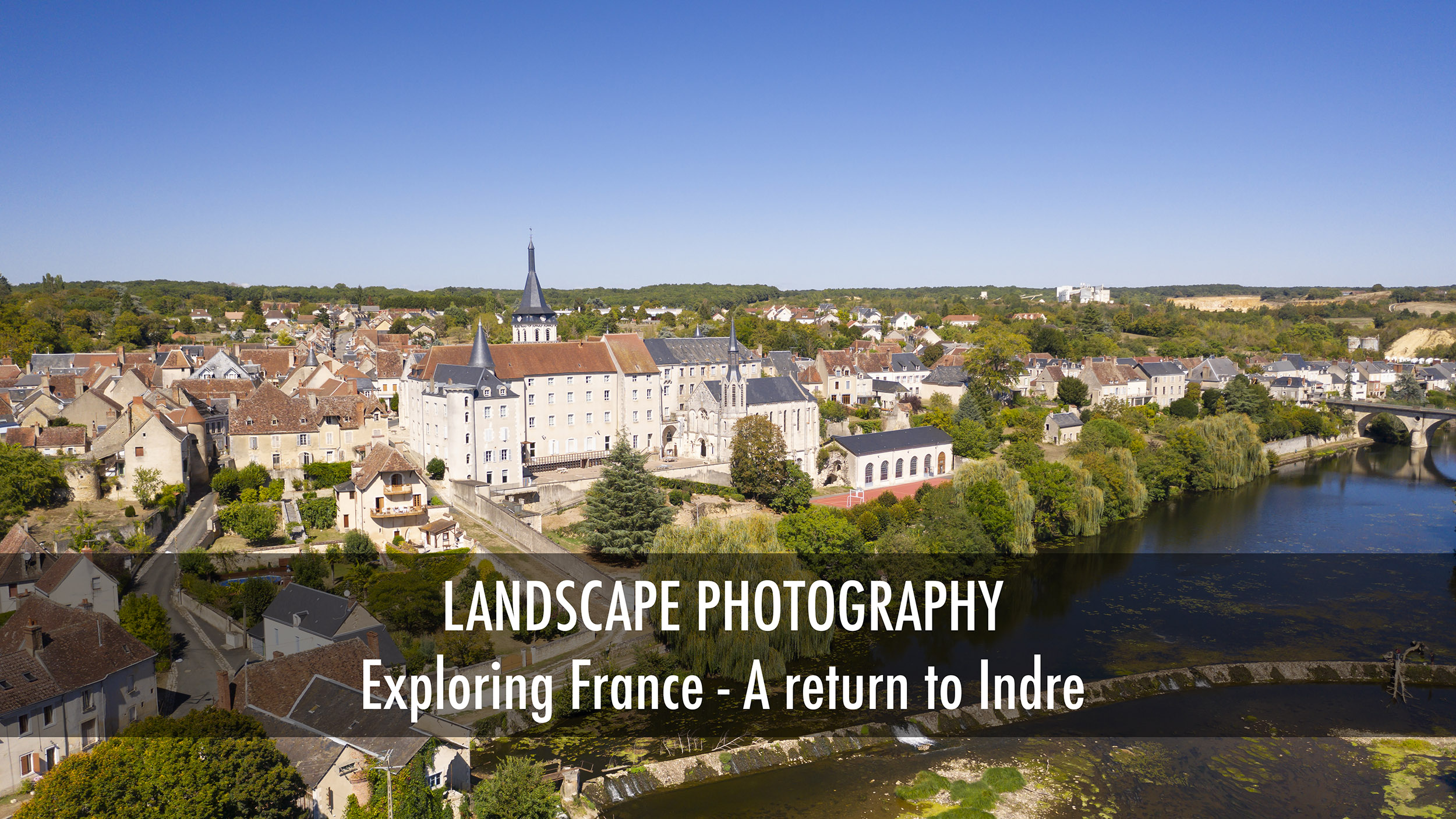

The 09 September 2020, I travelled down to the department of Indre in central France to film my latest YouTube vlog. A very rural area of the country that has some gems that any photographer would appreciate.
Principally, I wanted to get out and about. I wasn’t looking for any particular light; it was more about discovering and seeing what was there. Of course, I do try to capture what I can in the best way that I can.
The end of the day was actually just over the border from Indre in the department of Vienne in the village of Angles-sur-l’Anglin, but it didn’t quite go as planned.
Places visited: Fontgombault – Saint-Gaultier – Angles-sur-l’Anglin
And if you’re interested, I offer photography tours and workshops in a variety of destinations around the world. If you’re interested in learning more from me to help you get the best out of your photography, then get in touch.
I had no fixed shot list for this trip into Indre. That was the point. Indre sits south of the Loire, and although people often pass through central France with somewhere else in mind, this part of the country has plenty for a photographer to work with, villages, churches, rivers, abbeys, and old stone buildings that still feel rooted in daily life.
That kind of day matters to me. Sometimes photography becomes too rigid. People decide they want one known composition, then drive straight to it, take it, and leave. For me, that can start to feel like train spotting. I prefer to leave room for chance, because some of my favourite photographs come from the moments I had not planned.
There was another layer to this day down in Indre as well. I am not only making photographs for a video or for the pleasure of the trip. I am also working. I sell images and footage through stock libraries, and I have been doing so for nearly ten years. Because of that, I am often thinking in two directions at once. I want the image to feel right, but I also need to think about how usable it is, whether a scene is general enough to avoid release issues, and whether a still, a pano, or a locked-off clip might have value later.
That changes how I move through a place. I am not always waiting for sunrise or sunset. If I have a strong scene in front of me in hard light, I will still look at it seriously. I might not get the ideal version, but I would rather leave with a workable photograph than drive past and have nothing.
My first stop in Indre was Fontgombault, where I had come mainly for a drone view. Across the trees stood the old Benedictine abbey, with the Creuse in front of it, and from the right position, I could lift the drone and show the site in its setting rather than only as a building on its own.
That worked well. I captured some video footage, along with a few stills, and the scene had the sort of shape I like from the air. The abbey held the frame, while the river gave it direction and scale. From a distance, it was a simple composition, but a strong one.
At that stage, I was still deciding what to do next. I had not been there before, so I looked at the map, checked what else might be nearby, and kept the day loose. That freedom was useful because it stopped me from becoming too fixed on a single idea too early.
I then went down to the abbey itself. Fontgombault is a Benedictine abbey set in the Indre countryside with origins in the 12th century, and parts of it stretch through to the 19th century. It is also still a working abbey, and that changes the whole experience of photographing there.
Access was limited. I could go into the nave, but no further. I asked, and the answer was no. That was fair enough. When a place is still active, that has to come before any photograph I want to make. So I worked with what I had, kept quiet, and photographed the interior from the space I was allowed to use.
The silence inside was striking. Even opening the zip on my camera bag seemed loud because the sound travelled through the building. That made me more aware of my own presence and more careful with every movement. It also shaped the sort of pictures I made. I focused on wider views of the nave and the character of the interior rather than chasing details in spaces I could not reach.
The abbey is worth visiting if you are in that part of Indre. Even with limited access, it has presence, and the setting gives it even more from the outside. I left with a small set of images rather than a full series, but they felt honest to the place.
My next stop in the department of Indre was Saint-Gaultier. From the bridge, the attraction was obvious: the town rising behind the river, with a large church dominating the view. The light was hard, and I know some people would dismiss that scene straight away. I did not.
There is a difference between making photographs for entertainment and making photographs while you are out working. If I only shot at sunrise and sunset, I would leave a lot behind. So I looked at the view for what it was, not for what it was not.
From that first position, I made a panoramic photograph and a locked-down video clip. The composition was simple, but useful. It showed the place clearly, and because it was a general view of the town, it also fit the sort of material that can work well for stock. That matters. A photograph does not need dramatic light to earn its place in the edit.
Earlier in the day, I had passed through Le Blanc and seen an old town with a church on a hill that looked promising. I did not stop because I did not yet know the best angle or the best light. That is part of the same process. Some places ask for a quick response. Others need a return visit.
The better photograph in Saint-Gaultier did not come from the bridge. It came from moving.
I went down to the riverbank and walked along until I found a calmer view of the church reflected in the water. That changed everything. The light felt softer from that angle, even though I had barely gone any distance. The sun sat better behind me, the reflections added balance, and the scene gained a sense of quiet that the bridge view did not have.
I also had something in the foreground to help frame the picture. Tree branches hung into the top of the frame, which gave the image a more natural edge. The important part was keeping those branches clear of the church spires. If the branches cut through the tops of the spires, the picture would feel messy. A small shift in position solved that.
I get better photographs when I stop, walk around, and look at the scene from more than one height and one distance.
That was the lesson again. The first view had value, but the stronger one was nearby. Too many photographers stop where the road tells them to stop. I prefer to wander a little. I look up, look down, and keep asking whether the photograph in front of me is the best one the place can give.
I also looked at the possibility of a drone shot of Saint-Gaultier, but the area where I stood in the centre of town was restricted. I found a point farther down the river on the map that might have worked better, both for airspace and for light, though by then I was ready to keep moving.
The end of the day took me over the border from Indre into Vienne, to Angles-sur-l’Anglin, one of the “Plus Beaux Villages de France”. I had wanted to come here for a long time. It is a fine place to photograph, with an upper and lower part to the village and plenty of structure in the streets and skyline.
Then the light disappeared.
It had been bright all day, about 28°C, with blue sky from morning into late afternoon. As I arrived, a thick bank of cloud rolled down from the north and covered the sun. The timing could hardly have been worse. Moments earlier, the village had the sort of glow I had hoped for. By the time I set up, that light was gone.
That was frustrating because I knew the place had more to offer. I still made photographs. I came away with eight frames, including a panoramic view of the lower part of the village and another shot made earlier in flatter light. They were usable, but they were not the set I had imagined.
Still, some disappointments are easier to accept when a place is close enough to revisit. Angles-sur-l’Anglin is only about an hour and a half from where I live, so I can return. In a way, that knowledge steadied the mood of the evening. I had lost the light, but I had not lost the location.
Earlier in the day, I had also gone in search of a ruined chateau on a hill. Finding it was far more awkward than it should have been. It was marked on Google, but the signposts on the ground were poor and inconsistent, so it took longer than expected to get there.
When I finally arrived, the setting was good. The ruins sat high up, and there were very few houses around, which kept the scene clean. It had potential, though the weather was not helping by that stage. I left thinking the same thing I thought at Angles-sur-l’Anglin, this place needs another visit in better conditions.
That is part of photographing France over time. One day rarely settles a place. You make a first pass, learn the ground, notice what works, and then come back with a better idea of what the location wants from you.
Trips like this to Indre bring me back to a few simple truths. The first is that exploration still matters. I had a better day because I did not lock myself into one fixed composition before I left home. I followed the map, responded to what I found, and gave each place enough time to show me a second or third possibility.
The second is that practical work and personal work are often the same day. I do not separate them as neatly as people sometimes expect. A panoramic town view in hard light might not be the picture that excites me most, but it may still be worth making. If I ignore those frames, I narrow the day too much.
The third is that respect for place comes first. Fontgombault is not a museum set built for photographers. It is a working abbey. That means being quiet, accepting limits, and making the most of the access you have.
A few habits stayed with me throughout the day:
Those points sound simple, but they shape the whole day. They also explain why a trip through Indre can feel so rewarding. The department does not shout. It asks you to notice things.
For this trip to the department of Indre, I used a mix of stills and video kit that suits this kind of travel day well. The drone was important at Fontgombault, while a solid tripod helped with the locked-off clips and panoramic work later on.
A few key pieces of kit were:
If you want to keep up with where I am photographing next, I also post updates on Instagram and Facebook. With the weather deciding so much of the schedule, the next outing could be back in the Vienne, into the Loire, or both.
Indre gave me what I had hoped for: a day of discovery, a few strong photographs, and a few places I now want to revisit with better light. The strongest reminder was also the simplest one: exploration still beats formula.
Some days end with a perfect set of images. Others end with notes for the next return. This one gave me both, and that was more than enough reason to go back.
We noticed you're visiting from United States (US). We've updated our prices to United States (US) dollar for your shopping convenience. Use Euro instead. Dismiss