 Skip to content


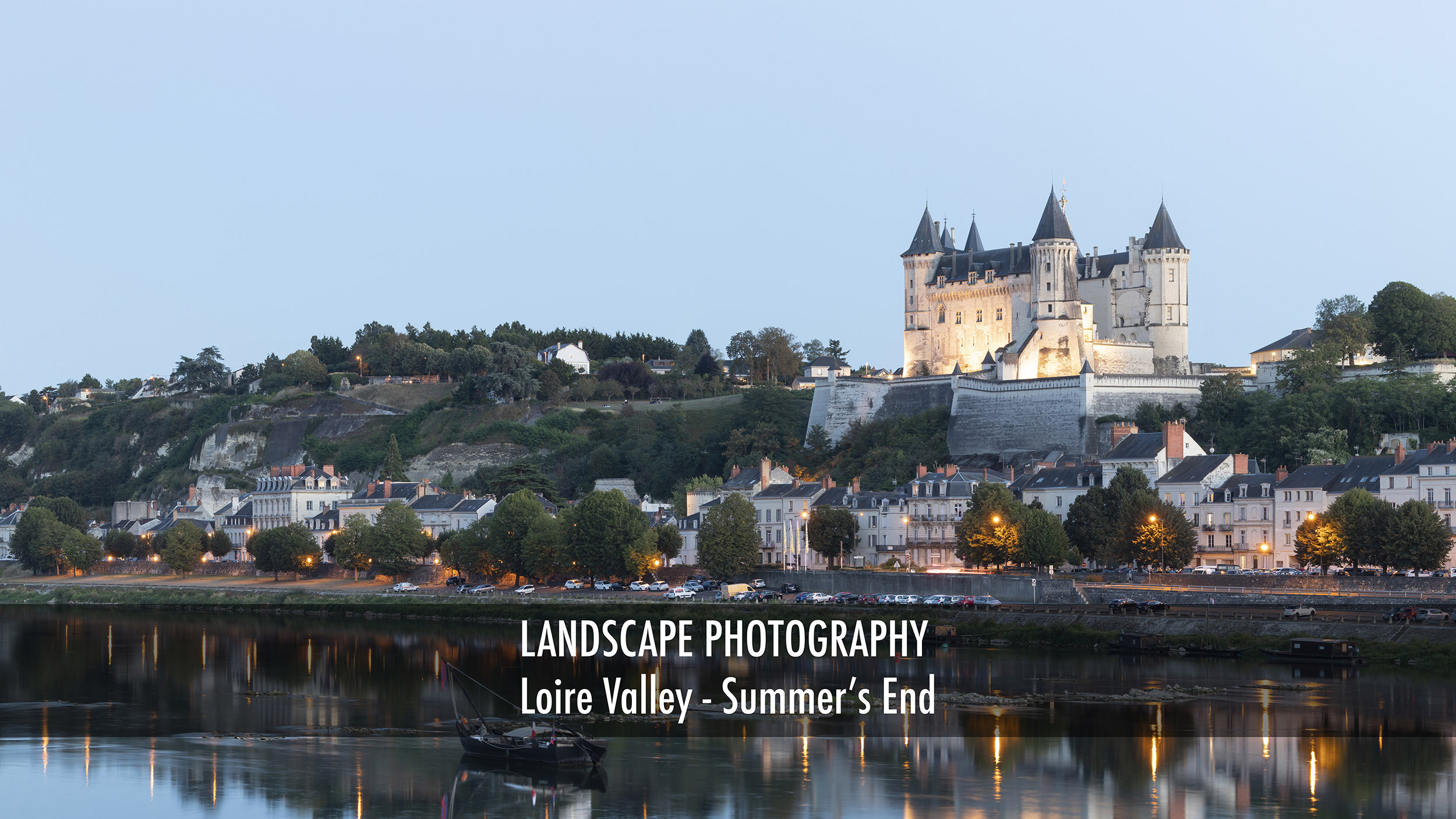
The latest episode of my YouTube series, Landscape Photography Exploring France, sees me exploring both the Loire Valley & Deux-Sèvres. 08 September 2020 was the first time in a while that I had photographed the dawn light in the Loire Valley.
My principal aim was to photograph Candes Saint Martin at dawn across the river Loire. This nearly didn’t happen as there was a massive traffic jam on the road there, and I could see in my rearview mirror the dawn light getting really nice.
But not long after, the cloud started coming in around Saumur, so I headed further south into Deux-Sèvres to have a look around. It is a beautiful area to visit, and there is much to see.
At the end of the day, I headed back up into the Loire Valley but didn’t quite get the sunset I was hoping for.
Places visited: Candes Saint Martin; Montsoreau; Saumur; Pont de Preuil; Argenton-les-Vallées; Château X; Mauléon; Saint-Jouin-de-Marnes; Loire river.
And if you’re interested in discovering the Loire Valley with a camera, then do check out my annual Loire Valley photo tour in May.
I began the morning on the far side of the Loire from Candes-Saint-Martin. Getting there was far more awkward than it should have been. There were heavy traffic jams, delays everywhere, and all the while, I could see the dawn colour building in the distance. That is never a pleasant way to start. When you know the light is moving fast, every red light and every queue feels twice as long.
I made it to the spot just as first light hit Candes-Saint-Martin. The sun had only just cleared the tree line in the east, so I was still in with a chance. I got part of the image I had in mind, but only part. The sky had looked wild a few minutes earlier, the kind of dawn that makes you press on even when the journey is going badly, yet it never quite gave me what I needed once I was in position.
Even so, I did not want that rough start to shape the whole day. I already had a few ideas in mind, and I had seen enough on previous drives through the area to know I could recover something good if I stayed flexible. Some days need a fixed plan. Others are better if I treat them as a day of roaming and reacting.
That first stop also reminded me how rich this corner of the Loire Valley is. Within a short distance of where I was standing, I had:
That concentration of subjects is one reason I keep coming back.
A few minutes later, I found myself near Montsoreau, and the mood of the day began to shift. I had taken a wrong turn while trying to head elsewhere, but it worked in my favour. The light on the chateau had turned beautiful, and I knew I needed to stop.
What helped most was local knowledge. The previous week, I had noticed how low the river Loire had become. Because of that, I knew I could get further out into the riverbed than usual. I was standing in the middle of the Loire, looking back towards Montsoreau, with a clear foreground and a far better angle than I would normally have had from the bank. That sort of chance rarely comes from luck alone. It comes from paying attention over time.
When I realised how empty the Loire was, the whole morning opened up.
From that position, I made two pictures of Montsoreau, one panoramic frame and one regular 3:2 composition. Neither depended on dramatic weather. Both relied on being in the right place when the river conditions allowed it. The sun then slipped behind a cloud in the east, which was frustrating, but by that point I already had something solid.
More importantly, the stress from the journey started to drain away. The moment I looked back at the rear screen and saw the structure of the image, I felt the day settle. A poor start does not always ruin a shoot. Sometimes it only delays the part where things begin to work.
Montsoreau has that effect on me. The village, the chateau, the open riverbed, and the sense of space around the Loire all come together in a way that is hard to rush. It is one of the reasons I keep returning to this part of France on my Loire Valley photography tours. The river changes, the levels change, the weather shifts, and the same viewpoint can look entirely different from one week to the next.
After Candes-Saint-Martin and Montsoreau, I kept moving. I had a place in mind amongst the vineyards, with a small windmill that had caught my eye before, and I wanted to see whether the idea in my head would hold together in a frame. I made the shot I wanted there, or close to it, and then pressed on to Saumur.
By the time I reached the viewpoint above the town, the sun was hitting the facade of the chateau. From that spot, I could look down over the vineyards, across the Loire, and towards one of the classic views of Saumur. I made a standard image with the vineyards in the foreground and the chateau beyond, then turned to a panoramic version because the scene felt wider than a single frame.
For the pano, I had the camera set to around 35mm on my 24-70mm lens, mounted on a rail on the tripod. The point of the rail was simple. It let me shift the lens back so the camera rotated more cleanly around the nodal point, which makes stitching much easier later. I wanted the frame to begin at the end of the vineyard rows, sweep across the slope, and finish with Saumur and the river, all in a long 17×6 ratio.
The problem was not the composition. The problem was the sky. To the east, the weather still looked clean, but from the west cloud was blowing in, and the wind suggested a northerly flow pushing it across Saumur. That killed some of the light I had hoped for.
If I had been passing through as a tourist, I might have taken what I could get and moved on. Because I live in these places and can return, I was more relaxed about leaving without the final version. I had made a useful frame, and I had learned what the view needed on a better day.
This was the rough pattern of the morning’s main images:
| Location | Approach | What I was after |
|---|---|---|
| Candes-Saint-Martin | Dawn view across the river | First light on the village |
| Montsoreau | Panorama and 3:2 frame from the riverbed | Clean foreground and soft early light |
| Saumur | 35mm stitched panorama | Vineyards, river, and chateau in one sweep |
The takeaway was clear enough. The compositions were there. The weather simply chose which ones were ready that day.
Once it became clear that the light around Saumur was not improving, I changed direction and drove south into Deux-Sèvres. I had marked several places on a map over the weekend, so I was not driving blind. This was still part of the work. Photographing full-time is not only about making finished images. It is also about finding places that might pay off on another day, in another season, or under different weather.
The first stop was the Pont de Preuil. It is an 11th or 12th-century bridge, unusual for its six arches, and it is striking even before you lift a camera. You can still drive across it, which adds a strange sense of fragility because it feels both solid and delicate. Midday was not the right time for a strong ground-level photograph, so I chose to make a drone image instead. That gave me a cleaner way to show the bridge in its setting and made better use of the hard light.
From there, I moved on to Argenton-les-Vallées, where a church immediately caught my eye. The building had plenty to work with, but I focused first on the tympanum above the main door, then looked for a stronger corner composition with a tilt-shift lens. The sun was in the wrong place for the image I wanted, which is always one of those slightly annoying moments. Still, it was useful. I knew the photograph existed. I simply needed to return at a better hour if the schedule allowed.
After that, I stopped at an old castle that I had also marked during my planning. Better still, I was given permission to photograph the exterior and to use the drone outside the building. That made a big difference. I worked on a shot of the gate and looked at another angle where a pocket of shadow gave the entrance a bit more shape.
The only issue was width. The frontage wanted a 17mm tilt-shift more than anything else. I could have used a 16-35mm zoom, but I do not enjoy how much edge correction that kind of shot can need later. Even so, once the sun pushed through again, the place looked excellent and well worth revisiting.
By mid-afternoon, I was still in discovery mode. That is often how these trips go once the best early light has passed. I came to Mauléon with one thing in mind, a viewpoint over the old walled town and the church rising from its centre. The good news was access. The viewpoint was only about a two-minute walk from the car, which matters when I am judging whether a place is practical for dawn or repeat visits.
The bad news was the light. It was around 27°C, bright, and harsh. At about half past three, I knew I was not there for a final polished image. I was there for a scouting frame. That still matters. A reconnaissance photograph can save hours later if it helps me understand lens choice, foreground clutter, and where the sun will rise.
At Mauléon, I tried both 70mm and 100mm compositions. The longer lens helped me avoid a chateau d’eau and a crane that distracted from the old town. Going tighter also reduced the need to include the edge of the castle, which did not add much to the picture from that angle. What interested me most was not the frame I made that afternoon, but the one I could imagine at dawn, with mist sitting in the valley and soft light wrapping around the church.
Some days give me finished images. Others give me future ones.
Later, with only a couple of hours left, I moved towards Saint-Jouin-de-Marnes and the old abbey there. The abbey dates from the 12th century, and it has a real presence in the landscape. I made a long-lens shot at around 200mm and looked at what I could do with the drone nearby, while staying clear of flying over the abbey itself. I had also stopped at Airvault earlier, but a parked car blocked the image I wanted. That went straight into the mental notebook for another day, along with the interior of the abbey there.
Even at Saint-Jouin-de-Marnes, small obstacles got in the way. I had seen a possible front-on photograph on the approach, but somebody’s bin was out and ruined the line of the frame. That is part of photographing real places. There is always some element you cannot control, and often the best answer is to return rather than force it.
By the close of the day, I had photographed or scouted:
I finished back in the Val de Loire, hoping for warm light on the traditional wooden boats moored along the river. I was about half an hour too late. I had made a better image of the same scene the week before, when the sunset colour was stronger, and the light hit the boats more cleanly. This time, I still made a frame, but I knew it was not the one I wanted. That did not bother me too much. By then, the day had already given me enough.
The morning began in traffic and with a missed chance at perfect dawn light, but it never stayed there. Once I settled into the rhythm of adapting, the day became far more useful. Montsoreau gave me the clearest reminder that local knowledge changes everything, and Deux-Sèvres gave me several places worth returning to under better light.
I ended with more ideas than finished images, and I am fine with that. Some days are there to produce a photograph you keep. Others are there to build the map in your head, so that when the weather, season, and light line up, you already know where to stand.
The next day, I had Indre in mind. After a day like this, that felt like the right way to carry on.
We noticed you're visiting from United Kingdom (UK). We've updated our prices to Pound sterling for your shopping convenience. Use Euro instead. Dismiss