 Skip to content
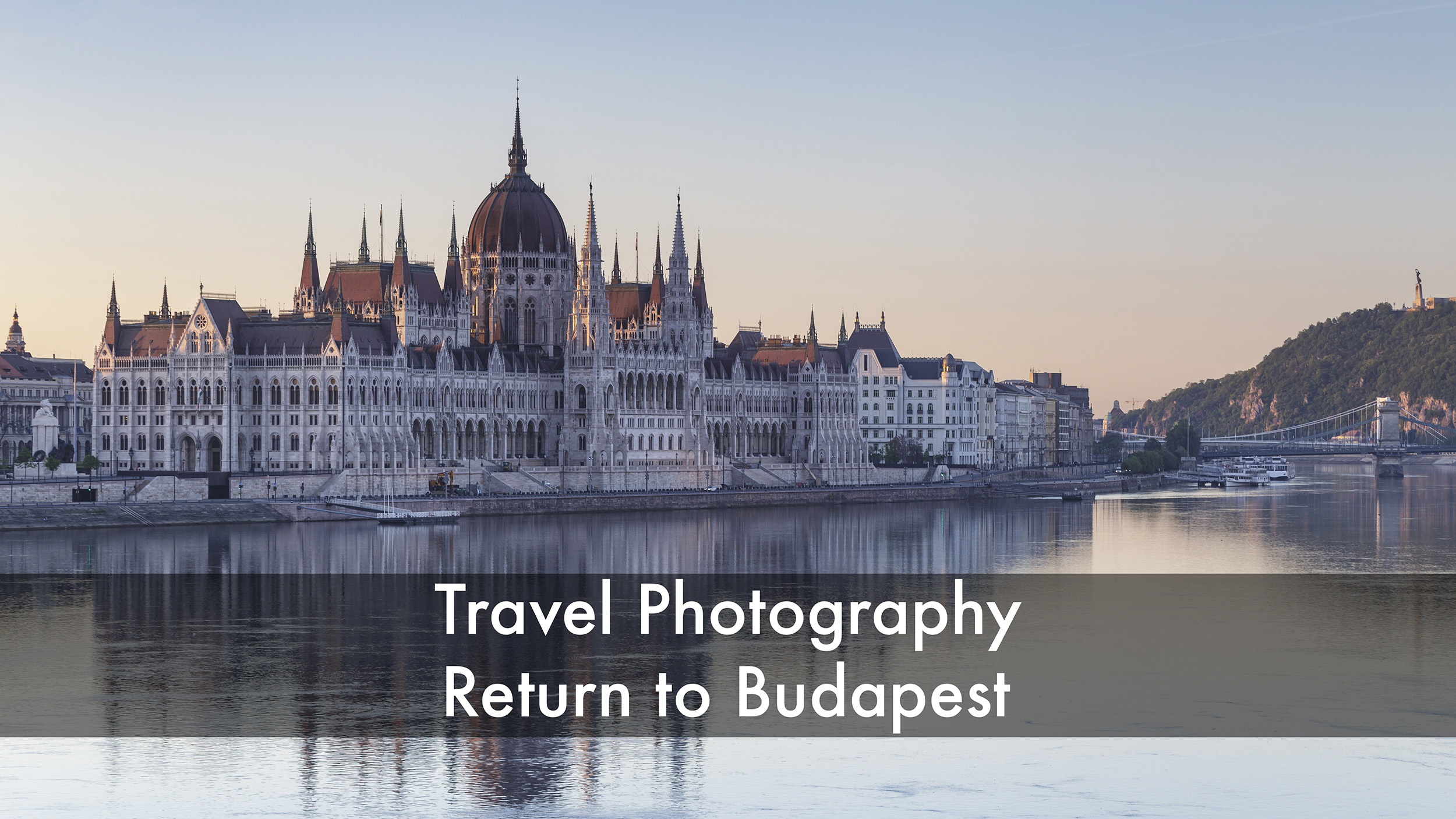

At the end of March, I took the plunge and went to Budapest for 4 nights. A city that I had had on my list of places to go to for a long time. But I was greeted by 4 days of non-stop grey weather, as well as my flight being delayed by just over 3 hours.
Despite doing my best during my time there, it just felt tiresome seeing the flat and lifeless sky each day. In total, I probably had about 3 hours of workable light during the whole time.
So, in mid-April, just 2 weeks afterwards, I decided to head back over to Budapest, rent an apartment and try again. And this time, I was greeted by sunnier days, and also spring had transformed the city in that small amount of time.
As a travel photographer, I very much rely on the weather. It might look all nice and arty in the grey, but it doesn’t cut it for me. I want to make my destinations look as beautiful as they should be!
Take a look and see how I got on in my latest YouTube vlog detailing my exploits as I return to Budapest.
Throughout the year, I offer photography tours and workshops in a variety of destinations around the world. If you’re interested in learning more from me to help you get the best out of your photography, then get in touch.
My return to Budapest happened because the first trip had left too much undone. I had seen enough to know the city could be spectacular, but the weather had got in the way. By the time I came back between 17 and 21 April 2018, the forecast was far kinder, with sunshine and long days instead of the heavy grey conditions I had dealt with before.
That changed everything. The earlier visit had become a scouting trip without me planning it that way. I already knew the viewpoints I wanted, the timings that might work, and the compositions worth revisiting. So when I landed back in Hungary, I wasn’t wandering or experimenting much. I was trying to catch up.
That also meant the work came first. I could show some of what I was doing, but there were plenty of times when filming the process simply wasn’t possible. If I were trying to run two cameras, manage filters, watch exposure, keep an eye on my gear, and deal with the public in a busy tourist spot, something had to give. The vlog always came second to the photography.
Mornings made that easier. At half past four or five o’clock, the viewpoints were still quiet, and the city hadn’t filled with tourists. Even up to around eight, Budapest could feel calm. Evenings were different, especially at the best-known locations, and that changed how much I could show whilst still getting the work done.
One of my first stops was Fisherman’s Bastion, high above the city. It is one of those places that photographers are drawn to for good reason. From there, I had a sweeping view across Budapest, with the Parliament building down below, the Danube cutting through the city, and the rest of the skyline stretching away in soft morning colour.
There were already a handful of photographers there, even at that hour, which told its own story. This is a popular spot, and for good reason. The light over Parliament was clean and colourful, and the remaining cloud from earlier in the morning had mostly cleared. That left enough texture in the sky without turning it into a flat blue backdrop.
I also spent time looking inward rather than outward. One of the classic compositions at Fisherman’s Bastion looks along the battlement-like walkway, with the stairs dropping away in a strong leading line and one of the turrets framing the scene. On my left was Matthias Church, and that structure helped complete the sense of place.
The difficulty was a lamp sitting in the wrong place for the frame I wanted. To work around it, I had to get very low and use my 24mm tilt-shift lens to control the composition and keep the lines tidy. It was one of those small adjustments that no one sees in the finished photograph, but it makes the image work.
If I were heading there again for photography, I would still choose the morning. By midday, the place fills with people, and the quiet feel that makes careful composition possible disappears.
Fisherman’s Bastion wasn’t only a sunrise location for me. I went back in the evening as well, because it worked for a day-to-night time-lapse and for still photographs when the gaps appeared. The problem was that evenings are far busier, and that changes how you can work.
I knew I would be juggling two cameras. One was set for a day-to-night time-lapse, and the other was there for stills when I had a chance. On top of that, people often wanted to know what I was doing, and some asked if I could take their picture. I don’t mind that at all, but it breaks concentration when I’m trying to manage long sequences and changing light.
In places like Fisherman’s Bastion, the photograph is only half the job. The other half is managing time, gear, and people without losing the shot.
That is why behind-the-scenes coverage can be patchy on trips like this. It isn’t because there is nothing happening. Usually, the opposite is true. There is too much happening all at once.
The first full day back in Budapest was hectic because I was retracing steps from the earlier trip. I had a list of viewpoints in my head, and I was trying to make good weather count. That meant less talking to the camera and more moving, setting up, shooting, and moving again.
Around midday, I got access to a viewpoint above the Danube. The light was harsh, which is never ideal for city work, but the cloudscape gave me enough reason to take the opportunity. When someone says yes to access, you work with what you have.
That sort of access also changes how I present myself. Walking in with a microphone, camera pointed at myself, and full vlogging kit isn’t the right approach if I want people to take me seriously. I need to look professional, compact, and focused. On that occasion, I was also accompanied, which made filming even less practical.
So the first day became less about showing every step and more about making sure the photographs were secured. I could show some of the final results, but the setup and the small decisions behind them often happened too quickly, or in the wrong place, to film properly.
One of the best mornings came from the castle overlooking Budapest. The last time I had been there, the city had been hazy. This time, the horizon had lovely colour before sunrise, even though the forecasted cloud never really arrived.
I had two cameras set up, both running night-to-day time-lapses. That is hard enough on its own. Add vlogging to it, and it becomes a balancing act. One camera was a Canon 6D connected to a Promote control, which let me change the exposure without touching the camera. The other was a Canon 5D Mark II on an intervalometer, so I still had to make physical changes by hand.
That matters because touching a camera during a sequence can introduce movement. I already knew I would have to stabilise the footage from the 5D Mark II in post-production, while the 6D should be cleaner because I could adjust it remotely.
Filter choice was partly experience and partly guesswork. On the wide setup, around 16mm, I used a hard grad. On the tighter shot towards Parliament, I used a soft grad. The direction of sunrise and the brightness across the frame decide that. You don’t always know with total certainty until the sequence is underway.
I didn’t use an ND filter for the Holy Grail sequence. For me, night-to-day is easier without one. Day-to-night is different again, but for this setup, I kept it simple and watched the exposures carefully.
This is the filter setup I was working with:
| Filter | Why I used it |
|---|---|
| Hard graduated filter | For the wider scene, where the transition at the horizon was more defined |
| Soft graduated filter | For the tighter shot towards Parliament, where the tonal change was gentler |
| Polariser | To control the sky and make the blue hold together better when the angle to the sun suited it |
| ND filter | Useful in some situations, but not something I use for Holy Grail sequences like this |
The table looks tidy on paper. In practice, it still involves judgment, timing, and plenty of watching.
There is a lot of waiting in this kind of work. A night-to-day sequence can keep me in one place for an hour and a half, sometimes more, whilst I keep checking exposure, light, and movement in the frame.
That can be peaceful, but it can also be tedious. If I’m on my own and not filming, there are long stretches where I am simply monitoring gear and waiting for change. In a busy place, conversations with passers-by can break that up. In a quiet place, I am left with the technical side and the patience the job asks for.
I also don’t shoot time-lapses for the sake of it. A city scene needs visual change. That might be colour shifting across the sky, lights appearing or fading, or weather moving through the frame. If nothing is happening, the sequence often isn’t worth the effort.
I only time-lapse a city scene when the change in light or motion is strong enough to carry the image.
That thought shaped most of the trip.
At one point, I went after a well-known composition of the Chain Bridge with the castle beyond. It is a classic Budapest photograph, and there are countless versions of it on postcards and in books. I still wanted my own take on it.
For that frame, I used the Canon 6D with the 24mm tilt-shift Mark II and a 1.4x extender. The extender helped because 24mm on its own was too wide for the crop I wanted. The tilt-shift lens was the obvious choice because I needed control over the uprights and the geometry of the frame.
I compose these scenes in live view at 100 per cent because the edges matter. The viewfinder doesn’t always show everything, and little distractions can creep in. I was checking the margins of the frame, lining up gaps between buildings, and making sure stray rooftop detail didn’t pull the eye away from the bridge.
The sun was off to my left, so I didn’t need grads for that image. I did use a polariser because the angle was right, and I also added an ND filter to slow the shutter enough to soften the water slightly. I didn’t want it glassy or false. I wanted a touch of movement. The exposure was around f/11, half a second, at ISO 100.
I didn’t shoot a time-lapse there because it wouldn’t have added much. I was too low near river level to get useful movement from the traffic on the bridge, and there was no cloud in the sky to give the frame life. A time-lapse only works when the scene offers change.
Another morning took me up Gellert Hill, and the effort was worth it. The view from there is one of the finest over Budapest. I spent about an hour capturing a night-to-day sequence as the sky shifted from red tones into a clean blue, and the scene cried out for panoramas as well.
Because of the amount of gear I carry, I was slightly wary of the walk up. Part of the route went through a park that wasn’t well lit, and that always makes me more alert when I am travelling alone with cameras, lenses, filters, and a tripod. Still, everything was fine, and the city rewarded the early start.
From up there, Budapest opens out in a way that makes sense photographically. The river, the bridges, the sweep of the urban blocks, and the hills all fall into place. It is the sort of viewpoint where a single frame can feel cramped, which is why I was so keen to shoot panoramas.
Later on, I was given access to a roof space with a view across Pest towards the Buda side. I had been asked to see what I could produce from that location, so I worked with a long lens and began picking out details from the city rather than trying to show it all at once.
I used a Canon 100-400mm Mark II, and that lens gave me reach but also introduced a fresh problem. It is a heavy lens, and I was standing on a wooden floor that moved slightly. Even on a tripod, that kind of setup is vulnerable to camera shake.
So I kept it simple. I used a cable release, sat down, and did not move. When you are working at that focal length, even small movements matter. The shot depended as much on restraint as it did on the view.
I had a plane to catch a few hours later, but I still wanted one final shot. I had found a viewpoint of Parliament from a bridge not far from where I was staying, and I thought it might make a good last night-to-day time-lapse.
The scene looked promising until the bridge started doing what bridges do. Trams and buses rolled over the joints, and every time they did, the camera shook. I could see frames moving around in the sequence, and when a tram and a bus crossed together, it became a nightmare.
I had no perfect fix. Dropping lower would have reduced the vibration problem, but it would also have left me with a straight-on view of Parliament that I didn’t want. Other positions were blocked, and the higher angle I needed simply wasn’t available.
So I improvised. I kept the shutter speed as quick as I could to reduce the effect of the vibrations, and when a tram or bus came through, I stopped the intervalometer rather than waste frames. It wasn’t ideal, but it was better than pretending the problem wasn’t there. I also guessed my grad filter for the morning, settling on a 0.9 to hold back the sky with the sunrise coming at an angle.
I knew before it finished that it might not be my strongest sequence from the trip. Even so, those imperfect sessions often say more about travel photography than the easy wins do.
This return to Budapest relied on a familiar kit. Each piece had a clear role, and the city pushed every one of them in a slightly different way.
| Gear | How I used it |
|---|---|
| Canon 5D Mark II | Time-lapse work with manual exposure changes during sequences |
| Canon 6D | Time-lapse work with remote exposure control |
| Canon 24mm TS-E Mark II | Architecture, city scenes, and controlling verticals |
| 1.4x extender | Tightening the field of view when the 24mm was too wide |
| Canon 100-400mm Mark II | Picking out details from the rooftop view |
| Lee Filters | Graduated filters, polariser, and ND control |
| Manfrotto carbon fibre tripod | Stability for stills and time-lapse work |
| Manfrotto 410 geared head | Fine adjustment for precise composition |
The more important part, though, was workflow. In a city, I am always balancing light, access, crowds, security, and time. I have to watch my gear, move quickly, and stay flexible when the scene changes. If I am filming as well, that pressure doubles.
I shared the finished work and updates through my website, and I often posted more from the road on Instagram and Facebook. Those platforms showed the polished images, but the trip itself was full of small technical choices and compromises.
Budapest gave me what the first trip couldn’t: good light, clear mornings, and enough time to revisit the scenes that had stayed with me. That made the photographs stronger, but it also made the working process clearer in my own mind.
What I remember most is not only the skyline or the Parliament building at dawn. I remember the lamp that ruined a composition, the shaking bridge, the heavy lens on the wooden floor, and the need to stay calm whilst everything happened at once. Travel photography often looks smooth in the finished frame, but the reality is a long chain of small decisions.
That is why I was glad to return. The city was beautiful, but the real satisfaction came from solving the problems well enough to do it justice.
We noticed you're visiting from United Kingdom (UK). We've updated our prices to Pound sterling for your shopping convenience. Use Euro instead. Dismiss