 Skip to content

London rarely gives me the sky I want. Why? Well, I no longer live in the UK, so I have to have luck on my side.
On this shoot, I had some snow showers in the morning, a moody grey afternoon, and a stunning rooftop view across the London skyline.
If you’ve ever tried to photograph London in changeable weather, you’ll know how fast the light can slip away. I had special permission to work from a rooftop in the City of London, so I had to make the most of the conditions I had, not the ones I hoped for.
So take a look at my latest YouTube video to see how I approached the setup, the weather, and the day-to-night time-lapse from above the rooftops above the city.
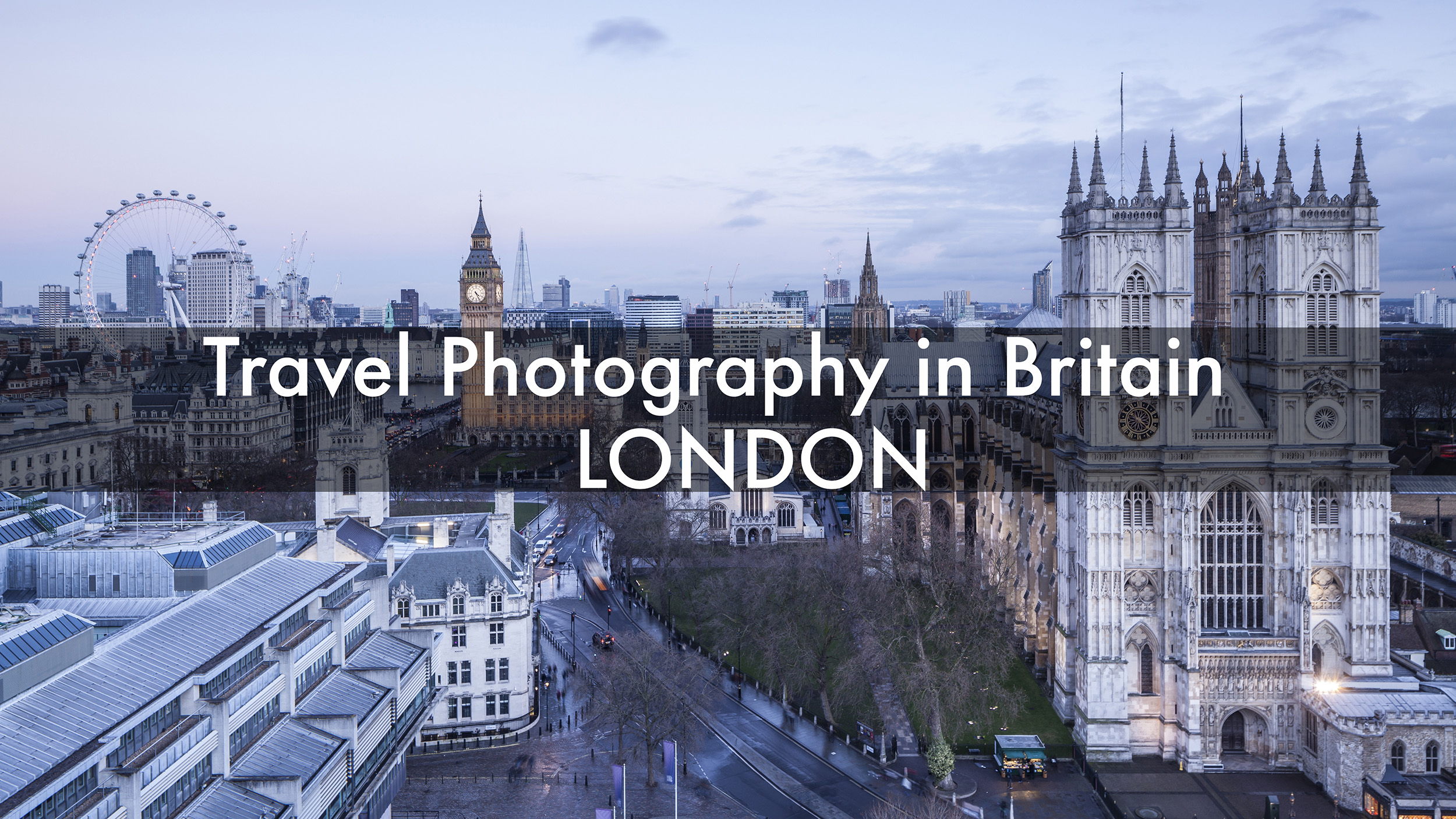
The view in front of me was the kind photographers wait a long time to get. From that privately accessed rooftop, I could see across the London skyline with Westminster Abbey in front, the Houses of Parliament beyond, the Shard rising in the distance, the London Eye off to one side, and St. Paul’s Cathedral farther back across the cityscape.
The special access that I had been given changes everything. I wasn’t dealing with crowds, blocked sightlines, or street-level clutter. Instead, I had an open sweep across the city and the freedom to compose carefully.
The London skyline included some of the city’s most recognisable landmarks:
The problem I had, though, was the sky. I would have loved a clean blue backdrop with a few soft clouds, but it wasn’t happening. The weather had turned unsettled after snow showers earlier in the day, so the light felt heavy and dramatic instead of bright and crisp.
Still, that mood had its own character. The city looked colder, darker, and more alive because of it. A flat sky can kill a skyline, but a stormy one can sometimes give it tension.
For the first time-lapse, I set up my Canon camera with an L-series zoom aimed at the cityscape. On the front, I used two Lee soft graduated filters, a 0.9 and a 0.3, to hold back the sky. I also added a Heliopan polariser.
I hadn’t planned to use the polariser for stronger blue skies because there wasn’t much blue to work with. Instead, I used it to help lengthen the exposure. That mattered because the clouds were racing across the skyline, and I wanted movement in the frame.
The biggest factor was wind. It pushed the clouds fast enough that I didn’t need a long gap between frames, so I set my intervalometer to a 3-second interval and got the sequence going quickly. At that point, there was no time to wait around for better light. I had to start shooting before the remaining light disappeared.
I’d been up on the same rooftop the day before, but the wind was too strong to get much from it. I came away with something, though not enough to feel satisfied. This evening was different. The air still had that moody feel, but the conditions were steadier, and I finally had a chance to shoot the sequence I wanted.
That mattered even more because, as I now live in France, I can’t simply turn up whenever the light looks perfect. I have to plan these shoots in advance, and that means I sometimes arrive at skies that don’t match the picture in my head. This was one of those days.
Even so, the rooftop view still felt stupendous. I was grateful to the people who allowed me up there, because a location like that gives me a version of London I can’t get from the street.
For the evening setup, I used a Canon 5D Mark II for the day-to-night sequence. I fitted Lee soft grads again, this time a 0.3 and a 0.6, and set the intervalometer to 7 seconds. I also had a Promote Control connected, which let me change exposure without touching the camera.
That small detail makes a big difference in time-lapse work. The less I touch the setup, the smoother the sequence stays.
The evening sequence was a classic Holy Grail time-lapse, the tricky transition from day into night, where the light keeps falling, and the exposure has to change with it. If that change is rough, the final sequence flickers or jumps. If it’s smooth, the whole city seems to glide from afternoon into darkness.
I watched the histogram, not the clock. That told me when the light had shifted enough to change exposure.
My process was simple, but it needed constant attention. I watched the histogram on the back of the camera and waited until it started moving to the left. Once I saw that shift, I adjusted exposure by one-third of a stop.
Then I repeated the same pattern as the light kept dropping:
That method lets me stretch the sequence without sudden jumps. In most cases, these day-to-night time-lapses end around ISO 400 and an exposure time of about 4 to 5 seconds. After that, the sequence is finished in software during post-production.
This shoot brought a few things into sharp focus for me. First, access matters. A rooftop like this gives me a clean view, a strong composition, and a sense of scale that street-level shooting can’t match.
Second, the weather never follows the script. The afternoon sky wasn’t what I wanted, yet the moody light gave the city character. In other words, London still worked, only in a different key.
Third, wind shapes the whole plan. It affected my interval in the afternoon, ruined much of the previous day’s attempt, and stayed in my mind through the evening setup. Time-lapse work often looks calm in the final result, but on location, it can feel like a race against movement, fading light, and small technical choices.
The strongest lesson from this rooftop session was simple. A great London time-lapse doesn’t come from perfect weather. It comes from reading the light, adapting fast, and staying patient while the city changes in front of the lens.
That’s what kept this shoot alive from a grey afternoon into a finished day-to-night sequence.
And check out my portfolio of images of London, as well as my stock library for exclusive images of the London skyline not found anywhere else.
We noticed you're visiting from United Kingdom (UK). We've updated our prices to Pound sterling for your shopping convenience. Use Euro instead. Dismiss