 Skip to content
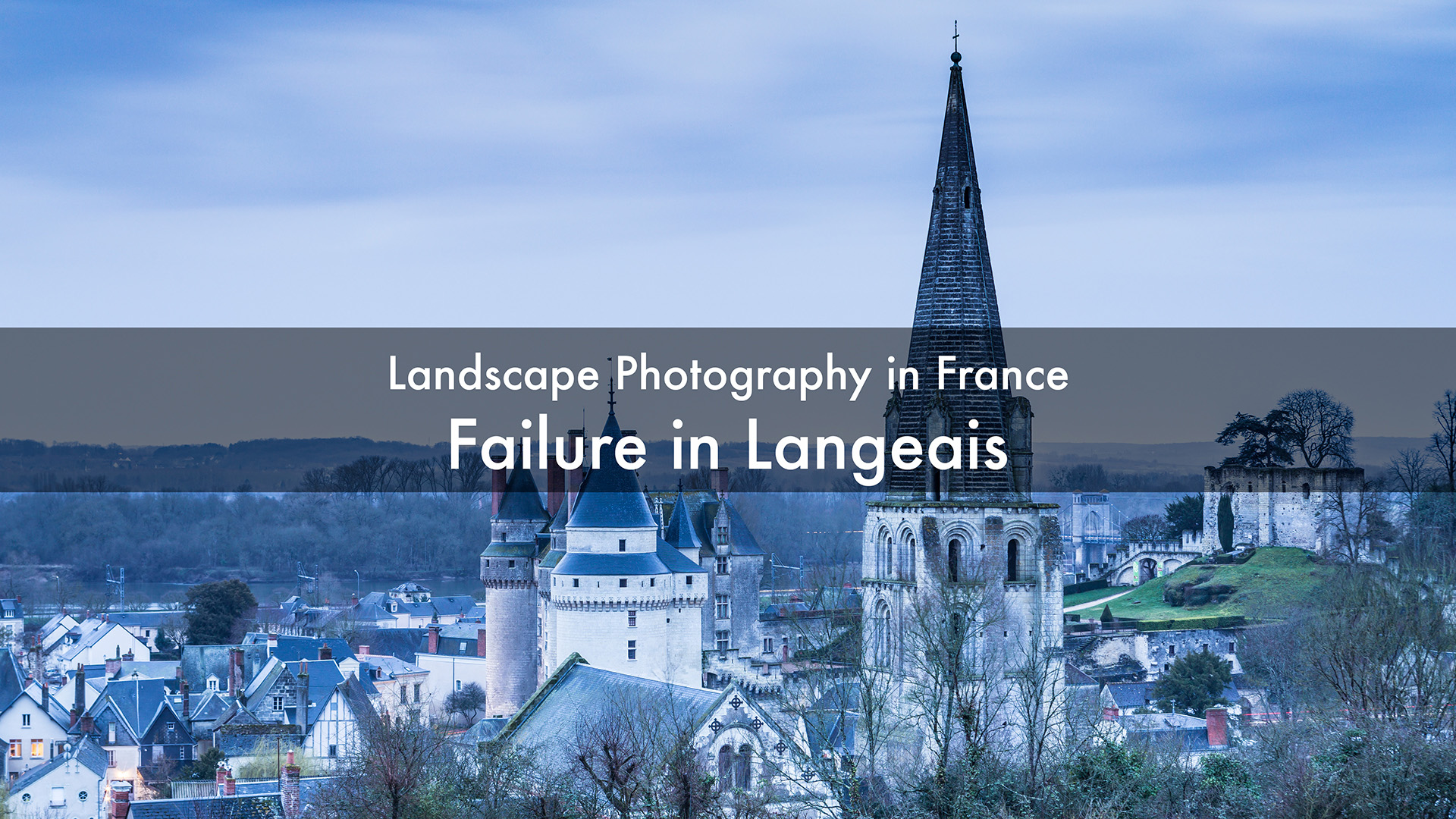

A failed shoot in Langeais is my latest YouTube vlog detailing some of my exploits as I travel to various parts of the world.
The small town of Langeais is very close to my home in the Loire Valley, being just a short 15-minute drive away. I had two targets in mind. The first was a dawn shoot overlooking the town to the château, and the second was to capture the suspension bridge that crosses the river Loire. Unfortunately, the predicted weather didn’t happen, and I was left having to pack up my things and head back home.
As a travel photographer, the weather is something that I rely on and need it at its best. This was one of those occasions where I was doomed to failure.
And if you’re interested in discovering the Loire Valley with a camera, then do check out my annual Loire Valley photo tour in May.
Join me as I try, and fail, a dawn shoot in my local patch of Langeais.
And don’t forget to see who won the print of Sainte Suzanne!
I set up overlooking the city of Langeais in the Loire Valley, a place that is only about 15 minutes from home for me. From that viewpoint, I had the town spread out below, the church spire rising above the rooftops, and the chateau sitting behind it. On paper, it had all the ingredients for a strong dawn photograph.
The problem was the light. The night before, the forecast had shown a chance of sunshine breaking through the clouds. It did not look like a perfect morning, but it looked good enough to get me out of bed and out the door. After the rain and storms from the day before, I thought there might be one of those brief, useful gaps in the weather that can make a scene come alive.
Instead, the sky closed in. There was no sunlight at all, only thick cloud and a flat, gloomy feel across the whole scene. Frustrating as that was, the conditions did give me a slightly moody shot over the town. It was not the image I had hoped for, but it still had atmosphere.
I had gone to Langeais with two targets in mind. The first was this dawn view over the town and the chateau. The second was the suspension bridge over the Loire. Once I saw how the morning was shaping up, both felt less and less likely.
Still, when a shoot starts to slip away, I don’t always pack up straight away. I look around, think again, and ask whether another angle might save the outing. In this case, my next thought was the church.
Once I finished at the viewpoint, I planned to walk down to the church and ask if I could get up into the bell tower, or at least find out who I needed to speak to. From up there, I felt there might be a better shot looking across to the chateau.
That sort of access is one of the genuine benefits of working as a professional photographer. Sometimes I can reach places that most people simply would not be allowed into without special permission. It does not always lead to a photograph, of course, but it often opens up angles that would otherwise stay hidden.
Sometimes the hardest part of landscape photography is accepting that the scene in front of me is not the one I came for.
There is also something I enjoy about photographing so close to home. This part of the Loire Valley is my local patch, and even when the weather is poor, I like showing a bit more of the area around me. Langeais is familiar ground, but that does not make it easy ground. In some ways, local places are harder, because I know exactly how good they can look when the light turns up.
When I looked at the composition on the camera, one thing bothered me straight away. The church spire was too dominant. It grabbed the eye faster than I wanted, and that shifted attention away from the chateau.
At that point, I had not yet tried switching to my 70-200mm lens and zooming tighter onto the chateau itself. That might have made a cleaner composition and reduced the pull of the spire. It was worth trying, although the threat of rain was never far away, and that always changes how much time I want to spend refining a setup.
Even beyond the spire, the view had other problems that I could not fix. In the background, there were cars moving through the scene. If the light had been right and I had stayed in the darker part of the morning, that would have meant light trails. Sometimes that helps. Here, it would only have added another distraction.
There was also the main railway line in the background, the one that runs between Tours and Saumur and on towards Langeais. That is part of photographing real places as they are, but it can still be awkward when I want a cleaner frame.
What I could do was tighten the edges of the composition and remove as many distracting buildings as possible. I managed that fairly well. The framing felt controlled. The larger issue was that the photograph still depended on light that never came.
The gear itself was not the problem. I had what I needed with me:
This was one of those mornings where the technique was fine, the location had promise, and the weather simply refused to play along. If the rain returned like it had the day before, the sensible choice was to pack up and abandon the shoot.
That decision is never exciting, but it matters. A failed morning can still be useful if I pay attention to the place, the angles and the weak points in the composition. I left without the image I wanted, yet I learned more about how Langeais works from that viewpoint.
Next time, I would still watch the church spire carefully. I would also be more tempted to isolate the chateau with a longer focal length, especially if the light was patchy. Some scenes ask for width. Others need editing in-camera before I even press the shutter.
This was a short outing, and in truth, it matched the week as a whole. The weather across the Loire Valley had been poor, with wind, rain and everything in between. I spent a lot of time looking out at a blown-about view and waiting for a break that never quite arrived.
For a travel and landscape photographer, that kind of week is hard work in a quiet way. There is no drama in it. There is only that steady sense of time passing while the conditions stay wrong. I rely on the weather more than most people realise. Light, cloud, rain, mist and wind all change the result, and sometimes they simply block the result altogether.
That was the mood behind this trip to Langeais. I was already coming off a run of unsettled weather. So when the forecast hinted at a usable dawn, I took it. By the time I was set up and looking over the town, I knew the morning was slipping away.
The upside was that I had not been idle. While I waited for better conditions, I had been filming a tutorial on how to use neutral density graduated filters properly. It is one of those subjects that often gets mentioned without being explained clearly, so I wanted to show my own approach in a straightforward way.
At that stage, I had already filmed two of the three parts. I was waiting for the weather to improve so I could shoot the final section and finish the tutorial properly. The plan was to explain three ways of choosing an ND grad, because many photographers struggle with that decision when they start using them in the field.
That project gave me something useful to work on while the landscape outside refused to cooperate. Bad weather can stop a location shoot, but it does not always have to stop the work.
I had also promised to run a small competition, and this seemed like the right moment to announce the result. The prize was a print from one of the places I had photographed a couple of weeks earlier, and the challenge was to identify the location from three clues.
The clues were simple:
Plenty of people got it right. The answer was Sainte Suzanne, and the winner I picked at random.
I asked the winner to email me again with his address so I could get the print in the post. If he happened to be in the UK and I was passing nearby, I even had the option of pushing it through the letterbox by hand. It was a small thing, but I enjoyed doing it, and I appreciated everyone who joined in.
Around the same time, I was preparing to head back to the United Kingdom for the next couple of weeks. That meant fresh ground, different weather and a change of pace. I was due to be up in the Peak District soon, and if conditions were decent, I hoped to film there and show a bit more of how I teach when I am out working with people.
That was not the only plan on the horizon. I was also starting to look at the idea of running photography workshops around Europe with one or two other photographers. It was still early, but it was an exciting prospect because it joined travel, teaching and photography in a way that felt natural to me.
On top of that, I had the ND grad tutorial to finish, the next vlog to prepare, and the usual challenge of fitting shoots around the weather. So while this morning in Langeais ended in failure, it sat in the middle of a much bigger stretch of work.
I’m also grateful for everyone who has subscribed to the channel, watched the videos and taken the time to comment. That support mattered, especially in quieter weeks like this one, when the weather made the footage less dramatic but no less honest.
I did not get the photograph I wanted in Langeais. The sun stayed hidden, the sky stayed flat, and the scene never lifted. Yet mornings like this still belong in the story, because failed shoots are part of the job as much as the good ones.
What stayed with me was not only the frustration, but the reminder that the weather decides more than we do. I can choose the viewpoint, the lens and the framing. I cannot force the light. On this occasion, Langeais won.