 Skip to content
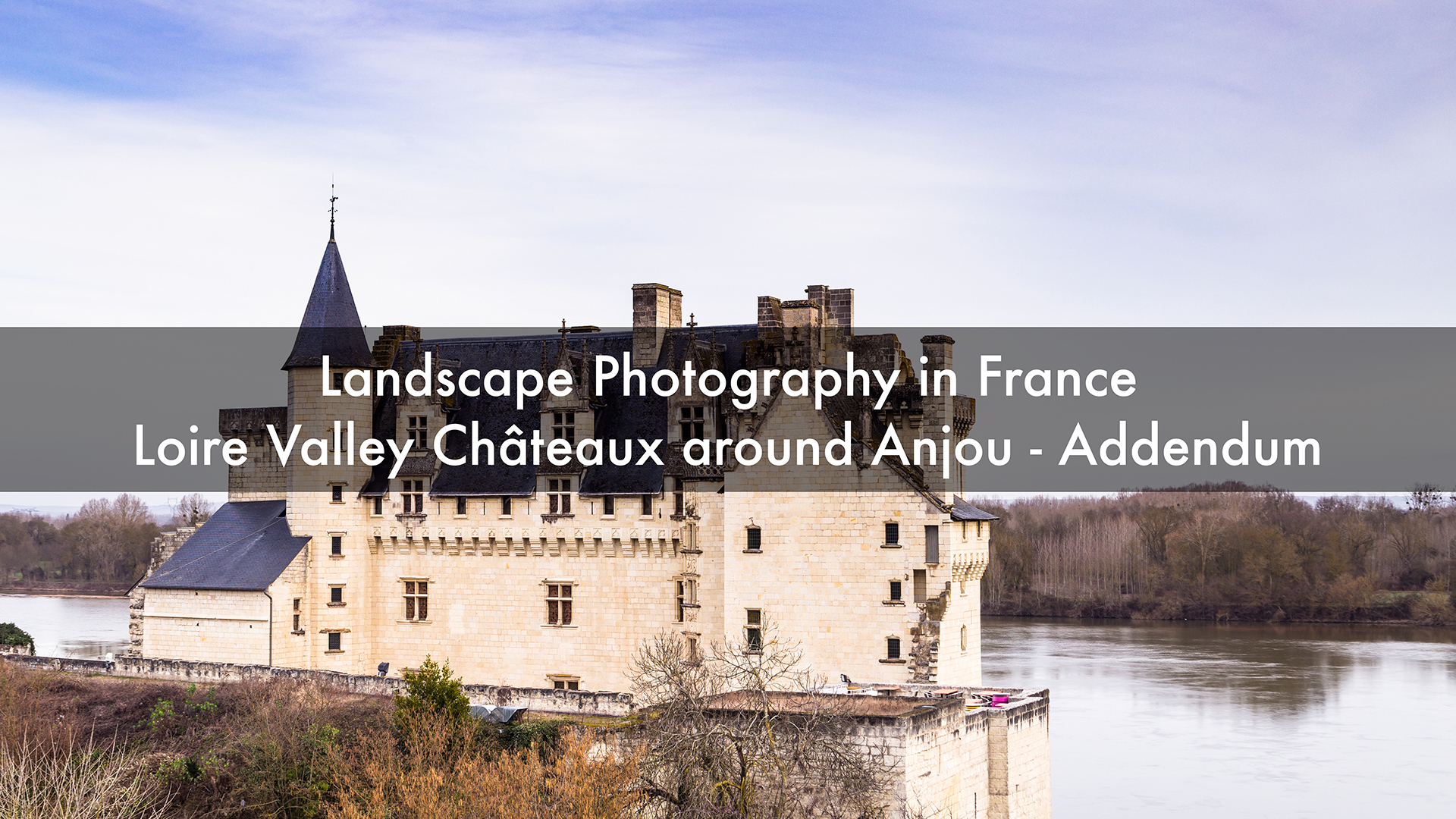

On Friday, 24th February 2017, my latest YouTube photography vlog took me to the Beaux Village de France of Montsoreau in the Pays de la Loire. This part of France is also known as Anjou and is one of the old provinces.
Good light can disappear in the time it takes to drive from one viewpoint to the next. That was the story of this morning in Montsoreau, where I went back out between my seventh and eighth vlogs to add a little more colour to the place and the process.
I wasn’t trying to start posting daily, and I wasn’t chasing filler either. I simply had another hour with one of the most photogenic corners of the Loire, and I wanted to show what that looked like when the light almost worked, then slipped away.
And if you’re interested in discovering the Loire Valley with a camera, then do check out my annual Loire Valley photo tour in May.
This was a small extra outing, nothing more than that. I was already between vlogs, and I felt Montsoreau deserved a little more time on camera because the place has so much character, especially at first light.
I also had to give a nod to my friend Martin Carlson, who enjoys these vlogs. This extra film was a bonus, not the start of a new upload schedule. It was simply a way to show more of the village, the river and the decisions that happen after I have already taken a frame I like.
A few things defined the morning from the start:
That matters because the usual finished image only tells part of the story. As a stock travel and landscape photographer, I spend a lot of time exploring, returning, checking angles and working out whether a place gives more than one possible image. Montsoreau does. The village, the church, the river and the chateau all sit together in a way that makes you want to keep moving around it until the shapes line up.
For anyone who loves France and photography, that is part of the appeal of the Loire Valley chateaux. They are not only about architecture. They are about setting, approach, weather and timing. This short addendum was really about that.
From the high ground above the village, I had a broad view of the scene spread out below me. Off to my left sat the Loire, and ahead of me lay Montsoreau with its handsome chateau and church. Dawn had already passed, but I had the frame I came for, so I turned the camera around to show the setting that had produced it.
The light was tricky from the start. The sun sat directly to my left, so I had to be careful about glare when I filmed the view. Even so, the scene had plenty going for it. Below the horizon line, the village rested quietly beside the river, and the chateau held the eye in the way Loire Valley chateaux often do when they sit close to water. They look settled into the land rather than dropped onto it.
One detail in the distance caught my attention. A cloud drifting from left to right was not weather at all, but steam from the nuclear plant at Chinon. I had hoped it might add something unusual to dawn itself, perhaps a little more shape or drama in the sky. It did not quite do what I wanted. Still, the sunrise gave me enough, and the scene looked good as the light came up.
A morning can be worth the drive even when it does not give the exact sky I had hoped for.
There was one frustration in the foreground. The vineyard rows ran parallel to the camera. I would much rather have seen them dropping away towards the Loire, because that would have given the composition a stronger lead into the village and river below. Instead, the lines moved across the frame rather than into it.
I have heard vineyard owners say vines often do better running downhill rather than across the slope, though I can’t say with certainty whether that applies here. Either way, those rows were not planted for my composition, and that is the point. Landscape photography often means working with what the land gives me, not what I wish it gave me.
Even with that limitation, the viewpoint was worth the climb. Montsoreau looked superb from above, and I knew I had more to try before the light faded completely.
Because I was already up early and in position, I had two more ideas in mind. The first was to go back down towards the river and look again across the water at the chateau. I had noticed a pleasing cloud in the sky, something I did not have on the earlier visit, so I wanted to see whether it could help the frame.
The second was a viewpoint behind the chateau, looking back towards the Loire. I had found that one beforehand while searching on Google Earth, and it seemed worth checking in person. That kind of preparation helps, especially when the good light is short-lived. I may not always use the planned location, but I prefer to arrive with options.
There was some urgency now. Once the best part of dawn has gone, every minute starts to matter more. A low cloud bank, a slight change in direction, or the loss of side-light can flatten a scene fast. So I packed up and headed down towards the river to see if the next image would come together.
When I reached the riverbank and looked towards the Chateau de Montsoreau, the scene had changed in the most annoying way possible. A bank of cloud had appeared and swallowed the light to the east. From the vineyard viewpoint, it had not looked like a problem at all. Down by the water, it was a different story.
That is one of the maddening things about photographing rivers and wide valleys. A view can look promising from one position, then fall apart from another because the sky behaves differently across distance. While I drove down, I had seen a little form in the light and thought the shot might open up nicely. By the time I stopped, the sun had vanished behind a cloud.
I could do very little about it, so I did the only sensible thing. I banked the location for another morning.
This is where patience matters more than stubbornness. If I force the photograph in poor light, I may come away with a decent record shot, but not the image I know the place can give me. Montsoreau is only about half an hour from home, so there is no need to pretend that one failed attempt must become a finished result.
I already had several versions of the shot in mind, and each depends on slightly different light:
That last option appeals to me because side light often gives stone buildings more shape. With subjects like Loire Valley chateaux, a little shadow on one face can make all the difference. It brings out the form without turning the whole scene harsh.
Weather forecasts can suggest one thing, while a single cloud bank gives me something else entirely.
Even then, the outing was not over. When I looked back behind the camera, I could see breaks in the cloud. That gave me one last reason to move.
With those gaps opening up, I headed back towards Montsoreau for the other viewpoint I had found earlier. This one looked over the chateau from a position behind it, facing north. I had spotted it on Google Earth, and mornings like this are exactly why I spend time searching maps before I set out.
A higher or offset angle can rescue a session. Sometimes the foreground improves. Sometimes the river sits better in the frame. On other occasions, the sky that failed from one side opens up from another. I did not know whether this spot would work, but it gave me a fresh chance while there was still some life in the light.
That, for me, is the real value of scouting. I am not trying to script the whole morning before it happens. I am giving myself room to adapt. If one plan collapses, I already know where the next road, lane or viewpoint might be.
This matters even more in places like Montsoreau. The village is compact, but the number of possible photographs around it is larger than it first appears. From the vineyards, it feels open and layered. From the riverbank, it becomes calmer and more formal. From behind, the relationship between the chateau and the Loire changes again. A small area can produce very different images if I keep moving.
For travel photographers, that is one of the pleasures of France. A place that looks familiar from the postcard angle often has more to say when I walk a little further or arrive at a better hour.
I kept the gear straightforward. I was working with a Canon 6D, along with a Canon 28-70mm f/2.8 L and a Canon 70-200mm f/4. I also had Lee Filters, plus a Manfrotto carbon fibre tripod and a Manfrotto 410 geared head.
That setup suits this kind of morning well. The wider lens gives me room for the village, river and vineyards when I want a broader sense of place. The longer zoom helps when I need to isolate the chateau or tighten the scene across the water. Meanwhile, the tripod and geared head matter when the light is low, and I want careful control over the composition.
None of that removes the need for patience, of course. Good gear helps me execute the photograph. It does not create the light. This morning proved that once again. The scene changed faster than I could move between locations, and the cloud made the key decisions for me.
Still, I would rather be there with the camera and come away with one strong frame and a plan for the next visit than stay at home waiting for a perfect forecast that may never come.
I came away with more than a single photograph. I came away with a clearer sense of how I want to shoot this part of the Loire next time. The vineyards gave me one image. The riverbank gave me a stronger plan. The shifting cloud reminded me that persistence matters as much as timing.
Photographing Loire Valley chateaux often looks romantic in the finished frame, but the work behind it is usually quieter and less tidy. It means scouting, returning, accepting frustration and knowing when to leave a shot for another day.
The next vlog at the time was due around 03 March 2017, but this small addendum earned its place. It showed the bit that polished images leave out, the near misses, the changing sky and the promise of coming back. Montsoreau still has photographs waiting for me, and I know I will get that river view in the end.
We noticed you're visiting from United Kingdom (UK). We've updated our prices to Pound sterling for your shopping convenience. Use Euro instead. Dismiss