 Skip to content
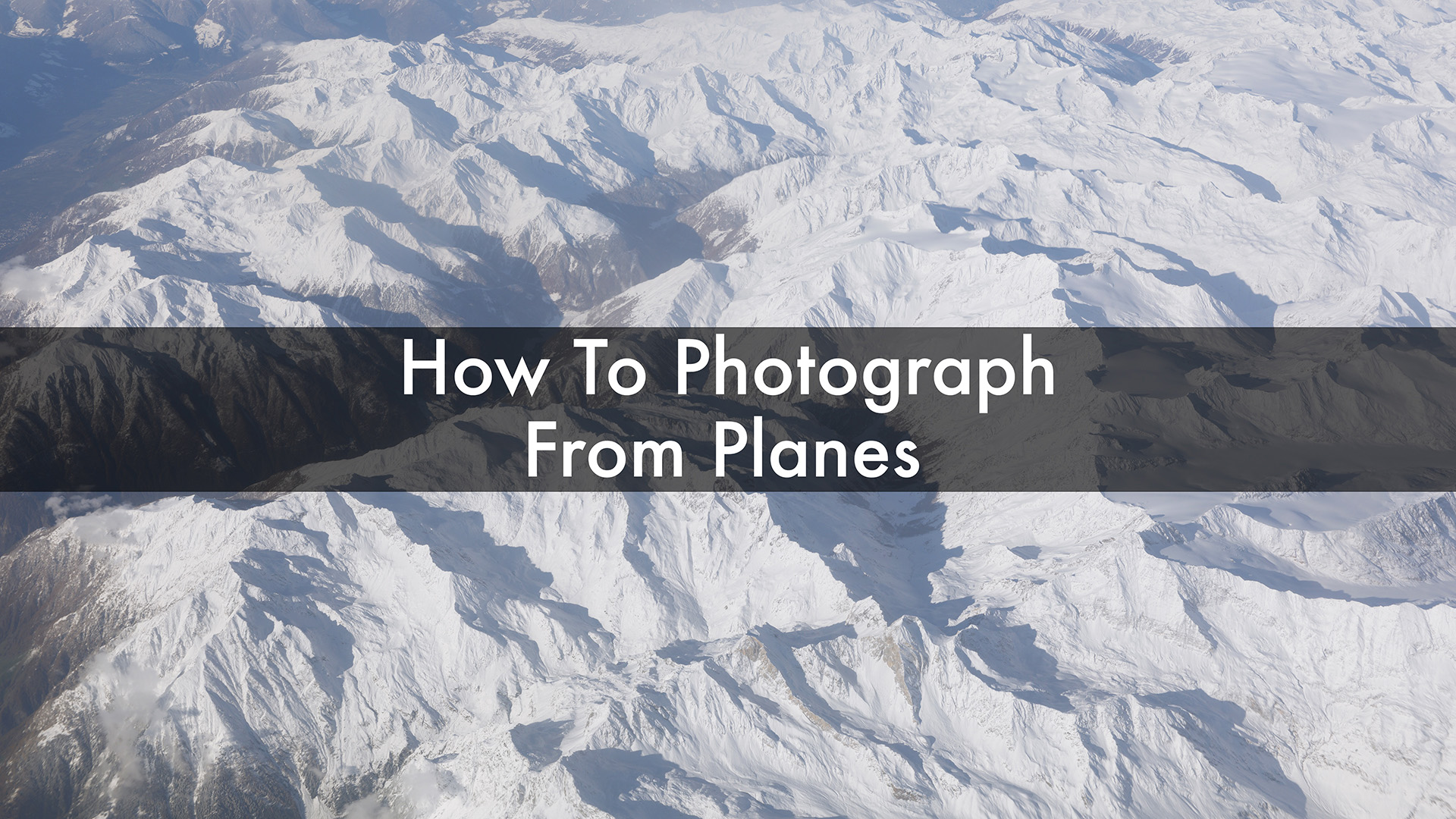

How to Photograph From Planes is a YouTube vlog I put together 3 years ago, but never got around to releasing it. Why? Because just afterwards, the pandemic hit and flying was nigh on impossible.
The sound isn’t perfect, but then I am on a flight and trying not to disturb other passengers around me.
Tips would be to use a 16-35mm or 24-70mm lens. Anything longer starts showing the ground speed of the plane.
If possible, take a look at Flight Radar 24 to see what flight path your plane is likely to take. At times you’ll be flying over some beautiful landscapes or sometimes be flying over cityscapes as you come into land.
If you can get the first row, then you’re definitely in business. Being seated over the wing will result in nothing, whereas if you’re at the back, you may pick up the heat from the engines.
So check out how to photograph from planes as next time you fly you could end up with some spectacular images on your journey.
My YouTube channel is dedicated to all things landscape and travel photography, so if that’s your thing, then I’d love to have you come along for the ride.
And if you’re interested, I offer photography tours and workshops in a variety of destinations around the world. If you’re interested in learning more from me to help you get the best out of your photography, then get in touch.
When I want to know how to photograph from planes well, I start by keeping the kit small. I don’t need a huge bag full of glass. In fact, taking too much gear usually gets in the way because space is tight, movement is limited, and the view can change in seconds.
My usual choice is a standard DSLR with either a 24-70mm lens or, if I want something a bit wider, a Canon 16-35mm F2.8 L Mark III. The Canon 24-70mm F2.8 L Mark II is a particularly good fit because it gives me enough width for broad mountain scenes, but it also lets me tighten the frame when patterns in the land start to appear.
I stay away from anything longer than 70mm for this kind of shooting. Once I push beyond that, the ground speed of the aircraft becomes far more obvious. Small vibrations, movement in the cabin, and the speed of the plane all show up in the shot much faster. Even if the subject looks close and tempting, a long lens often makes the whole thing harder than it needs to be.
For this kind of work, simple gear wins. My full setup is usually no more than this:
The polariser can help, but I treat it with caution. Sometimes it cuts glare from the window and gives me a cleaner frame. At other times, it creates odd rainbow effects across the image because of the layered aircraft glass.
If I use a polariser at all, I test it first. If the window starts producing strange colours, I take it off straight away.
That small decision can save a lot of frustration later.
Keep your camera settings simple when learning how to photograph from planes. A plane is not the place for fiddling through menus. The light changes quickly, the view disappears fast, and I need the camera ready before the best part of the scene slips behind the wing or cloud.
My standard starting point is ISO 100, aperture priority, and auto white balance. That combination gives me speed without losing control.
I use aperture priority because it lets me react quickly. If a mountain ridge suddenly appears through a break in the cloud, I can raise the camera and shoot without stopping to set everything manually. The camera handles the shutter speed, and I stay focused on timing and framing. For most daylight flights, that works well.
ISO 100 is where I begin when the light is strong. If the conditions are dull, or if haze and cloud knock the brightness down, I move up to ISO 400. I don’t mind that increase if it keeps the shutter speed healthy. A sharp frame at ISO 400 is worth far more than a blurred frame at ISO 100.
Auto white balance is also the right choice for me here. Aircraft windows can add all sorts of colour casts, especially when the sun hits the glass at an angle. Auto white balance handles those shifts better than trying to force one fixed setting.
Here is the quick setup I rely on most often:
| Setting | Starting point | Why I use it |
|---|---|---|
| Mode | Aperture priority | Fast to work with when the view changes quickly |
| ISO | 100, rising to 400 if needed | Keeps quality high, but gives me flexibility |
| White balance | Auto | Helps with colour casts from plane windows |
| Focus | Back button focus | Makes it easier to lock focus, then shoot cleanly |
That setup keeps the technical side out of the way so I can watch the light.
Back button focus is especially useful when learning how to photograph from planes. You can focus on a distant mountain, a strip of coastline, or a city below, then wait for the right moment and press the shutter with your index finger. Because focus is separated from the shutter, the camera is less likely to hunt again just as I take the frame.
That matters more than people think. A window can confuse autofocus, and the reflections don’t help. If I lock focus first, I have one less thing to worry about.
These settings work well for both landscape views and cityscapes on approach.
I still keep an eye on the shutter speed, of course, but this method gives me a reliable base every time I fly.
A good seat can make the difference when you’re learning how to photograph from planes. It’s the difference between coming home with strong images and coming home with nothing but wing shots. If I have a choice, I try to sit right at the front of the aircraft. On the flight I was filming, I was in seat 1 on an Alitalia flight from Rome to Amsterdam, and that front position gave me the cleanest chance of getting usable frames.
The reason is simple. At the front, I avoid much of the interference from the engines. Heat distortion and engine haze can spoil detail, especially when the air outside is cold, and the light is crisp. The back of the aircraft can also work reasonably well, but it depends on the plane and how much engine disturbance reaches the window.
The seats I avoid are the ones over the wing. That sounds obvious, yet it’s still the easiest mistake to make if I book without thinking. A wing seat often gives me nothing worth shooting, especially if the best view sits low on the horizon. Even when I can see beyond the wing, it usually dominates the frame and gets in the way of a clean composition.
On budget airlines, I often buy a front-row seat if I can. Because there is no first class or business cabin taking up that space, the best window seats are usually available if I book early enough.
Time of day matters too. On that Rome to Amsterdam flight, I was travelling in the morning. The sun was on the right-hand side of the aircraft, and I was sitting on the left. That gave me a better chance of avoiding direct glare. If I’m shooting through thick aircraft glass, that simple choice can save me a lot of trouble.
One of the best things you can do when learning how to photograph from planes is to check the likely route of the aircraft. I use FlightRadar24 because it gives me a solid idea of the path the aircraft is likely to take. That matters a lot if I want mountains, coastlines, or an urban approach rather than random clouds and farmland.
Before leaving for the airport that morning, I checked the route from Rome to Amsterdam and saw that we were due to pass over the middle of the Dolomites. That immediately changed how I thought about the flight. I wasn’t only travelling, I was preparing for a shooting opportunity. I also knew the region had seen its first snowfall, so I had a clear subject in mind before I even boarded.
That kind of planning helps in two ways. First, I can choose the best side of the aircraft. Second, I can stay alert when the strong part of the route is coming up instead of spending the whole flight staring aimlessly out of the window.
I use the same approach for city work. For example, flights from Paris to Heathrow sometimes come in over the eastern side of London before heading west. When that happens, the city can look fantastic from the air, especially in good light. If I know the approach in advance, I can be ready for it.
A few things I always consider before departure are:
When all of those line up, a routine flight can turn into a great photo session. If the thought of snowy peaks and layered mountain light appeals to you, my Dolomites landscape photography tours are built around the same love of strong mountain scenery, only with both feet on the ground.
Once we reached the mountains, the view did not disappoint. The Dolomites were covered in snow, and with the sky fairly clear, the whole range stood out beautifully. From the left side of the aircraft, I could already see snow across the Alpine margins, and as we moved on, the ridges and peaks became more dramatic.
Those are the moments when everything comes together. The route matters, the seat matters, and the setup matters, but light still does the heavy lifting. On this flight, the fresh snow gave the mountains shape, contrast, and a clean sense of depth. That sort of scene is exactly why I keep a camera close when I travel.
I also tried to get some footage through the window as well as still images. Video through aircraft glass can be tricky because vibration shows up quickly, but when the conditions are calm enough, it adds another layer to the experience. Even a few short clips can help capture the scale of the scene in a way a single still frame can’t.
Later in the flight, after chatting with one of the flight attendants, we tried to work out exactly where we were. It looked as though we had gone over or near Innsbruck and were leaving Austria behind. That kind of in-flight guesswork is part of the fun, especially when the terrain below is so distinctive.
I was also happy to give a nod to the Alitalia crew. They were not sponsoring anything, and there was no arrangement behind it. I simply appreciated the flight and the work they do. If I’m going to sit in a window seat staring out for half a journey, I don’t mind saying thanks to the people who make the trip possible.
When the scene outside changes quickly, I don’t want to think through ten decisions. I want a short routine that I can repeat without hesitation. Over time, this is the method that has worked best for me:
That is the whole process. There isn’t much mystery in it, and that’s the point. Plane window photography works best when the setup is clean and the decisions are made early.
If you enjoy this kind of work, you can also find more from me on the Julian Elliott Photography YouTube channel and follow along on Instagram, where I share more landscape and travel images.
The best part of learning how to photograph from planes is realising that strong results usually come from a few simple choices made before take-off. The lens has to be sensible, the seat has to be right, and the route has to be worth watching.
Once those things are sorted, I can stop worrying about the camera and pay attention to the world outside the window. That is where the photograph starts.
We noticed you're visiting from United Kingdom (UK). We've updated our prices to Pound sterling for your shopping convenience. Use Euro instead. Dismiss