 Skip to content
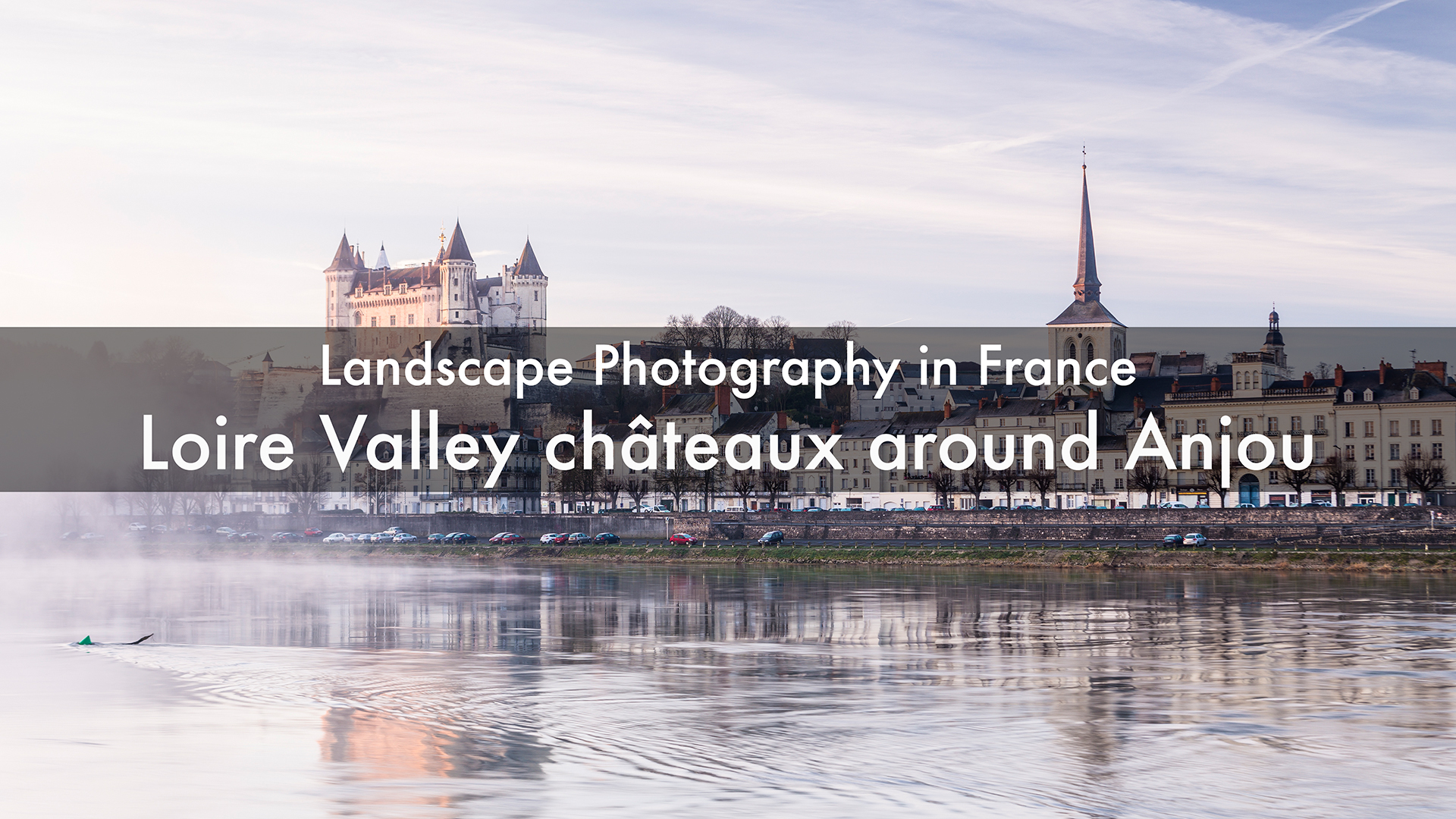

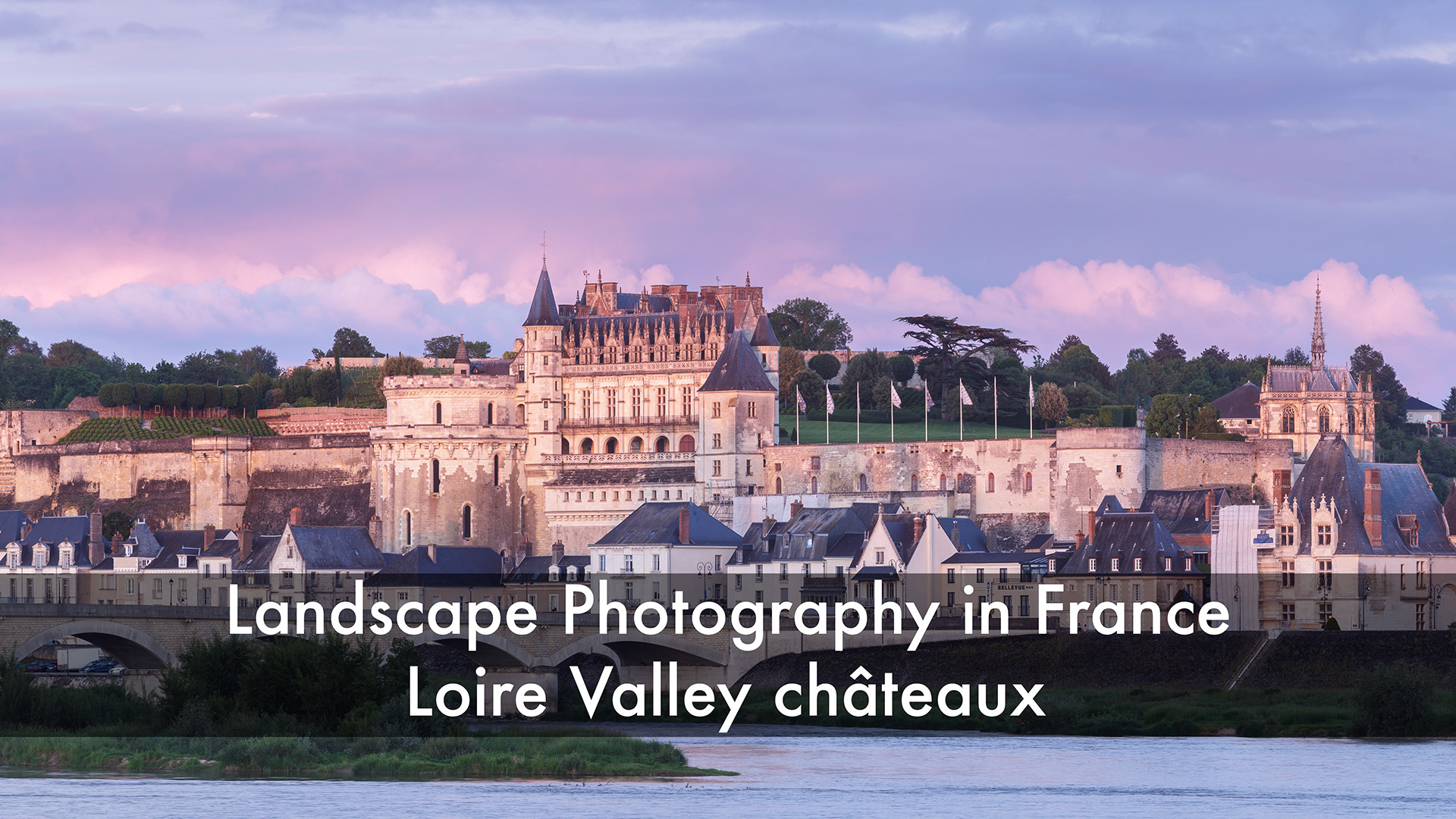
Loire Valley châteaux around Anjou is my latest YouTube vlog detailing some of my exploits as I travel to various parts of the world.
Some photography days feel settled before they begin. This one didn’t. I left home before sunrise with two clear goals, Saumur at dawn and Chinon at sunset, but the hours in between turned into the kind of loose, changing recce that often gives me more than the planned shots.
For anyone drawn to Loire Valley chateaux, this stretch of France gives you almost too much to look at. Rivers, vineyards, hilltop towns and old stone all sit close together, yet the light still decides everything. That was the story of this day.
And if you’re interested in discovering the Loire Valley with a camera, then do check out my annual Loire Valley photo tour in May.
I headed to Saumur in the dark, roughly an hour from my home in the Loire Valley. The idea in my head was simple and very clear: I wanted the gorgeous chateau atop the hill overlooking the city with a clean reflection in the Loire. When the river sits still, that view can be superb.
By the time I arrived, the scene already looked uncertain. Mist was moving across the water, the chateau kept appearing and fading, and the sky had picked up a soft pink tone that suggested there might still be a chance. That tension is part of dawn photography. You can read the forecast, make the drive, trust your instinct, and still find the whole place changing minute by minute.
I had nearly chosen a different location that morning. In the end, I took a chance on Saumur because the conditions felt close enough to what I had pre-visualised. Even when a place doesn’t give me the exact frame I came for, I still want to be there. Standing on the riverbank at first light, watching the mist move and the colour build, is never wasted time.
After setting up, I turned the camera about 45 degrees towards the bridge leading into the town centre. I could still see Saumur Chateau on the hill, although only faintly. The sun had not yet cleared the horizon, so I hoped the extra light would burn off enough mist to reveal the full shape of the building and its reflection.
That never quite happened in the way I wanted. Some of the mist behind me started to lift, but the conditions stayed awkward and patchy. It was one of those mornings where every few seconds looked promising, then closed down again.
A few things made the shoot harder than expected:
Mist can give a place atmosphere, but it can also hide the very thing I’ve come to photograph.
Even so, I didn’t leave empty-handed. When the main idea slips away, I still look for the best version of what the morning is offering. That meant trying an alternative composition by the bridge, then deciding to head higher for a different view over the town.
After finishing on the riverbank, I went up towards Saumur Chateau to see whether the higher ground offered anything better. I already knew there were one or two worthwhile views around the chateau itself, but this time, there was another issue: the building was under renovation.
From where I had stood earlier, that wasn’t obvious. Up close, though, it affected what I could do. Renovation work changes the feel of a historic site immediately, especially when you’re trying to make a timeless image. Scaffolding and barriers have a way of pulling the eye straight out of the frame.
So I moved on again, this time into the vineyards to the south of Saumur. On paper, that sounded promising. Vine rows, elevated views and old stone usually give me plenty to work with in this part of France.
The moment I reached the area, I remembered why I don’t often return there. Off to the east sits the nuclear power station at Chinon, and the surrounding area is threaded with electricity pylons. Once you notice them, they’re everywhere.
That was the main frustration of mid-morning. The vineyards themselves still had charm, but pylons skirting the landscape break the scene in a way that’s hard to ignore. They cut across the slopes, distracting from the lines of the vines and making the composition much more difficult.
I stayed with it long enough to assess the possibilities, then decided not to force images that I already knew wouldn’t satisfy me. Recce work matters as much as taking finished photographs. Sometimes the value of a stop is simply remembering why a location doesn’t suit the picture I want.
From there, I crossed towards a view I knew of across the Loire, looking towards Montsoreau and its chateau. That side of the river felt more open, and the scene immediately settled down. Nearby sits Candes-Saint-Martin, another beautiful village, at the meeting point of the Loire and the Vienne. Together, those places have the kind of quiet character that keeps drawing me back to this region.
There was still a pylon in sight, but only one, and that didn’t trouble me too much. Compared with the vineyards I had just left, the view felt manageable. I also wanted to scout another angle from around Montsoreau itself, one I had been aware of for some time but never properly checked.
Those middle hours were less about chasing a finished frame and more about building a mental map. That’s often how these days go. I set out for two anchor shots, then let the rest of the route fill in around them.
At one point, I also spoke about a small competition I was running at the time. In the previous vlog, I had photographed a place without naming it, and I thought it would be fun to let people guess the location.
The clues were:
The prize was an A4 print of the final image from that earlier visit, with entries due by the end of 1 March 2017. It was a simple way to keep people engaged, and it reflected something I enjoy about sharing photography in this format: people don’t only look at the pictures, they start paying attention to the places as well.
Later in the day, I made my way towards Fontevraud. After Montsoreau, I had been allowed onto private land for a view of the chateau there, which was a welcome bit of luck. Then, a little farther on, I stopped near the Royal Abbey of Fontevraud.
The abbey is huge. What you see from the road only tells part of the story because the site spreads much farther than a single frame suggests. A local had told me about a panoramic view, but when I checked it, trees blocked most of the clear sightline. That could have been the end of it.
Instead, another local pointed me towards a different angle, and that changed everything. The view was not the grand sweeping panorama I first expected, but it was better in a photographic sense because it gave me a cleaner, more useful composition.
I always value moments like that. If I speak to people in their own language, I get access to information that most visitors never hear. It might be a path, a field edge, a gate, or simply a better understanding of how a place opens up.
Local knowledge often beats hours of blind searching.
I spent a bit more time scouting around the abbey, then paused for lunch before thinking about the rest of the afternoon.
One of the things I was looking for that day had nothing to do with a famous building. I wanted a simple rural French scene, a small village among vineyards, the sort of picture that would work best on a misty autumn or early spring morning.
I found one by chance. While driving around and reading the shape of the land, I came across a winding road leading towards a church steeple. The composition was there straight away. Even under harsh light, I could see the future image in it.
That was not a photograph to force on the spot. The light was too hard, and the mood I wanted depended on softer conditions and likely some mist. So I noted the location and left it for another time, probably around six months later when the season and light would suit it better.
These half-finished discoveries matter. A day out with the camera is not only about what goes in the bag that evening. Sometimes the real result is a location stored away in memory, waiting for the right morning.
By late afternoon I reached Chinon, where the fortress rises above the Vienne. It is one of those places that seems made for photography. The scale of it is striking, and from the riverbank the whole structure holds the skyline with real presence.
I’ve photographed Chinon several times, and one reason I keep returning is the reflection. The Vienne so often gives me some form of mirror beneath the fortress, which makes composition much easier to build. When the water settles and the light begins to drop, the scene becomes exactly what I want from this part of France, strong architecture, calm water and enough space for the eye to rest.
Among the many Loire Valley chateaux, Chinon feels especially direct. It doesn’t need much explaining. It sits there and asks to be photographed.
For the main river shot, I used my Canon 6D with a 28-70mm lens and a 105mm polariser on the front. I didn’t need ND grads because the dynamic range was enough for the conditions in front of me.
The polariser helped in two ways. It cut some of the unwanted reflection on the water, and it also gave the sky a bit more strength because the sun sat roughly 90 degrees to my position. Small choices like that matter when the composition itself is already strong.
The practical challenge came from traffic. Cars passed between me and the scene, so I had to watch the timing of each exposure. On a longer exposure, even the roof of a passing vehicle can intrude enough to spoil an otherwise clean frame. Beyond that, it was mostly a matter of trimming out distracting modern buildings and keeping the focus on the fortress and its reflection.
As the sun dropped, I knew the river view had done its job. There was still some colour gathering in the sky, though, so I packed up quickly and climbed towards the vineyards above Chinon to see whether the evening had one more image in it.
That last move paid off. From the vines, I could look back towards the chateau with warm sunset colour behind it. I made two different compositions there, one from my main position and another slightly off to my left, both with the fortress sitting neatly in the broader setting rather than dominating the frame.
It was a strong way to finish. The day had begun with uncertainty at Saumur, passed through recce work, local conversations and abandoned ideas, and ended with the kind of light I had hoped to find.
The strongest lesson from this trip was simple, flexibility matters as much as planning. I began with a clear idea for dawn, but the mist had other plans. Because I kept moving, kept looking and stayed open to smaller discoveries, the day still produced work I was pleased with.
That is why I love photographing this region. The Loire Valley chateaux are remarkable in themselves, yet the spaces between them, the vineyards, roads, riverbanks and villages, often shape the day just as much. If you’d like to experience places like these with me, you can see my photography tours and workshops.
Saumur didn’t give me the exact reflection I had imagined at dawn, but Chinon closed the day with colour, structure and calm water. That balance between patience and movement is often what turns a long day out into a good one.
We noticed you're visiting from United Kingdom (UK). We've updated our prices to Pound sterling for your shopping convenience. Use Euro instead. Dismiss