 Skip to content
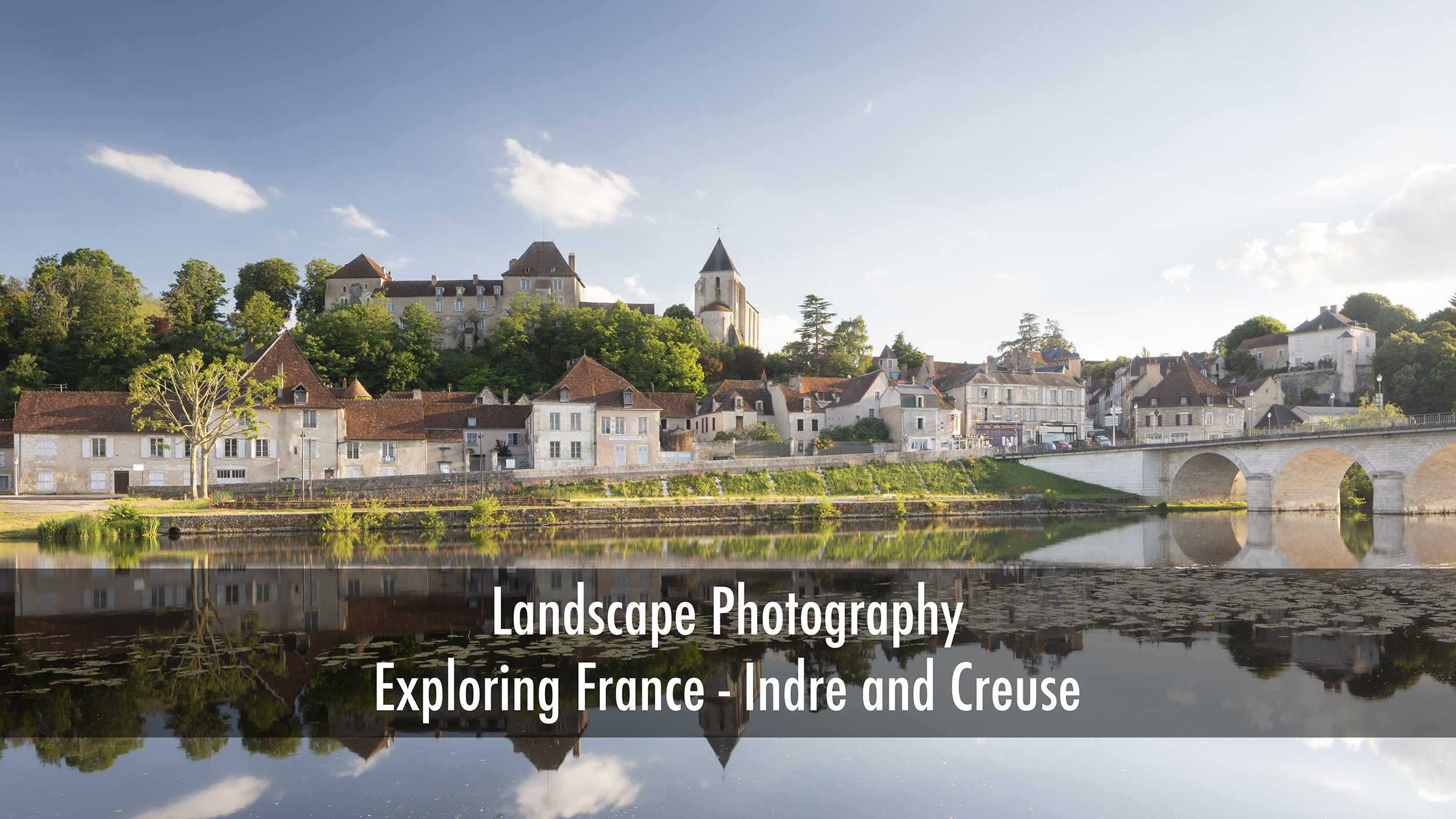

This week’s YouTube vlog on Landscape Photography Exploring France shows a little of the departments of Indre and Creuse. These central French departments have a number of beautiful sites to visit.
Now, I didn’t get a lot of time to vlog as I was trying to do some work on a presentation I’d been asked to do. Sometimes work just comes first!
My channel is dedicated to all things landscape and travel photography, so if that’s your thing, then I’d love to have you come along for the ride.
I began in Déols, in the Indre department, where the remains of an old abbey have been on my list for quite a long time. What survives today is striking in a sparse, almost stubborn way. There is the great archway, and there are the bells, and that is enough to make the place memorable.
Part of the reason I had put this visit off to this part of Indre for so long came down to light. I did not want sunlight falling badly across the structure first thing in the morning, and that meant waiting for the height of summer. At this time of year, I can arrive early enough and work with the angle of the sun before the scene loses the mood I want.
When I got there, the conditions improved the moment I looked east. Cloud was beginning to move across the sky, and that mattered. A clean blue sky can work, of course, but in a scene like this, I wanted a little shape overhead. The remains of the abbey have so much character that they benefit from a sky with some weight in it.
I had wanted to go to this part of Indre and photograph Déols for months, but this was not the sort of location I wanted to grab in the wrong season and call done. Morning light is everything here. In summer, the timing and angle line up far better, and that gave me the chance to work the scene properly rather than settle for something half right.
The sunrise itself had been pleasant earlier on, but the cloud arriving later across this part of Indre was what improved the picture for me. It softened the light and gave the old stone more atmosphere. That sort of change is why I keep watching the sky even after I have reached a location. A place can stay the same, but the photograph changes minute by minute.
Sometimes the best part of a morning is not the sunrise itself, but the light ten minutes later when the sky finally starts to do something useful.
After Déols, the day turned into one of those trips where every stop came with a small obstacle attached. Nothing disastrous happened, but there were enough hold-ups to test my patience.
The rough sequence looked like this:
That sounds neat written down, but it did not feel neat while I was doing it. Travel photography often looks tidy once the images are edited and placed in order. The day itself rarely is.
Saint-Marcel was one of those brief stops that stays in the mind for the wrong reason. I had hoped to sort out something simple at the bakery, but that turned into more trouble than expected. It was hardly the biggest issue of the day, though it added to the sense that things were not going to come easily.
Little moments like that are part of travelling. They do not ruin a day, but they do shift the rhythm.
From there I went on to Gargilesse-Dampierre, one of the “Beaux Villages de France” and a place long linked with George Sand. My main reason for stopping was the church, which is known for its beautiful Romanesque frescoes.
I arrived ready to photograph the interior and found a funeral taking place.
There was nothing to do but step back and move on. That is one of the unspoken rules of photographing historic churches and villages. However carefully I plan, these are living places first. I can return another time, but a funeral changes everything.
I did consider filming more there, but I was also working around the time and trying to stay focused. On a day like this, setting up the camera for every spoken piece can slow me down too much. I would rather come away with stronger photographs and a shorter account than spend the whole day talking into the lens.
My next major stop was Moutier-d’Ahun, in the department of Creuse. I have been there before, and every single time I found the church closed. By then, I almost expected another disappointment.
That nearly happened again.
When I arrived, I was told it was not open that day. After so many unsuccessful visits, that was a hard thing to hear. Still, this time I pushed a bit further and explained that I had come back repeatedly without ever managing to get inside. In the end, the mayor kindly phoned the town hall, and I was given permission to enter and take photographs.
That changed the whole day.
The church itself is beautiful, and from what I could see in the capitals and structure, it is Romanesque in style. Yet the real draw for me was not the building as a whole. It was the choir stalls.
They are extraordinary.
Some places impress you because of scale. Others do it because of the detail. Moutier-d’Ahun works through craftsmanship. Once inside, my attention kept returning to the carved wood, the rhythm of the forms, and the richness packed into that part of the church. I had wanted to get in there for ages, and within moments, I knew the effort had been worth it.
There is a special sort of relief that comes when a door that is always shut finally opens. That was the mood here. I was not racing about trying to make too many pictures. I wanted to slow down, look properly, and give the interior the time it deserved.
Because the access had come through a favour, I was also keen to work respectfully and efficiently. Historic interiors like this ask for patience. They are not places to rush.
My plan was simple. I wanted images that showed why I had kept returning to this church, and that meant putting the choir stalls at the heart of the work.
I focused on three things:
Even without saying much on camera, the place spoke for itself. Some interiors do that. They do not need much explanation, only careful framing and enough time to let the eye settle.
Moutier-d’Ahun is one of those places where the photograph begins with access. If the door stays shut, the image never happens.
By evening, I had reached Le Blanc, back in Indre, with the river behind me and the town rising beyond it. I had driven through there at night before and thought the same thing each time: this would suit a summer evening far better than a quick stop in poor light.
That instinct proved right.
The view needed the late end-of-day sun because of the angle of the town and the direction of the light. I still had about an hour and a half before sunset, and at that point in summer sunset was not until around 9.45 pm. In France, high summer can feel odd in the best way. You can be outside late in the evening and still feel as if the day has not quite finished.
Le Blanc was not a random last stop in Indre. It was somewhere I had noticed before and stored away for the right season. That is often how these photographs happen. I pass through, make a mental note, and return when the sun is in the right place.
This time I had the time to wait and watch. The river gave the scene calm, and the town above it gave shape.
Before reaching Le Blanc, I had also photographed a château near the same river. I did not spend much time talking about that part of the day on camera, but it added to the sense of moving through a connected landscape rather than jumping between isolated stops. River valleys often do that. They tie places together and make the day feel like one long route rather than a series of separate locations.
What helped all day was the weather. I had expected a lot of plain blue sky, which can become dull quite quickly, but instead I had good cumulus cloud drifting through. It never rained, and the cloud came and went often enough to keep the light interesting.
That sort of weather is a gift for photography. It gives the sky shape without shutting the day down.
I did not film as much as I sometimes do, and there was a simple reason for that. I was working on a presentation and needed to give that proper time. Sometimes the job in hand has to come first.
That meant I had to pick my moments. I could either stop constantly, set up the camera, and explain everything, or I could keep moving and concentrate on making the photographs. On this trip, I chose the second option more often.
Even so, the day still gave me a good cross-section of Indre and Creuse:
If you want a sense of what central France can offer, that is a fair start. Old religious sites, small towns, river views, and a lot of places that do not shout for attention but reward it when you stop.
For filming on the move, I have often kept things fairly simple. A GoPro Hero 8 and a Feiyu Tech gimbal make it easier to capture the day without carrying a full video setup everywhere I go.
For stills, my wider and tilt-shift options are often the tools I think about first in old towns and church interiors. Lenses such as the Canon 16-35mm F2.8 L Mark III and the Canon 24mm TS-E Mark II L suit this kind of work well because they help me manage both space and structure. Support matters too, and a sturdy tripod such as the Benro TMA38CL Carbon Fibre Tripod is useful when the light drops late in the day.
If you want to follow the wider journey, you can find more on my YouTube channel, browse my work on my website, or keep up with new images on Instagram and Facebook.
The strongest memory from this trip down to Indre and Creuse is not a single photograph. It is the mix of patience, frustration, and reward that ran through the whole day. That is often what travel photography in places like Indre and Creuse feels like. You wait, you adapt, and if you stay with it, the day usually gives something back.
Déols gave me the summer morning I had waited for. Moutier-d’Ahun finally opened its doors. Le Blanc closed the day with the kind of evening light that makes the long drive worthwhile.
Some journeys are easy. This one was better than easy because I had to work for it.