 Skip to content
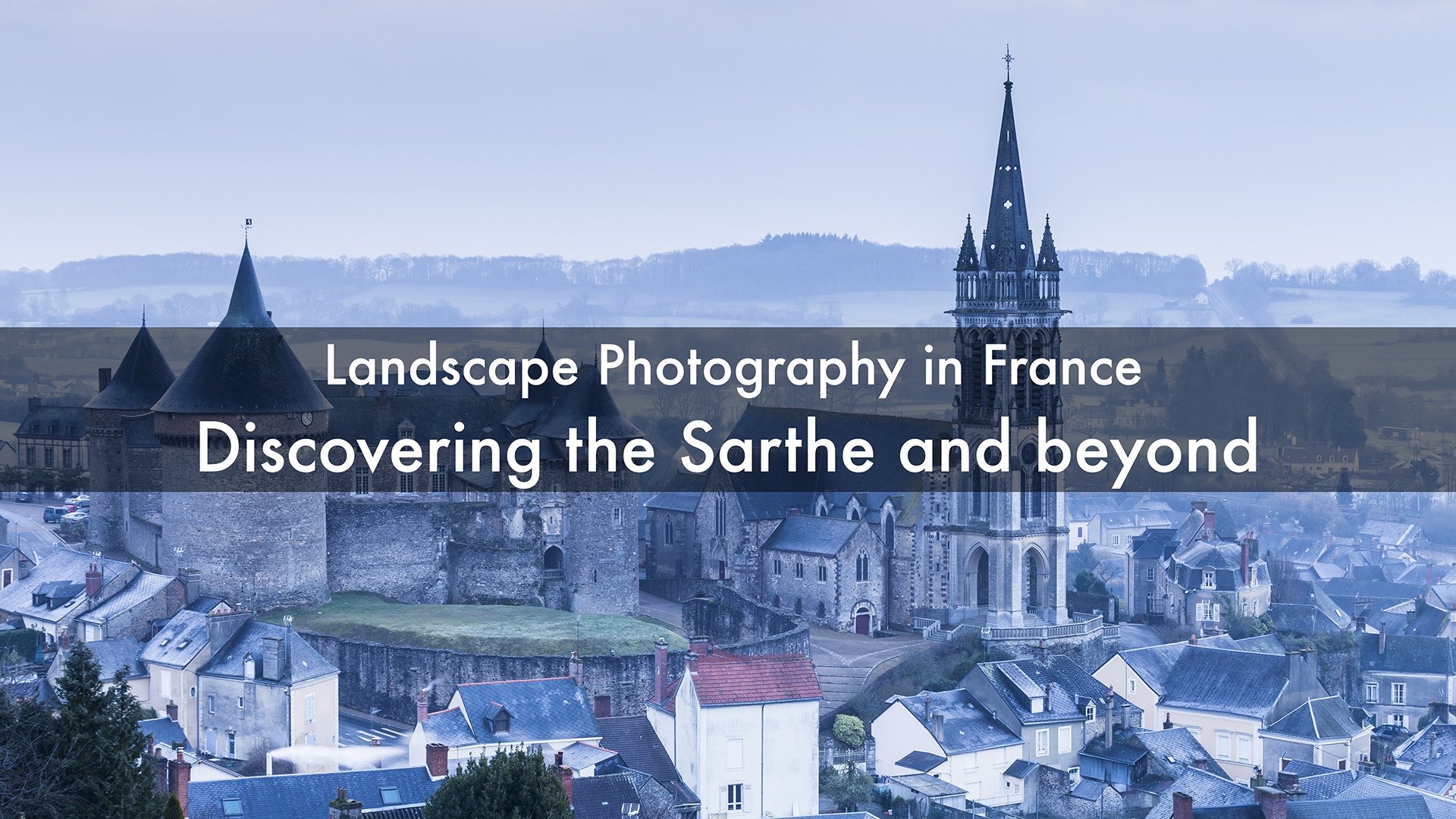

Discovering the Sarthe and beyond is my latest YouTube vlog detailing some of my exploits as I travel to various parts of the world.
If you only knew this beautiful part of France for Le Mans, then you’re missing out. I spent the day discovering the Sarthe and the country beyond it, looking for the kind of views that make you stop the car, slow down, and pay attention.
This is the side of France I always enjoy driving through, rolling hills and valleys, old villages, and quiet viewpoints that reward a bit of effort. Some images worked straight away, some became future plans, and that felt like a good day all the same.
I began the morning in Sille-le-Guillaume, around an hour and a half from home in central France. I know this area fairly well because I often pass through when I drive back to the UK with the family, and every time I do, I’m reminded how much I like this corner of the country.
The roads through here have a gentle rhythm to them. There are folds in the land, little valleys opening up behind bends, and villages that seem to appear one church tower at a time. That makes it a good place to start early, because even before the sun rises, the shapes are already there waiting.
I set up before dawn with a view across the town. The main pull for me was the pairing of the church steeple and the castle. Together, they gave the scene a clear sense of place. I wasn’t after a wide descriptive view of everything around me. I wanted something tighter, something that kept the feel of an old town rather than mixing it with too many modern details.
There were a few obvious distractions in the lower part of the frame, including a white building with a red roof and what looked like a supermarket area off to the right. Those elements pulled the eye away from the older buildings, so I had to work around them.
Once I looked through the camera, it was clear that I needed more reach. I changed over to the 70-200mm so I could pull the castle and church steeple closer together and trim away the edges of the scene that weren’t helping.
That change made a big difference. The longer lens let me remove some of the newer buildings and keep the frame focused on the older character of the town. I placed the church steeple slightly off the third, which suited the shape of the scene better than forcing it into a strict central balance. The castle sat over on the left and gave the image weight.
The composition felt right, but the sky never quite played along. Earlier, there had been less cloud, then cloud began pushing in from the east, right where I needed the sunrise to break through. That was frustrating, because the land had potential and the sun was rising over the hill behind.
Still, that first stop set the tone for the whole day. I had a usable image, a stronger sense of the place, and a reminder that weather forecasts only tell part of the story.
Sometimes a dawn shoot gives me a finished photograph. Other times it gives me a better reason to come back.
That early frustration was familiar. As a travel photographer, I spend a lot of time looking at forecasts, checking cloud cover, and trying to judge whether a location is worth the drive. The trouble is that forecasts can change from one hour to the next, and sometimes they are simply wrong.
That had been the case here. The day before, every time I checked this area, the prediction seemed to shift. In the end, I decided to go anyway because there are mornings when the only sensible move is to take that chance and get out there. If the conditions work, brilliant. If they don’t, I can still recce the area and bank locations for another day.
Sille-le-Guillaume wasn’t going anywhere, so I moved on. My next stop was Saint-Leonard-des-Bois, up in the Alpes Mancelles, an area I love for its deeper valleys and stronger shapes in the land.
I found the viewpoint I wanted, but, as so often happens, the best composition was in one of the most awkward places to reach. A few trees blocked the cleaner line towards the village, so I had to pick my way through heather to get to a spot with a clearer view.
It wasn’t the sort of position that would reassure anyone watching from below. There was a drop nearby, although I felt safe enough where I was standing. The reward was worth it. Down in the valley, mist moved in soft swirls through the gorge, and I set the camera running on a time-lapse to capture that movement.
The village sat quietly below, tucked into the folds of the land with the river, probably the Sarthe, running beneath it. This is exactly the kind of French countryside I love most, deep valleys, mist in the morning, and old settlements that look as though they belong to the shape of the ground.
The light wasn’t perfect, yet it was still good enough to show the place well. Shadows were falling across parts of the wider view, but they didn’t interfere with the village itself. If anything, the darker areas helped give the scene a bit more depth. By then, the forecast had already been proven wrong again, because instead of closing in, the cloud had started to burn off, and the day was turning beautiful.
From there, I moved on to Saint-Ceneri-le-Gerei, one of those villages that seem made for a high viewpoint. Looking down into the valley, I had the whole place laid out in front of me, with the houses clustered together and what looked like an old watermill below.
This kind of scene has a strong picture-postcard feel, and I mean that in a good way. There is something timeless about standing above a village like this and watching the light travel through it. When the sun shone into the valley and lit the buildings, with blue sky and white cloud above, the whole place came alive.
The pattern was already clear. Even when the weather didn’t match the plan, the day kept giving me places worth returning to.
For this view, I had the camera on my Manfrotto carbon fibre tripod with the 410 geared head. I also used the 1.4x extender with my Canon 24mm TS-E, which gave me the framing I wanted without losing the character of the wider scene.
Then the usual careful work started. I checked the frame for small distractions, because those details matter in village views. Some of the houses had satellite dishes, which I did my best to avoid. There was also a white car below, and although it wasn’t a disaster, it was one more thing to think about. At another time of year, the tree nearby would probably hide it.
That is often how these scenes go. From a distance, the composition looks simple. Once the tripod is up, all the little problems appear, and I have to work through them one by one.
I was happy with what I got at Saint-Ceneri-le-Gerei, but I knew straight away that it was a place to bank for later. In spring, the fresh growth would soften some of the harder edges. In autumn, the trees on the slopes behind the village could bring real warmth to the frame.
I could also see this working with a lower winter sun. That slightly angled light would give more shape to the buildings and more feeling to the valley. Some places are good on the first visit. Others show you what they could become, and this was one of those.
I stayed in the village and spent some time near a small chapel, where I set up another time-lapse facing east. After that, I started walking around to see whether there was a second image nearby. There usually is, if I give a place long enough.
Behind the chapel, I found a view towards the church on the hill. Straight away, I could see the problem. The chapel and the church belonged together visually, but the distance between them made the composition awkward. I couldn’t simply point the camera and expect it to work.
This is one of the less glamorous parts of the job, but it matters. Good travel photography often comes from patience rather than speed. I don’t simply spot a subject and press the shutter. I stop, move, change lenses, step back, look again, and work the scene until I know whether there is something there or not.
My first thought was to use the tilt-shift lens because I was dealing with architecture. That didn’t solve it. I tried the extender as well, and that still wasn’t enough. The issue wasn’t only sharpness or correction; it was perspective. With a wider lens, the chapel looked fine, but the church on the hill fell too far back and lost presence.
So I switched to the Canon 28-70mm and settled at around 50mm. That focal length brought the two elements closer together and gave the image a more natural relationship between foreground and background.
I wasn’t fully convinced it was a perfect photograph, but it was much stronger than the earlier attempts. On a cold morning like that, with my hands feeling the temperature, getting to a workable frame felt satisfying in itself.
My last stop of the day was a walled village beyond Sarthe. I had to finish before sunset because of a family commitment, so I arrived knowing this would be more of a recce than a finished evening shoot.
Even so, the place had immediate promise. It was easier to find the viewpoint than I had expected, and once I reached it, I saw a strong relationship between the rocks in front of me and the walled settlement behind. That foreground gave the image an anchor and stopped the village from floating too neatly in the distance.
The light, though, never fell into place. The sun kept peeking in and out of a bank of cloud, which had been the story of the day from the start. Had the sun broken through at the right moment, the frame might have worked well enough. As it was, I knew I was looking at a location to return to rather than one to finish there and then.
For this setup, I used the tilt-shift lens again, along with the 1.4x extender. The extender brought the castle and walls a bit closer, so they didn’t feel too small in relation to the rocks.
I then applied some drop shift and a little front tilt. The aim was simple: I wanted sharp detail from the foreground rocks all the way through to the village. That is where the Scheimpflug principle becomes useful, because it lets me line up the plane of focus more carefully across the scene.
The method was sound. The conditions were not. Yet I left pleased, because I had found another location that deserved better light. A misty morning would suit it far more than a flat afternoon, and since it isn’t far from home, I know I can get back there.
The equipment stayed fairly straightforward throughout the day. I worked with the same kit I trust on most trips through France:
More important than the gear, though, was the reminder that a place is not going to go away. If the cloud blocks the sun, if the shadows fall badly, or if the season isn’t quite right, I don’t need to force a picture that isn’t there. I can note the viewpoint, remember the light I want, and come back.
That was the real value of the day. I came home with some images I liked, but I also came home with a map in my head that had become much richer.
The best part of discovering the Sarthe was not a single finished frame. It was the steady build of possibilities, from dawn in Sille-le-Guillaume to the misty valleys of the Alpes Mancelles and the final walled village waiting for another morning.
I also left with a stronger sense of why I keep returning to rural France. These places reward patience. They ask for repeat visits, better weather, a different season, and a willingness to look again.
I’m grateful to everyone who has subscribed and taken the time to comment on the videos. That support makes these trips feel worth it, even when I am standing alone on a cold hillside with the camera clicking away.
You can see more of my photography on my Facebook photography page, and keep up with new work on my Instagram feed.
And if you’re interested in learning from me, I run various photography tours in France and beyond.