 Skip to content


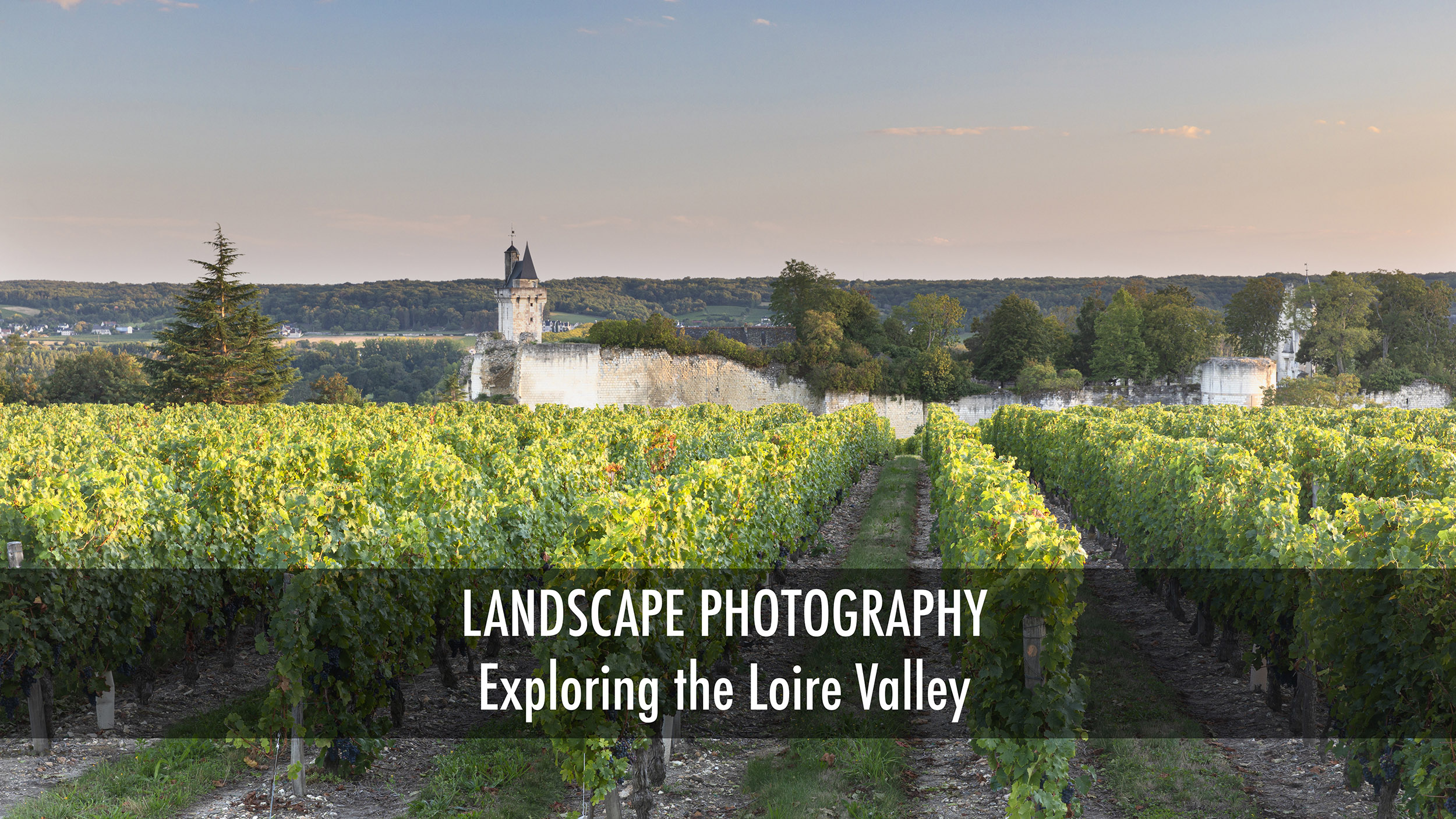
The Loire Valley châteaux and basilica is my latest YouTube vlog detailing some of my exploits as I travel to various parts of the world.
A winter photography day rarely goes to plan, and that is often when the best lessons turn up. I started at dawn beside one of the best-known Loire Valley chateaux, then spent the rest of the day adapting to cloud, rain, building work, and changing light.
What I came away with was more useful than a neat schedule. I found one strong dawn image, worked hard for another at a second château, marked down a village for spring, and finished inside a superb Gothic basilica when the weather finally shut the day down.
And if you’re interested in discovering the Loire Valley châteaux with a camera, then do check out my annual Loire Valley photo tour in May.
I began the morning at Sully-sur-Loire, which, for me, is one of the most beautiful Loire Valley châteaux, and it sits right at the start of the UNESCO World Heritage Site. The château sits only about 100 metres in front of me, dark and solid in the blue light before sunrise, with its reflection holding steady in the water. After a stormy night, I hoped the broken cloud would catch the first light and give me some colour behind the castle.
By the time I set up, the sky was still changing. Some of the cloud had cleared, but more drifted back in. That meant the scene never gave me the big, fiery dawn I had imagined. Still, winter often works like that. You arrive with one picture in your head, then the morning gives you a different one.
For this setup, I kept things fairly tight. I used a Canon 24mm TS-E tilt-shift lens with a 1.4x extender. On the back of the camera, the composition looked bold and close, and I didn’t need graduated filters for the light I had in front of me. I had also moved slightly from the position I had used on an earlier visit, because winter renovation work had introduced a white container into the scene, and I did not want that in the frame.
The light never opened up in the way I had hoped. Instead of warm clouds lit from behind, I got a cooler, moodier sky. I did not mind that in the end. The château of Sully-sur-Loire has enough character to carry a winter scene, especially when the colour contrast starts to work in your favour.
That happened as the morning settled. The château picked up a gentle red glow, while the cloud behind it stayed blue and cold. That mix gave me a finished image that felt honest to the conditions. It was not the dramatic sunrise I had set out for, but it was still a picture worth making, and it made the long, early drive worth it.
After leaving Sully-sur-Loire, I decided to keep exploring. I had found another château near Bellegarde while searching for ideas, and it looked promising enough for a stop, even if I was only treating it as a recce. Travel photography has always worked that way for me. I set a rough plan, but I leave room for detours.
Bellegarde looked strong from the start. The building had that grand Loire Valley châteaux character, and the sky was improving as I arrived. During the drive, the cloud had looked heavy and dull. By the time I got out of the car, patches of blue had started to break through, and that gave me hope that the scene might become more than a quick note for later.
Then the usual trouble started. Workmen came round the moat in a boat and drifted into the frame. On the opposite side, a large white van sat in a place that pulled the eye straight away from the château. I moved to avoid one distraction, only to have the van move back into view again.
That sort of problem can make a scene feel much smaller than it first appears. A beautiful building may be sitting in front of you, yet one badly placed van can ruin the balance.
A reflection does not always need the horizon in the middle. Habit is not composition.
I walked around the château and tested different angles. I tried wider views, longer views, and even a panorama with the tilt-shift lens. None of those frames pleased me. When I went too wide, the extra buildings in the background became tiny and weak. When I moved too tight, I lost the reflection that had drawn me to the scene in the first place.
The answer came when I stopped trying to force a full reflection shot. Many people see still water and immediately place the horizon dead centre. Sometimes that works well. Here, it did not.
I switched to a portrait composition and used the 24mm tilt-shift with the 1.4x extender, which brought the view closer to what felt like a 35mm field of view. That pulled the château nearer in the frame and let me keep only the part of the reflection that mattered. The scene felt more controlled straight away.
I also had to think about what belonged in the image and what did not. That included the obvious distractions, but it also meant judging how much of the surroundings helped the main subject. The bridge, the moat, the edge of the castle, and the space above it all needed to work together.
By the time I was talking through the shot, the light had gone flat again. The sun had slipped behind a cloud, and the château no longer had any light on its walls. Luckily, I had already made the frame I wanted about 15 minutes earlier, when the light was better. That is often how these moments work. You spend time wrestling with the scene, and then you get one short window when everything lines up.
The main lesson from Bellegarde was simple. Work the scene. Walk. Change height. Change lens. Drop the idea you arrived with if the place asks for something else. A good photograph often comes after the first five ideas fail.
From Bellegarde, I drove on to a village I had only noticed in passing earlier in the day. That village was Yèvre-le-Châtel, and from the approach it had the sort of outline that catches the eye at once: a ruined castle, a church tower, and a cluster of houses sitting together on the rise.
In better conditions, it could have been a proper stop. On that afternoon, though, winter had stripped the place back. The fields were not planted, the sky was grey, and the whole scene looked harder than I wanted. There was no point pretending otherwise. Some places ask you to return later.
So that is what I decided to do. I made a recce shot, enough to remind me of the view and the position, and I banked the location for April or May. With fresh growth in the fields and softer light, I could see it working well.
This stop mattered because it says a lot about the way I travel and photograph. I love driving in France for this exact reason. You get these open spaces, long views, and small places that appear with no warning. If the weather plays its part, the road itself can feel like part of the day’s photography.
It also reminded me that a fixed plan only gets you so far. I had one route in mind that morning. By lunchtime, I had already changed it more than once. That never bothers me. If a day closes down in one direction, I would rather keep looking than sit on the original idea out of habit. Some places give me a finished image there and then. Others give me a reason to come back at the right time.
By the time I reached Cléry-Saint-André, the day had turned. Rain had started, and there were reports on the radio warning of winds of around 100 km/h pushing in from the west coast. Any thought of photographing outside the sunset disappeared there and then.
That suited the next stop, because the basilica at Cléry-Saint-André was the main indoor subject of the afternoon. From outside, it had all the signs of French Gothic work, tall windows, rich stone detail, and that flamboyant character that stands out even in bad weather. I also knew that King Louis XI was buried there, which made me expect something special inside.
The interior did not disappoint. It was cold enough that I could see my breath, so the place felt almost as wintry indoors as it had outside. I kept my voice low out of respect for the building, and the quiet suited it. The nave opened up with tall arches, strong columns, and stained glass glowing softly at the far end.
Church interiors can be difficult to photograph well because height exaggerates every small alignment error. If verticals lean or the framing slips slightly off-centre, the image loses its strength. That is where the tilt-shift lens came into its own again.
For the first composition, I framed the nave so that the columns on each side sat evenly at the edge of the image. I also lined the arches up so they rose cleanly and met the upper part of the frame in balance with the centre of the nave. Because the space was so tall, I had to shift the lens a long way upward to include the upper structure and the stained glass at the back.
The first result looked good on the camera, but I was not fully convinced. That often happens with church interiors. A frame can be technically right and still not feel quite settled. So I pulled the camera further back into the nave, reset the whole thing, and made a second version.
That second shot was similar, but not identical. Each image had its own strengths and weaknesses. One felt stronger in the foreground. The other gave the space a better sense of depth. I knew I would have to wait until I got home to compare them properly on a larger screen.
In Gothic interiors, small changes in position can matter more than big changes in lens choice.
What mattered most was the process. I was not firing off frames and moving on. I was measuring the edges, checking the arch lines, watching the height, and making sure the image held together from top to bottom. In a place like Cléry-Saint-André, precision is part of the picture.
A day like this, photographing Loire Valley châteaux and other architecture, depends as much on flexibility as on equipment, but the gear did shape what I could do. This was the main kit featured across the shoot:
| Gear | How I used it |
|---|---|
| Canon 6D | I shot all the main still images on this body |
| Canon 24mm TS-E + 1.4x extender | This was my key setup for the chateaux and the basilica |
| Canon 5D Mark II | I used this for the time-lapse |
| Canon 70-200mm L | This was part of the featured kit for the day |
The tilt-shift lens was the thread that tied the whole day together. It helped me keep lines straight in the basilica, and it also helped me refine the château compositions when ordinary framing felt clumsy. Adding the extender gave me a little more reach without losing the control I wanted.
More than the gear, though, I was reminded how much a day improves when I stay open to change. I had a sunrise target and a rough plan for the rest of the day. Then the weather shifted, workmen moved into shot, a village turned into a future recce, and rain sent me indoors. None of that spoiled the day. It gave the day its shape.
If you want to see more of the work behind days like this, I share it through my photography portfolio, my Facebook page for Julian Elliott Photography, and my Instagram feed. I also run photography workshops for photographers who want to spend more time in places like these.
The strongest lesson from this trip was not about one lens or one location. It was about adaptability. Sully-sur-Loire gave me a dawn image I had to work for, Bellegarde made me rethink a reflection shot from scratch, Yèvre-le-Châtel became a note for another season, and Cléry-Saint-André rescued the afternoon when the rain arrived.
That is often what a good photography day looks like. You start with a plan, but the best results come from paying attention to what is in front of you. Some of the finest days among the Loire Valley châteaux do not unfold neatly, and that is part of their charm.
Finally, check out my blog highlighting what I consider to be the ten best photogenic Loire Valley châteaux.