 Skip to content
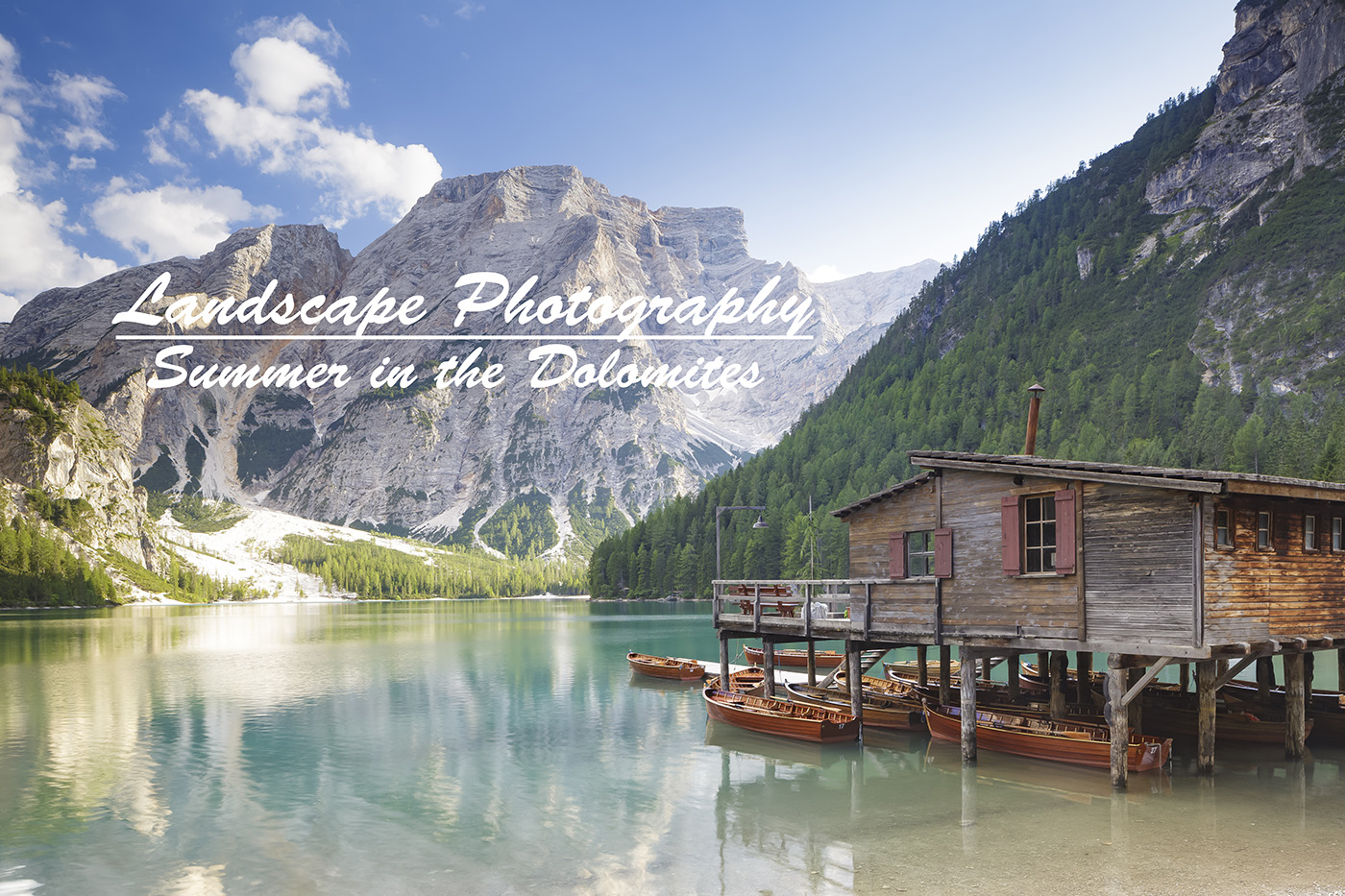

The Dolomites in the northernmost part of Italy are a stunning area to visit at any time of the year.
Wintertime is when the area has one of its peak seasons, as it’s apparently Europe’s biggest area for skiing. Autumn sees the area burst into wonderful shades of yellows and reds in both the trees and the vineyards. Spring sees the area gaining the greens again, while the summer season sees wild mountain flowers start to come into bloom.
So after many years of promising my daughter that I’d take her to Italy, the decision was made to spend the Summer in the Dolomites before heading down to Tuscany.
The Dolomites themselves are spread out across many miles, so you have to choose what part interests you or stay in the various parts to see all of it. What isn’t evident at first glance is the amount of driving that you can do. And if you’re not a fan of switchback roads and get uneasy in a car, then definitely think first, as you’ll come across many of these on journeys in the area.
So sit back and take a peek at my latest YouTube vlog to see what we got up to in the Dolomites.
And if you’re interested, I offer photography tours and workshops in the Dolomites. If you’re interested in learning more from me to help you get the best out of your photography, then get in touch.
Our summer holiday began in France, but the plan quickly turned into a proper driving tour. The day before reaching Italy, we set off towards Valais and drove right up to the Swiss border. Then, on the next leg, we crossed Switzerland from west to east and carried on through Austria before finally making our way into the Dolomites.
That long drive felt like part of the trip rather than a chore. When you’re moving through that much mountain country in one go, the journey has its own rhythm. The scenery keeps changing, the weather shifts by the hour, and the excitement builds the closer you get to the Italian peaks.
We had four nights set aside in the Dolomites, which gave us enough time to slow down a bit. That mattered, because this wasn’t one of those trips where I wanted to rush from one famous spot to the next. We were travelling as a family, so the plan was simple. We’d do some walking that suited the children, enjoy the high mountain views when we could, and then head down to Tuscany afterwards for a change of mood.
Tuscany promised something softer after the jagged drama of the Dolomites. We were hoping for old towns, a bit of swimming, and the sort of easy wandering that fits the second half of a summer break. Still, before any of that, I knew northern Italy would put a few photographs in front of me that I wouldn’t want to miss.
Our first proper day in the Dolomites took us up to around 2,000 metres. It was a little windy, but the height gave us a huge open view across the range. I was sitting on a bench facing roughly south, and the panorama in front of me was one of those scenes that makes you stop talking for a minute.
The mountains seemed to stretch out in layers, each one slightly different in shape and tone. Some were hard and jagged, others sat back in the haze, and the whole view had that clean Alpine depth that makes distances feel larger than they are. Even with people around and children to think about, it was the kind of place that settles the mind straight away.
From that viewpoint, I thought I could make out Val di Funes, the valley that holds the well-known Santa Maddalena church. I could also see more of the valley system around where we were staying, although I was still getting my bearings and didn’t know the area well enough to name every feature with confidence.
That uncertainty was part of the pleasure. When I visit a place I know well, I often arrive with a list in my head. I know the foreground I want, the timing I need, and the lens I’m likely to use. Here, I had none of that pressure. I could sit down, look around, and enjoy the place before thinking about photographs.
I liked the fact that I didn’t know every corner of the Dolomites on this trip. There is something refreshing about arriving without a fixed programme, especially when you’re away with family. It gives the day more room to breathe.
Instead of charging around, I could take my time and see what the area offered naturally. If the light looked good, I could respond to it. If the children needed a slower day, that worked as well. The Dolomites are generous like that. Even when you’re not in full work mode, they still give you more than enough to look at.
This part of northern Italy has earned its reputation. The rock faces, the open meadows, and the scale of the place all work together, and in summer there is colour everywhere. Even before sunrise and sunset come into play, the whole region feels photogenic. It isn’t hard to see why the area is recognised by UNESCO as a World Heritage Site.
A day or two into the trip, we spent the morning walking around one of the larger lakes close to the border between Italy and Austria. I kept the exact location to myself, but what mattered most was how easy it was as a family walk. The path was fairly flat, there wasn’t much climbing, and it gave us space to move at a comfortable pace.
That sort of place works well when you’ve got children with you. Nobody is struggling uphill, nobody is bored after ten minutes, and you still have enough around you to keep the camera out. In this case, the wildflowers were one of the highlights. There were plenty of them along the route, and they gave me the chance to make a few close-up photographs whilst the rest of the family carried on enjoying the walk.
Summer in the Dolomites isn’t only about grand mountain views. Sometimes the smaller details stay with me more strongly, especially on a holiday like this. A patch of flowers by a path, a quiet bit of water, or a gentle track through open ground can be enough to make a good morning.
We also spent time at Lago di Braies, one of the best-known lakes in the area. On this visit, we couldn’t walk the full circuit because part of the path was closed, so we had to go part of the way round and then turn back. That was slightly frustrating, but it didn’t spoil the visit.
The lake still has presence. Even when conditions aren’t perfect, it draws the eye with that dark water and the steep slopes behind it. I came away with a photograph I was pleased with, and that was enough for the day.
A location doesn’t always need to give you the full experience to be worthwhile. Sometimes you work with what’s open, take the view that’s available, and leave the rest for another time.
Later that same day, we drove up one of the mountain passes to have a look around. I treated it more as a recce than a shoot. I wanted to see what was there, how the land opened out, and whether any future options might be worth returning to. That proved useful, because I found some information I’d been looking for.
It wasn’t something I planned to act on during this trip, but it gave me a lead for another visit. That’s often how these holidays work. I might come away with a handful of finished photographs, but I also come away with ideas, notes, and half-formed plans for later.
By the end of the day, we were tired, so we went back early. From the terrace at our accommodation, I set up a time-lapse and let the light do the work. There was some good cloud around, and the sun was breaking across the hills in a way that kept changing every few minutes.
On a family holiday, I don’t try to force every photograph. I take what the day gives me, then I let the rest wait.
That approach suited this trip. I still had plans for the final day in the Dolomites, but I didn’t feel the need to lock them in too tightly.
When I go away with the family, I keep my gear light. I don’t want to haul half the house into the car, and I don’t want every outing to feel like a full job. For this holiday, I took one camera body and a small, practical set of lenses and accessories.
My kit was straightforward:
That was enough for the trip and no more. The 100-400mm gave me reach for compressed mountain scenes and details. The 28-70mm covers most general use. I packed the 24mm tilt-shift because I knew we’d be going into towns in Tuscany later on, and that lens makes a lot of sense when buildings start leaning the wrong way.
A lighter kit changes the mood of a holiday. I move more easily, think less about equipment, and spend more time looking at what’s in front of me. For me, that matters more than having every lens I own in the boot of the car.
One of the highlights of the trip was visiting Alpe di Siusi, often described as Europe’s highest high-altitude plateau. The sun was strong, as it was across much of Europe during that heatwave, but up there, the air still felt cool. I reckoned it was around 20°C, which made it comfortable even in full daylight.
I had both of my children with me, so the place had to work for more than photography. That was one of the reasons I liked this particular path. It was flat, easy to walk, and didn’t have steep drops right beside it. If I hadn’t felt comfortable bringing them there, I wouldn’t have done it.
That point matters more than people sometimes admit. Photographers often talk about getting to the best spot, but on a family trip, the best spot is the one that fits everyone. A huge view is no use if the path is stressful from start to finish.
Because the route was simple, we could enjoy the place together without turning it into an ordeal. The children could walk, stop, look around, and stay interested. Meanwhile, I still had the chance to take in the lines of the plateau and the mountain shapes beyond.
Later on, the plan was to head back down and do something for the children before I went off to another viewpoint I had wanted to see for some time. That felt like a fair trade. Family holidays work best when there’s a bit of give and take. I get some time with the camera, they get their part of the day as well, and nobody feels dragged through someone else’s plan.
That balance is one of the strongest things I took from this trip. The Dolomites are famous for sunrise, sunset, and those red-lit rock faces that photographers love, but a good holiday isn’t built only around the perfect light. It’s built around pacing, patience, and choosing the moments that suit the people you’re with.
I did allow myself one early start. At around 6.25 in the morning, I got up and drove to Lago di Misurina, which was only about an hour from where we were staying. On a normal family holiday, I probably wouldn’t bother, but the lake was close enough to make the idea hard to resist.
I had photographed it before, and if I’m honest, I had better conditions on a previous visit in November. Back then, the scene had more atmosphere, and the reflection behaved better as well. This time, I had hoped the thunderstorms from the night before might leave some good cloud hanging around the mountain behind the lake.
That didn’t happen. The cloud never quite formed the way I wanted, and the reflection was only decent rather than special. Still, that’s mountain photography. You can plan the drive, you can set the alarm, and you can arrive on time, but you can’t order the conditions.
Even so, I didn’t mind being there. A quiet lake at that hour still has its own reward, and the drive back gave me the sense that I had scratched the itch without giving the whole holiday over to work.
After the mountains, it was time to head south to Tuscany and the coast. We planned to visit Lucca, Pisa, and Livorno. I already knew Lucca and Pisa, but Livorno would be new to me, which always adds a bit of interest to the drive.
Pisa also had one obvious draw. My wife was keen to see the Leaning Tower, so that stop was always going to happen. I wasn’t sure how much of that part of the trip I would film, because once we left the Dolomites, the pace of the holiday shifted again. The mountain mornings gave way to town squares, old streets, and a more relaxed kind of wandering.
Trips like this often leave traces that carry on long after the holiday ends. A location I scout in passing becomes a future plan. A place I visit with the family later turns into a workshop location. In that sense, this short summer break in northern Italy sat alongside the wider work I do through my photography tours and workshops.
I also knew there was more travel ahead. Mongolia was already on the horizon, and that change of scene could not have been more different. Still, before any new destination came into view, I was happy to trade the Dolomite peaks for Tuscan streets and a slower coastal finish.
What I remember most from this trip is the balance. I was in one of the most photogenic parts of Europe, yet the best moments often came when I stopped trying to chase every frame.
A summer in the Dolomites gives me more than enough to work with, even at a family pace. The mountains are still there, the light still finds its way across the rock, and the photographs that matter usually come when the day has room to unfold on its own.
That’s the part I would keep from this trip above all else. I didn’t need to shoot everything to enjoy where I was.