 Skip to content
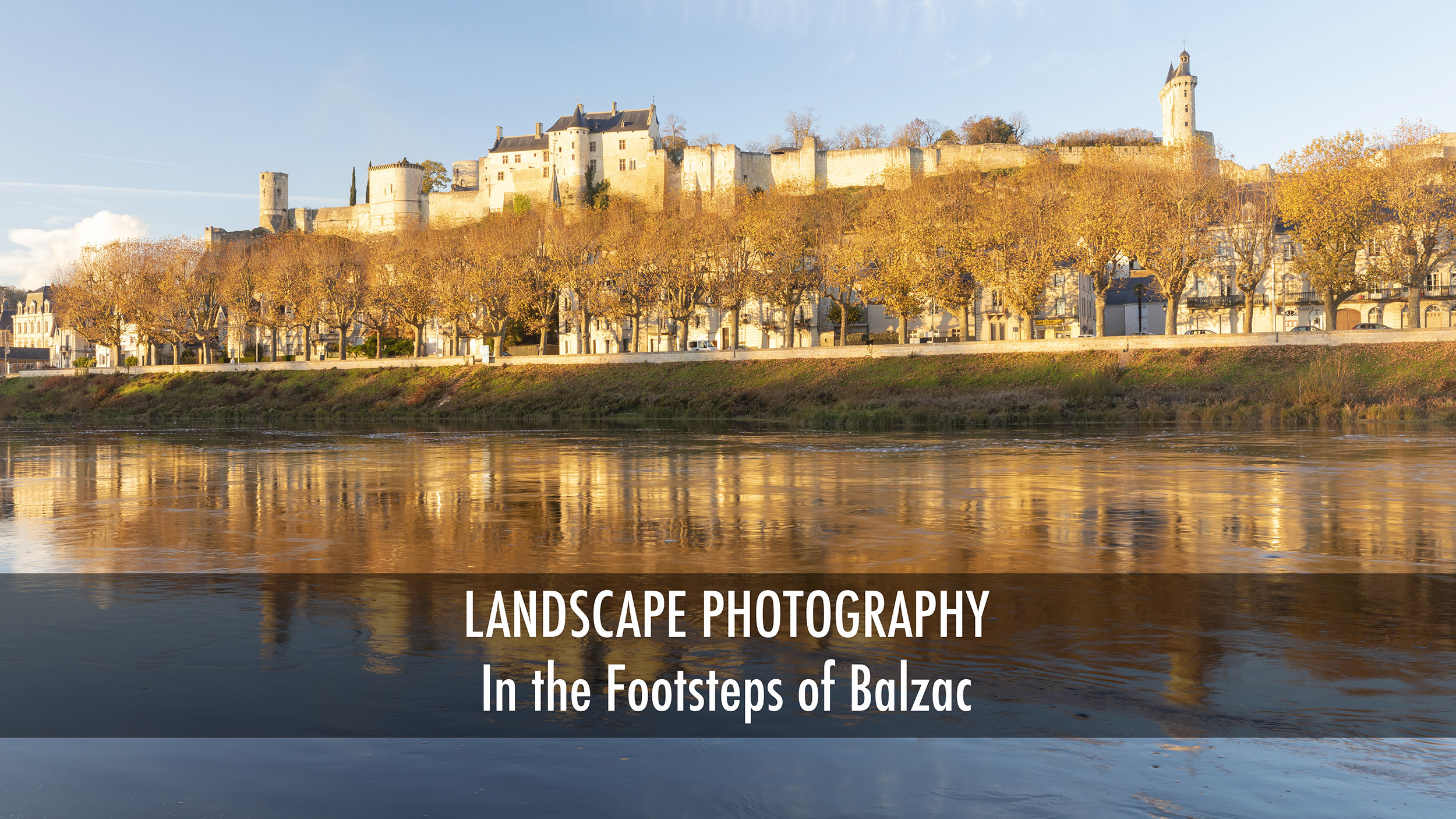

Exploring France – In the Footsteps of Balzac is my latest YouTube vlog detailing some of my exploits as I travel to various parts of the world.
For today’s vlog, Exploring France with Landscape Photography, we take a journey along a trail dedicated to the famous French writer Honoré de Balzac.
Born in 1799 in Tours, he lived in Paris but would come back to central France to write. The area inspired the novel Lys dans la Vallée or Lilly in the Valley.
The trail that I came across pointed out several places such as towns, castles and old mills. So I thought, let’s take a journey along some of these highlights and give you more of an idea of what’s here in central France.
And if you’re interested in discovering the Loire Valley with a camera, then do check out my annual Loire Valley photo tour in May.
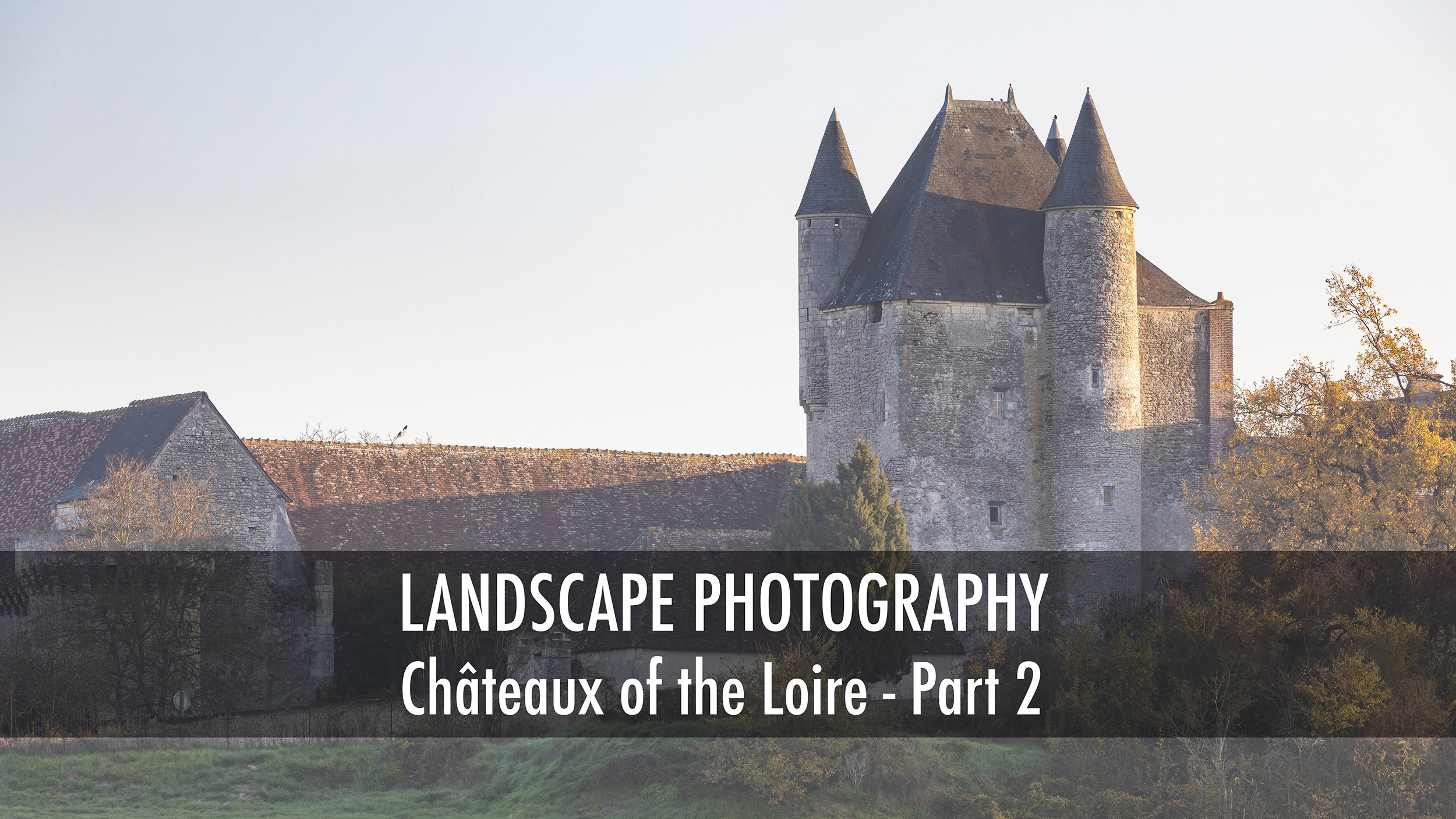
The morning began with the sort of conditions that can make one subject sing and leave another dead on arrival. The sky had no shape to it, the light was flat, and the air sat somewhere between mist and fog. For trees on their own, I wasn’t interested. For a ruined castle, it was perfect.
My first stop was a ruined chateau about 25 minutes from home. I couldn’t get inside for a stronger angle because it was closed, and the better viewpoint seemed to be on private land, so I stayed by the roadside and worked with what I had. That limitation didn’t bother me much because the whole point of the scene was atmosphere, not access.
With the frost still on the ground, the castle had that soft, half-hidden look that ruins wear so well in winter. The lack of a strong sky stopped mattering at once. In fact, it helped. The broken shape of the building carried the picture on its own, and the mist stripped away anything distracting beyond it.
I used my 24-70mm at about 50mm. A dedicated 50mm tilt-shift would have suited the scene beautifully, but the standard zoom still gave me the framing I wanted. I looked at a bank with some old trees on it and thought that might have been the best angle of all, but from where I stood, I had enough to make the most of the morning.
Mist can rescue a scene when the subject has a strong outline, and a ruined castle has more than enough shape to hold a frame.
That first stop set the tone for the day. I wasn’t chasing grand weather. I was chasing places with character, and Balzac’s trail had already given me one.
From the ruined castle, I moved to Cinq-Mars-la-Pile, a place known locally for the Roman monument that rises above the village. If you drive the main road between Tours and Langeais, you can hardly miss it. It stands on the hill with the sort of presence that makes you slow down even if you had no plan to stop.
La Pile dates from around AD 200. It’s often described as a funerary monument, built to mark the death of an important person, although the identity of that person isn’t clearly given in the local information. That uncertainty almost adds to it. So much of Roman France survives as fragments, but this thing still stands tall and stubborn above the road.
I didn’t photograph it that morning because the conditions weren’t right. The mist was heavy, the sound of traffic carried up the slope, and I knew I could return in better light without much effort because I live nearby. Sometimes the right decision is to leave the camera in the bag and make a note for another day.
That stop also reminded me how layered this part of France is. Within a short drive, you can move from medieval ruins to a Roman monument, then on to the rivers and villages Balzac wrote about. It gives a day out with a camera a sense of depth that goes beyond ticking locations off a list.
One of the best surprises of the day wasn’t on the Balzac plan at all. I found it by looking around on the map, saw the symbol for an old mill, and thought it was worth a quick detour. Those unplanned turns often give me more than the sites I started with.
The mill sat beside the River Cher in a fog-laden scene that felt half-hidden and half-revealed. I could hear the rush of water before I settled on the composition, and once I got into position, I found myself changing my mind more than once. At first, I crouched low and tried to include the reeds and rough growth at the edge of the bank. Then I stood up, looked again, and realised the foreground was only cluttering the picture.
In the end, I kept it simple. I placed the camera low, about 60 centimetres off the ground, used an eight-second exposure at f/11, and let the water smooth out a touch. I wasn’t trying to turn it into a soft, abstract long exposure. I only wanted to take the edge off the movement because there wasn’t much detail in the water worth preserving.
The ground was muddy and awkward, so I used a longer self-timer to avoid any shake. Meanwhile, the mist came and went around the mill, and that changeability gave the scene an ethereal feel without making it disappear completely. It looked better and better as the fog began to lift.
What mattered most was the potential. I could see at once that this place would be superb in better light, perhaps on a summer morning or evening when the angle of the sun suits the building, or even on a winter day with cleaner air. The access is awkward, and I wouldn’t send anyone down there lightly, but I knew I’d be back.
The next stop was Château de la Carte in Ballan-Mire, south-west of Tours. This one left me scratching my head a bit, because although it appears on the Balzac trail, I couldn’t find a clear reason why. The information board didn’t explain it, and what I found elsewhere gave me very little. That happens sometimes on local heritage routes. A place is included, yet the connection is left hanging.
Even so, the photography was worth the stop. I couldn’t get any closer than the fence line, and I had no interest in hopping over for the sake of a better frame. From where I stood, a 45-degree view towards the old gate worked well enough, especially once the light improved and the mist began to burn away.
For this scene, I used my 24mm tilt-shift lens with a 1.4x extender. The sun was picking up the trees, and I wanted to keep the warmth I could see with my own eyes, so I switched the white balance from auto to shade. That small change made a big difference. Auto made the whole view feel colder than it was. Shade brought back the autumn colour in the trees and made the place feel welcoming.
I also fitted a polariser because patches of blue were starting to appear overhead. As the sky cleared, the old gate, the framing trees and the remaining haze began to work together. Best of all, there was almost nothing modern in the frame, which always helps when I’m photographing somewhere with a long history.
At the time, I also had a SpyderX Pro on the way, so white balance was already on my mind. Days like this make that sort of tool relevant. Stone, mist, weak winter sun and fading leaves can all pull colour in different directions, and getting the warmth right matters.
One of the most fitting stops of the day was Pont-de-Ruan, the place that first gave me the idea for this outing. I had finished a previous shoot here, walked back to the car, and spotted the information board that mapped out Balzac’s local trail. Returning felt like closing the loop.
Pont-de-Ruan is easy to understand once you stand there. The river, the mill, the church, the houses and the gardens all sit together in a way that feels settled and balanced. Balzac wrote about several mills on the River Indre in Le Lys dans la vallée, and this area still has that calm, almost storybook quality.
The light was better than on my earlier visit, though I could already see that a winter sunset would be even stronger. With the sun behind me, I used the 24-70mm again at about 50mm, fitted a polariser, and made a half-second exposure to soften the water slightly. I also moved enough to reveal a little more of the mill’s side wall, because a straight-on view felt too flat. That small shift gave the building some depth.
The result had a picture-postcard feel, but I don’t mind that when the place deserves it.
Later in the day, I found another mill, tucked away off the main road. You wouldn’t stumble across it by chance. I found it because I spent time with the map before heading out, and that sort of groundwork still pays off.
This mill sat beautifully on the water and looked partly restored. It also seemed lived in, or at least used, because there was a satellite dish attached. By then, it was past one in the afternoon, so I put on a six-stop filter to make the water feel a little softer and calmer in the frame. Again, I wasn’t after a heavy-handed effect. I only wanted a gentler surface.
There was a nice reflection, but I didn’t want to centre it. Instead, I used the lines in the scene, including the tree line and the wall, to hold the composition together. I noticed something colourful near the wall, perhaps a small boat or pontoon, though I couldn’t make it out clearly from where I stood.
The light wasn’t perfect, yet the place had enough charm to make an impression. I left knowing it was another one to bank for a better day.
From the mills, I carried on towards Saché, one of the most obvious Balzac stops in the area. The village is home to the Chateau de Saché, now the Musée Balzac, but before reaching the museum, I went in search of another place tied to the novel.
Near Saché, I picked my way through dense woodland to reach Moulin Rouge, the red mill mentioned in Le Lys dans la vallée. Getting there wasn’t pleasant. There was no clear marked path on the route I used, only thick undergrowth and stinging nettles up to chest height in places. Across the river, the opposite bank looked plainly private, with fishing huts, boats, and neatly kept grass. On my side, I saw no signs saying private property, but I still wasn’t fully sure where I stood.
The mill itself looked closed up. Shutters were shut, curtains drawn, and the place had the feel of a summer house or an occasional retreat rather than a full-time home. Even so, it sat in a lovely, quiet setting beside the water.
The difficulty was the angle. Overhanging branches got in the way, and the stronger view seemed to be from the private side of the river. I took the shot I could get, accepted its limits, and moved on. That’s part of photographing historic places in France. Sometimes the scene is there, but the access never fully lines up with the picture in your head.
Back in the village, the mood changed at once. Saché gave me one of my favourite views of the whole day, not because it was grand, but because it felt so rooted in place. An old road led towards the church, with old stone houses and the sense of a village that hasn’t had its edges knocked off.
I had noticed this scene on an earlier drive and knew it would work with side light. When I returned, the sun was striking the stone from the right angle, so I set up with the lens around 50mm and added a polariser. The composition was simple, but the exposure was not. White stone in bright sun can throw back a huge amount of light, and that meant I needed to blend exposures to keep detail in both the lit walls and the darker areas.
I didn’t get the château itself in the way I had hoped, but I was happy with the compromise. The church, the houses and the narrowing road carried the feel of Saché better than a rushed museum exterior would have done.
Before heading to Chinon, I made a brief stop at another ruined chateau. The site had suffered a major fire in the late 19th century, which destroyed much of it, and it was later used by German occupation troops. What I couldn’t pin down was its Balzac connection. Like Château de la Carte, it appeared on the trail, yet the reason remained unclear.
The place had promise, but the timing was wrong. The sun had gone behind it, and the season didn’t help either. I sent the drone up for a quick still to record the site, though I didn’t bother with video because the light wasn’t good enough to justify it.
From there, I pushed on to Chinon, my final stop of the day. Chinon needs little introduction if you know this part of France. The fortress rises above the town with real authority, and it carries a long history beyond Balzac, including its links with the Knights Templar. For this journey, though, I was thinking about Balzac’s Les Deux Amis.
By the time I arrived, the day felt complete. I had moved through fog, frost, Roman stone, river mills and village streets, all within a part of France that Balzac knew well. Born in Tours, he spent much of his life in Paris, yet he came back here to write. Standing in Chinon at the end of the day, that made perfect sense.
What stayed with me most was how clear Balzac’s local inspiration still feels on the ground. The mills, the rivers, the old roads and the worn stone villages haven’t lost the mood that would have drawn a writer back from Paris.
I came away with some photographs I liked, a few locations I want to revisit in better light, and a stronger sense of how much character sits within a short drive of Tours. Days like this are also why I love running Loire Valley photography tours, because this part of France keeps rewarding patience, research and a willingness to wander a little off plan.
Most of all, the day confirmed something simple. If I keep following history, rivers and instinct, France usually gives me a picture worth stopping for.