 Skip to content
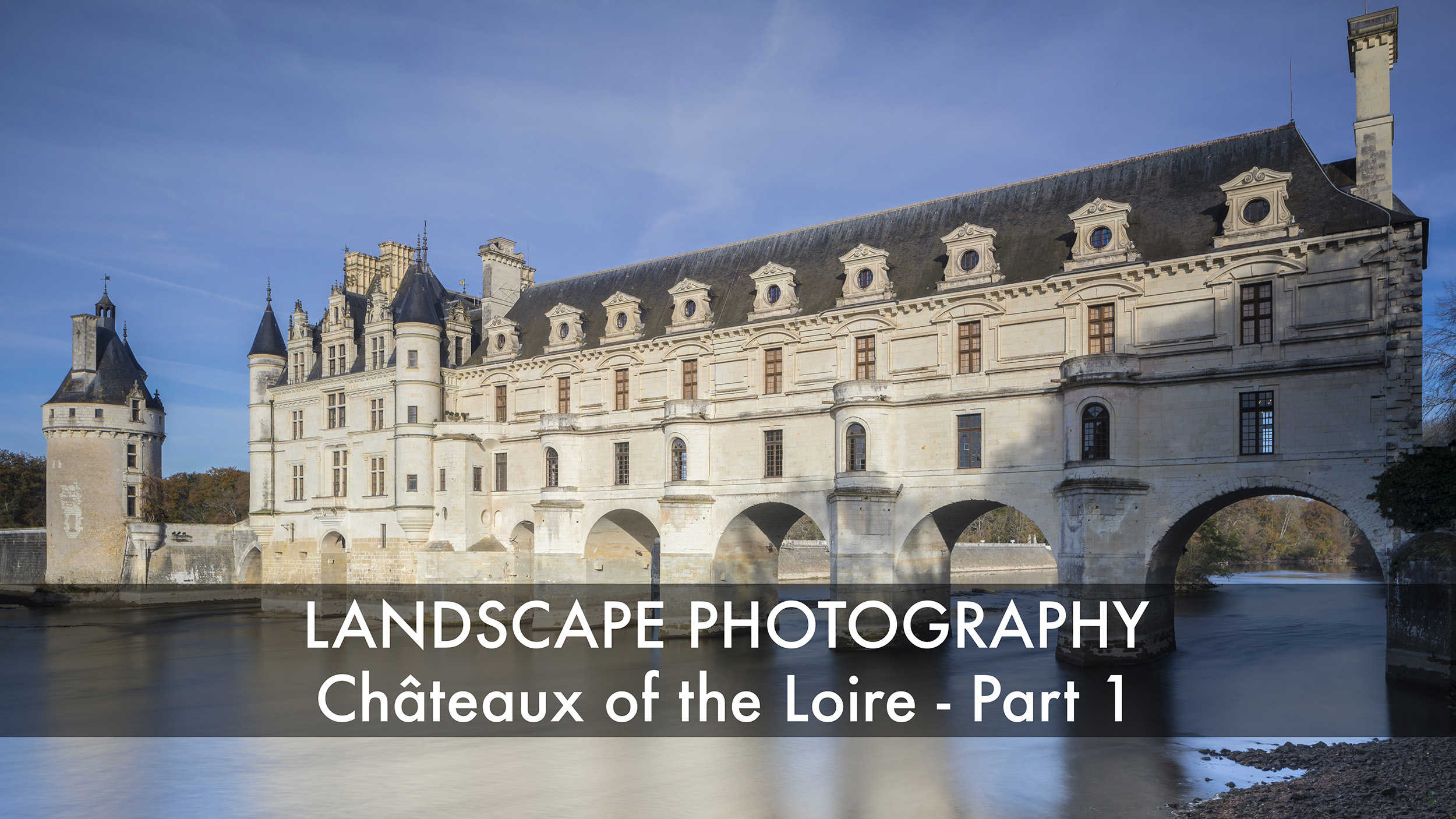

The Châteaux of the Loire Valley are famous worldwide and rightly so. From old medieval fortresses such as those at Chinon to more stately castles dotted around the area, they make great subjects for both landscape and travel photography.
With this YouTube vlog series, I aim to introduce some of the well-known as well as lesser-known castles that are here in central France. Do be aware, though, that not all of them are accessible to the public and remain behind high walls sealed off from public gaze. But those that are visible will be covered where I can.
And if you’re interested in discovering the Loire Valley with a camera, then do check out my annual Loire Valley photo tour in May.
The Loire Valley is a UNESCO World Heritage Site, and when you stand in front of places like Chenonceau, it is easy to see why. This stretch of France is beautiful throughout the year. Spring gives you fresh greens, summer offers early and late colour, autumn can bring warm foliage, and winter often strips the scene back to shape, stone and light.
That matters for photography because the châteaux of the Loire are not one-season subjects. They change with the weather, the river level, the leaves on the trees, and the direction of the sun. A view that works in winter at sunset might be poor in summer. Another spot may come alive only when the river is low enough to let you move onto the bank.
For this first outing, I kept to three castles that sit within easy driving distance of each other. If you enjoy cycling, they are also realistic as part of a route in the area, especially with paths and regional cycle infrastructure nearby, including Loire à Vélo routes. That makes this part of France especially appealing if you want to combine travel and photography without spending half your day in the car.
The main takeaway is simple. These are not postcard locations where I turn up and press the shutter. I have to read the light, trim distractions, and sometimes accept that the strongest shot is the tightest one.
Château de Chenonceau is one of the great châteaux of the Loire, and it earns that reputation every time I see it. The building began as an old mill on the River Cher, and over time, it became the remarkable bridge-like chateau that stretches across the water. Its history is layered, with wartime use as a hospital and a striking position during the Second World War, where one side connected occupied territory and the other linked to free France.
For visitors, there are two ways to think about access. You can pay to enter the grounds on the main side of the estate, and at the time I filmed it was around €10 or so. However, the side I prefer for photography is the freely accessible public side. I can park near the woods, walk up, and work from the cycle path and riverside area without entering the formal grounds at all.
That matters because this side gives me what I want most, a cleaner view of the chateau with stronger reflections in the Cher. It is also a practical location. I can come at different times of day, I do not have to work around opening hours in the same way, and I can move more freely along the path.
At Chenonceau, the most famous side is not always the best side for a photograph.
I also like the fact that this location works for more than one kind of photographer. If I want a classic wide shot, I can do that here. If I want a longer lens view with the river curving towards the castle, I can do that as well.
The first composition I often look at is a fairly straight-on facade view from the wall near the river. For that, I used a 24mm tilt-shift lens. I could have gone wider and corrected the verticals later in Photoshop or Lightroom, but I prefer getting those lines right in camera when I can.
There is one immediate problem, though. The contrast can be harsh when the sun hits the facade. The castle sits in bright light while the foreground and parts of the scene fall away into darker tones. On a day like this, I am usually looking at around a two-stop difference between the main subject and the darker foreground. I can use graduated filters, but because of the angle of the light, I often get a cleaner result by taking two exposures and blending them later.
I also watch the edges of the frame closely here. The wall by the river can creep into the composition if I am not careful, and there are overhanging trees that can intrude from above. With a tight framing at 24mm, there is not much spare room left once the chateau fills the composition.
The second option is the long-lens view. When the river is low, I can step down onto the bank and shoot almost face-on towards the castle. If the water is still, Chenonceau reflects beautifully. That is where a lens over 200mm becomes useful. On a crop-sensor body, it becomes even easier to fill the frame. I also pay attention to the horizon line and the chimney on the right-hand side of the castle. If I place the frame badly, the skyline feels cramped. If I set it slightly off-centre, the whole image settles down.
There is also room here for more experimental framing. With a 100-400mm lens, I can crop out the sky and isolate windows, arches and stonework for a more abstract study of the building.
Timing changes everything at Chenonceau. The château runs roughly on a south-west to north-east line, so the season matters. If I want a fiery sunset on the castle, winter is stronger. If I want warm early light in the morning, summer gives me more chance.
Aerial options exist, too. I can go up in a hot air balloon for a broader view, but I also keep drone restrictions in mind because there are height limits in the area.
My second châteaux of the Loire was Château de Montrichard, with the town below and the old ruined castle on the hill above. This one is older in feel than Chenonceau, more defensive and rough-edged. The ruin dates back to the 11th century, and it was later dismantled on royal orders. From a photographic point of view, that worn look is part of its appeal.
The view I know best is from across the River Cher, where the 15th-century bridge carries traffic from one side to the other. At first glance, it looks perfect. You have the river in front, the arches of the bridge, the town rising behind it, and the castle above everything. The trouble starts when I look more carefully.
The church spire sits in front of the ruin from this angle, and that can interfere with the shape of the keep. Then there is the road traffic. Because there is a traffic light before the bridge, vehicles bunch up and cross in groups. Lorries, vans and cars can ruin the timing of the shot, especially if I want a clean bridge line.
Patience is the main tool here. I have to wait for gaps, and sometimes the clean frame lasts only a second or two. I can get a usable image, but I do not get to relax into it.
If I move closer to the bridge, I can reduce the clash between the church spire and the ruin. That gives me a wider composition, around 40mm or so, and it works better than I expected. Even then, traffic stays part of the scene, and I still have to time each exposure.
One thing I like about Montrichard is its broad east-west orientation. That means it can work at different times of year. In summer, sunrise comes up in a useful position. In winter, sunset can light the castle from the other direction. So while traffic and overlap are annoying, the place is not locked to one short seasonal window.
Still, light and composition have to work together. When I crossed to the other side of the road and looked back, I found a familiar problem. The castle, church and town caught the late afternoon light well enough, but the near side of the bridge sat in poor shadow. For me, that breaks the image. I do not want one half of the scene to sing while the other half goes flat.
That is why I prefer this view earlier in the day. In the morning, the bridge and the rest of the scene have a better chance of feeling unified. I can still make a photograph later on, and I did, but I know it is not the strongest version of this location.
What stays with me at Montrichard is how small interruptions can change the whole frame. A church spire a few metres off-line, a van on the bridge, a patch of dead shadow, all of it matters. Castles may feel permanent, but the photograph is fragile.
The third châteaux of the Loire of the day was Château de Montpoupon, and this is one that many visitors to the Loire never talk about. That is part of the charm. The region has so many famous names that a quieter place can slip below the surface, even when it has real photographic value.
Montpoupon is a fortress-like castle with roots in the 13th to 15th centuries. It has been in the hands of the same family since the 19th century, and it is open to visitors. If the weather turns poor, it is one of those places where I can still make something of the day because there is a proper visit behind the exterior views.
When I arrived, the light was slipping away behind a bank of cloud. That often feels like the end of the session, but castles can surprise you. A few breaks opened under the cloud, and sunlight began to catch parts of the stone again. That was enough to work with.
This stop also shows how useful it is to know a region well. Montpoupon is only around 15 minutes from Montrichard, so it makes sense as part of the same outing. In the Loire, I do not always need a grand plan. Sometimes a short drive is enough to move from a ruined hilltop townscape to a tighter, more secluded castle portrait.
For Montpoupon, I put on the 100-400mm and went for a tight composition. That choice was not only aesthetic. Part of the castle was under renovation, and I did not want scaffolding or work areas in the frame. So I cropped decisively and kept the working side out of view.
The field in front can also change the scene from one season to the next. I have seen images where crops add extra texture and structure to the foreground. On this visit, the field was plain, and it looked as though it had been that way for some time. That meant the castle had to carry more of the image on its own.
I also found another angle from the roadside, and I liked it more than I expected. The trouble was that it was awkward. The angle was slightly forced, and a nearby tree partly hid the fact that a main road sat behind it. Once I noticed that, I had to watch for traffic in the background. The last thing I wanted behind an old medieval fortress was a passing lorry.
That is a good example of how small checks save a photograph. Castles often feel self-contained when I first see them, but the frame does not lie. Renovation work, road signs, traffic, parked cars, and utility clutter all need attention. At Montpoupon, the strong image came from narrowing the view and staying disciplined.
After visiting these three châteaux of the Loire in one afternoon, a few patterns stand out. They apply to famous châteaux like Chenonceau and to quieter places like Montpoupon.
I always think about the direction of light before I think about lens choice. A castle can be beautiful and still sit badly in the light.
I pay close attention to access. A paid entrance is not always the best photographic option, and a public footpath can be better.
I use wide lenses for structure and setting, but I rely on long lenses when I need to remove distractions.
I blend exposures when contrast is too high, especially on bright stone facades over dark water or foreground.
I stay patient around traffic and timing, because bridges, roads and village approaches can change by the second.
I keep the region’s cycle routes in mind. This part of France is easy to explore without rushing, and that suits photography well.
If I were planning a return visit, I would not try to tick off dozens of locations in one go. I would pick a few, match them to the season, and give each one room to breathe. The Loire Valley rewards repeat visits because the same castle does not look the same in June, October and January.
For anyone who wants to spend longer in the region with a camera in hand, I also run Loire Valley photography tours. It is the kind of place where a small change in weather or season can give you a completely different portfolio.
The best part of this day was not simply seeing three castles. It was seeing how different they were to photograph. Chenonceau asked for control and precision. Montrichard demanded patience. Montpoupon worked best when I simplified the frame.
That is why I keep coming back to the châteaux of the Loire. They are beautiful, but beauty alone is not what holds my attention. Each one asks for a different response, and that is what keeps the work fresh.
We noticed you're visiting from United Kingdom (UK). We've updated our prices to Pound sterling for your shopping convenience. Use Euro instead. Dismiss