 Skip to content
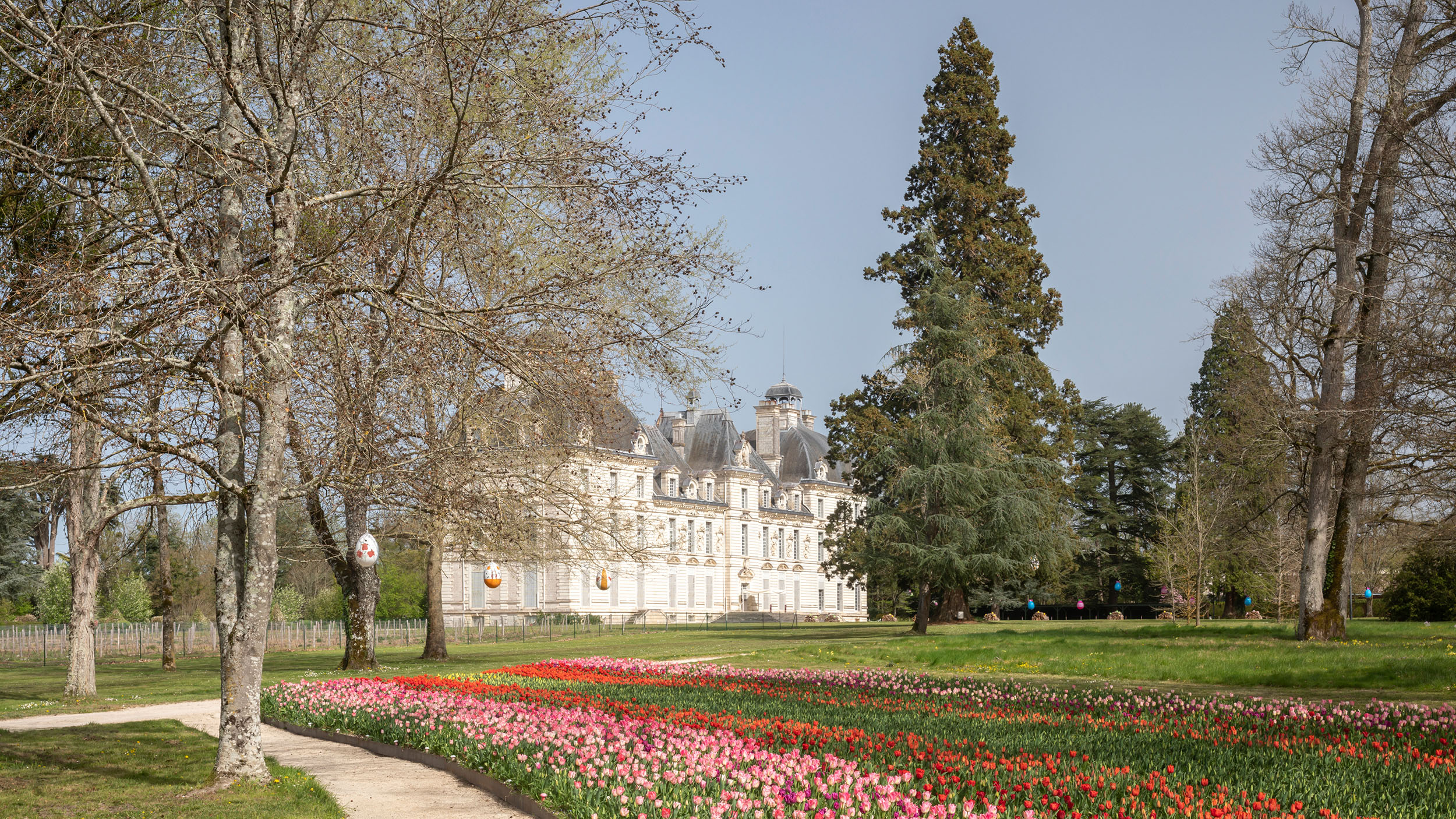

See how I photographed Château de Cheverny during tulip season. My latest YouTube vlog shows what I did to capture some of the gardens on the castle grounds.
Located in Loir-et-Cher, the Château de Cheverny is a must-visit. But not just during the tulip season, at any time of the year. This stunning castle is known for its association with the Tintin series of books, too, so if you’re a fan, then definitely make a beeline for it.
And if you’re interested in discovering the Loire Valley with a camera, then do check out my annual Loire Valley photo tour in May.
Château de Cheverny is one of those places that already has plenty going for it before the tulips even enter the frame. The castle is beautiful, it is well known for its link to Tintin, and it also has its hunting tradition and pack of dogs, which many visitors know about. Add a huge spring planting of tulips in the formal gardens, and it becomes a dream spot for anyone who loves photographing France.
On this visit, the gardens held 250,000 tulips, and that number matters because it changes the way the place feels. This is not a small patch of colour in front of a stately home. It is a broad, sweeping display that fills the scene and gives you lines, shapes, layers, and colour right across the foreground.
The only disappointment was timing. The château was closed to the public at that moment, and by the time it re-opened, the tulips would likely be past their best. Still, if you’re planning future trips in France, this is one to keep in mind for next spring, especially around the Easter period. Château de Cheverny is worth seeing at any time of year, but tulip season gives it a different kind of energy.
I wasn’t there as part of any sponsorship. I simply wanted to do the place justice and show how I approach a location when the subject is already strong, but the composition still needs work.
Before I set up a tripod, I like to walk. That first pass through a location tells me far more than pulling out a camera too quickly. Earlier that morning, I had already done a recce, even though the light wasn’t right. That helped because when I came back in the afternoon, I knew where I wanted to begin.
The first thing that caught my eye was the sweep of the tulips as they curved towards the château. The path and planting created a natural leading line, and even without standing in the middle of the beds, which I wasn’t going to do, I could see the bones of a strong image straight away. I couldn’t get the perfect central position because that would have meant stepping where I shouldn’t, but the edge of the bed still gave me enough to work with.
Respect mattered as much as the photograph. This is private property, and even when you have permission to shoot, that doesn’t mean you can be careless. I was careful with every tripod leg and every step. If I wanted people to see the final image and think they should visit Château de Cheverny, I had to photograph it well and behave properly while doing it.
A good photograph starts before the camera goes on the tripod. The walk-through often decides the image.
That afternoon, the sky also had more shape, and the light was cleaner. The scene had started to polarise nicely, which gave the colours more strength and helped separate the tulips from the sky and the pale stone of the château.
For the first test frames, I reached for my Canon 5D Mark IV and a 24-70mm zoom. That might seem odd if I already knew I wanted a tilt-shift image, but a zoom is often the quickest way for me to work out the focal length before I commit to a more specialist lens.
At 24mm, the view was too wide. It showed too much of the surroundings and pulled in distractions, including a bin off to the left. Wider also made the château feel smaller in the frame, and I didn’t want that. The house is a major part of the picture, so I wanted it to stay bold and present.
As I zoomed in, the image started to settle. Around 35mm, there was something interesting, but the château still lost some of its presence. At about 50mm, the balance felt right. The tulips still had room to sweep through the foreground, yet the château held its own and looked substantial.
My thought process at that stage was simple:
That third point matters more than people sometimes think. I was standing, kneeling, and lowering the camera to see how the tulips would fill the bottom of the frame. A few inches can change whether the foreground feels rich or empty. In a scene like this, height is part of composition, not an afterthought.
Once I had a better sense of focal length, I swapped over to a 50mm tilt-shift lens with a 1.4x extender on the front. That combination gave me the framing I wanted whilst keeping the perspective controlled. It also let me shift the lens slightly, which helped keep the building where I wanted it in the frame.
At first, I looked at a landscape composition. On the back of the camera, I could see the tulips taking up roughly the lower third, then a strip of grass, and then the château above. In theory, it should have worked. In practice, one large tree got in the way and upset the balance. If that tree had been smaller, I might have stayed with that framing. It wasn’t, so I moved on.
Turning the camera to portrait orientation improved the picture straight away. The sweep of tulips came alive, and the frame felt taller and cleaner. Instead of fighting the tree, I could place it more carefully and avoid cutting it in an awkward way.
There was also an Easter decoration hanging in the tree, and that became one of those small details I had to watch at the edges of the image. Edge control matters in garden photography because formal spaces often look calm at first glance, yet even little distractions can break that calm fast.
By moving slightly into the edge of the flowers, without crushing anything, I could fill the lower part of the frame with tulips and lose more of the path. The path still worked as a guide through the scene, but it no longer dominated the composition. That was a big improvement.
I was happiest when the bottom of the frame was full of colour, and the sweep of the beds led the eye naturally towards the château.
I tried using tilt to get the tulips and Château de Cheverny sharp from front to back, but it wasn’t behaving the way I wanted. There was simply too much tilt required, and the result didn’t look right. At that point, I had two options: focus stack the scene or stop the lens down and see how far I could push the depth of field in a single frame.
So I set the lens to f/16 and worked from there. A focus stack was still on the table, but I wanted to see whether a stopped-down frame would do the job well enough. In a place like this, wind can become an issue for stacking because flowers move. Even a small amount of movement can make blending more awkward later.
One other thing was happening in the background, and it is the kind of issue you always need to catch before pressing the shutter. Grounds staff were working, and a tractor was moving across the far side of the scene. That meant I had to keep waiting for the background to clear. The best composition in the world still fails if a distraction drifts through the most important part of the frame.
The strongest part of this shoot wasn’t the gear. It was the series of small decisions that built the frame. I had to find a safe place for the tripod amongst the tulips, keep the camera level, check the edges, watch the background, and avoid letting the château shrink in the frame.
This is often how photographing grand French locations works. The subject is already attractive, so the challenge is not finding beauty. The challenge is editing the scene until the image feels calm, balanced, and direct.
My gimbal stayed in the car, which was typical of me, so part of the filming side of the day was handheld. That didn’t affect the stills, but it summed up the pace of the visit. I was focused on the photography first, and everything else came second.
See you somewhere in central France is a line I often use, and days like this are why. Central France keeps offering these quiet surprises, where a famous château and a mass of spring colour can meet in one frame if the light comes good.
After I had the main composition, I wanted something different. A wide or normal view tells the story of the place, but a long lens can pull out the feeling of the flowers themselves. So I switched to my 100-400mm and went looking for backlight.
The sun was high enough to give me a strong glow through the petals if I aimed into the beds from the right angle. That worked especially well on the red tulips, although those reds also made life harder for auto white balance. The files looked a bit odd in camera, so I considered using a white balance tool to get a cleaner starting point.
The telephoto changed the mood completely. Instead of a formal garden leading to a château, I had layers of colour, compressed shapes, and light passing through petals. It was a more intimate way to photograph the same location.
Backlighting also gave the tulips a softness that the wider scene didn’t have. The house was no longer the main character in those frames. The flowers took over, and the château became secondary or disappeared altogether. That sort of variation matters because it stops a shoot from becoming repetitive.
Towards the end, I moved a little further down the gardens and tried one more approach. I could still see Château de Cheverny in the distance, but this time I wasn’t after a crisp record shot. I wanted something looser.
So I kept the 100-400mm on the camera, stopped the lens down to f/32, and used that smaller aperture to bring the shutter speed down. The goal wasn’t depth of field. The goal was a slower exposure that would let me move the camera during the shot.
I focused on the flowers and then twisted the camera quickly during the exposure. Image stabilisation was on, though in this case it wasn’t the important part. What mattered was the motion. The result was a frame with streaks of colour and shape, part tulip field, part impression.
I like doing this at the end of a shoot because it frees me up a bit. Once I know I have the safer frames, I can play. Some intentional camera movement images fail completely. A few, though, carry the mood of the place better than a literal frame does.
A little bit of messing around can be worthwhile when the scene has strong colour and clean forms.
If I were planning the same shoot again, I would still start with a recce and still come back if the light wasn’t right. The morning visit helped, but the afternoon gave me the images. That change in conditions mattered.
I would also stay disciplined about access. The temptation in a tulip display is always to move one step further into the bed because the angle looks cleaner. Most of the time, that one step is the wrong decision. Working from the edge forced me to compose with care, and that ended up improving the photographs.
For anyone who loves France and wants more than the usual postcard view, Château de Cheverny during tulip season is a gift. The formal gardens give you shape, the château gives you structure, and the flowers give you colour on a grand scale. If you’re also a Tintin fan, that adds another reason to go.
I share more of this kind of work on my YouTube channel, on Instagram, and through my website. This location is worth putting on any France photography list for next spring.
The best frame I made at Château de Cheverny came from patience, not speed. I had to return when the light improved, test focal lengths, work around distractions, and keep adjusting until the tulips and château felt balanced.
That is the main lesson I took from the afternoon. A place this beautiful still asks for care, and the strongest image often comes from a few measured choices made well. When the tulips are out at Château de Cheverny, restraint is as useful as any lens in the bag.