 Skip to content
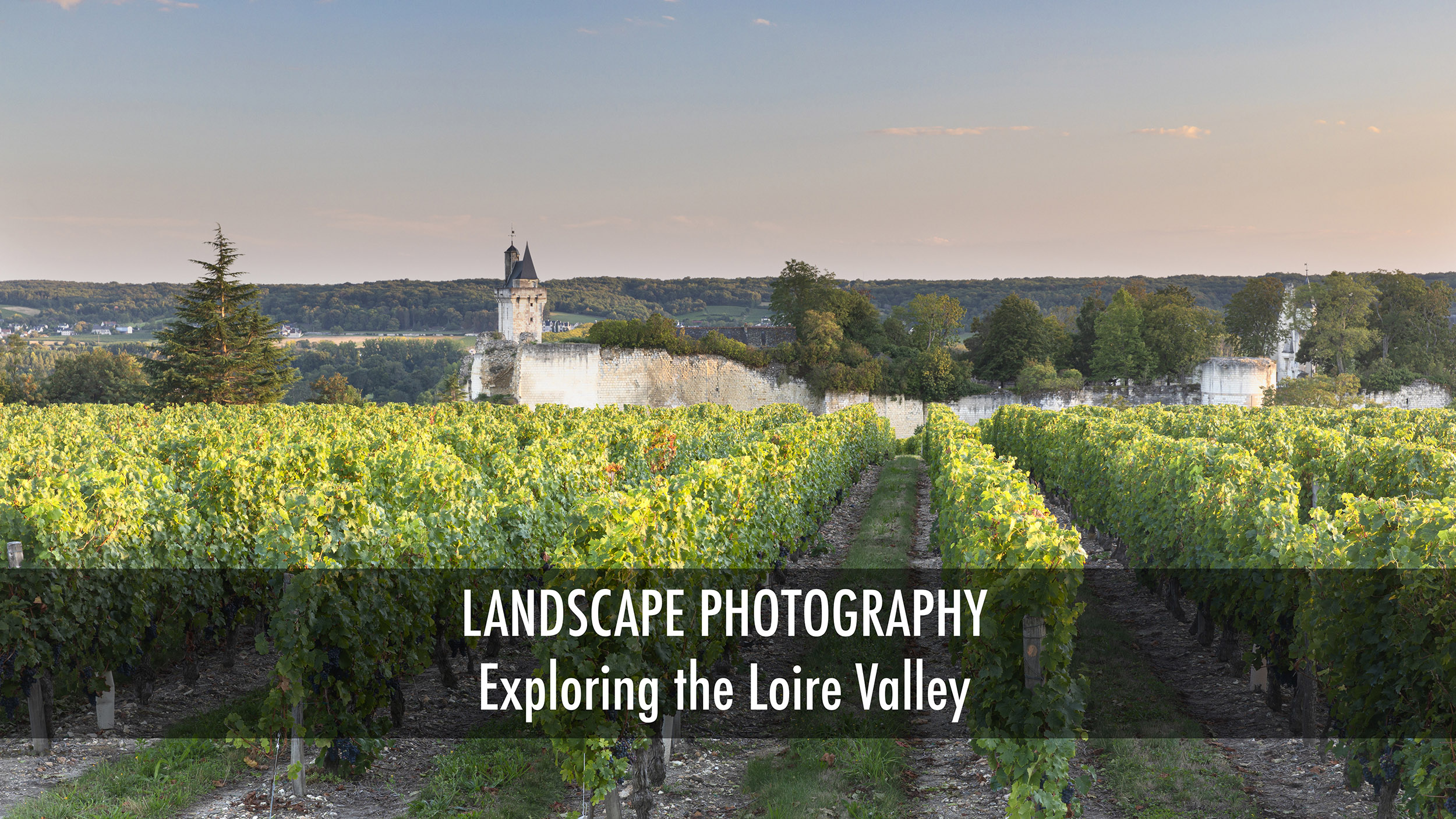

Landscape Photography | Exploring the Loire Valley is my latest YouTube vlog detailing some of my exploits as I travel to various parts of the world.
The 01 September 2020, I went back out into the Loire Valley. Having seen some places of interest the previous day, I decided that I’d go back and see what I could find.
The Loire Valley is a huge area, and during these locked-down times, I’m hoping to cover a lot of it and some other areas too, so keep an eye out.
And if you’re interested in discovering the Loire Valley with a camera, then do check out my annual Loire Valley photo tour in May.
I headed back into Maine-et-Loire, in the area of Anjou, because Le Puy-Notre-Dame had got under my skin. From the road, it looked almost unreal, a huge church rising out of a tiny village. Places like that always stop me in my tracks, especially when the architecture has real age and weight to it.
According to the information outside, the building dates from the 12th to the 13th century. That alone would have been enough to pull me back, but the setting mattered too. Around the village, there were vineyards, gentle slopes and the promise of a view where the church and the land might come together in one frame.
I have a soft spot for Gothic architecture, and this collégiale had everything I love about it. The scale is striking. The stonework has that mix of grace and solidity that makes even a quiet village feel grand. When I first saw it, I knew I didn’t want to photograph only the exterior and move on. I wanted the whole visit, inside first, then outside, then out into the vines to see how the church sat in the wider scene.
That is one of the pleasures of photographing the Loire Valley. A day can start with a village church and end with a château, yet the thread running through both is the same: light, form and patience.
Whenever I photograph a building like this, I want the lines to stay true. Gothic architecture suffers quickly if I force it into a frame with too much distortion, so I put my 24mm tilt-shift lens on the front of the camera straight away.
That lens is one of the best tools I own for architecture. By shifting it upwards, I can keep the walls and columns upright while still fitting more of the building into the frame. If I point a normal wide lens up, the verticals start to lean, and the whole thing feels less stable. With the shift movement, I can hold the camera level and move the composition instead.
Inside this church, that made all the difference. I could show the height of the nave without turning the whole interior into a mess of converging lines. I often find that tilt-shift lenses are hard to explain until you see the result, but the benefit is simple. They help me photograph a building as it feels, not as a wide-angle lens tries to bend it.
With architecture like this, I don’t want to force the composition. I want the building to stand upright in the frame.
The light inside was beautiful and gentle. It was coming through what I took to be the southern windows, and it gave the stone enough shape without flattening it. That kind of light doesn’t shout, but it brings out texture in a way harsh sun never can.
So I stayed with it and made a few more photographs. I didn’t need anything complicated. The building carried the scene on its own. The arches, the length of the nave, and the quiet glow across the interior did most of the work. My job was simply to place the camera well and keep the composition honest.
Standing in a place like that, I always slow down. It helps me see better. Instead of chasing lots of frames, I prefer to work carefully and make each one count. That was the mood in the collégiale, calm, measured and focused on detail.
After the interior work, I drove just outside Le Puy-Notre-Dame and stopped amongst the vineyards. The reason for the move was clear as soon as I got out of the car. From there, I could see the vines in the foreground and the collégiale sitting above them on the hill.
The composition was simple, but it still needed timing. The church had some light on it already, yet the vines in front were still waiting for the sun to break through. Cloud was moving across the sky, and I could tell that, with a bit of patience, the light would come. It looked like three or four minutes at most, so I stayed put and waited for the scene to line up.
A wide view might have been tempting because of the sky and the curve of the cloud, but I didn’t want the church to shrink into the distance. I put the 24-70mm on and set it to 70mm so the collégiale kept its presence in the frame. That focal length let me hold together the pattern of the vines and the scale of the building without making one overwhelm the other.
When the light started to edge across the rows of vines, I knew I was close. I took the exposure down a touch and settled on f/16, 1/20 sec, ISO 100. The shot was there, but I still felt I needed one more thing.
What bothered me was my camera position. I was slightly too low, and that low viewpoint made the foreground work against the scene I had in my head. I wanted a cleaner line through the vines towards the church, and for that, I needed a bit more height.
So I improvised.
I moved the car into a spot that gave me a better base, then worked with the tripod and stepladder to lift the viewpoint. It was a proper Heath Robinson set-up, the sort of arrangement that probably looks ridiculous from a distance but makes perfect sense when the photograph matters. The change was small in metres, but huge in the frame.
That is something I keep coming back to in photography. A tiny movement can transform a picture. People often think in terms of left and right, but up and down can matter just as much. In this case, lifting the camera slightly gave the collégiale more room above the vines and cleaned up the layers in front of it.
I had one annoyance in the middle of all this. I couldn’t get my camera to connect to the Canon app, which meant I couldn’t check the composition on my phone as easily as I wanted. Still, the setup worked well enough through the camera itself, and the photograph was there.
I also sent the drone up because the weather was too good to ignore. A clear day in the Loire Valley, a church on a rise, vineyards stretching out below, it would have been a waste not to take those aerial views as well.
Sometimes the difference between an average frame and a strong one is no more than a small step upwards.
By the end of the day, I made my way back to Chinon. Part of the reason was practical, because I didn’t fancy a long drive home after already being out in the area with my kids the day before. But Chinon also gave me another chance to work a place I knew had promise.
I started from a position behind the château, where I could gain a little height and see the top of it above the town. The evening sun was still hanging on, and I made a couple of photographs from there. I also grabbed a few drone shots while the light lasted.
That first view was never meant to be the final one. My plan was to move down afterwards and photograph the Chateau de Chinon as the sun set on it, then stay a little longer and see it lit up after dark. I had never photographed it illuminated before, so that felt worth waiting for.
Once I got down by the river, the evening changed. The colour I had hoped for over the château didn’t arrive. Instead, the better light and colour seemed to be happening further down the River Vienne. It was one of those moments every photographer knows well, where the scene in front of you isn’t bad, but it isn’t the one you had pictured either.
That didn’t mean the stop was wasted. It simply meant I had to adjust. I stayed on for another 20 minutes and planned a panoramic frame with the château lit up. I also started thinking ahead to the next chance. There was another viewpoint in mind for a future sunset, and before trying it, I wanted to check The Photographer’s Ephemeris to see if the sun direction matched what I thought it would.
I don’t mind days like that. Of course, I would rather come home with the exact colour and sky I had imagined, but photography outdoors doesn’t work that way. Some evenings give you everything. Others give you a note for next time.
A day like this sharpens a few habits for me. The first is patience. If the light is close, I wait. The second is movement. If the frame feels wrong, I don’t assume the scene is the problem. I change my position. The third is that I keep working even when the plan shifts.
When I give talks, I often tell people to move, even if it’s only a little. This trip was a perfect example of that. I didn’t need to relocate miles away. I needed to go slightly higher in the vineyard and then stay flexible later in Chinon when the sunset didn’t behave.
These were the pieces of kit that mattered most on this outing:
| Gear | Why I used it |
|---|---|
| Canon 24mm TS-E | To keep the church interior upright and clean |
| Canon 24-70mm f/2.8 | To frame the vines and collégiale at 70mm |
| Tripod | To keep the compositions precise in low light |
| Stepladder | To gain a little height in the vineyard |
| Drone | To record the wider setting from above |
The common thread wasn’t the kit itself. It was using each tool for a clear reason. The tilt-shift solved a problem indoors. The zoom helped me control the scale outside. The tripod and stepladder gave me the viewpoint I wanted. The drone added another way to read the place.
Trips like this are also why I keep returning to the region, and why I enjoy shaping Loire Valley photography tours around places with strong character, good light and room to work slowly.
The best part of this Loire Valley outing wasn’t a single photograph. It was the mix of old stone, vineyard lines and changing evening light, all within one day.
What stayed with me most was how often the answer came down to patience and position. A shifted lens inside a church, a small rise in camera height above the vines, a longer wait beside the river at Chinon, each one nudged the work closer to what I had seen in my head.
That is often enough. Not every day ends with the sky I want, but a day like this still gives me plenty to take home.