 Skip to content
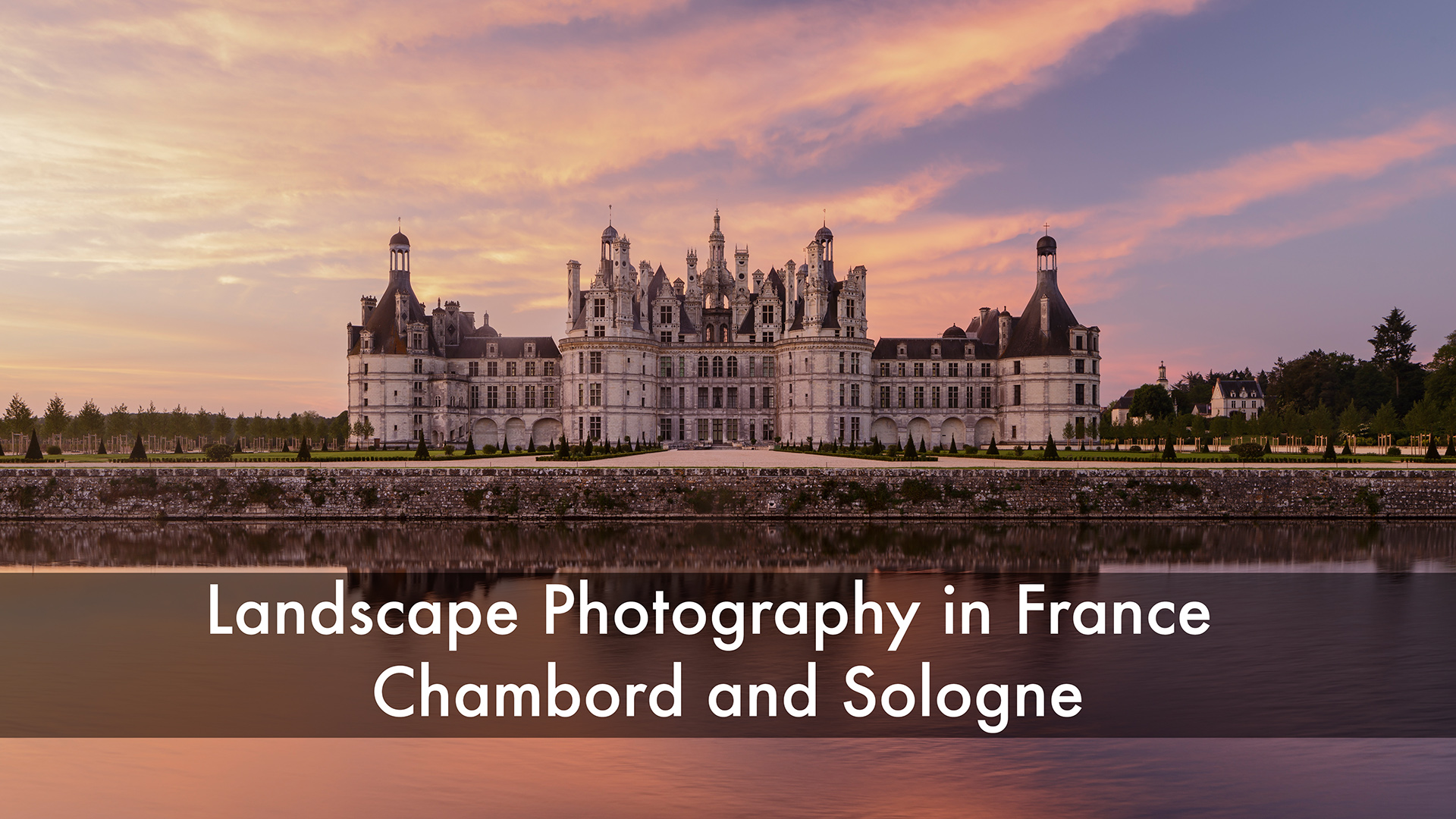

Chambord and Sologne is my latest YouTube vlog detailing some of my exploits as I travel to various parts of the world.
From the 26th to the 28th of May 2017, I spent some time in the Sologne area of France. To most people, this won’t mean much, but if you were to mention the château of Chambord, then they will know where you mean.
This vlog is more of a mini location guide to three different places that are worth visiting for their picturesque nature.
Sologne in central France is the old name for the majority of the Loir-et-Cher region. It is heavily forested and contains several étangs, which translate to pond or lake. There are also several famous Loire Valley châteaux in the area. The Château de Chambord is by far the most famous of these.
As well as the grandiose royal castles, you will also find beautiful small towns such as Montrichard and, featured here at dawn, Saint-Aignan.
And if you’re interested in discovering the Loire Valley with a camera, then do check out my annual Loire Valley photo tour in May.
Sologne is one of those areas in France that rewards patience. It isn’t only about headline locations, although Chambord clearly falls into that category. What I like about the area is the mix of subjects. One morning, I can work with a broad, quiet pond, and the next I can stand in front of a famous chateau with perfect reflections.
The region is known for its étangs, which are ponds or lakes scattered through the landscape. They give the area a stillness that suits early starts, especially when there is little wind. For photographers, that matters. Flat water can turn an ordinary scene into one with shape, balance and calm.
When I was out there, the weather was hot and dry, with temperatures above 30°C and almost no cloud. That isn’t ideal if I’m hoping for dramatic skies, but it doesn’t make a place unphotographable. It simply changes the approach. I had to pay more attention to composition, contrast and how I handled exposure.
What also helped was proximity. I was staying with my parents-in-law nearby, so getting out early and moving between locations was easy. That always changes the feel of a trip. I didn’t need to force too much into one day, and I could work around the light rather than the clock.
Although many people know this part of France through the better-known Loire Valley châteaux, I found that Sologne adds another layer. It gives me water, woodland and villages alongside the grand architecture, and that mix keeps the photography fresh.
My first stop was the edge of Etang des Sonnay, where I was trying to shape a simple image from a difficult morning. The light was harsh, the sky was empty, and I was pointing the camera straight towards the sun. Still, there was enough structure in the scene to make it worth working.
What held the composition together was a small lock gate low in the frame and a line of trees across the top part of the image. That gave me a clear bottom anchor and a clean horizon. On mornings like this, I rely on those basic relationships more than anything else. If the sky isn’t doing much, the arrangement of the frame has to carry the shot.
My setup here was straightforward:
For the foreground, I took a longer exposure, around 2.5 seconds. Then I made a shorter exposure for the sky, around 1/4 second, so I had detail in both ends of the scene. Because the sun was directly ahead, that gave me far more control than trying to rescue a single frame later.
On bright mornings with strong contrast, I often trust two clean exposures more than one compromised one.
There was also a small frustration with the tilt-shift lens. The screw that holds the front tilt knob had jammed, which is the sort of minor gear problem that becomes irritating when you’re travelling. I knew I’d need to sort it later with a screwdriver, especially because I was due to be in Rome the following week and didn’t want the same issue there.
Even so, I was pleased I had gone out. A cloudless day rarely gives me the most exciting sky, but it can still give me a usable picture if the scene has enough shape. Etang des Sonnay felt calm, open and quietly photogenic, which suits Sologne perfectly.
Chambord is the location most people recognise at once, and for good reason. It is one of the best-known châteaux in France outside Versailles, and from a photographer’s point of view, it has scale, symmetry and water in front of it. That combination makes life easier when the light is good.
I arrived at dawn, and the scene was superb. The water in front of the chateau was still, which gave me the reflections I wanted, and the early colour in the sky added a softness that the building needs. Chambord can easily become overpowering in flat daylight, but at dawn it settles into the frame.
There was one practical problem. The batteries in my separate audio recorder had died, so I had to rely on the camera’s own audio. On top of that, a balloon festival was taking place nearby, which meant a lot of background noise. I ended up filming part of the sequence later, around an hour after dawn, once the sound had eased off a bit.
That delay didn’t spoil the morning. In fact, it added something memorable. I was able to photograph the hot-air balloons as they prepared for take-off, and later as they lifted into the sky. If one had drifted directly over the chateau at the right moment, it would have been a gift.
For this scene, I used my Canon 6D with a Canon zoom lens and a Heliopan 105 polariser on the front. The composition itself was simple because the location doesn’t need much forcing. I kept the horizon around the middle and placed the chateau slightly off-centre on a third, which gave the frame some balance without losing the strength of the reflection.
The still water did a lot of work for me. Reflections at Chambord can turn a familiar view into something more elegant, especially in the first light of day. When the surface stays calm, the image feels twice as complete.
I also looked at a couple of nearby alternatives. One angle into the chateau doesn’t work as well now because a garden has been planted there, which blocks the view that would once have been more open. On the other side, there are rowing boats, although there seemed to be fewer of them than I remembered. Both are worth noting if you’re planning a visit, because famous locations often change in small ways over time.
What stayed with me most was the combination of grandeur and calm. Chambord is huge, but in that soft morning light, with the water
We noticed you're visiting from United Kingdom (UK). We've updated our prices to Pound sterling for your shopping convenience. Use Euro instead. Dismiss