 Skip to content
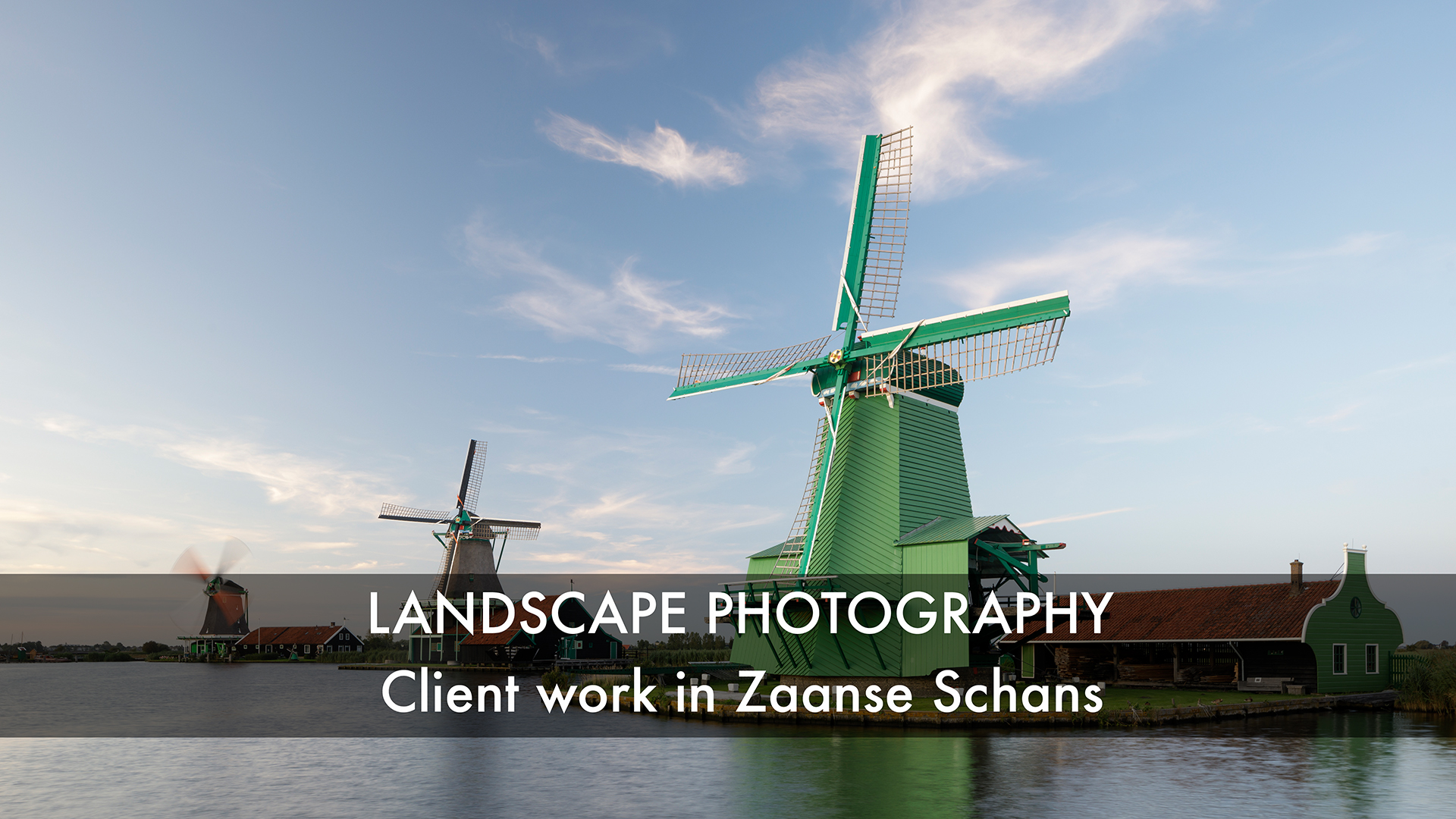

Landscape Photography – Client Work in Zaanse Schans is my latest YouTube vlog detailing some of my exploits as I travel to various parts of the world.
In mid-August 2019, I was commissioned to go to the Netherlands to do some photography for a commercial client in the tourism industry. These are the results of those two days.
Originally, the idea for the shoot came about in 2018, but neither the client nor I had the chance to catch up with each other. So in June 2019, we started to plan out how I could get over to the Netherlands in the best possible weather for the time needed to capture the photos they required.
Zaanse Schans is an area northwest of Amsterdam that can easily be reached by public transport in around 20 minutes or so from the central railway station. It’s not that big of an area, but you need to be aware that once it gets to around 8 am in the morning, then busloads of tourists start arriving on the scene. But then they all start disappearing again around 6 PM.
August 2019 was pencilled in to capture the photos, and it took two weeks of waiting for bad weather to clear from the Netherlands in order for the shoot to go ahead.
Remember that this isn’t a photography tutorial or out to get typical photographer-style images. This is client work for the tourism industry, and as suc,h the images need to be of the type that will attract tourists to the area.
I arrived in the Netherlands the night before and headed out early the next morning, well before sunrise. My assignment was in the preserved windmill area north-west of Amsterdam, at Zaanse Schans, and the first thing I noticed was how calm it felt before the crowds arrived. Behind me, the windmills stood in that soft half-light that always makes a place feel full of promise.
At first, it looked as though I might get the kind of dawn I had hoped for, a beautiful, colourful dawn building behind the mills. I had three nights in the area and two full days to do the work, so there was pressure, but also enough time to adapt if the weather shifted.
The gap since my last vlog had come down to two simple things:
Once I started shooting, I realised my original position was not giving me enough colour in the part of the park I had chosen. So I packed up, moved, and looked for a better angle. That is a normal part of working at dawn. You commit to a spot, then the sky tells you that you were wrong.
The new position gave me more colour than before, and the composition felt stronger. Even then, I knew the morning was only one part of the job. I was not there for a single dramatic image. I was there to build a useful set of photographs for a paying client, and that changes how I think from the first frame.
Once the stronger colour had faded and the sun climbed above the horizon, the shoot changed character. I stopped looking for dramatic dawn tones and started watching how the low sun shaped the scene. The long shadows began to stretch across the ground, and that softer post-sunrise light often gives me images I like just as much as the few minutes before sunrise.
There is always that small battle in my head on a commission. Am I going to get exactly what I need, or will the light fall short at the wrong moment? That tension never disappears, even after years of shooting.
This trip had been in the works for a long time. The first contact for it went back more than a year, after I attended ITB in Berlin in 2018. The actual shoot did not come together then, but the client got back in touch in June 2019 and asked when I was free.
The arrangement was simple. If the weather looked right and I got the call on a Monday, could I pack my bags and travel on Tuesday? My answer was yes. That flexibility is often the difference between getting the job and missing it.
We watched the weather for nearly two weeks before confirming the trip. Conditions in the Netherlands had been poor, which made the wait frustrating, especially while I was sitting in central France with much nicer weather around me. Still, the delay was worth it because this kind of work depends on timing more than comfort.
The first two dawns could not have felt more different:
| Morning | Light | Problem | Result |
|---|---|---|---|
| Day one | Colour built slowly, then weakened in parts of the park | I had to move position to find a better angle | I got useful frames, but not the exact version I wanted |
| Day two | The dawn colour was much stronger over the windmills | My train was cancelled, and I lost half an hour | I remade an earlier frame and preferred the new version |
That is the truth of a short commission. You can plan for months, then spend the morning reacting.
The client I was working for was in the tourism industry, though not the local tourism board. That distinction matters less than the brief itself. They did not want moody skies, dark clouds, or rain-soaked streets. They wanted the sort of photographs that make somebody look at a place and think, “I want to go there.”
That may sound obvious, but it changes everything.
If I am out for myself, I might enjoy stormy light or a brooding frame with heavy cloud. For tourism work, that usually is not the point. The brief was about a day-trip appeal, and Zaanse Schans is exactly that, an easy visit from Amsterdam that needs to look welcoming, open, and bright.
A few things mattered most to the client:
By around 8 am, the sun had risen high enough to clear a bank of cloud that had blocked the light earlier. Once that happened, the scene settled into the kind of soft shadow and clear colour that tourism clients love. It was still early enough to keep shape in the light, but clean enough to look inviting.
When I take a commission, I am there to work for the client, not to force my own taste onto the brief.
That balance matters more than many people admit. Personal style still counts, but the job comes first.
The second morning gave me the dawn I had wanted the day before. I went back to remake one of the earlier shots, and today’s version looked better to me straight away. The colour had more life, the sky worked harder, and the scene had that extra bit of clarity I had hoped for.
At the same time, the train I needed was cancelled. I lost about half an hour and had to rush from the station to the location while the sky was already lighting up. That is the kind of problem no amount of camera knowledge solves. Sometimes you simply run and hope the best light waits a little longer.
One of the clearest lessons from this trip had nothing to do with lenses, settings, or composition. It was about behaviour. When I am commissioned to shoot for somebody else, I am stepping into their working world for those few days. I may be outside with a camera, but I am still in a professional setting.
That means I need a clear understanding with the client before the job begins. I also need to communicate throughout the shoot, rather than disappear for hours and return with a folder of surprises.
My process is simple:
That was how I worked here. I met the client, showed photographs as I went, and used those conversations to guide what I shot next. It keeps the job focused, and it stops small misunderstandings from becoming bigger ones.
There is another side to this, and it is one that matters if you put your work online. I have seen photographers post videos of themselves losing patience when people get in the way of a shot. I understand the frustration, especially in busy tourist spots, but anger is a poor look when you are trying to build trust.
If you are on commission, you are close to being a public face of that business for the hours you are working. If you start shouting at people and somebody complains, you could lose your job. You might even lose payment. On top of that, if a client sees you behaving badly online, why would they want to hire you?
Patience is not a soft skill here. It is part of the job.
Early in the morning, Zaanse Schans feels manageable. On one of the dawn starts, there were only a handful of people in the area. That made movement easy, let me work quickly, and gave me a chance to compose without too much distraction.
Then the coaches start to arrive.
By around 8 or 9 am, the place changes completely. Tourist buses pull in, footfall rises fast, and the calm of dawn disappears. That is not a criticism of the location. It is simply the reality of photographing a popular attraction so close to Amsterdam.
For anyone planning a visit, the timing is easy to understand:
Because it is so accessible, the location is worth the effort. Zaanse Schans is around 15 to 20 minutes by train from Amsterdam Central, so it makes sense as a day trip if you are in the city. If you arrive early, you get the best of it. If you arrive later, you need patience and a bit of luck.
I am not saying you can never ask somebody to move. If a person steps right in front of the camera, a polite “excuse me” is fair enough. What does not work is acting as if a public place belongs to the photographer. It does not, and at a busy tourist site, it never will.
Whilst I was in the Netherlands doing this commission, the rest of my schedule was already taking shape. October was set aside for a Dolomites photo tour, and January for a photo workshop in the Scottish Highlands, up in Glencoe. I was also hoping for snow like the conditions I saw there in 2018, when I met the YouTuber Renegade Scot.
Beyond that, I had the usual festival in Montana during March on the horizon, plus a heavy spell of travel from mid-September to mid-October. That meant time on the road, teaching, and less certainty about when the next vlog would appear. That is part of the rhythm of this kind of life. Some trips are made for filming, and others are made for work.
If you want to see where I am heading next or join me in the field, details sit on my Photography Tours & Workshops page. That is where I keep the current trips and workshop information together.
I also had bigger travel plans coming up after the Netherlands, including Vietnam, then Romania and Moldova on the same journey. That sort of run of travel leaves little room to slow down, but it keeps life interesting. It also means that when I do get a short commission like this one, I have to make every dawn count.
This commission reminded me that good client work is rarely about chasing the most dramatic photograph. More often, it is about reading the brief, waiting for the right weather, and keeping a cool head when transport fails or crowds build.
At Zaanse Schans, the light mattered, but so did timing, manners, and knowing what the client needed the pictures to do. That is the part of professional photography that people often talk around, when in truth it is the part that holds the whole job together.
For me, the best frame from those two mornings was not only about windmills and dawn colour. It proved that patience still wins.
We noticed you're visiting from United Kingdom (UK). We've updated our prices to Pound sterling for your shopping convenience. Use Euro instead. Dismiss