 Skip to content
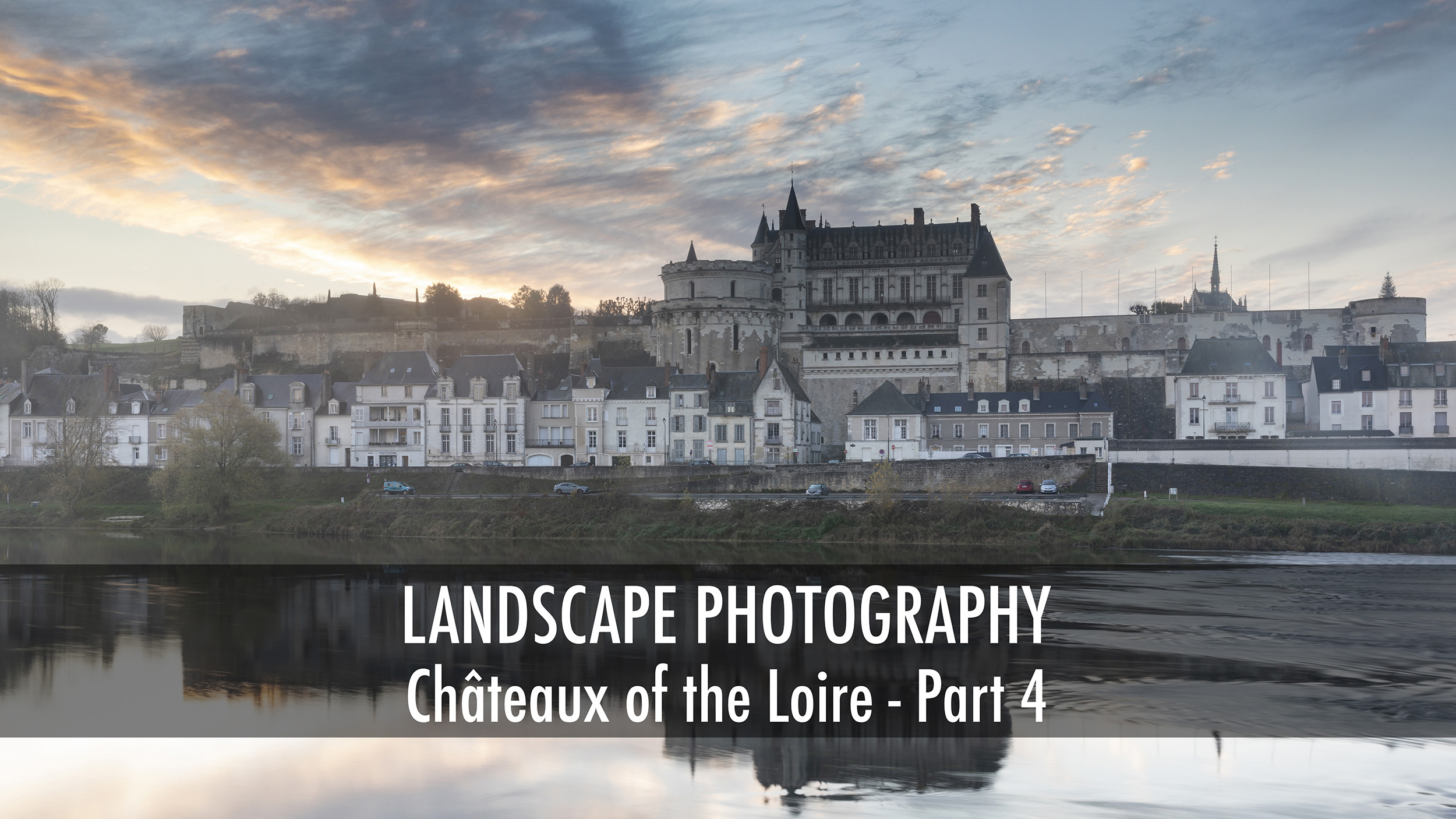

The Châteaux of the Loire are famous worldwide and rightly so. From old medieval fortresses such as those at Chinon to more stately castles dotted around the area, they make great subjects for both landscape and travel photography.
In this latest episode from my YouTube channel, more castles are the subject of my lens in the Indre-et-Loire department of France. You’ll get to see castles from throughout the ages, starting with Château d’Amboise. This central area of France plays host to some 144 castles that are registered as historic monuments.
With this series, I aim to introduce some of the well-known as well as lesser-known castles that are here in central France. Do be aware, though, that not all of them are accessible to the public and remain behind high walls sealed off from public gaze. But those that are visible will be covered where I can.
And if you’re interested in discovering the Loire Valley with a camera, then do check out my annual Loire Valley photo tour in May.
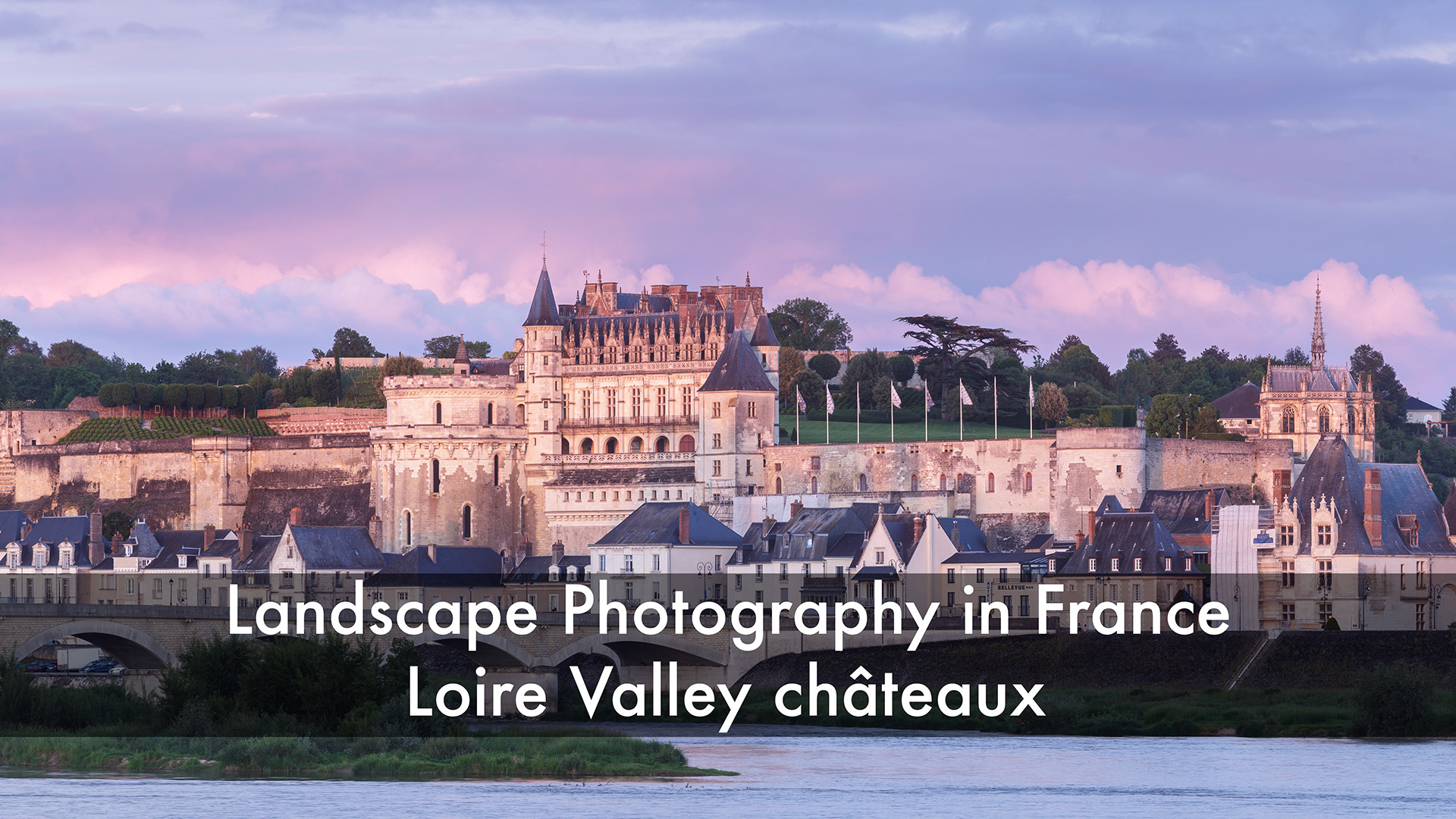
I started the morning in Amboise, with the Loire flowing west towards the Atlantic and the Château Royal d’Amboise rising above the river. It is one of those castles that feels instantly recognisable, even before the light does anything special. The setting does much of the work for you, because the river gives you width, reflections and breathing room, whilst the castle brings shape and history.
This was a royal residence for kings between the 15th and 19th centuries, and that long run of history shows in the building. It has weight. It also has that mixture of elegance and defence that makes Loire castles such good subjects. Beside it sits a chapel where Leonardo da Vinci’s remains are believed to rest, which adds another layer of interest when you’re standing there in the half-light.
What I like here is how simple the setup can be. I don’t need to fight through clutter or search for an awkward angle. From the banks of the Loire, I can look straight across the water and get the castle, the reflection and the open sky in one clean view. There are other places to photograph it from, but this remains one of the better positions because the scene reads quickly and clearly.
That matters with architecture. If the eye understands the frame at once, the photograph has a better chance of holding attention.
The morning was cold, and a couple of days earlier, snow had been forecast. I wasn’t sure I’d get out in worthwhile conditions, but the weather gave me a usable dawn and enough colour in the sky to make the visit count.
Even so, I wouldn’t normally pick this time of year for Château d’Amboise if my main goal was the best possible light. In winter, both sunrise and sunset sit behind the castle from this viewpoint. That means I lose the clean side light that gives shape to the walls and towers. The scene can still work, especially with soft dawn colour and river reflections, but it isn’t the strongest season for this spot.
Summer is the better choice. Then the sun shifts enough to side-light the castle at sunrise and again at sunset. That side light gives form to the stone, separates the building from the background and makes the structure feel more three-dimensional. In other words, the castle starts to glow rather than flatten out.
Still, dawn had enough going for it. The first light in the sky, the still water and the quiet on the riverbank gave the place some calm. That softer mood often suits the Loire, because these castles don’t always need drama. Sometimes they only need a gentle start to the day.
When I set up a shot like this, I don’t go very wide. It is tempting, because the river is broad and the bridge nearby can draw the eye, but a wider frame quickly fills with negative space that doesn’t help the subject. The castle then shrinks and loses authority.
So I pulled the composition in. Small adjustments mattered. One of the details I always watch with buildings is the edge of the frame. If a window lands half-cut on the border of the image, it looks clumsy. On this shot, I made a slight move, only a small nudge, so the frame didn’t slice through the windows on the outer edge of the castle.
That sounds minor, but it makes a visible difference. Architectural photographs often stand or fall on those tiny corrections.
The contrast was high enough that I knew I would need a blend. I had roughly three stops between the foreground and the sky, and I wanted to hold detail without blowing the brightest tones. I checked the highlights and made sure the sky was still under control. Once that was set, I could focus, wait for the light, and take the frame.
When I photograph castles, I spend as much time fixing the edges of the frame as I do admiring the subject itself.
My second Châteaux of the Loire was near Amboise, at Montreuil-en-Touraine. This is the kind of place I enjoy including in a Loire route because it changes the mood of the day. After the polish and prominence of Amboise, this castle feels more fragile and more wounded, which gives it character.
The building dates from the 15th century, and one of its defining features today is the roof, or rather the loss of it. In the early 1980s, a storm took the roof away, and the structure now has a temporary covering. That damage gives the castle a different profile, and it makes the photograph less about grandeur and more about survival. I also came across the detail that it was confiscated during the French Revolution.
Some viewers might look at it and say it doesn’t fit their idea of a castle. For me, that doesn’t matter. It is still classed as a château, and visually it has plenty to offer. Old stone, a broken roofline and morning side light can carry a frame very well.
Before coming out on this route, I spent about four hours researching castles in the area. That time paid off here. I knew where the sun would be, how the light would move across the building, and roughly what sort of lens I would need.
The sun was side-lighting the castle beautifully by the time I arrived. Because of the angle, this isn’t a location that only works for a tiny window. I felt it could work for much of the day, though the morning was excellent on this visit. The stone had shape, and the damaged roofline stood out cleanly against the sky.
I photographed it with a long lens, roughly around 250mm. That compression helped simplify the scene and gave the castle more presence. Instead of wandering closer and forcing a wide view, I let the lens do the work and built the frame from a distance.
That is often the better choice with buildings that sit amongst fields, hedges and stray distractions. A long focal length allows me to select the parts that belong and ignore the parts that don’t.
Composition here came down to exclusion. Below the castle, there were hedges, trees and a strip of field that added little. Off to the left sat a water tower that I knew I wanted out of the frame. When I was driving in, that was one of my concerns, because a feature like that can pull the eye away at once.
By making a slight adjustment, I was able to bring the composition across enough to hide the tower. That gave me the cleaner frame I wanted.
To the right, there were other buildings, but I kept those in. They felt in keeping with the castle and didn’t introduce anything too modern or jarring. That contrast matters. Some surrounding structures ruin a period scene. Others support it. These sat comfortably alongside the main subject, so I left them there.
The light was strong on the walls, which meant the highlights needed care, but I felt I could probably manage the scene in one exposure if I stayed on top of them.
I wasn’t sure how close public access would allow me to get. My understanding was that the site may be town-owned, but I didn’t know at that moment whether that meant I could go right up to it. In truth, the distant shot was already working, so I was happy to move on once I had it.
My final Châteaux of the Loire was at Château-Renault. Even before I set the camera up, I knew there was a picture here. I was standing near what had been the old castle gates, and through them I could see the 11th-century dungeon. That kind of natural frame is hard to ignore.
A man stopped and asked whether I was taking photos. When I said yes, he told me he was from the town hall and said I should walk further into the grounds because there was an even better angle there. That sort of local knowledge is gold. Maps and satellite views help, but they do not tell me everything.
The gate shot still had plenty going for it. The dungeon sat neatly within the opening, and there was still good autumn colour in the trees. The sun was at about 90 degrees to the camera, which is ideal when I want a polariser to do proper work on the foliage and the sky.
I also liked the contrast between the old stone and the softer leaves. Without that colour, the frame might have felt a little severe. With it, the image had some warmth.
For that first composition, I found myself wishing for a 50mm tilt-shift lens to gain a little extra height on the dungeon whilst keeping the lines under control. Castle photography often becomes a problem of geometry. The subject is tall, I am close, and standard lenses start to push the verticals over in a way I don’t like.
Later, when I moved to the rear view, a tilt-shift lens became much more important. I was only about 20 metres from the castle, looking up at it, and without shift, I would either lose a big part of the structure or end up with strong converging verticals. Some people don’t mind that effect. I do. On a building like this, I think it looks awful.
So I levelled the camera and shifted up. That let me keep the walls and tower looking right without resorting to heavy correction later.
The light needed a bit of care as well. Because the sun was to the side, flare was a risk. When that happens, I often shade the lens with my hand before taking the frame. I also use the depth-of-field preview button to check whether flare is showing up before I commit to the shot. It is a small habit, but it saves a lot of cleaning up later in Photoshop.
The best surprise at Chateau-Renault came after I followed the tip from the town hall. I walked around the back of the castle to a side I hadn’t seen on Google Earth. That matters because it is a reminder that research is only the start. Once I arrive, the place still gets a vote.
From this angle, I could see the old castle mixed with later additions, and beside it were remnants of the ruined sections. It felt less polished than the front and more honest. You could read the building’s age in layers.
The composition was tight because of the distance. I arranged the frame so the key elements sat where I wanted them, kept a palm tree near the edge from intruding too much, and made sure a street lamp stayed out of view. One lamp post is enough to break the mood of a castle shot.
A couple of local women passed by and mentioned that the area looks particularly good in summer when the flowers are out. I believed them at once. Even in this season, the setting had enough structure and colour to work. With summer flowers added, it would be stronger still.
One of the pleasures of photographing the châteaux of the Loire is that I can build a day without spending half of it in the car. These stops were all relatively close, which made the route efficient and left me more time to watch the light.
This is the rough spacing I was working with:
| Route | Approximate travel time |
|---|---|
| Amboise to Montreuil-en-Touraine | 10 to 15 minutes |
| Amboise to Chateau-Renault | 25 to 30 minutes |
| Montreuil-en-Touraine to Château-Renault | Short onward drive within the same cluster |
That is exactly the kind of grouping I like. I can photograph a famous royal castle, move on to a lesser-known ruin, and finish at a site where local knowledge opens up the best view of the day.
Indre-et-Loire has around 144 castles registered as historic monuments, so there is no shortage of material. Some are hidden behind walls and out of reach. Others reveal themselves from roadsides, rivers, fields or town paths. If this area appeals to you, my Loire Valley landscape photography tours follow the same mix of castles, villages and scenery that keeps pulling me back.
Although these châteaux of the Loire are close together, proximity is not enough on its own. I only got the most from the day because I had researched the sun angles beforehand. At Amboise, that told me winter wasn’t ideal, even if dawn still had value. At Montreuil-en-Touraine, it told me the side light would shape the roofless profile well. At Château-Renault, it helped me understand why the dungeon and the trees looked so good in the morning.
Then the local advice improved the plan. That is often how these days go. I arrive with one good idea, and the place gives me another.
I was also working around a necessary trip back to the UK for family reasons, so photographing castles in batches made practical sense. That constraint helped, rather than hindered. It pushed me towards a tighter route and made me look harder at what was already within easy reach.
Research gives me the best chance of success. Local knowledge often gives me the best photograph.
What stayed with me from this day was not only the castles themselves, but how different each one felt under the camera. Amboise gave me royal scale and river reflections. Montreuil-en-Touraine gave me damage, texture and a more unusual profile. Château-Renault gave me a strong gate shot, a hidden rear angle and proof that a quick conversation can change the whole day.
That is why the châteaux of the Loire keep rewarding repeat visits. A short drive can take me from a polished landmark to a half-ruined survivor, and the light can make each one feel new. When I get the timing right, the Loire does not ask for much more than patience, good framing and the willingness to look twice.
We noticed you're visiting from United Kingdom (UK). We've updated our prices to Pound sterling for your shopping convenience. Use Euro instead. Dismiss