 Skip to content
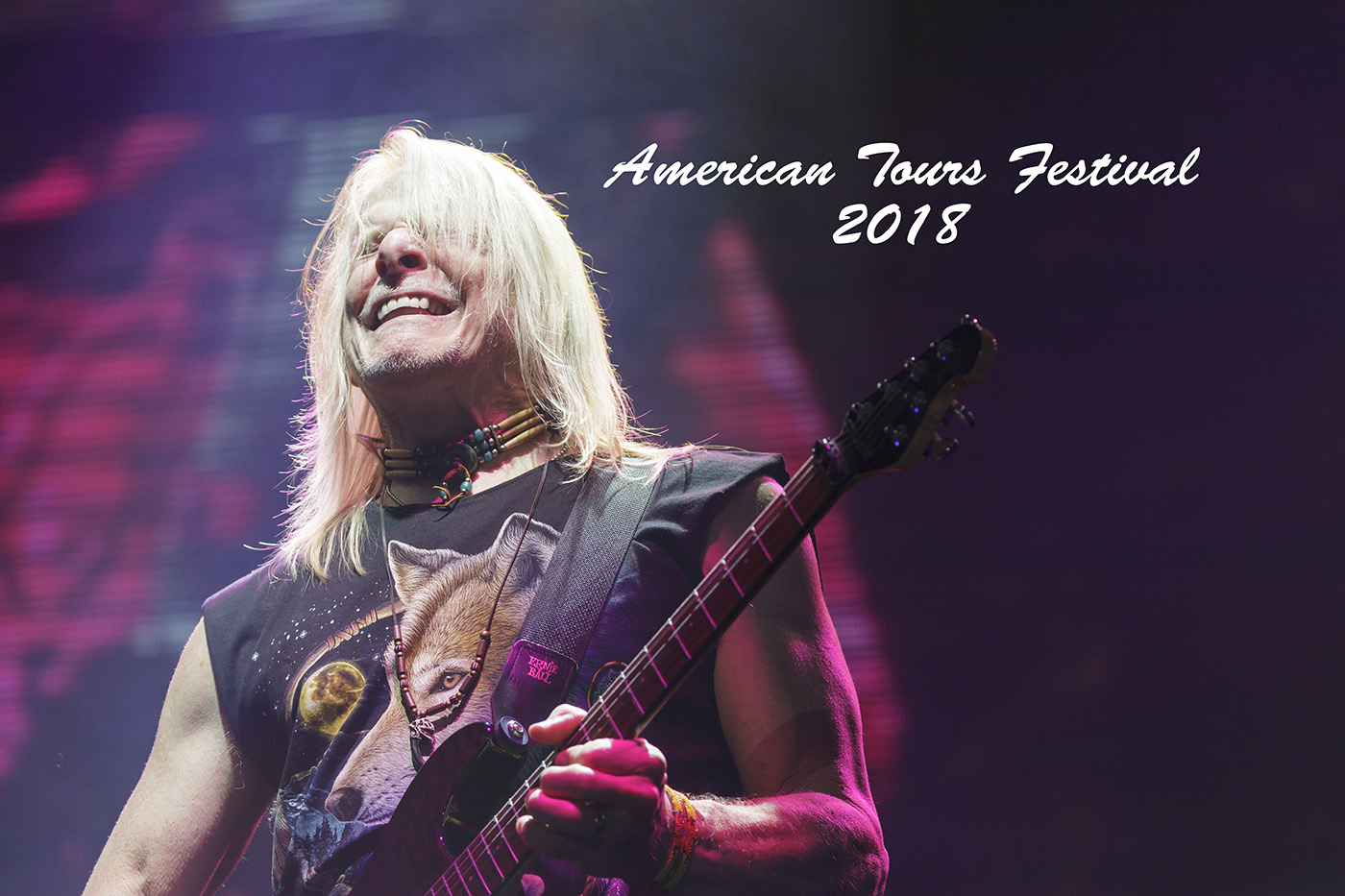

The American Tours Festival in the city of Tours is held over three days during the month of July. If you like good music, rodeo and all things American then you’re likely to be in 7th heaven.
Each year there is a headline music act at the end of the day from a big-name artist. This year saw Lenny Kravitz on Friday. Deep Purple on the Saturday and Imelda May on Sunday. Honestly, I’d never come across Imelda’s music but after witnessing her up close all I can say is definitely give her a listen. She sings beautifully and it’s a treat to hear a “singer” rather than shout at their audience.
As an accredited photographer for the main festival, I had to apply separately for each of the three music artists and their support. I lucked out on Lenny Kravitz but was over the moon to be chosen to photograph Deep Purple. Imelda May was a last minute decision but I’m glad I asked as she was, as I said earlier, superb and well worth seeing.
So do you get to see the whole concert as a photographer? Nope. Normally, you get at most 3 songs and then you’re marched off away from the venue towards the press office. That’s fine as getting up close and personal with some of these amazing artists is a blast as you get to capture them from behind the lens.
Take a look at my latest YouTube vlog showing some of what I did over the course of the festival.
I came home on Friday, 13 July 2018 and went straight into work mode. Near the city of Tours, the American Tours Festival was already underway, and for three days, I had editorial photography to cover. After a week spent in Provence, where the pace is often slower, and the subject matter leans towards landscape, villages, and light, the contrast could not have been clearer.
This festival is built around American culture, and it gives a photographer plenty to work with. The appeal is not only the music. All day long, there are details, characters, vehicles, and moments that can carry a picture before the headline act even steps on stage.
A quick look at the weekend shows why it was such a rich assignment:
| Festival highlights | What I had to photograph |
|---|---|
| Big trucks | Huge American-style lorries and the people around them |
| Motorcycles | Custom bikes, chrome, leather, and rider portraits |
| Rodeo | Action, dust, movement, and timing |
| Concerts | Major evening performances and strict photo access |
The line-up gave each day its own pull. Lenny Kravitz was due on Friday night, Deep Purple on Saturday, 14 July, and Imelda May on Sunday, 15 July. The festival also featured classic cars, period dress, and a wider American theme that ran through the whole site. Returning to the bill as well was Canadian country singer Gord Bamford.
At that stage, the biggest news for me was that I had been chosen to photograph Deep Purple on the Saturday. That meant one thing straight away: I had a fixed deadline in the middle of a busy weekend. I still did not know whether I would get access for Lenny Kravitz or Imelda May, so there was plenty of waiting around mixed in with the shooting.
The first day felt hot from the start. The Loire Valley was baking, and the festival grounds had that heavy summer air that slows you down if you let it. I did not have much time to ease in, because there was already plenty to photograph, from the vehicles and displays to the people who had come dressed for the occasion.
That is one of the pleasures of a festival like this. Even before the music starts, there is a constant stream of pictures. Big trucks catch the eye because of their size, but the smaller scenes often matter just as much. Someone standing beside a polished motorbike, a crowd gathering near the barriers, or a patch of late afternoon light landing on chrome can carry the day as well as any stage image.
I was also filming bits of b-roll as I went, because I wanted to document the atmosphere of the weekend, not only the headline sets. The American Tours Festival had enough going on that there was little danger of running out of material.
By Friday evening, my attention shifted to the concert. I was hoping for accreditation to photograph Lenny Kravitz, but it never came through. That happens, of course, though it does not become easier when you are already in position and ready to work.
I was right at the front, up against the crash barrier, which made the situation more frustrating. The restrictions were so tight that people in the front row were being stopped from taking photographs at all. It was one of those moments that remind you how carefully major artists manage their image rights and access.
I was in the perfect spot to shoot, but I could not use it.
That was the tone of the evening. I could watch, I could absorb the atmosphere, but I could not make the pictures I had hoped for. It was very frustrating, especially when the crowd energy is building, and you know the photographs are there in front of you.
Still, there was no point in dwelling on it. Festival work moves quickly, and the next day was already shaping up to be the key one for me.
Saturday, 14 July, was Deep Purple day, and I went into it knowing the access would be short. As far as I had been told, I had accreditation for the first three songs only. After that, we would be out.
That sort of rule is common in music photography, but knowing it in advance does not remove the pressure. Three songs sound generous until you are in the pit and the clock starts moving. You have only a few minutes to assess the light, pick your angles, watch the performers, and come away with frames that work both editorially and visually.
The festival itself was still buzzing through the day. There was more to see, more to shoot, and more heat to deal with. Yet the evening concert was always the centre of gravity. Once that set time gets close, the whole day starts to narrow towards the stage.
“First three songs, and then that’s it.”
That was the rule, and everyone knew it.
When Deep Purple came on, I felt lucky to be there. Some shows are built around sheer production, but this one had presence. The band gave the crowd everything, and from a photographer’s point of view there was plenty of character on stage as well. That matters more than spectacle. You want movement, expression, and moments that feel alive, and they gave me those.
The three-song limit was enforced exactly as promised. Once our time was up, we were ushered away from the stage quickly, and it felt close to being frog-marched out. There was no hanging around and no extra frame if you had missed something. When access ends, it ends.
That might sound harsh, but it is standard concert procedure with major acts. The real challenge starts after the pit. I did not have time to go back and enjoy the rest of the show because the images needed to be sent off to a couple of news wires. That is the side of editorial photography that never looks glamorous. The music is still going, the crowd is enjoying itself, and you are already thinking about card transfers, edits, captions, and deadlines.
I was finished at about two o’clock in the morning, which tells its own story. Even so, the effort was worth it. Deep Purple were excellent to photograph, and they were excellent for the audience as well. Looking back, I can say without hesitation that they gave fans their all.
Sunday, 15 July was the final day of the American Tours Festival, and I felt the previous night in my bones. After getting back and finishing the Deep Purple work so late, I had a slower start than planned. That is another ordinary part of a weekend like this. The deadline might be over, but the next day’s assignment still arrives on time.
Even with the late start, there was more than enough happening across the festival site. I still wanted to film some extra b-roll and take photographs of whatever was going on during the afternoon. That included the general festival life as much as any formal display, because the shape of an event often sits in those in-between moments.
By the third day, there is also a different rhythm in the crowd. Some people are still fresh; others are running on the momentum of the weekend. For a photographer, that shift can be useful. The energy softens in places, and small scenes become easier to notice.
My other uncertainty on the Sunday was Imelda May. A request had been put in for access, but at that point, I was still waiting to hear whether I would be allowed to photograph her when she went on stage that evening. After the Lenny Kravitz experience, I knew better than to assume anything.
The access picture over the weekend looked like this:
| Artist | Photo access |
|---|---|
| Lenny Kravitz | No access |
| Deep Purple | First three songs |
| Imelda May | Access granted |
That final line became clear by the end of the weekend, and I was pleased it did. Like Deep Purple, Imelda May was an artist I could happily recommend to anyone going to see the show. She gave the audience a proper performance, and that always comes through in photographs.
What stayed with me most on the Sunday, though, was the contrast between uncertainty and routine. I was still waiting for a decision, still shooting the festival around me, and still working with the knowledge that the day could change quickly. That is editorial photography in a nutshell. You plan what you can, but you also stay ready for the bit you cannot control.
This weekend worked because it was broader than a concert assignment. If it had only been about the main stage, it would still have been worthwhile. But the American Tours Festival had far more texture than that. Big trucks, classic cars, motorcycles, rodeo, period costumes, and live music all sat side by side, and that gave me different kinds of pictures across the three days.
I also liked that it could be approached as a documentary weekend rather than a technical exercise. I was not trying to turn it into a lesson in settings or kit. I was there to observe, respond, and produce photographs under editorial pressure. Sometimes that meant making the most of the afternoon atmosphere. At other times, it meant getting in, making the frames quickly, and getting back out to file.
The weekend also summed up three hard truths about this kind of work. First, access is never guaranteed, no matter how strong the line-up is. Second, when access does come, it may last only minutes. Third, the job often continues long after the crowd has gone home.
“That’s just the nature of the job.”
That line sits at the heart of the whole experience. I could not photograph Lenny Kravitz. I could photograph Deep Purple, but only briefly. I had to wait for Imelda May, then work with the answer when it arrived. None of that reduced the value of the weekend. If anything, it made the successful moments feel earned.
What I remember most is the pace of the change. I went from Provence and its softer rhythm straight into the noise, heat, and deadlines of the American Tours Festival, and the switch sharpened everything.
For me, the best part of the weekend was not only photographing Deep Purple and Imelda May. It was working through the whole shape of the assignment, the waiting, the restrictions, the rush, and the atmosphere around the site. That is what made those three days near Tours worth documenting.
We noticed you're visiting from United Kingdom (UK). We've updated our prices to Pound sterling for your shopping convenience. Use Euro instead. Dismiss