 Skip to content
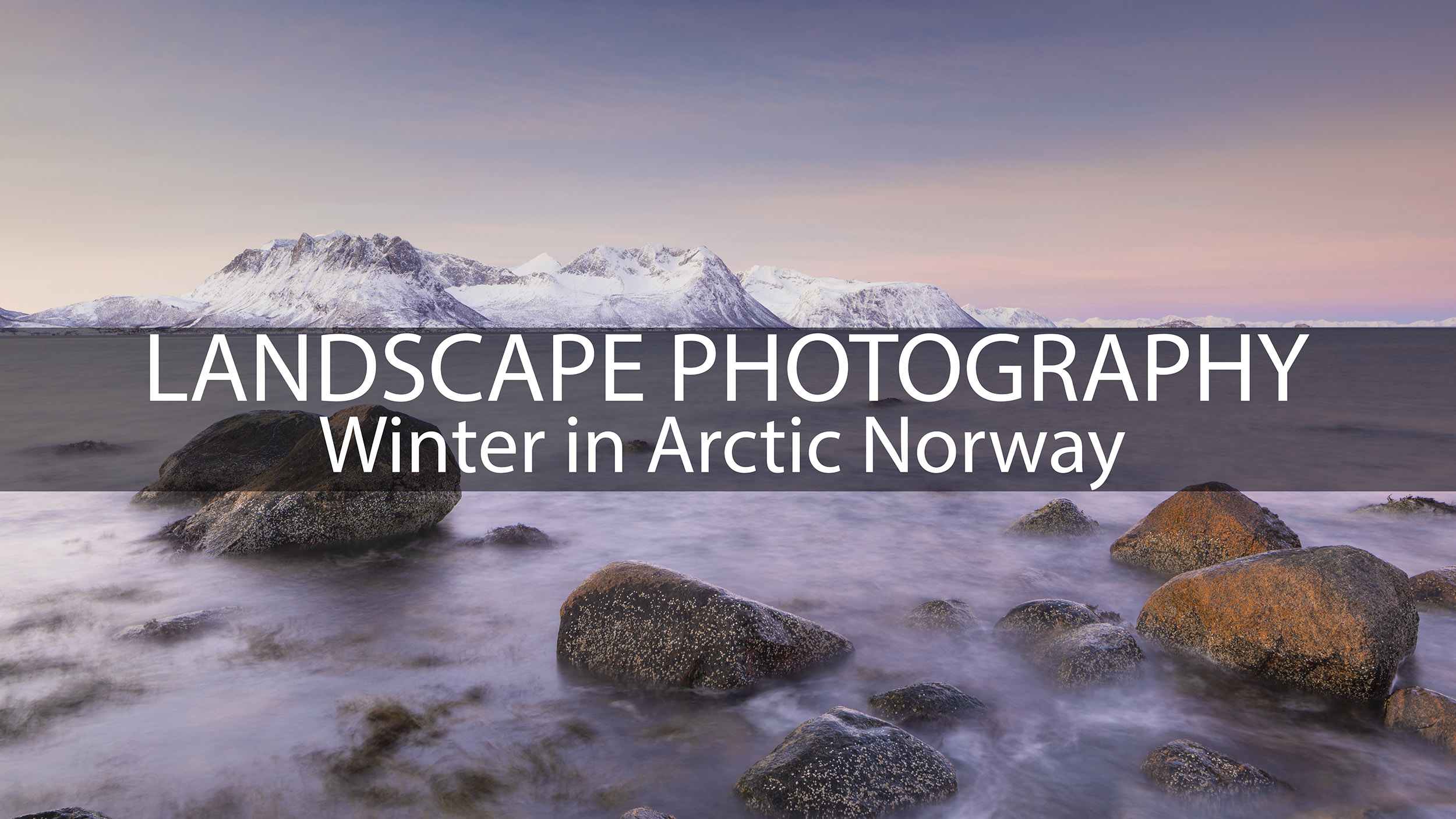

Winter in Arctic Norway is my latest YouTube vlog detailing some of my exploits as I travel to various parts of the world.
Norway is a landscape photographer’s paradise. With its beautiful fjords and high mountains, in winter it becomes a beautiful sight for any photographer when snow blankets the landscape.
Back in February, I had an opportunity to go above the Arctic Circle, starting first in Tromsø before heading a little southwards to the island of Senja. The latter is less visited than the more popular Lofoten Islands, which means at times you have the place to yourself as a photographer.
So sit back and see what I did on my first, and hopefully not last, visit to the north of Norway for some stunning landscape photography.
I arrived in Norway after time in Patagonian Chile, and the change felt immediate. The fjords were still there in spirit, as were the mountains and the weather that never seems settled for long, but the cold had a different bite. I based myself in an Airbnb around Tromso for a few nights, then planned to move on to the island of Senja. At that stage, I wasn’t chasing a strict shot list. I wanted to drive, stop when something caught my eye, and start learning the place.
That first day gave me a small red barn, or perhaps an outbuilding, by the roadside. Behind it sat a mountain under a moody sky, and that was enough. For a first frame in a new country, it had the right ingredients. It also had the kind of simple, local character I always look for when I don’t yet know an area well.
I built the image quite carefully:
The tilt-shift mattered. With a subject like that, I wanted the structure to sit cleanly in the frame without leaning backwards. The 24mm on its own felt too wide, so the extender helped bring it closer to the picture I had in mind. I also found myself thinking that a 50mm tilt-shift would be ideal in places like this.
That first image wasn’t dramatic, but it set the tone for the trip. I was in a new place, I had changing weather, and I could already see how well red buildings sit against snow and mountain light in northern Norway.
The best moments on a trip like this often come with no warning. I had been driving north of Tromso through snow showers and passing cloud when the light suddenly opened up over a small fishing village, what I believe was near Sommaroy. I pulled over as quickly and safely as I could because the scene had everything I wanted in one frame.
A red hut stood near the water. A boat rested in the snow. More buildings sat further back, and above them the sky held a mix of blue, sunlight, and dark incoming weather. It was one of those scenes that feels almost arranged for a photographer, except the window for shooting it is painfully short.
Good light in Norway can turn a random roadside stop into the picture of the day.
Because the wind was strong, I put the six-stop ND on again to smooth the water. My hands were freezing, but the conditions were too good to worry about comfort. The composition came together in layers:
I worked at about 50mm and kept the camera level. A tilt-shift would have been useful, but the subject didn’t demand it in the same way as the first barn. Soon enough, the sun dropped behind a cloud, and the front of the boathouse lost its glow. The light still looked attractive in the distance, yet the photograph had gone flat where it mattered.
That was the end of the frame, and I packed up. In winter landscape photography, there is no point staying loyal to a dead scene. When the light moves on, I move on with it.
Further along the road, I found a viewpoint overlooking a broad bay, backed by fresh snow on the mountains. It was one of those scenes that people often assume needs a wide-angle lens, but I saw it differently. My eye wasn’t drawn to one dramatic foreground object. I wanted the whole sweep of the place, stitched together the way I was seeing it.
So I put the tripod into what looked like nearly a metre of snow. The top layer was soft, but underneath there was solid ice, which gave the legs enough support. I couldn’t risk the drone because the wind was too strong, so a stitched panorama became the obvious answer. I shot around 50mm and made roughly eight or nine frames across the view.
I kept the setup simple. No grads, no polariser, no tricks. The scene already had enough shape from the mountains, the bay, and the fresh snow. A panorama felt more honest than forcing it into a single wide frame.
The other constant on this part of the trip was the road itself. It was about minus 6°C, and the wind made it feel colder. Even with winter tyres, the driving needed full attention. At times, there was black ice under the surface, and although the tyres held up well, the car could still shift when I least wanted it to. On roads like that, 60 km/h felt sensible. Anything more would have been careless.
That part of the day reminded me that in Arctic Norway, the photograph is only half the job. The other half is reaching the location, parking safely, and getting home again. There were many places where I saw promising scenes from the car, but had nowhere to stop. That can be frustrating, but it also forces discipline. You don’t chase every frame. You wait for the ones you can work properly.
I kept driving and eventually reached Rekvik, near the end of the road. There, a pier with a red building at the end caught my eye straight away. Snow covered the ground, the sea had enough movement to justify a longer exposure, and the contrast between red, white, and grey made the whole scene feel clean and graphic.
For that shot, I used the familiar combination of polariser and six-stop ND, mainly to soften the water and give the frame a calmer feel. I also put the 24mm tilt-shift back on with the extender, because I wanted a little more reach without losing the ability to keep the building straight. I included some foreground, but I stayed higher up rather than dropping to the rocks below. From that elevated position, I kept better separation between the building and the mountain behind.
Later, on my final full day around Tromso, I returned to another spot that had stayed in my mind. This one had a bridge in the background, a small house or boathouse to one side, and a foreground of snow-covered rocks. The light at the end of the day was decent rather than spectacular, but I felt there was enough to work with. I used a modest long exposure, around four or five seconds, because the water didn’t need much more than that.
The first composition looked stronger, with the bridge, house, and rocky foreground all working together. Then I tried to push further along the coast when I noticed some red light on a mountain. That second idea never settled. The foreground was attractive, but there was too much empty space between the rocks and the mountains beyond. I made several versions, and none of them felt right.
That matters. Not every photograph on a trip needs to be rescued in the edit. Sometimes the honest answer is that a scene isn’t a keeper. I still value those attempts because they tell me what the place can do, and what it can’t.
At one point in the trip, I was lucky enough to see the northern lights properly for the first time. I had seen them before from the Isle of Skye, but only faintly. In Norway, the display was clear enough to stand beneath and watch in open-mouthed silence. Green light moved across the sky in a way that doesn’t look quite real, even when you’re staring at it.
Soon after, I moved down to Senja for five full days of exploring. The island felt immediately calmer and, in some ways, wilder. The weather wasn’t perfect, but I liked the subtle colour in the sky and the quiet feel of the place. Senja also struck me as less crowded in spirit than the more famous Lofoten Islands, which is part of its appeal.
Getting there, however, was another matter. I had to cross a mountain pass to reach my Airbnb, and the weather turned with no warning. Visibility dropped to almost nothing, the road disappeared into blowing snow, and I ended up stuck. A snowplough driver came through at exactly the right time and helped pull me out. Without that help, I would have been there a lot longer than I wanted.
That moment was a sharp reminder that winter photography in Norway is never only about pictures. It is also about judgment, timing, and respect for conditions that can change in seconds. It also left me thinking how naturally this country fits alongside the destinations on my photography tours and workshops, because the mix of big scenery, fast weather, and strong local character is hard to beat.
One of my favourite moments on Senja came after driving through a tunnel. I emerged, looked to my right, and saw one of the finest coastal views of the trip. The light was superb, the mountains had shape, and the sea was pushing onto the rocks with enough force to create lovely patterns in the retreating water.
I didn’t settle on the composition at once. First, I tried using a single foreground rock as the main anchor, but the frame felt too sparse. After a while, I found a better answer by watching the water rather than the static stones. I waited for a larger swell to push in, then photographed the instant when it drew back and left a form in the surface. That gave the foreground movement and structure.
The final arrangement made sense to me. The rocks sat around the lower part of the frame, the mountains held the upper third, and the water tied them together. I used the 24mm tilt-shift, shifted downward, plus a polariser to control reflections on the water. The contrast between foreground and sky was around three stops, so I chose to blend exposures instead of using a grad.
The scene was there all along, but the picture only appeared once the water started doing something useful.
Another photograph on Senja had been waiting for me for days. Each time I drove over the mountain pass to the Airbnb, I passed a lone tree with beautiful curves in the snow leading towards it and mountains beyond. I knew the shot was there, but I also knew it needed the right morning. When that morning came, with minus 11°C temperatures and crisp blue tones through the scene, the image finally matched what I had been carrying in my head.
That picture depended on simple compositional lines. The curves and diagonals in the snow led down towards the tree, then out towards the mountains. A polariser deepened the colour and kept the tones clean. It was a fine example of why patience matters more than speed in landscape photography. Passing a subject five times without stopping can feel foolish until the sixth pass gives you the frame you wanted all along.
A clear morning later in the trip drew me back to a location I had already found. With no cloud overhead, I knew sunrise would hit the mountain tops cleanly, and it did. Early light kissed the peaks with a bright red glow while the rest of the scene stayed cool and blue. Those are the moments winter gives you, short, sharp, and gone before you have time to hesitate.
I was back on the Canon 24mm tilt-shift, with a polariser and blended exposures rather than grads. My settings for that scene were simple: 2 seconds at ISO 100 and f/11, enough to hold depth and keep the frame crisp. I had started to leave some filters behind more often, partly because I preferred blending, and partly because travelling with too much gear becomes a burden after a while.
Later, I returned to the coast near the place where I had managed to get the car stuck the day before. The beach had snow on it, reeds along the edge, and a cluster of red industrial buildings or fishing huts beyond. The sea was gentle, which made a longer exposure feel right. I used the six-stop ND and tested around four to eight seconds, settling on the longer time because it gave the waves a softer, more painterly look.
This small table sums up the tools I kept coming back to throughout the trip:
| Gear | What I used it for |
|---|---|
| 24mm tilt-shift | Keeping buildings upright and controlling perspective |
| 1.4x extender | Tightening scenes when 24mm felt too wide |
| Polariser | Cutting reflections and strengthening blue tones |
| Six-stop ND | Softening water and adding calm to windy coastal scenes |
| Exposure blending | Holding detail without relying on grads |
On the final day, with a storm forecast, I made one last photograph from a road I had driven every day. Snow banks at the edge of the road gave me a higher vantage point than I would normally have had. From there, I could see the S-curve of the road winding down into the valley, with diagonals from the hillsides guiding the eye straight into the frame. It felt like the right way to finish, a picture made not from a famous viewpoint, but from the ordinary route that had shaped each day.
What stayed with me most in Norway was not one single photograph. It was the mix of weather, patience, and adaptation that the country demands. Some scenes came together in seconds. Others took days of driving past before the light and conditions matched the idea in my head.
That is why the trip felt so rewarding. I left with frames I liked, a few misses I learned from, and a much stronger sense of what winter landscape photography in northern Norway can offer. For anyone drawn to Patagonia for its mood and scale, Tromso and Senja make a compelling northern answer.
We noticed you're visiting from United Kingdom (UK). We've updated our prices to Pound sterling for your shopping convenience. Use Euro instead. Dismiss