 Skip to content

My latest YouTube vlog explains how I photographed Osaka and Tokyo during a recent trip to Japan.
For the early part of February 2019, I spent 12 days between two Japanese cities. Osaka had already been visited in November of 2018, but Tokyo was a new one for me.
Both cities offer many observation points, both open and closed, and it’s these which attracted me as I wanted to time-lapse them as best I could. As always, though the weather was a challenge but that is what you have to put up with at times.
In addition to each of the two cities, I decided a visit to the Mount Fuji area would be a must, as I was due to visit the area in April, as well as heading north into the mountains to see the famous snow monkeys.
As well as discovering these two amazing Japanese cities, it gave me an opportunity to gather content and reconnaissance information for future Japan photo tours.
So have a listen to a more narrative type of vlog, as I didn’t get time to vlog properly, where I explain each of my days in Japan.
My main reason for returning to Japan was simple. I wanted to time-lapse Osaka and Tokyo properly.
I had been to Osaka the previous November and came away with the feeling that I had only scratched the surface. The city has a look that suits long exposures and time-lapse work, especially if you like high viewpoints, dense blocks of buildings and roads that snake through the frame. Tokyo, of course, had been on my mind as well, so I built the trip around those two cities.
Because I had already been to Japan once, I looked at the planning more carefully this time. The biggest question was the Japan Rail Pass. I didn’t want to buy one out of habit if the numbers didn’t stack up, so I used an online fare calculator I had found through TripAdvisor and added up the journeys I knew I wanted to make.
Even though I was only using it for three core journeys, the pass still made financial sense. That surprised me a bit, but the sums were clear.
The practical side is worth knowing too. The pass doesn’t arrive ready to use. I received a voucher in the post, then exchanged it in Japan with my passport, in my case at Osaka Station. Once I had it in hand, the trip felt much more flexible. Later on, that flexibility mattered more than I expected.
The trip began with a long-haul flight from Amsterdam to Osaka, around ten and a half hours. I had an emergency exit seat, and that made a big difference. On a flight that long, even a small amount of extra space helps.
Once I landed, I dealt with the first practical job straight away, which was mobile data. Near Osaka Station, I went to Yodobashi Camera and picked up a SIM setup with a 3GB top-up for 3,000 yen, roughly £25 to £30, with the SIM itself costing around the same again. For me, that wasn’t optional. I relied on Google Maps to move around and Google Translate when I needed help, especially in situations where English wasn’t widely spoken.
My first proper shoot in Osaka was at the Umeda Sky Building, the one with the Floating Garden Observatory at the top. I had tried to shoot there on the previous trip and arrived too late for the light I wanted, so I went back with a clear plan. I focused on one specific direction, shot a regular time-lapse and then stayed for a day-to-night sequence.
One thing I appreciated there was the attitude toward tripods. Staff were fine with it as long as I stayed sensible and didn’t raise it too high. In city observation areas, that sort of flexibility isn’t guaranteed.
The next day, I went to Tsutenkaku Tower, another Osaka landmark and one of the city’s recognisable symbols. It has an open-air section, which matters because glass can ruin a shot quickly when reflections start to creep in. Again, I found that tripod use was possible if handled carefully. The problem there was time. The outdoor section had restricted opening hours, so I had to work within a fairly tight window to get the time-lapse I wanted.
Below the open-air part, there was also a glass-enclosed area, but the panes sat at an awkward angle. That made clean shooting difficult. Getting a tripod close enough to the glass, whilst avoiding reflections, was messy, so I left most of that alone and stuck with the open section where the frame was cleaner.
The third day in Osaka was much duller, but it still gave me one of my favourite moments of the trip. I stumbled across a temple and found my first blossom of the journey. It wasn’t cherry blossom, it was plum blossom, and that mattered because the trip was in February. The flowers looked great, but what stayed with me more was the scent. Standing there with the camera, the smell coming off those blossoms was wonderful.
I used my 100-400mm lens to get close and treat the flowers almost like a macro subject. That lens gave me enough reach to isolate details without getting in the way of anyone around me. Later the same day, I went back to Tsutenkaku Tower and caught a strange, almost apocalyptic sunset over Osaka. The sky looked as though it might break into rain at any moment, but it held long enough for the time-lapse.
By day four, I wasn’t feeling great at all, and that showed in the way I worked. I made it to Osaka Castle before dawn and caught a bit of colour in the sky, though not much. From the angle I had, sunrise was behind me, so the castle didn’t get the kind of front-lit glow I might have hoped for. I had also been hoping for more plum blossoms in the surrounding park, but that didn’t happen.
Later that day, I picked up my Japan Rail Pass at Osaka Station. Whilst I was there, I asked one of the staff if there was anywhere nearby that I could visit cheaply using the pass, somewhere that tourists might skip. She suggested a waterfall to the north-west of Osaka. I went, but I came away feeling that the place needed either autumn colour or blossom to really work. Without leaves on the trees, and with only the red bridge adding contrast, it felt a bit empty.
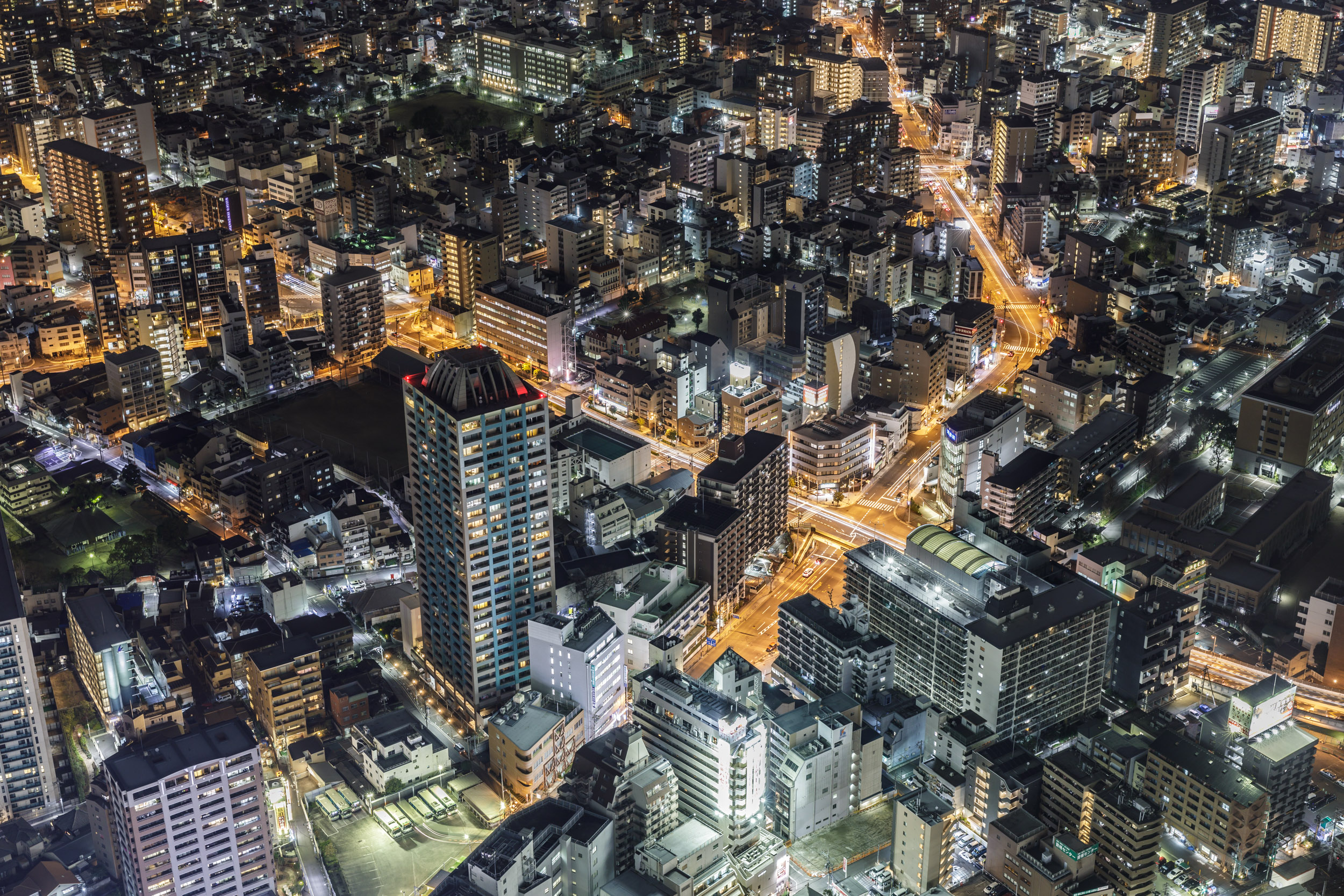
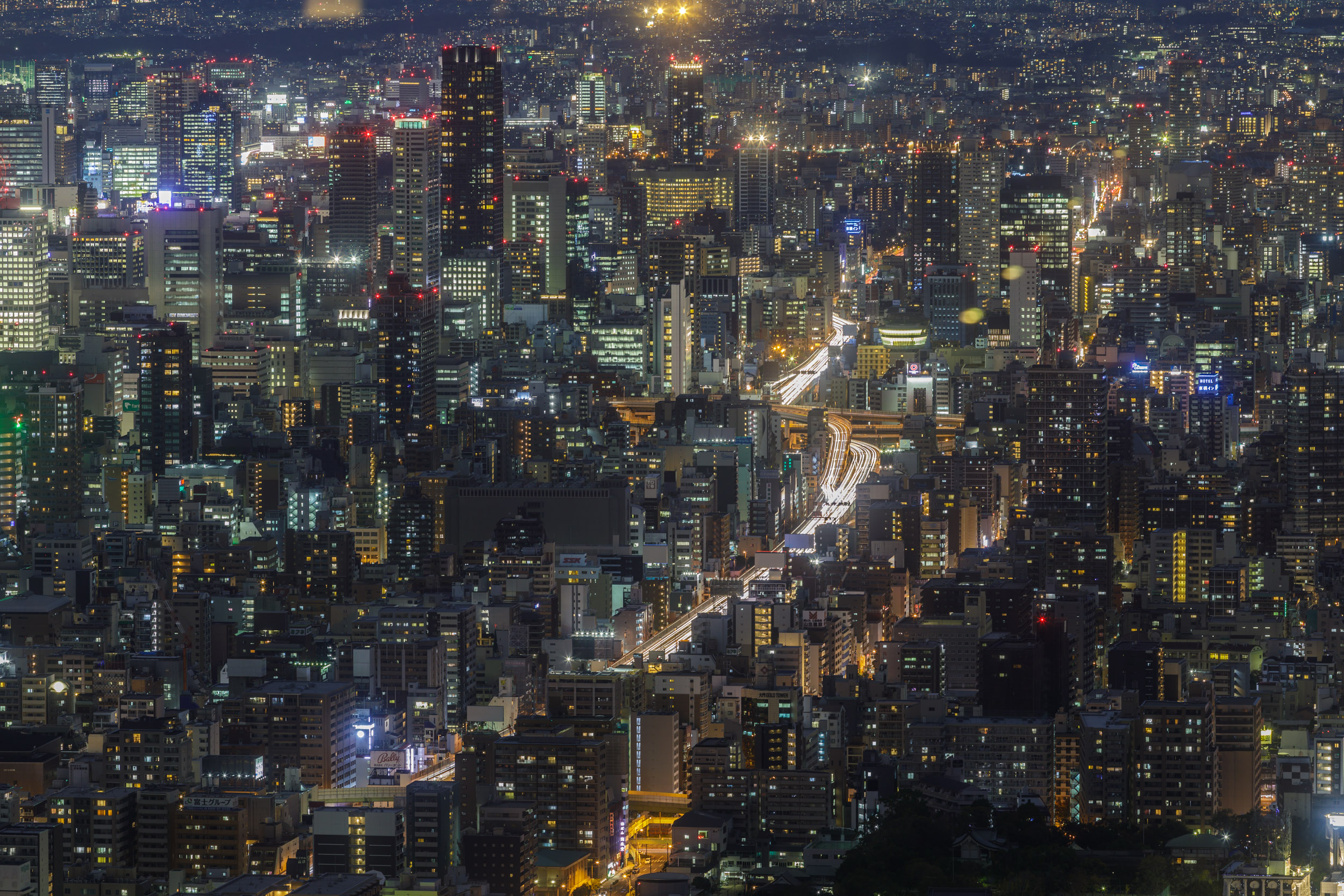
That same day improved sharply when I headed to a viewpoint outside the city that looks back across Osaka and over a major road junction. It is one of those urban scenes that works brilliantly for time-lapse because the structure of the roads gives the whole frame energy. When I arrived, I was told it was closed because of decoration work. I pushed my luck, asked again, and someone came down to check. In the end, they let me in, with the condition that I didn’t touch the part they had been working on. That saved the evening.
Grey weather never stopped the trip. It only changed what kind of work I could do that day.
The fifth day brought another practical purchase. I went into Bic Camera and bought my first proper power bank. My phone was doing too much work, maps, translation, planning and killing time during long time-lapse sessions, and the battery drain was constant. The one I bought could recharge my phone about three times, and I used it a lot.
Later that day, I went up Harukas 300, which at the time was the tallest building in Japan, around 300 metres high with 60 floors. The view from there was superb. I shot five different time-lapses and left happy with what I had. The sixth day in Osaka was grey again, and I lost time in the morning fiddling about in my flat instead of getting out early. When I tried to return to Tsutenkaku, it was a Sunday and the queue was huge, around 45 minutes. I abandoned that plan and switched to a harbour viewpoint instead, using a longer lens to pull the city in from a distance.
After Osaka, I moved on to Tokyo by bullet train. The journey took about two and a half hours, and this is where the Japan Rail Pass felt especially useful. I reserved a seat in advance at no extra cost, which made the whole transfer easier. On a long travel day, I didn’t want to be standing.
Tokyo worked differently from Osaka straight away. The scale is bigger, the metro feels more relentless, and small inefficiencies start to annoy you faster. I spent the first couple of days paying cash for metro journeys, then gave up and bought a Suica card. Once that was topped up, getting around became much smoother. Japan still felt cash-heavy in a lot of places, but at least I no longer had to keep fishing around for coins every time I entered or exited a station.
My first evening in Tokyo was short, so I stayed local. Near my flat, I found a shrine with a staircase lined by red torii gates, the kind of place that looks simple until you try to photograph it cleanly. I waited around half an hour for the frame I wanted because people kept drifting through, including someone in the middle of the steps doing the usual social media poses.
After that, I went to Shibuya Crossing. Even when it isn’t absolute chaos, it still feels intense because of the flow of people and the way everything moves at once. I went to a newer indoor viewpoint inside a shop, only to be told that tripods were not allowed. That would have ended the shoot if I hadn’t packed a small Manfrotto clamp. I could fasten it to a rail, attach my tripod head and get a stable setup without using tripod legs on the floor.
It was a slightly clunky workaround, but it worked. In cities like Tokyo, small bits of kit like that can save a shoot.
My second day in Tokyo started at Senso-ji in Asakusa, one of the best-known temple areas in Japan. It is free to visit, and it is easy to spend a few hours there without forcing anything. I wasn’t chasing time-lapse at that point. I was happy to walk, shoot stills and respond to the place as I found it.
Whilst I was there, I met another photographer who recognised me from the Getty forum. We got talking, had breakfast, then went off to see another shrine with torii gates that had been on both our lists. It wasn’t as strong visually as the one I had found the night before, but the morning was still enjoyable, and I also remember a café stop with excellent chocolate cake.
Later, I went to the World Trade Centre in Tokyo, mainly because it used to offer a famous view with Tokyo Tower and Mount Fuji. That view is gone. A newer building now blocks Fuji, so if someone is going there hoping to recreate that frame, they’ll come away disappointed.
The next day I returned to Shibuya Crossing in daylight because I wanted the contrast of a daytime time-lapse. Harsh light wasn’t ideal, but I made it work. To solve the reflection issue against the glass, I used a 77mm rubber lens hood and pressed it right up to the window. That gave me a clean view down onto the crossing.
Later that same day, I met the photographer again, and we headed to Roppongi Hills, another major viewpoint over Tokyo. The city opens up brilliantly from there, and the view towards Tokyo Tower is strong. Online, you often see images showing Tokyo Tower with Mount Fuji perfectly placed behind it. I need to be blunt about that, because it causes a lot of confusion.
The famous Tokyo Tower and Mount Fuji composition you see online is often fake. Fuji is added later.
Roppongi Hills also has an outdoor roof area, but I skipped it because they wouldn’t allow my tripod, and I believe they also restricted rucksacks. I stayed with the indoor viewpoints instead.
On the following day, with the weather still flat in the morning, I slowed down and reviewed some of the work I had already done. Then I headed to another well-known Tokyo crossing to shoot more time-lapse. Once again, the issue was glass, angle and reflection. A lens skirt or hood makes a big difference in places like that.
Afterwards, I tried a street-level view of Tokyo Tower, looking for a panoramic frame from the road. In the end, I settled for a time-lapse instead. Then I moved on to the Tokyo Metropolitan Government Building, where the observatory is free. Tripods were not permitted there either, but I managed to talk my way into another spot and got the view I wanted across the Shinjuku towers. I also came away with a local contact in Tokyo, which always helps when I’m working in a city more than once.
The fifth day in the Tokyo area was set aside for the snow monkeys. I worked out a train that would get me there around 9 in the morning. The journey involved a bullet train first, then a private railway, which meant my Japan Rail Pass covered the main section and I paid cash for the rest.
I met a French photographer on the way, and that turned out well because he had been there the day before. Once we reached the end of the rail line, we took a bus for about half an hour and then walked another half hour to reach the monkey area.
There was still snow on the ground when I arrived, and that helped the whole scene. The monkeys were close, much closer than many people expect. They ran past my legs, fought, played, climbed and occasionally settled into the hot spring. I didn’t get endless bathing-monkey shots, but I got enough. More than that, I had time with them. That’s what mattered.
It was easy to spend hours there. Wildlife photography can compress time like that. You think you’ll stay an hour, then suddenly half the day has gone. For me, the whole outing was worth it not only for the photographs, but for the rare feeling of being so close to animals that still seemed utterly unconcerned by the camera.
My last day around Tokyo was for Mount Fuji and the famous red pagoda viewpoint. The journey took about two and a half to three hours on three trains, two of them covered by the Japan Rail Pass, followed by a private line that cost around 1,400 yen.
I had been checking a webcam for the area before I left, and for much of the journey, Fuji looked clear. Then, by the time I arrived, the mountain had started to cloud over. That is travel photography in one sentence. I still managed a usable image, but I then waited about three hours for the clouds to shift properly. By that point, the light had grown harsher, and the tourist numbers had risen sharply.
After lunch, Fuji disappeared again and never returned. Since I was already there, I turned the rest of the day into a scouting session for possible future trips. I wanted to see which compositions in that area were real and which were exaggerated or false online. That recce also shaped the way I think about Japan photography tours, because I want to know what holds up in real weather, real light and real conditions.
I didn’t need a huge amount of clever kit in Japan, but I did need the right small items at the right time. Without them, I would have lost several frames.
A few things earned their place straight away:
That last point mattered more than I expected. My final day was mostly about getting home, which meant heading to Haneda Airport and sorting out a long route back to France over three flights. I always try to keep my camera accessible on planes, and I asked at check-in for a window seat as far back as possible. Once I was on board, I ended up persuading the passenger beside me to let me take the window seat.
The first stretch after take-off was cloudy, but once we rose above the clouds and passed the Mount Fuji area, the mountain came into view cleanly enough for sharp photographs from the air. Those ended up being some of my favourite images from the trip.
Later, on the westbound flight, I also photographed frozen Siberian scenes far below. I still had to check those files properly when I got home, but even on the camera screen, they looked promising. Japan had already given me trouble with cloud at ground level, then handed me a final Fuji frame through an aircraft window.
Japan wasn’t the end of a quiet month. It was the start of a packed run of travel.
I was due in Northumberland for a YouTube meet-up, then straight on to a conference in Berlin. After that came Mongolia, where I would be spending ten nights with eagle hunters, followed by Lewis and Harris in the Outer Hebrides. Then, after only a few days back at home, I would return to Japan for cherry blossom season.
That next Japan trip felt important because I expected it to be easier to work more freely. I was going to have a car, which changes everything once you start moving beyond station-to-station city work. In Osaka and Tokyo, I had spent much of my time solving access, timing and transport problems. With a car, I could think more about light and less about logistics.
What stayed with me from this trip wasn’t one perfect shot. It was how often I had to adapt.
Osaka and Tokyo rewarded patience far more than rigid planning. Some of my best moments came after a grey start, a denied viewpoint, a queue that changed my route, or a mountain that only appeared when I was leaving the country.
That is what I remember most about photographing Japan in winter. The images mattered, of course, but the real thread running through the whole journey was staying flexible long enough for the country to give me something back.
We noticed you're visiting from United Kingdom (UK). We've updated our prices to Pound sterling for your shopping convenience. Use Euro instead. Dismiss