 Skip to content
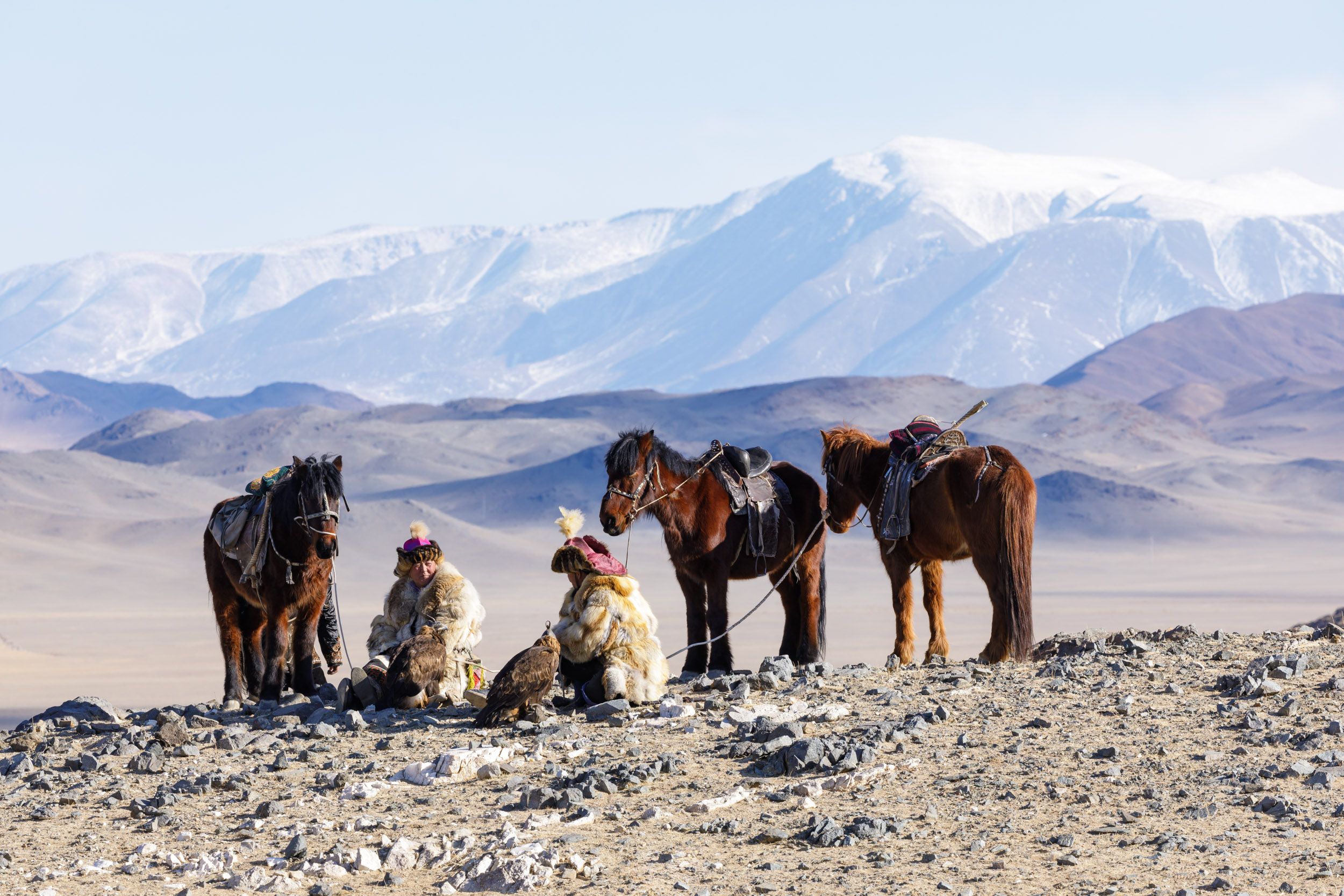

From the 13th to the 23rd March 2019 I spent my time in the vast landscapes of Mongolia. One of the most sparsely populated countries on the planet.
Due to unforeseen weather conditions, the group I was in spent a night in Hustai National Park with a local family. But it was definitely a beautiful place to visit and it’s where the vlog starts.
One night later, we took our flight to Ulgii in Western Mongolia. More Kazakhstan than Mongolia, it is where the high mountains are and what people typically think of when it comes to Mongolia.
We stayed on the floor of various eagle hunters whilst also partaking in the Eagle Festival for Nauryz, which is a celebration of the Spring Equinox.
And if you like what you see, then I’m teaming up with Eternal Landscapes to run a photography tour in the Altai where we’ll be staying with various eagle hunters and their families. More details can be found here on my dedicated photography tours for Mongolia.
The group and I were supposed to be in western Mongolia, going to see eagle hunters, close to the Altai. Instead, bad weather cancelled our flight, and we were redirected to Hustai National Park, not far from Ulaanbaatar. By the time we arrived, the sun was already dropping, and we were trying to find the family we would be staying with for the night before attempting the journey west again the next day.
Because I had never been there before, I walked up a hill without knowing what I would find. I hoped for a view. What I got was far better than I expected. The ground was cold, around 0°C, and the air had that dry chill that gets into your hands quickly, but the scene in front of me made all of that fade for a while.
Central Mongolia has a quiet kind of scale. It isn’t dramatic in a loud way. It opens out in every direction, and the more I looked, the more I realised how hard it would be to translate that sense of space into still images. A camera can record shape, light and colour, but it struggles with sheer distance. That first evening in Hustai reminded me of that straight away.
The night was equally memorable. We had clear skies, stars overhead and the kind of darkness that makes light painting worthwhile. I used a head torch and lit the scene carefully, adding a human touch to a place that otherwise felt untouched. It’s a simple technique, but in a place like this, it can say a lot. The following morning, I returned to a different viewpoint, hoping dawn would give me more to work with.
It did, though not in the way I had hoped. The sun rose into clouds, which is part of life as a photographer. Sometimes the conditions line up, sometimes they don’t. Even so, I stood there looking across that huge expanse of Mongolian wilderness, and it still felt like a gift. The weather had disrupted the journey, yet Hustai gave me one of the most peaceful starts to the trip.
By Saturday, we finally made it across to the Altai on our way to see the eagle hunters in western Mongolia, flying into Ulgii. That part of the country feels different straight away. The eagle hunter culture has a strong Kazakh identity, and that shapes the people, the homes and the traditions you encounter there.
One of the first people I met on arrival was Zaya, our trip assistant. She looked after meals, helped guide us through the practical side of the journey, such as translating to our eagle hunter hosts and kept everything moving when conditions were cold, remote and unpredictable. On a trip like this, that sort of support matters more than most people realise. She also started teaching me a little Mongolian, including some of the script, which added a personal layer to the experience.
That same afternoon, we visited an eagle hunter’s home. Behind the house, the land rose gently towards a hill, and that became the setting for our first proper session, photographing an eagle hunter with his golden eagle. He also brought his son along, which added another dimension to the scene. It wasn’t only a portrait of a man and a bird. It hinted at tradition being passed on.
Later, after dinner, I asked if I could step outside again to catch the last light. The view across the plain was extraordinary. The topography of western Mongolia is full of broad curves, distant mountains and open ground that seems to breathe. It made complete sense why this region stays in the imagination of so many photographers.
“Just stop listening to me and take in the view.”
That thought kept returning to me. There are places where words start to get in the way, and western Mongolia is one of them. The trip also confirmed why I keep returning to remote places with a camera to capture culture like that of the eagle hunters, and why I organise photography tours and workshops to places where culture and landscape belong together.
One of the strongest mornings of the trip came at dawn beside a frozen river in the Altai. I was standing on solid ice at around 7 o’clock, and it was thick enough that we had driven across it the day before to reach the family we were staying with. That gives a fair sense of the cold. Mid-March in this part of Mongolia is no mild shoulder season. It is winter, holding on.
The river surface had cracked in long lines across the ice, and those fractures gave the foreground real character. Behind it, the dawn light was beautiful. I wanted to send the drone up for a higher view, but the wind was too strong, so I stayed lower and worked with what I had in front of me. That’s a familiar lesson in harsh places. The photograph you imagined might not happen, but another one can.
Spending time with eagle hunters in western Mongolia also changed the way I thought about the region. Many people associate Mongolia with mountains, horses and eagle hunting, but in the far west, the culture is often more Kazakh than Mongolian. That matters. It changes the way the tradition is understood, and it gives more context to the images.
We stayed as guests in the home of a Kazakh eagle hunter near the Kazakhstan border. He and his family were generous with their space and their time, especially given the weather. The wind was relentless when we photographed him outdoors, yet he still demonstrated his skills and allowed us to make pictures in difficult conditions.
Hospitality stood out as much as the photography. We weren’t passing through a staged set. We were staying on the floor of family homes, eating with our eagle hunter hosts and seeing a small part of daily life around the tradition. That closeness gave the trip its depth.
After one night, we moved on to stay with another eagle hunter. The pattern of the trip was simple, but rich. Travel, arrive, settle in, step outside, photograph, share food, then wake to another hard morning and start again.
By the time we reached the second home, the cold had sharpened further. Around midday, it was about minus 5°C, and by evening it felt far colder once the wind cut across the open ground. Even dressed for it, I felt the temperature quickly whenever I stopped moving.
Still, the view behind the house made standing outside more than worthwhile. The plain opened towards distant mountains, and the whole scene carried that clean winter light that makes every line feel precise. The family demonstrated some of their eagle-hunting skills, and once again, I was struck by how physical and disciplined the tradition is. It isn’t decorative. It is rooted in practice, repetition and trust between hunter and bird.
What stayed with me most was how natural it all felt in context. Seen in isolation, a portrait of an eagle hunter can become a symbol and nothing more. Seen where it belongs, with the cold, the wind, the livestock, the house and the miles of empty ground around it, the image becomes more honest.
That is one of the main reasons I wanted to be there in person. I didn’t want only the iconic frame. I wanted the place around it.
When we left our second host, we began heading back towards Ulgii. On the way, we stopped for lunch beside a frozen lake, and I walked out onto the ice to photograph it. I didn’t know the lake’s name at the time, so I relied on the GPS in my camera to help me keep track later. Even without the name, the scene said enough. It was one more example of how Mongolia keeps offering these broad, stark places where the eye has room to wander.
The day before, we had attended an eagle hunting festival held for Nauryz, the New Year celebration. The setting could hardly have been more remote. It felt like the middle of nowhere, with the nearest town roughly 20 to 30 kilometres away. That sense of isolation is exciting, but it also deserves respect.
If there is one practical point I would make after travelling there, it’s this:
Because of that, I would never suggest turning up and wandering off on your own in the Altai. The remoteness is part of the appeal, but it also demands common sense.
The festival itself was a joy to witness. Eagle hunters, riders, spectators and open country all came together in a setting that felt completely true to the region. It wasn’t polished or theatrical. It was part celebration, part gathering, part display of skill. For me, it brought the whole trip into focus. The private moments with families had given me context, and the festival showed the tradition in a public, communal form.
Mongolia kept teaching me the same lesson in different ways. Scale is difficult. Wind is constant. Cold slows everything down. Light can vanish behind a cloud with no warning. Yet those same conditions are what make the place so rewarding to photograph.
In Hustai, I felt it in the open central plains. In the Altai, I felt it in the frozen river, the hilltop views and the vast stretches around the homes of the eagle hunters. Over and over, I found myself looking at a scene and thinking that a photograph would only show part of it. The land is too wide, too spare and too physical to fit neatly inside a frame.
That isn’t a failure of photography. It is part of the reason I enjoy it so much. Some places hand you easy compositions. Mongolia asks for patience. It asks you to wait for the cloud to move, to work around the wind, to accept when the drone has to stay in the bag, and to keep shooting when your fingers are numb.
The rewards are there if you stay with it. A light-painted scene under the stars. A cracked river of ice at dawn. A portrait of a Kazakh eagle hunter and his golden eagle against a wall of winter sky. A line of riders at the festival moving across a broad white plain. None of those moments felt ordinary.
After Mongolia, I was heading on to Lewis and Harris, then Japan, a couple of weeks later. Even with those journeys ahead, the time in the Altai stayed at the front of my mind. That says a lot.
Mongolia gave me more than the pictures I had hoped for. It gave me weather delays, frozen rivers, family homes, fierce winds, and a closer look at the people behind the images that so many of us recognise.
What remains strongest is the mix of space and human presence. The country feels vast enough to swallow sound, yet the warmth of the people I met made the trip feel personal from start to finish.
When I think back on those days, I don’t remember only the photographs. I remember the cold air at dawn, the silence on the ice and the sight of eagle hunters moving across western Mongolia as if they belonged completely to the land around them.
We noticed you're visiting from United Kingdom (UK). We've updated our prices to Pound sterling for your shopping convenience. Use Euro instead. Dismiss