 Skip to content
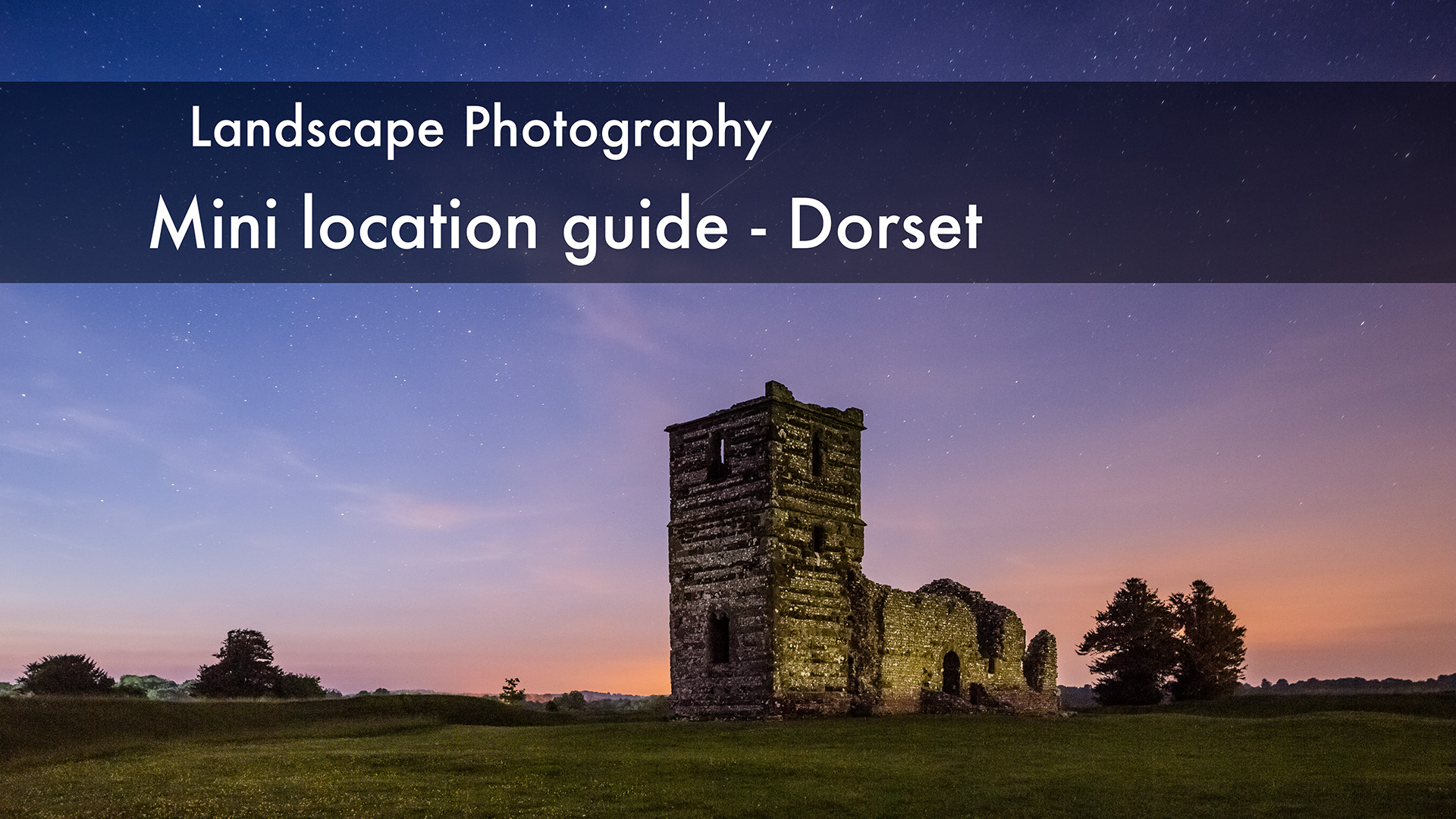

The Dorset Mini location guide is my latest YouTube vlog detailing some of my exploits as I travel to various parts of the world.
On 15th March 2017, I decided to film a Dorset mini location guide in some areas I love in the county, which is close to where I used to live. Of course, things don’t always go as planned, as you’ll see at the end.
The county is home to the famous Jurassic Coast World Heritage Site, but there are also numerous other places you can go to in the county.
Presented here are three of my favourites, as well as an abandoned shoot at sunset due to the Met Office completely messing up the forecast for the evening.
If you’ve never been to Dorset and wanted to be introduced to a couple of the lesser-known places, then take a look. I just wish that I’d had time to do more!
Throughout the year, I offer photography tours and workshops in a variety of destinations around the world. If you’re interested in learning more from me to help you get the best out of your photography, then get in touch.
This was my second week in the United Kingdom, and most of it had been wrapped in flat, grey weather. I had a better run in York a few days earlier, where I made some photographs across the rooftops and around the city, but I was still waiting for that moment when I could get back into the countryside.
At heart, I’m a landscape photographer. Travel photography is part of what I do, of course, but the countryside is where I started and where I still feel most at home. Dorset made sense because it wasn’t far from where I was staying, and I know the area well enough to look beyond the obvious places.
I wanted this trip to be more than a standard day out with a camera. So I treated it as a short location guide mixed with how I work in the field. My idea was to start with three places that don’t always appear on a visitor’s shortlist, then head south to the coast and give Durdle Door another proper attempt.
That last part mattered to me more than I expected. I’d photographed Durdle Door before, but I’d never come away with an image I was truly happy with. It’s one of the most photographed stretches of the Dorset coast, which can put people off, yet that isn’t a reason to ignore it. Sometimes a famous place still asks you to slow down, stay longer, and work harder.
Before I reached the coast, though, I made time for three spots that show a quieter side of Dorset. They’re very different from each other, and that’s exactly why I like them.
My first stop was Knowlton Church, near Wimborne St Giles. It’s one of those Dorset locations that feels slightly hidden, even though it has a strong sense of history the moment you arrive.
The church itself is a ruined Norman building, and what makes it special is its setting. It sits in the middle of a Neolithic henge, so when you stand beside the ruins, you can see the surrounding earthworks shaping the ground around it. That combination gives the place a strange, layered feeling. You’re looking at different periods of history in one frame, all held together by the landscape.
It’s also managed by English Heritage, which helps preserve the site without taking away its atmosphere. There’s nothing flashy about it. In fact, that’s part of the appeal. Unless you’re from the area or you’ve done a bit of searching, there’s a fair chance it won’t be on your radar at all.
Knowlton also has a reputation for being one of the most haunted places in Dorset. Whether you believe that or not, the place certainly changes character after dark. I’ve been there at midnight photographing the stars, and it becomes far more eerie once the light drops and the silence settles in.
For photography, I like it because it gives me more than one route into an image. A wider composition can show the church within the henge. A tighter frame can focus on the ruin itself, the worn stone, and the shape of the old windows. At night, the site becomes something else again.
Some locations work because they are spectacular. Others work because they feel older than the road you arrived on. Knowlton Church falls into the second group.
From Knowlton Church, I moved on to a small avenue of trees just outside More Crichel. It’s only a short drive away, which makes the two locations easy to combine in one outing.
This road has none of the fame of a major beauty spot, and that’s exactly why I like it. Most of the traffic is local, and most of the people who pass through are simply going about their day. Because of that, the place keeps a sense of calm that many better-known tree avenues lose.
Photographically, it suits a long lens. I like placing the tripod in the road when it’s safe to do so, then shooting either up or down the avenue, depending on where the sun sits. That longer focal length compresses the trees and gives the road a stronger rhythm, which can turn a simple lane into a much more graphic image.
Season matters here. The avenue is at its richest when the trees are full, so late spring and summer work well. Autumn is also excellent because of the colour. In winter, the scene is barer and more open, which can still work, but it becomes a different sort of photograph.
It’s a small location, and I mean that in a good way. I don’t need hours there. I need a little time, a bit of patience, and the right angle. Dorset has plenty of places like this, roads and corners that won’t make the guidebooks but can still give you a photograph with character.
On the way towards the coast, I drove down the Beech Avenue at Kingston Lacy. Unlike the previous two spots, this one is far better known, and with good reason. It’s part of the National Trust estate, and it is one of the finest tree-lined roads in this part of Dorset.
The avenue is magnificent. The road rises and dips gently, and the beech trees line it with enough structure to make it work in almost any conditions. Some places need autumn colour, or low mist or perfect evening light before they become interesting. This isn’t one of them. Winter, spring, summer, autumn, the avenue still holds together.
That year-round appeal makes it more than a quick stop. Even if I’m heading somewhere else, I’m happy to make a short diversion for it. A lot of roads are pleasant to drive. This one asks to be photographed.
There’s also a nearby bonus. Badbury Rings sits off to the left as you pass through the area, with a car park and room to walk. It’s a fine place for to explore and works at almost any time of year. If I were building a relaxed day in Dorset with a camera, a walk, and no pressure, this whole area would be easy to recommend.
For the photograph itself, I usually reach for a long lens again and look down the line of trees. The compression helps draw the trunks together, and the undulating road adds depth. It’s a strong image when it comes off.
The problem is traffic. This is the main road between Wimborne and Blandford, so cars are a constant factor. You can photograph from the middle of the road, and I have done it, but it is busy, and it is dangerous. Anyone tempted to do the same needs to treat it seriously. Taking someone with you to watch for traffic makes a real difference.
I never think of places like this as difficult because of technical settings alone. Sometimes the hard part is timing, awareness, and staying patient while the road clears for a few seconds. That patience matters as much as camera gear.
By late afternoon, I was on my way south, still deciding exactly where to finish the day. My original plan was Durdle Door, partly because I wanted another attempt at it, and partly because the forecast suggested a decent sunset was on the cards.
I also had Kimmeridge Bay and Chapman’s Pool in mind. Kimmeridge has a wilder feel and can be superb when the conditions suit it. Chapman’s Pool is less well known than some of Dorset’s headline coastal spots, and that alone makes it appealing. Even so, Durdle Door stayed in my thoughts because I felt I still had unfinished business there.
That’s one of the odd things about photography. A place can be over-photographed and still remain personal. My issue with Durdle Door was never that too many people had shot it already. My issue was simpler; I still hadn’t made the frame I wanted.
Everything depended on the weather, and that’s where the day turned.
The weather forecast had suggested wall-to-wall sunshine later in the day. What I found instead was heavy fog, thick enough to wipe out the coastline and, in places, make the drive itself awkward.
I was on my way to Durdle Door when I realised how bad it had become. Rather than push on blindly, I switched plans and thought Kimmeridge Bay might offer something. It was worse there. Visibility had dropped so much that I could barely see enough to make the journey feel worthwhile.
At that point, I tried one last option. I headed for higher ground above Corfe Castle in the hope that the evening light might lift the fog or at least break through it. From the road below, I could only just make out the castle. Once I was in position, there was almost nothing left to see.
Behind me sat one of the most recognisable landmarks in Dorset, and it had almost vanished into a blank wall of white.
This is the part of photography that doesn’t always make it into the polished final image. You watch the forecast, make the drive, carry the kit, commit the time, and still come away with nothing you want to keep.
That can be frustrating, especially when you know how much promise the day seemed to have a few hours earlier. I had hoped for a strong end to the shoot, the sort of sunset frame people respond to straight away. Instead, I packed up in fog.
Still, there’s nothing unusual about that. It’s built into the work. Landscape photography often involves long stretches of waiting, sudden changes, and the need to accept that nature doesn’t care what the forecast promised.
I don’t think those failed outings are wasted. They sharpen judgment. They remind me that persistence matters more than one evening’s result. They also strip the process back to what it is, showing up, trying, adapting, and sometimes going home empty-handed.
A good day in the field doesn’t always end with a good photograph.
I was travelling with a kit that suited both broader landscape work and tighter compositions along the roads and tree avenues. For this trip, I used:
That mix gave me enough flexibility for ruins, roadside compositions, and coastal work. The long lens was especially useful on the tree avenues, where compression helped simplify the scene.
Even though the sunset collapsed into fog, the day still did what I wanted it to do. It took me back into the Dorset countryside, away from the city, and into places with a bit more silence and space around them.
Knowlton Church, the lane near More Crichel, and the Beech Avenue at Kingston Lacy all reminded me that Dorset is far more than its best-known coastal landmarks. Some of the strongest places are the ones people drive past, or never hear about at all.
I left without the Durdle Door image I’d hoped for, but I didn’t leave empty-handed. I came away with three locations worth returning to, and a familiar lesson about weather. In this kind of photography, the plan matters, but the light always gets the final word.
We noticed you're visiting from United Kingdom (UK). We've updated our prices to Pound sterling for your shopping convenience. Use Euro instead. Dismiss