 Skip to content
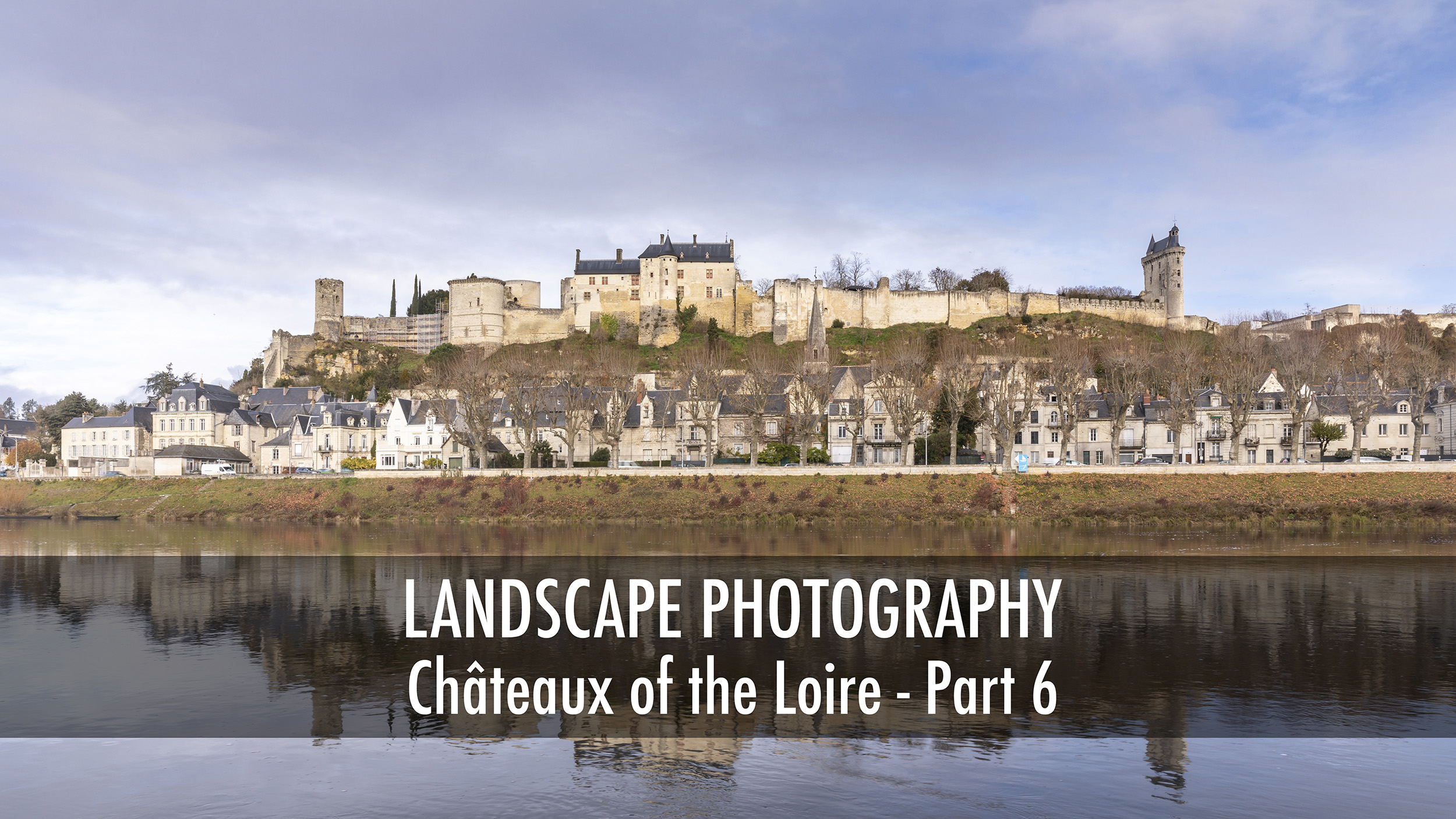

The Châteaux of the Loire are famous worldwide and rightly so. From old medieval fortresses such as those at Chinon to more stately castles dotted around the area, they make great subjects for both landscape and travel photography.
In this latest episode from my YouTube channel, more castles are the subject of my lens in the Indre-et-Loire department of France. I’ll show you three castles that probably haven’t been on your list of places to visit, but hopefully, you’ll change that with these beauties. This central area of France plays host to some 144 castles that are registered as historic monuments.
With this series, I aim to introduce some of the well-known as well as lesser-known castles that are here in central France. Do be aware, though, that not all of them are accessible to the public and remain behind high walls sealed off from public gaze. But those that are visible will be covered where I can.
And if you’re interested in discovering the Loire Valley with a camera, then do check out my annual Loire Valley photo tour in May.
The châteaux of the Loire Valley is packed with history, and Indre-et-Loire alone has 144 registered historic monuments. Across France, the total rises to more than 6,000. Those numbers tell you one thing straight away: there is far more here than the usual shortlist of headline names.
On this outing, I was not chasing the obvious “must-see” places. I wanted to keep the journey going and show a wider picture of the chateaux of the Loire and the surrounding area. That meant visiting a vanished palace at Richelieu, stopping at a private castle called Château de la Pataudiere, and finishing at the Royal Fortress of Chinon.
What tied these places together was not perfect light. In truth, the weather was not giving me much. Still, each stop offered something useful, and Chinon in particular reminded me how much a strong subject can carry a scene when the composition is right.
If you know a little French history, the name Richelieu will ring a bell at once. If, like me, you also grew up with The Three Musketeers, you probably picture Cardinal Richelieu as one of those larger-than-life figures who seem to belong as much to the story as to history.
The town of Richelieu was built for him and given to him by the King of France. His château once stood behind the town, and by all accounts, it was enormous. Old drawings show a grand and imposing building, far bigger than what most people would expect when they arrive today.
Because when you visit now, the shock is simple: the castle has gone.
What remains is the moat and the parkland around the former site. That still makes it worth stopping, especially if you enjoy places where history sits a little below the surface. I spent my time walking the grounds rather than trying to force photographs in poor light. The town itself is pleasant too, though on this occasion I left that for another day.
From what I had read before visiting, the estate was sold off and dismantled stone by stone. That explains why the site feels both grand and strangely empty. You are standing in the footprint of a major château, but the space is now defined by absence as much as by what survives.
Even when a castle has vanished, a place can still teach you something about seeing. As I walked out through the park, I found one of those simple lessons that is easy to forget when you are in a rush.
An avenue of trees ran through the grounds, and the structure of that scene was clearly vertical. The trunks were tall, the canopy rose high above me, and the shape of the subject asked for one thing: portrait orientation.
Too many photographs are made by habit. I see it often, and I catch myself doing it too. A camera gets lifted, the frame stays horizontal, and the shot is made before the subject has been properly read. When the scene is tall, that habit usually works against the picture.
If the subject rises, the frame often needs to rise with it.
I use a simple check before I shoot:
That sounds basic, but it changes a lot. On another recent castle shoot, I was stuck in a corner and could not move far enough to the right to balance the building properly. A vertical frame solved the problem because it removed empty space and gave the image more purpose. The same thinking applied here amongst the trees at Richelieu.
My next stop was Château de la Pataudiere, which appears to date from the 16th century. Information on it is not easy to find, so this was more of a visual visit than a historical one. That happens quite a lot with lesser-known French châteaux. Some are well documented, while others sit quietly behind walls and hedges with little more than a name attached to them.
This castle is private property, so the main building is not open in the usual way. However, there are chambres d’hotes within another part of the grounds, which means people can stay on the estate. From a photography point of view, the practical options are limited. You can photograph it from the roadside where I stood, or from another angle as you drive up towards the guest accommodation.
That sort of access changes the way I work. I cannot wander the grounds, test several positions, and wait for every line to fall neatly into place. Instead, I have to make the most of the angle I have been given.
This stop brought me back to the same lesson as Richelieu, but in a much clearer way. One edge of the castle rises high in the frame, and that strong vertical line tells me straight away that a horizontal composition is the weaker choice.
If I frame the building in landscape orientation, I lose what makes the view work. The height gets diluted, the subject feels less dominant, and too much empty space appears around it. Turn the camera upright, and the structure starts to make sense.
The light was not ideal on the day I visited. Had I been working only for a still image, I would have waited for better conditions. Yet the poor light did not cancel the lesson. A scene can still teach you something even when it is not at its photographic best.
There was one practical irritation as well, the road in the foreground. You could remove that later in post-processing if you wanted to clean the image up. Even so, the core decision happens before any editing. The first job is to frame the subject properly.
For this castle, the answer was plain. Its shape asks for a vertical composition. Sometimes a scene offers room for debate. This one did not.
The final stop was the Royal Fortress of Chinon, and this place needs little introduction if you have followed my work for a while. I have photographed it several times, and I keep coming back because it is one of those castles that works on both levels, history and image.
The fortress sits above the town of Chinon, looking over the River Vienne. When the water is calm, the whole scene settles into something balanced and elegant. The river gives space, the town gives scale, and the castle on the ridge gives the frame its weight.
Historically, it is one of the richest sites in the area. The architecture owes much to Henry II, and the fortress has existed in one form or another for more than a thousand years. The Knights Templar were also imprisoned there, which adds yet another layer to a place already full of stories.
Because Chinon stands within the Loire Valley UNESCO World Heritage site, it sits firmly amongst the best-known chateaux of the Loire. Yet even with all that fame, it still feels rewarding to photograph. Some places lose their appeal once you have seen the classic view. Chinon does not.
There are several angles from which the fortress can be photographed, although a few that interest me most are on private land and therefore out of bounds. Still, there are enough public viewpoints to keep a photographer busy.
The best-known composition is from the southern side of the River Vienne, looking north towards the fortress. It is an easy shot to reach. The car park is close, and from there it is only a short walk to the water’s edge.
Easy access does not make it a weak photograph. It remains a fine one.
My first choice here is to avoid going too wide. That may sound odd when photographing a large castle and a broad river, but wide-angle lenses are not always your friend. In this scene, there is no strong foreground detail to lead the eye into the frame. If I go too wide, I only add empty space and weaken the impact of the fortress.
A focal length around 35mm works far better for me. It tightens the composition, gives the castle more presence, and keeps the town and reflection in proportion.
The next decision is the horizon. Because there is a reflection, it can be tempting to place the horizon dead centre. I would not do that here. The strip of green bank on the far side of the river adds little to the image, so I place the horizon slightly off centre and let the built section of the town sit closer to the lower third.
At Chinon, wider is not better. A tighter frame gives the fortress more authority.
Light matters too, and this viewpoint has a real advantage. The sun sits behind the camera for much of the day, so when it appears, it lights the castle beautifully. That means this is one of the more forgiving Loire Valley castle views if you are trying to fit photography into a travel day rather than planning your whole visit around sunrise or sunset.
Some photographers avoid the well-known shot because it feels too easy or too touristic. I do not see it that way. If a viewpoint is obvious because it is good, there is no reason to ignore it.
What matters is how carefully I use it. I still need to choose the right focal length. I still need to place the horizon properly. I still need to wait for the light to do its part. The location does not make the photograph for me.
At the same time, Chinon rewards a bit of extra research. If I use a map or Google Earth before visiting, I can spot other possible angles and arrive with a clearer plan. That habit matters across the whole region. Some castles are easy roadside subjects, some are hidden, and some sit behind private boundaries. Research saves time and sharpens intent.
The great châteaux of the Loire deserve their reputation. Chambord, Chenonceau, and Amboise are beautiful, and I would never tell anyone to skip them. Still, if I only photograph the famous sites, I miss much of what makes this part of France so rich.
That was the point of this day out. I wanted to show places beyond the standard list, including one that no longer stands. Richelieu matters because of its history and because the site still teaches a useful lesson about shape and framing. Chateau de la Pataudiere matters because many French castles are like this, partly hidden, privately owned, and best approached with a practical eye. Chinon matters because a well-known fortress can still reward repeat visits when I pay attention to the details.
For photographers, the chateaux of the Loire are not only about monuments. They are also about the approach. I get more from the region when I research access, check orientation before shooting, and avoid forcing a lens choice out of habit.
If you want to explore this part of France with photography in mind, you can also take a look at my Loire Valley photography tours. It is a good way to build a trip around the castles, towns, and viewpoints that make this area such a pleasure to photograph.
This vlog also sat against a sadder backdrop. I was due to travel to the United Kingdom, so there would not be a Thursday upload in the usual way. The reason was family; my grandmother had passed away, and I needed to return for her funeral.
Life has a habit of cutting across plans. Even so, there was some comfort in the journey because I would see my father again after nine months, along with other family members. I was expecting to be in the UK for 16 days, with 14 of those in quarantine, so I hoped I might still find a small window to make a film there if things worked out.
I have always felt that photography sits alongside life rather than above it. Some days are for chasing light. Some are for family. This trip carried both.
If you want to keep up with the next locations, the best place is my YouTube channel. I also share photographs and updates on Instagram and Facebook.
That way, if the next chapter happens in France or in the UK, you will see where I end up.
The strongest lesson from this trip was simple. I get better photographs when I stop reacting to a scene and start reading its shape. At Richelieu and La Pataudiere, that meant turning the camera upright. At Chinon, it meant resisting the urge to go too wide.
That is one reason I keep returning to the chateaux of the Loire. They are not only beautiful places to visit, they keep sharpening the way I see. When I slow down, choose the frame with care, and let the subject lead, the picture usually improves.