 Skip to content
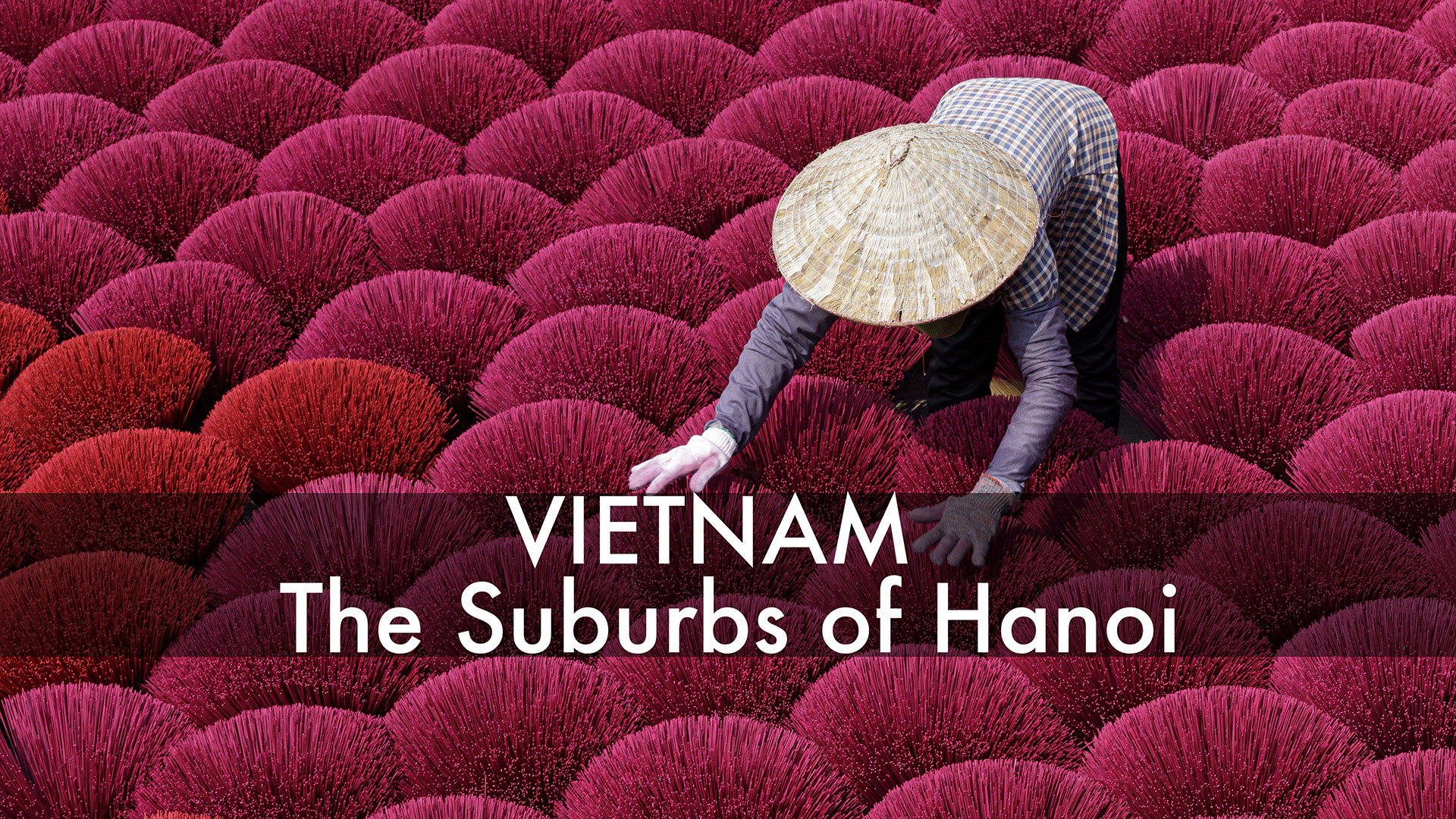

The Suburbs of Hanoi concentrates on two locations near Hanoi. The famous incense village along with another location.
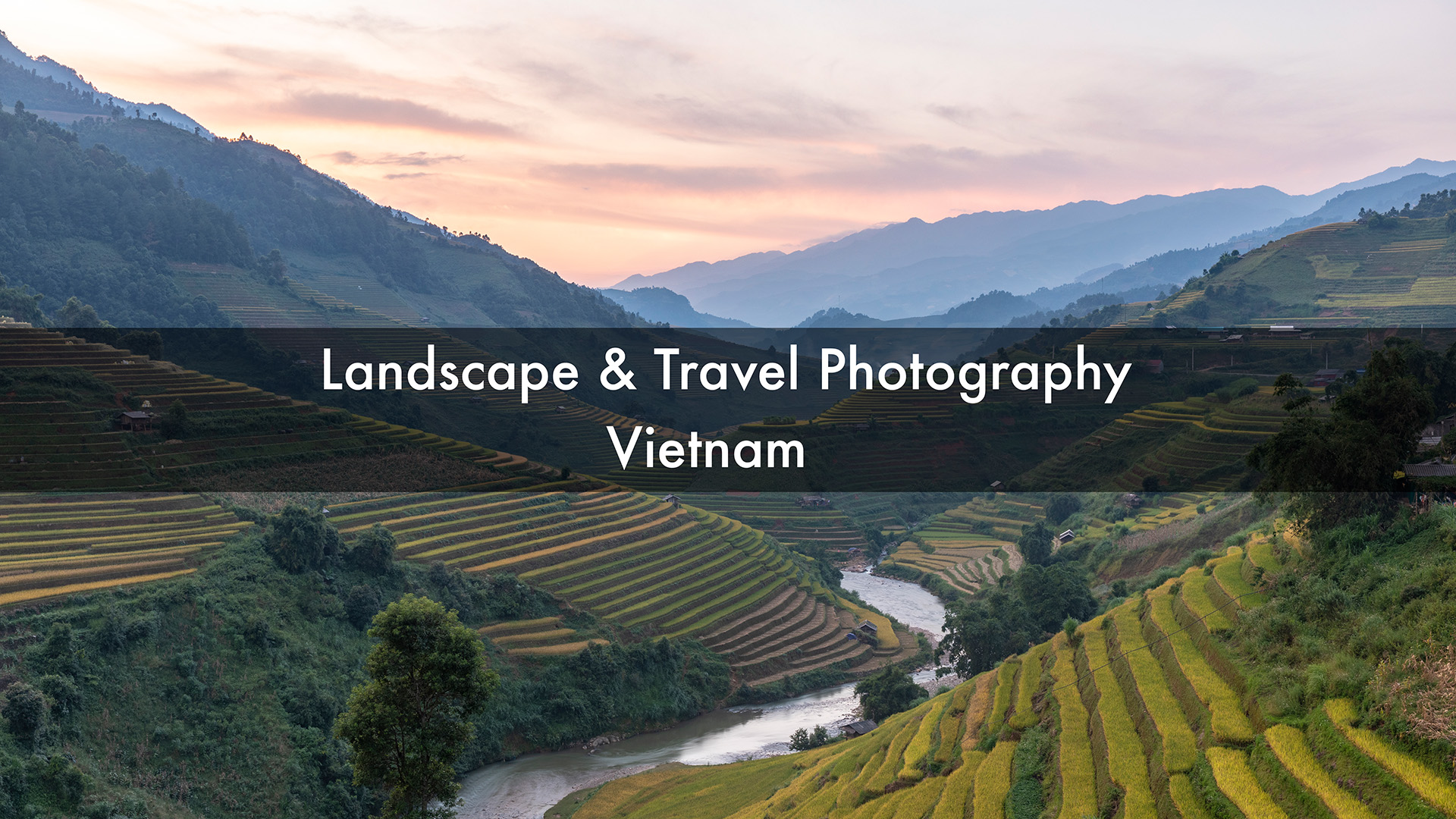
Vietnam is fast becoming a photographer’s dream as far as travel photography is concerned. With its myriad cultural experiences; landscapes and architecture. There is enough to keep anyone happy for a very long time.
With a population that includes around 55 minority groups, Vietnam plays host to a number of cultures and traditions. A huge number of these traditional ways are still around today which is good news for travel photographers.
My YouTube channel is dedicated to all things landscape and travel photography so if that’s your thing then I’d love to have you come along for the ride.
My day began early in Hanoi at West Lake, with Tran Quoc Pagoda behind me and a soft layer of haze sitting over the water. I’d wanted to photograph this spot at sunrise for a long time, but every previous attempt had been beaten by jet lag, rain, or bad timing. This time, I finally made it out in the dark, camera in hand, and it was worth the effort.
I had my 24mm tilt-shift lens on the camera, which felt right for the setting. It gave me the width I needed for the pagoda and the lake, and it also helped with the clean lines that suit this kind of scene. Across the water, another pagoda appeared through the haze, faint but still distinct enough to make a photograph.
What I love about Hanoi at this hour is how much is already happening. Around five in the morning, the city is far from asleep. Before the rush-hour traffic built up, the lakefront had its own rhythm:
That last one was the sort of thing you only mention because it happened. I hadn’t seen anything like that since Mongolia.
The energy of the place stood out as much as the light. Long before sunrise, people were already moving, talking, stretching and working. It made me think about how often, in the West, we miss this part of the day. By the time the traffic noise rose and the roads filled, I’d already seen a side of Hanoi that feels more human and more revealing than the busy daytime version.
From West Lake, I headed to one of the best-known photography spots near Hanoi, the incense village. I had been there once before in August, but I arrived too late, and the weather turned on me. Heavy rain flattened the mood and cut the shoot short. This visit was completely different.
The light was good, the village was active, and the scale of it hit me straight away. Incense bundles spread out in wide clusters of red and pink, laid on the ground like bursts of colour. From above, the patterns became even stronger, so I climbed up to photograph the workers arranging the incense below me. That elevated angle showed the structure of the place, not only the people working, but also the shape and repetition that make the scene so striking.
There was more activity than on my previous visit, probably close to double. Workers were preparing the incense for temples and for Tet, which was about two months away, around the end of January. That extra build-up gave the village a sense of purpose. It wasn’t only beautiful, it was busy in a way that mattered.
The smell added another layer to the experience. Once you’re there, you notice it straight away, the scent of the incense drying in the open air. It gave the whole place a calm feel, even though people were working all around me.
“If you come to Hanoi, you have to come to this place.”
I don’t say that lightly, but for photography, it earns its reputation. This is one of those locations that looks good from ground level, then becomes even better when you gain a little height and start to see the arrangement. Colour, repetition, gesture and local life all come together in one frame.
A lot of locations look strong at first glance, but fall apart once you start composing. This one doesn’t. The incense village keeps offering new frames, because the scene changes as people move, sort, stack and carry the bundles. Even if I stay in one spot, the photographs keep shifting.
A few things stood out each time I raised the camera:
I also found that it wasn’t a quick stop. It deserved a good couple of hours, because there was always another angle, another gesture, or another arrangement taking shape. When I take people on my Vietnam photography tours, this is exactly the kind of place I want time for. It rewards patience.
After the incense village, I moved on to another location to photograph traditional soya sauce making. The route involved a shortcut across the river, so I found myself on a small boat crossing the Red River for the first time in this part of Hanoi. The engine noise, the churn of the water and the rough simplicity of the crossing all added to the day.
The Red River has its own presence in northern Vietnam. It comes down from China and runs through the north, linking places that feel very different from one another. I always think of it as part of the same wider thread that reaches up towards the rice terrace country around Lao Cai. Even when I’m close to Hanoi, I still feel connected to the bigger geography of the north.
That kind of crossing also reminds me why I enjoy travelling and photographing this way. I like the stories that come with it, the odd routes, the unexpected transport, the moments in between locations that become part of the memory. Learning some of the language helps too, because it opens doors. I can interact more, understand more, and move beyond the surface. For me, that’s far more rewarding than moving through a place in a closed tourist bubble.
The final stop of the day was a place where soybean and sticky rice sauce were being made in old terracotta jars. I had seen this location many times before and always thought it had potential, but on this visit, I finally had the chance to photograph it properly. Once I arrived, I knew it was worth the wait.
The jars were everywhere, packed close together in rows and clusters, each one carrying its own texture and tone. Some caught the sunlight, others sat in softer shade, and the whole yard had that worn, practical beauty that often makes for strong photographs. There was nothing polished about it, which was exactly why it worked.
Women were working around the jars, dipping in to draw out sauce and moving through the space with calm efficiency. The scene had a natural rhythm, and I spent time watching before making too many frames. In places like this, the photograph improves once I understand how people move through the setting.
At one point, I waited for the sun to come around the corner a little more, because the light was close but not quite right. Once it shifted, I sent the drone up to make a top-down image of the jars. From above, the shape of the yard changed again. What looked like a scattered work area from ground level became a tight arrangement of circles and warm tones.
A simple sequence defined the shoot:
That combination gave me both the human side of the place and the graphic side of it.
This part of the day worked because I had help from a brilliant local guide in northern Vietnam. She understood what I needed photographically, translated when I needed it, and helped me organise the flow of the shoot. That matters in places where timing is tight, and communication shapes what is possible.
I’ve worked with excellent guides in central Vietnam as well, but on this day in the Hanoi suburbs, her support made the difference between finding a scene and properly photographing it. She helped speed things up without making the experience feel rushed, and that balance is hard to get right.
By the time I packed up, I felt I’d got the images I came for. Between the women at work, the texture of the jars and the overhead drone view, the location gave me a set of photographs that felt complete.
I didn’t need a huge amount of gear for this shoot, but the pieces I used mattered. At West Lake, the 24mm tilt-shift lens gave me control over composition and helped with the architectural feel of the pagoda scene. That kind of lens slows me down in a good way, because it encourages careful framing.
Later, the drone became the key tool at the sauce-making location. Without it, I could still have made solid images from ground level, but I would have missed the structure of the jars laid out across the yard. The overhead view turned the subject into something more graphic and more complete.
For the rest of the day, the most important thing wasn’t equipment at all. It was time, light and access. Good locations can fall flat if I rush them, and ordinary-looking places can come alive if I wait long enough and pay attention.
This was a short, packed day in and around Hanoi, but it felt full from start to finish. I began with pagodas and pre-dawn life in the city, moved into the colour and scent of the incense village, crossed the Red River, and ended amongst old jars of traditional sauce. Each stop had its own look, its own pace and its own mood.
What ties them together is the sense that Hanoi never runs out of photographic possibilities. The city itself is compelling, but the outskirts hold another layer. That’s where I often find work, routine, craft and small scenes that tell a fuller story about place.
For me, Hanoi is at its best when I move beyond the obvious landmarks. That’s where the day starts to surprise me, and where the photographs begin to feel personal.