 Skip to content
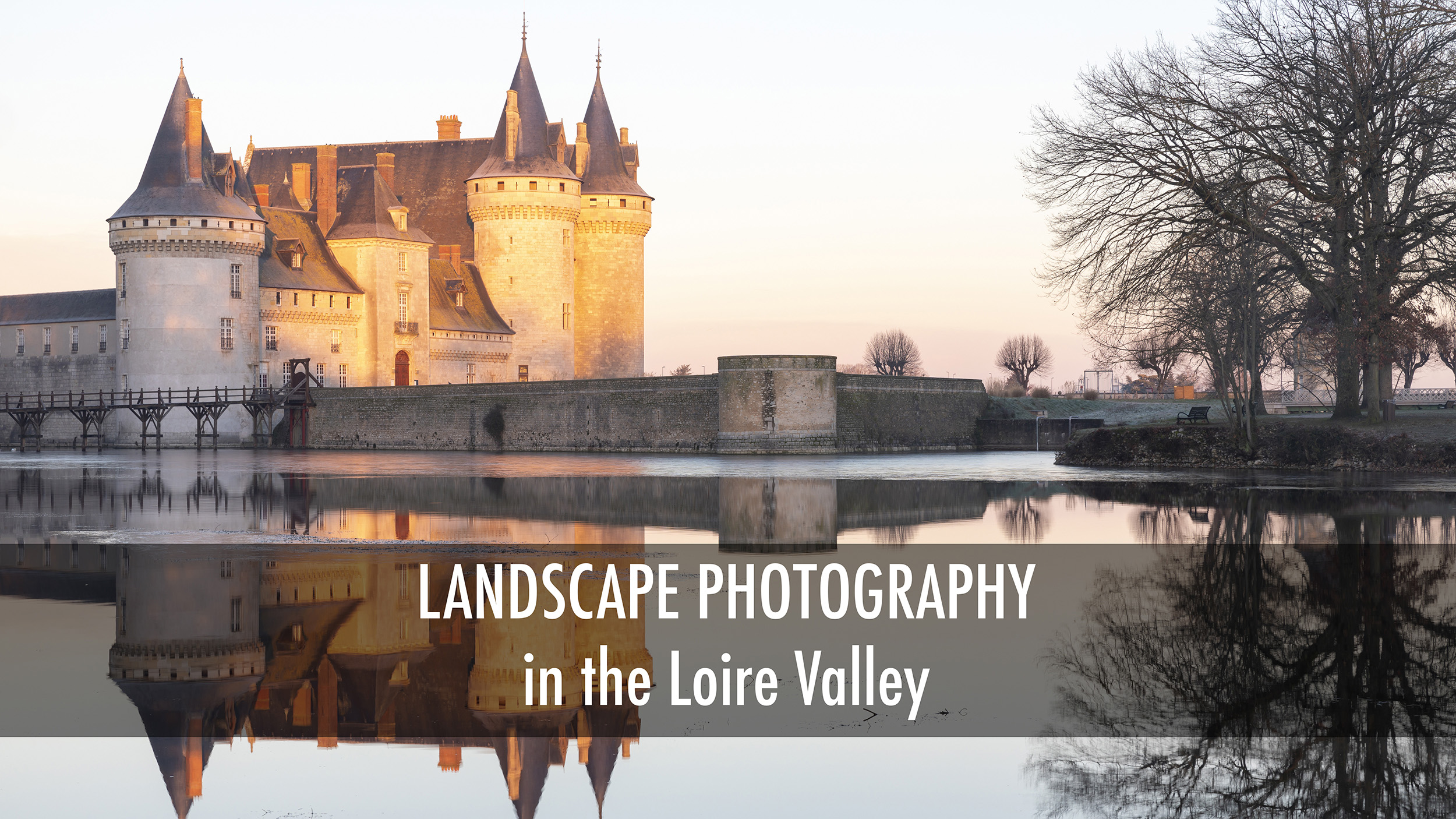

Landscape Photography in the Loire Valley is my latest YouTube vlog detailing some of my exploits as I travel to various parts of the world. OK, so it’s not the most original title but I wasn’t sure what to call this.
As the pandemic continues, I need to concentrate on my commission. Working out all of the locations, when they can be photographed and what issues are likely to arise from them.
This week’s vlog sees me back at the beginning of the Loire Valley. Photographing one of the beautiful castles at dawn. But not quite getting the light I wanted, as well as the position. But that’s part of the job. Returning until it does happen and things do come together.
And if you’re interested in discovering the Loire Valley with a camera, then do check out my annual Loire Valley photo tour in May.
I arrived on the edge of the Loire Valley before sunrise at Sully-sur-Loire, after a drive of about two hours from home. Even before the sun came up, the scene had that quiet winter beauty that makes an early start worth it. The sky held gentle pinks and blues, and the château sat waiting for the first touch of light.
There was one problem straight away. A park that is normally open was shut, and that changed what I could do. My guess was that it had something to do with coronavirus restrictions at the time, although it was still frustrating because plenty of other parks were open for walking. When you arrive with a plan in mind and lose access to a key part of the location, you have to adjust fast.
Even so, the morning still had promise. Sunrise was around ten minutes away, and from where I stood, I could see the castle beginning to separate itself from the darkness. I hadn’t worked from quite that far back before, and I liked what I was seeing. The light was clean, the colours were soft, and the white stone of the château was starting to pick up warmth.
I would have preferred more cloud. That’s the truth of it. A little more texture in the sky would have helped the image, but that is part of the bargain when you make a long drive for first light. You take the chance, because sometimes everything comes together, and sometimes the day gives you only part of what you wanted.
What made the scene work was the way the rising sun began to strike the castle. I couldn’t see the sun itself at first because trees were hiding it, but its light was already reaching the building. On the back of the camera, the stone had a soft red glow, and there was also a hint of pink behind the arches and along the water.
That kind of light doesn’t last. You have to work quickly, but you also have to stay calm enough to make small adjustments. I was trying to keep the composition clean without leaving myself hours of repair work later. I don’t like relying on heavy cloning in Photoshop if I can sort the frame properly in the field.
The best angle was still slightly out of reach. To get it properly, I needed to be farther out, almost in the river itself. A pair of wellies would have solved that. Without them, I had to stay back and accept a tighter framing than I wanted.
The other problem was a line of trees. They crept into the edge of the frame and blocked the clean composition I had in mind. That was the real frustration. From a distance, it can look as though I chose to frame the castle tightly. In fact, the tight crop came from trying to avoid those trees and still keep the image balanced.
A geared head helps in that situation because I can nudge the camera over with care and trim a tree out of the edge of the frame without throwing the whole composition off. Small movements matter in a scene like this. One adjustment can turn a messy edge into a finished photograph.
I made a mental note there and then. If I come back for this exact viewpoint, I need wellies. Some lessons come from great light. Others come from practical mistakes.
A strong photograph often depends on small field notes, not big ideas.
Even with those problems, the castle remains a strong place to photograph. It is easy to find; the subject itself is excellent, and the dawn light can be beautiful when it reaches the stone. The access issue and the river position are things I can note down for later, rather than reasons to abandon the location.
That matters to me because I am not only making pictures for myself. I am also researching places carefully, so that when I recommend a location, I know what I am talking about. If you want to explore similar places with guidance built around strong subjects and practical shooting conditions, my Loire Valley photography tours are a natural extension of that same approach.
A big part of any project like this is research. I have spent a lot of time working through Loire Valley locations and marking them on Google My Maps, so I can test them properly in person. That process sounds simple, but it often means driving to a place, walking it, checking angles, and then deciding that it doesn’t work well enough.
That happened later in the day. I had another viewpoint marked out and wanted to see whether it improved if I walked farther along a path from the parking area. From the car, there was a view. On paper, it looked possible. In the field, it wasn’t what I wanted.
The answer, in photographic terms, was no. The composition didn’t come together from the position I had hoped for, and moving along the path didn’t fix it. Some locations tease you with half a chance, but half a chance isn’t enough if you’re preparing solid guidance for other photographers.
I don’t see that as wasted time. It is time well spent, because I would rather lose an hour than send someone to a weak spot with false hope. When I publish a location, I want it to be reliable. I want the information to be useful. If a viewpoint is awkward, blocked, seasonal, or simply underwhelming, I need to know that before I ever suggest it to anyone else.
For me, a strong location usually has three things going for it:
The château at Sully-sur-Loire ticks most of those boxes. There are a few practical notes to make, but it is still a place I would feel confident guiding someone towards. Other spots fall away quickly once I test them.
I did make another image that day in the Loire Valley, and I thought it was worth showing because it says something important about choosing locations. The scene was an old church across the river, and at first glance, it was attractive. There was decent light, the subject had character, and in winter, I could see the building through the trees.
That last point mattered more than it first seemed. Because it was winter, the tree line in front of the church was bare. With no leaves, the structure showed through well enough to make a photograph. In that season, the image had a certain charm.
Still, I couldn’t ignore the obvious problem. Once spring arrives, the leaves come back, and the church starts to vanish. Summer would hide even more of it. Autumn would bring the same issue again. So although the picture was pleasant, the location was not dependable.
I have to be firm about these decisions. A location cannot be “quite nice” if I am going to recommend it. It has to be strong. It has to offer a good result without needing everything to line up perfectly for one short part of the year.
That church scene did not meet that standard. I had been there, seen it, photographed it, and made the decision. The answer was no.
There are better places in the Loire Valley by a country mile, and that is what I want to point people towards. I would rather show fewer locations and trust every one of them than pad a guide with scenes that only work in a narrow set of conditions.
By that point, a large bank of cloud was moving in. That changed the feel of the day again. When the light goes flat, I start thinking differently. Instead of chasing another open view, I might turn to an interior, perhaps a church or another sheltered subject where the weather matters less.
I hadn’t looked too far ahead with the forecast beyond the start of the day, because dawn was the priority. If sunset didn’t happen, that was fine. There is no need to force a day into something it isn’t. Sometimes the best choice is to head home earlier, review the notes, and come back another time when the conditions are better suited to the places I want to photograph.
That flexibility helps. Because I am only making one vlog a week, I have more room to wait for decent light and spend more energy on photography rather than filling time with constant output. I would rather return with a handful of good images and better location notes than chase content for the sake of it.
If you’d like to keep up with where I am photographing next, I also share updates on Instagram and on my Facebook page.
Even though my day in the Loire Valley didn’t unfold exactly as planned, I came away with images I was happy with from the castle. The soft dawn colour, the first warmth on the stone, and the calm winter setting gave me enough to work with. More importantly, I left with clearer notes about access, river position, and how to improve the composition next time.
That is a good day in my book. Landscape photography in the Loire Valley isn’t only about turning up at a famous place and pressing the shutter. It is about judging what will hold up over time, what deserves a return visit, and what belongs in a guide for other photographers who love France as much as I do.
The best images are only part of the story. The other part is the judgment behind them, knowing when a location is worth your effort and when it isn’t.
This trip to the beginning of the Loire Valley at Sully-sur-Loire reminded me that a good location is more than a pretty subject. It needs workable access, a clean composition, and enough reliability that I can return to it with confidence.
I went home with strong dawn frames of the château, a rejected church viewpoint, and better notes for the future. That balance matters. In the Loire Valley, the places worth revisiting are the ones that still work when the light, the season, or the access isn’t perfect.
We noticed you're visiting from United Kingdom (UK). We've updated our prices to Pound sterling for your shopping convenience. Use Euro instead. Dismiss