 Skip to content


Have you ever dreamed of going to the Italian Dolomites in autumn? For landscape photographers, it offers year-round opportunities for stunning images.
During the autumn, or fall as my North American friends prefer, the Dolomites become a riot of oranges and yellows as the Alpine larch trees turn from their summer jackets into their autumn ones.
The weather during October can be pleasant, with beautiful blue skies and clouds and misty mornings. The temperatures do drop at night, but during the daytime they reach a pleasant 15°c or 46°f.
My own photography journey to the Italian Dolomites started in October 2016. A seed had been in my head for a while about this magical place, and the opportunity arose to go. I grabbed it with both hands and started building my knowledge of the area.
Fast forward a decade, I’ve now been here more than 20 times in every season. Out of those, most of them have been in the autumn fall months, with winter coming in second.
Is it not worth going in spring or summer? Sure! During the summer months, you catch some of the meadows carpeted with wildflowers. Some places have just patches, but in others the flowers spread out over a wider area.
Springtime is my least visited. Not because it’s not worth it, but just because of timing issues with my own travels, as during those months, I tend to be around Asia.
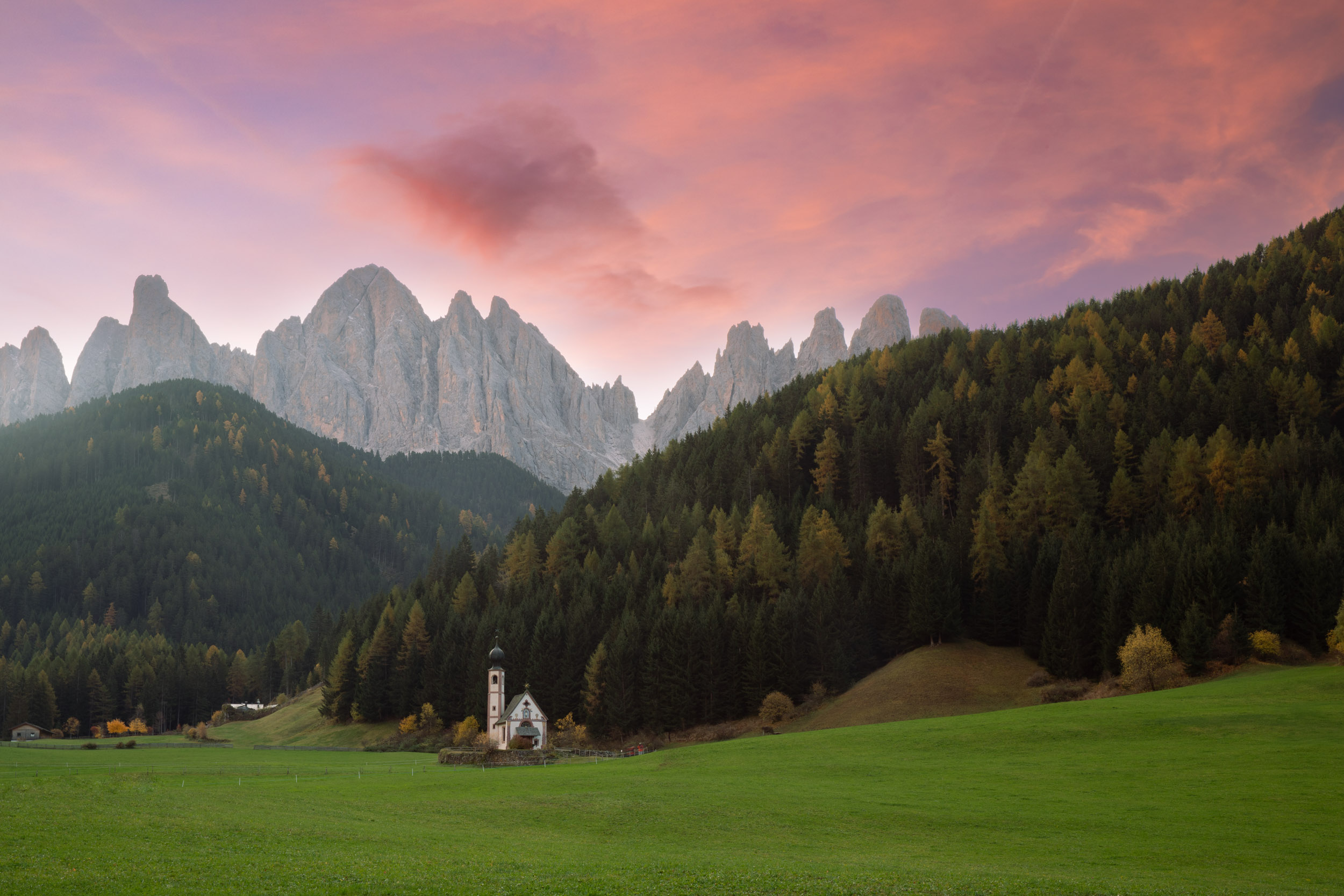
After my initial visit to the Dolomites in autumn 2016, I decided that it was a place that would be ideal to run a landscape photography tour.
During my first few stays, I rented an apartment in the Val di Funes, so I was near some of the highlights the area had to offer.
What I found, though, was that, for me, the Dolomites were a photography tour of two halves.
The area around the Val di Funes and Val Gardena is geared more around meadows and vineyards and steep valleys with towns and villages intertwined.
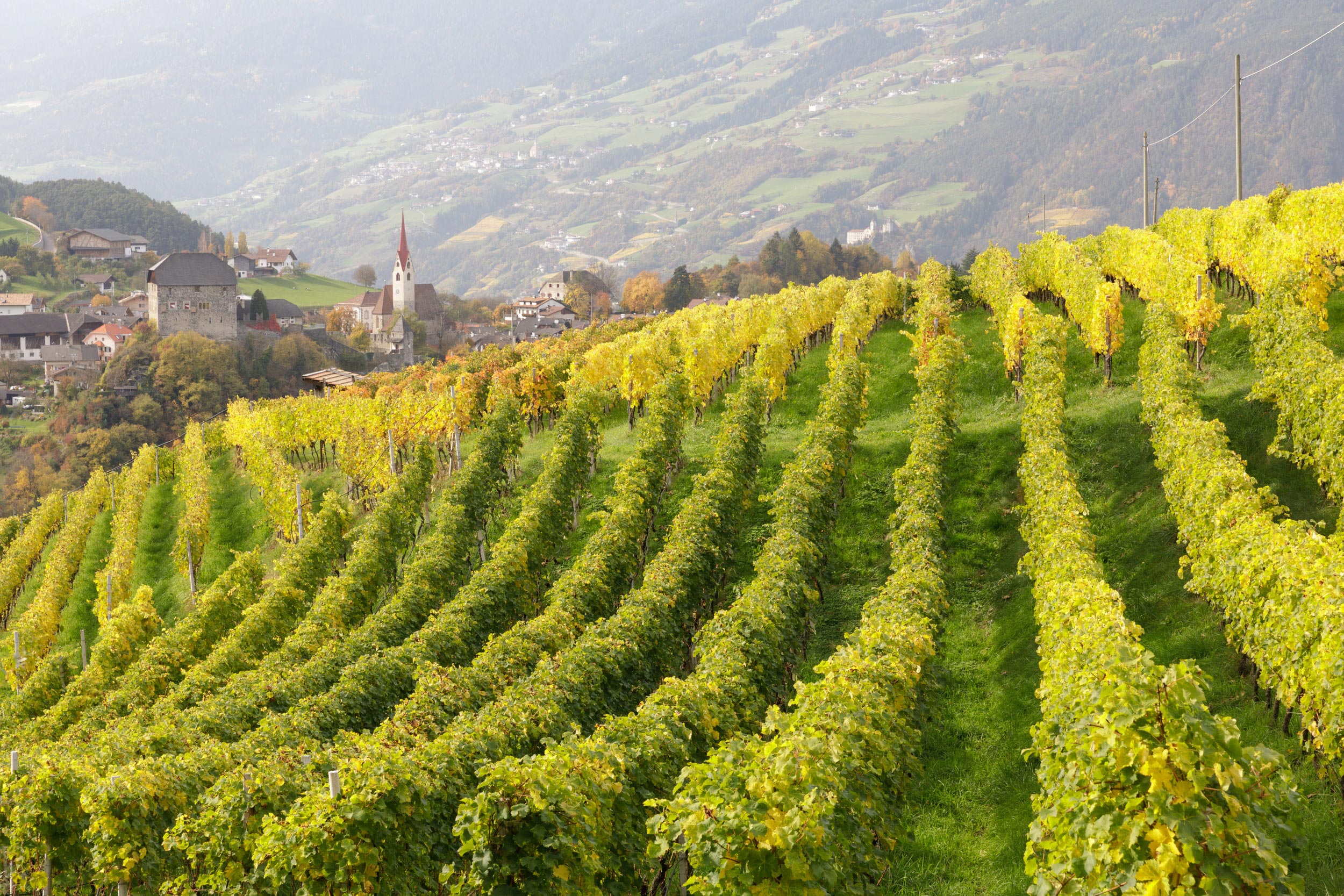
If you visit the Dolomites in autumn, the vineyards and apple orchards start turning golden yellow and, if you find the right spot, can be great for leading lines and abstract-type images.
Going up to the villages that hug the steep-sided mountains, you get altogether different views of the area plus some of the architectural wonders that are to be found here.
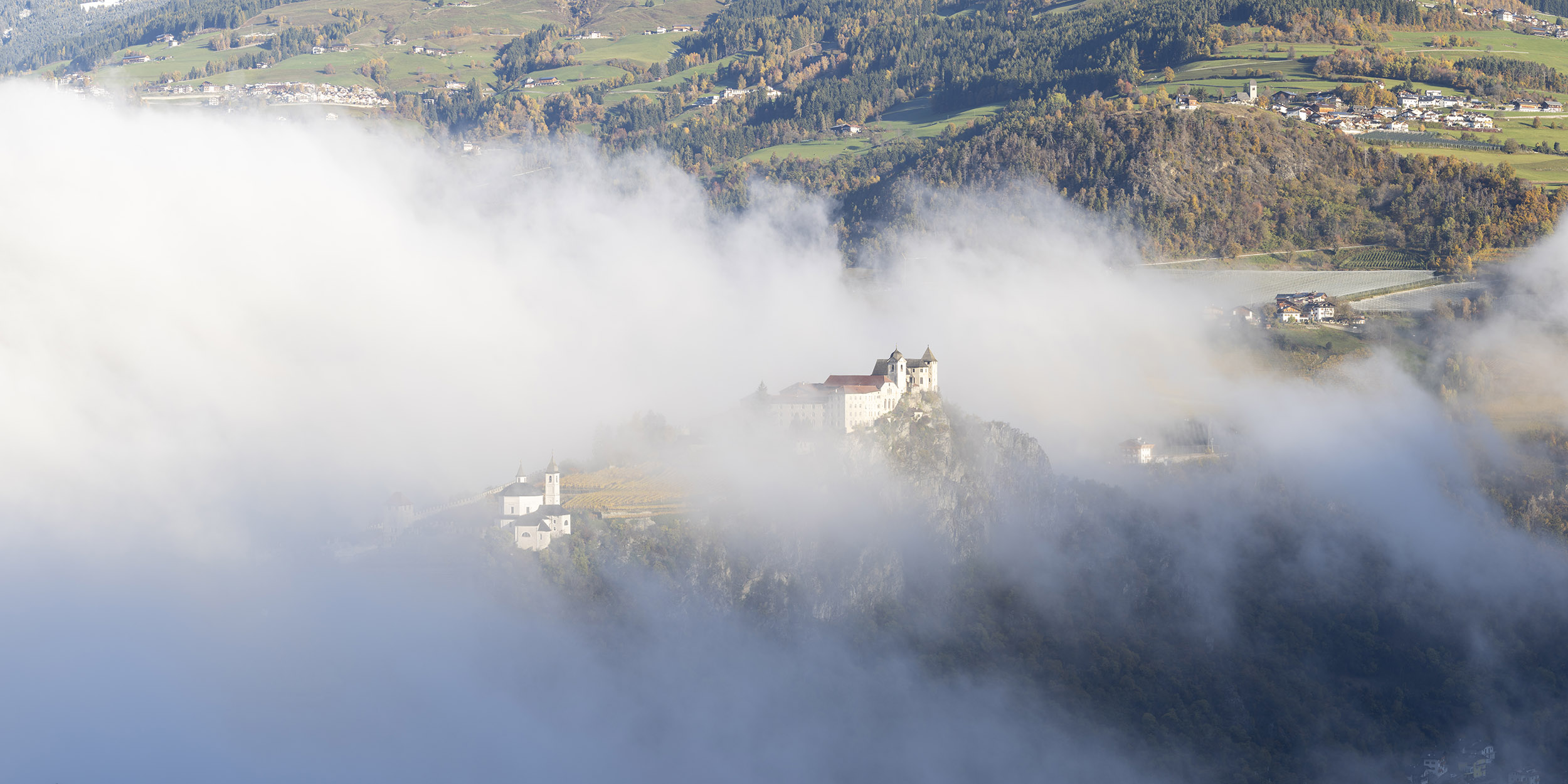
Take the town of Chiusa, or Klausen if you’re a German speaker. Sitting high above the town is Saben Abbey. From when you first get near the town, it looms menacingly above you.
During my visits to the area, I’ve managed to find several different viewpoints of this wonder from the late 17th century.
In 2025, my group and I were lucky to catch a stunning cloud inversion along the Isarco Valley. It wasn’t our intended location, as what we had planned to do hadn’t come to fruition.
From the knowledge I’ve acquired over a decade, I was able to get the group up above the cloud and look over the valley towards the Abbey. The mist gently swirled around as the sun rose higher in the sky, providing us with some spectacular imagery to take home.
When I was staying at the apartment, I came across a local guidebook highlighting some of the things to do around the area. In it was a view over the vineyards towards the mountains which lay to the west of Chiusa.
It took a little work, but I found the spot and, if the timings are right, I’ll take my group there to see if they can “see” the lines within the landscape and the potential of the images to be had there.
The Val Gardena area is another that I show people as it’s chock full of a variety of locations. Some of them, I have yet to take people to, though as it always depends on the fitness of the group.
During my annual Dolomites photo tour, we are based in a great hotel in Santa Cristina. This comfortable place, with its amazing breakfast, has seen an influx of photographers in the past few years and has actually based some of its facilities around our needs.
Behind the reception area is an AV room which they specifically kitted out for visiting photography groups!
But I digress.

The Val Gardena is south of the Val di Funes and is perfect because it’s in the middle of everything we’d look to do as photographers.
30 minutes to the east, you find two mountain passes in the form of Passo Sella and Passo Gardena. Each of these offers opportunities to capture stunning images at sunrise or sunset.
In October last year, I took my group to a different spot up on one of these passes to await the rising sun and have a nice rocky foreground to add to the scene.
When I was doing some scouting back in July, I went back to this place in search of the wildflowers and was graced with their presence, adding another ingredient into the mix.
The Dolomites are Europe’s largest ski area, and thus there are numerous ski lifts and cable cars to take people up the slopes. But they don’t only work in the winter months, and during the autumn some of them remain open, allowing quick and swift access to higher ground and stunning views.
What’s an example of that? How about the Alpe di Siusi with Sassolungo looming over it? It’s one of the icons of the Dolomites and is on most people’s bucket list when they visit the area.

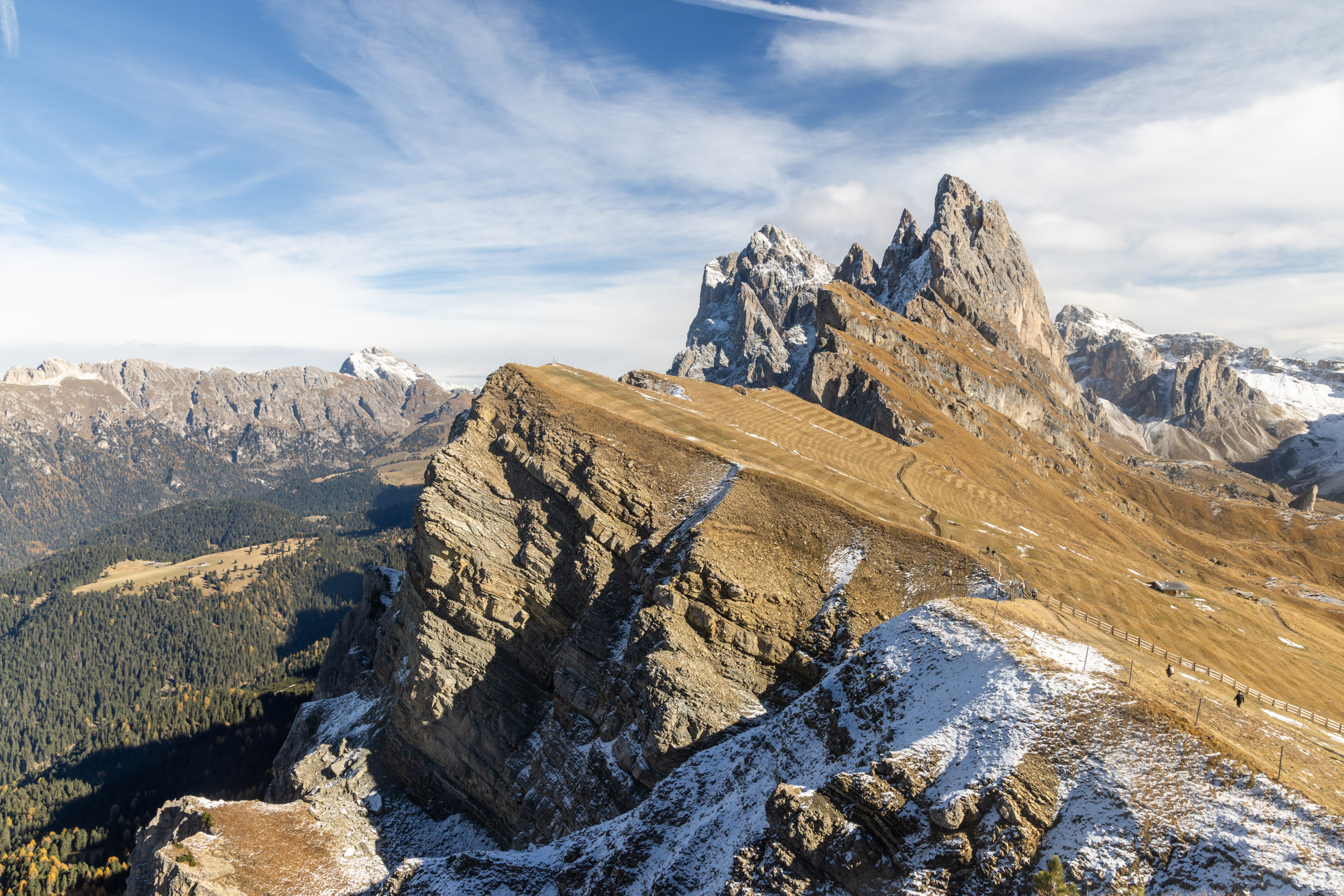
If you go back down to Ortisei and up the other side of the valley, then you can take two cable cars to go up the famous Seceda mountain landscape. This stunning, unreal jagged mountain was featured by Apple during the iPhone 15 Pro launch commercial. Because of this, it attracts hundreds of tourists each year wanting to see it for themselves.
Something to bear in mind is access. I’ve seen some photo tours saying they will drive you up by Alpine taxi to the Seceda for sunrise. I asked the owner of the hotel that my Dolomites photo tour is based in about this. From what’s been relayed to me, this isn’t possible, and the driver risks getting a fine for doing so. Is it true? I have no reason to doubt him, and I personally would prefer not to find out the hard way.
Is there more to the area apart from these magical landscapes? Of course, but due to the enormity of the spots, it would make this article far too long.
Back in 1956, Cortina d’Ampezzo hosted the Winter Olympics and was again the host in February 2026.
The event back in the mid-1950s forever cemented Cortina d’Ampezzo into history. It also happens to be the gateway to some of the spectacular mountain scenery, with the aforementioned Alpine larch trees carpeting the valley floor.
During both my winter and autumn photo tours in the Dolomites, the accommodation is based in the area for 4 nights so that we can take advantage of the dramatic mountain scenery.
Like the Val Gardena, a 30 minute drive can get you high up and have a huge vistas sweeping out underneath your feet.
One place is Passo Giau. At 2236m or 7336 feet, above sea level, you have to navigate around 30 hairpin turns to make the ascent up to the top. But once you’re there, it’s worth it as you’ll be greeted with those vistas across the mountains.
I’ve done the drive many times, and it’s always a blast navigating the car up and down the pass.
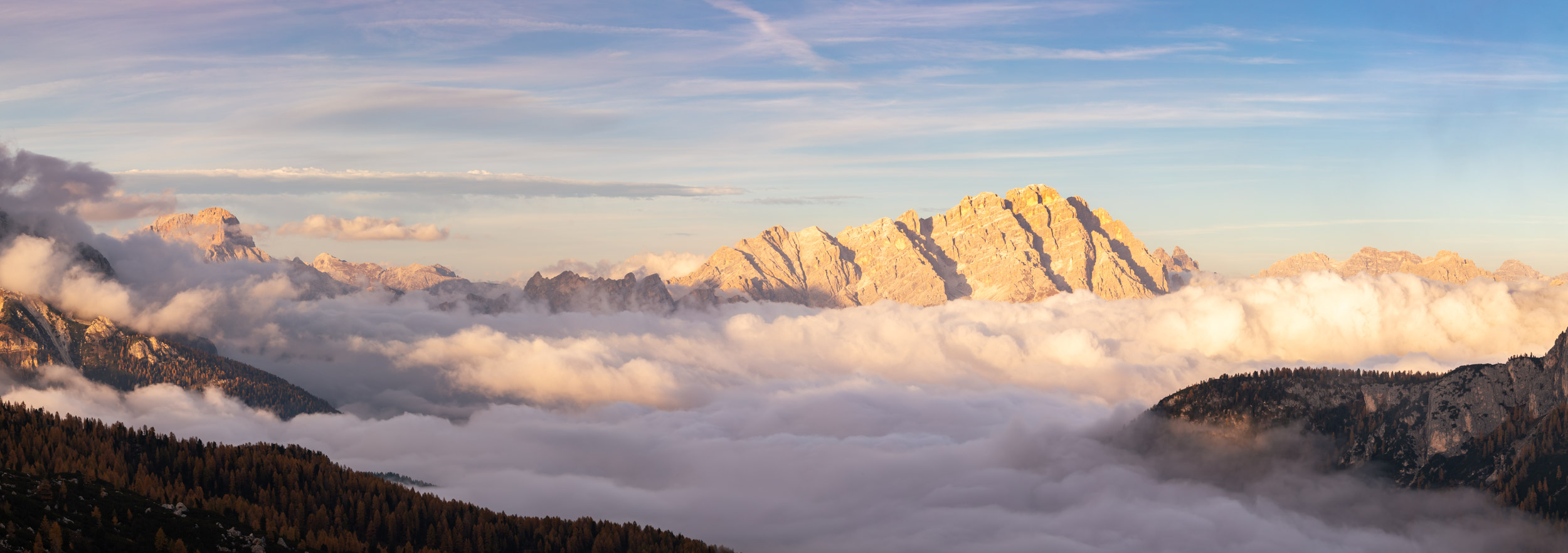
Back in 2021, my group and I saw a stunning cloud inversion fill the valleys to the north and south at sunset. I remember being with another photographer who was adamant that it wasn’t anything, but he had to eat his words as the clouds started to arrive and we were greeted with a truly mesmerising scene.
Heading north from Cortina d’Ampezzo, you find yourself driving one of two roads. Each of them leads to the town of Dobbiaco, but each offers different things.
The new road is a much easier drive in some respects, as the road is markedly wider. That’s not to say there aren’t any hairpin turns; there are, but the opportunities aren’t as numerous as on the old road.
The old road takes you up to the stunning Lago di Misurina. From here you can see the crown jewel of the Dolomites known as Tre Cime, or Drei Zinnen.
The road up to the Tre Cime is private and has to be reserved before you can make the drive up there. A few years ago, it came in at a cost of 25€, and you could pay at the gate. Now been elevated to 40€ and has to be reserved in advance. For 7 kilometres of road, that’s quite hefty.
Is it worth the price? Well, that all depends on what you’re after.
The car park at the base of the Tre Cime is the starting point for several hikes. Well-worn paths take you to the other side of the mountain and over to the famous mountain refuge named Locatelli. Personally, I’ve never been, and I’ve only seen it from a distance.
One of the other famous views here is called Cadini di Misurina. In recent years, it’s become a social media hotspot, and so much so that people are literally lining up to have their picture taken with arms flung up in the air.
I am often asked if my Dolomites photo tour goes to the famous Rifugio Locatelli. It doesn’t because of the time taken to get over there. From the car park, you are looking at a good 2 or more hours of walking. Then, once you’re done with sunset and have walked back in near darkness along a narrow scree path and driven down to Cortina d’Ampezzo, it’s likely to be around 11 PM at night.
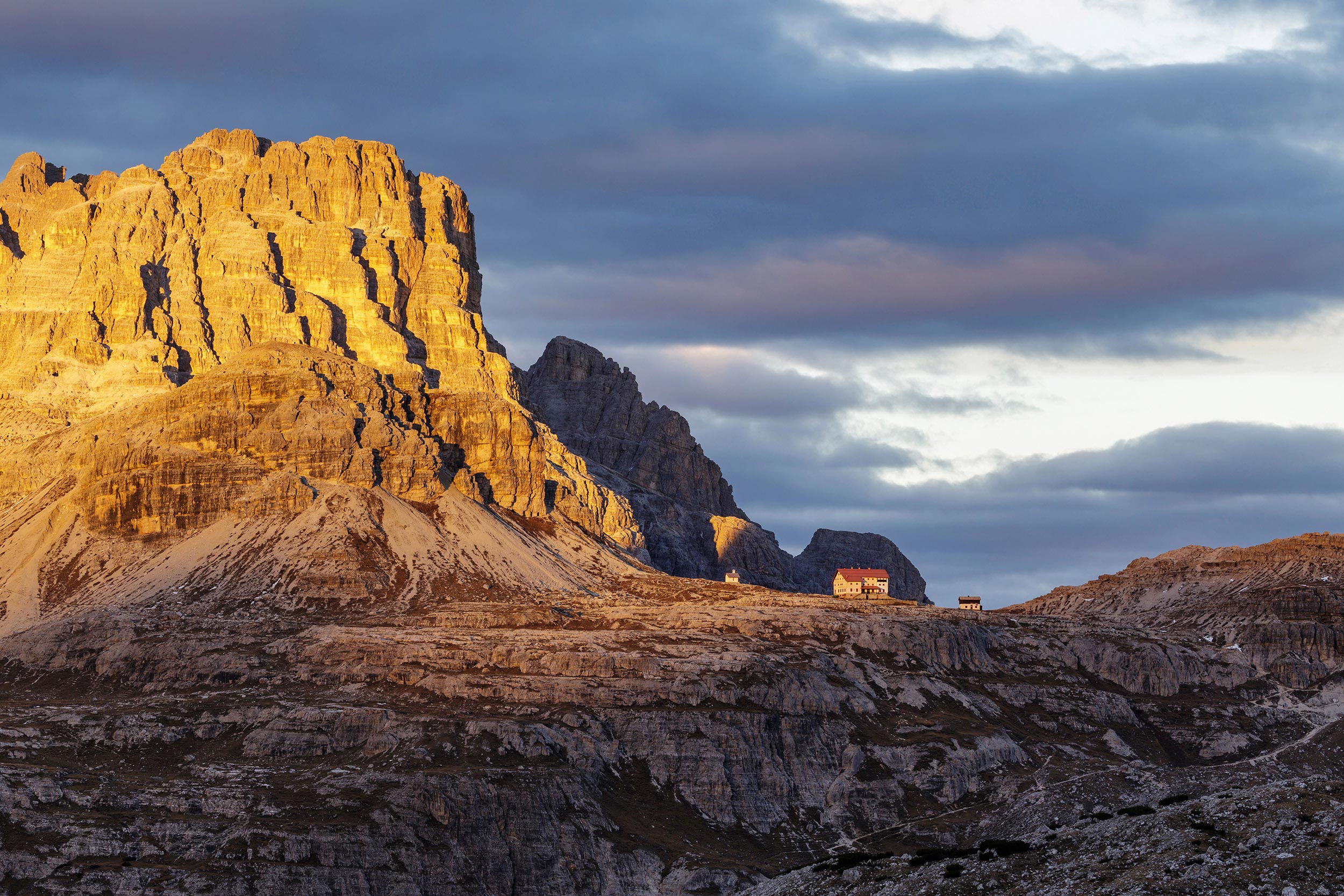
If you drive onwards to Dobbiaco and make a turn westwards down the Val Pusteria, then you’ll be headed towards another jewel of the Italian Dolomites.
At an altitude of 1490m, or 4888 feet in old money, Lago di Braies is one of those places you really should see if you’ve got this far in your journey.
One of the most easily accessible places for photography, Lago di Braies is found within the beautiful surroundings of Fanes-Sennes-Prags Nature Park.
On the lakeside is a 4-star hotel, and in recent times a café has been installed next to it, which is perfect if you’ve been up since the small hours.
Some of the famous images that you’ll see from here include wooden rowboats from the boathouse, which provide a great foreground to the mountain backdrop.
Sadly, since I first started coming here in 2016, they have closed access to the boathouse, and it’s only if you’re willing to pay a hefty price tag will you be able to get “that” classic shot of the boats.
Outside of the hotspots, there are other places to go if you’re willing to spend the time hunting them down.
But it does take time, and I’m still finding new places to take people each year. Just to give you an idea, the Dolomites cover an area of around 15900 square kilometres or 6138 miles square. That’s huge, and that’s why it’s still a draw for me every year. The opportunities here are endless, and it’s why I love showing people around on my photo tours.

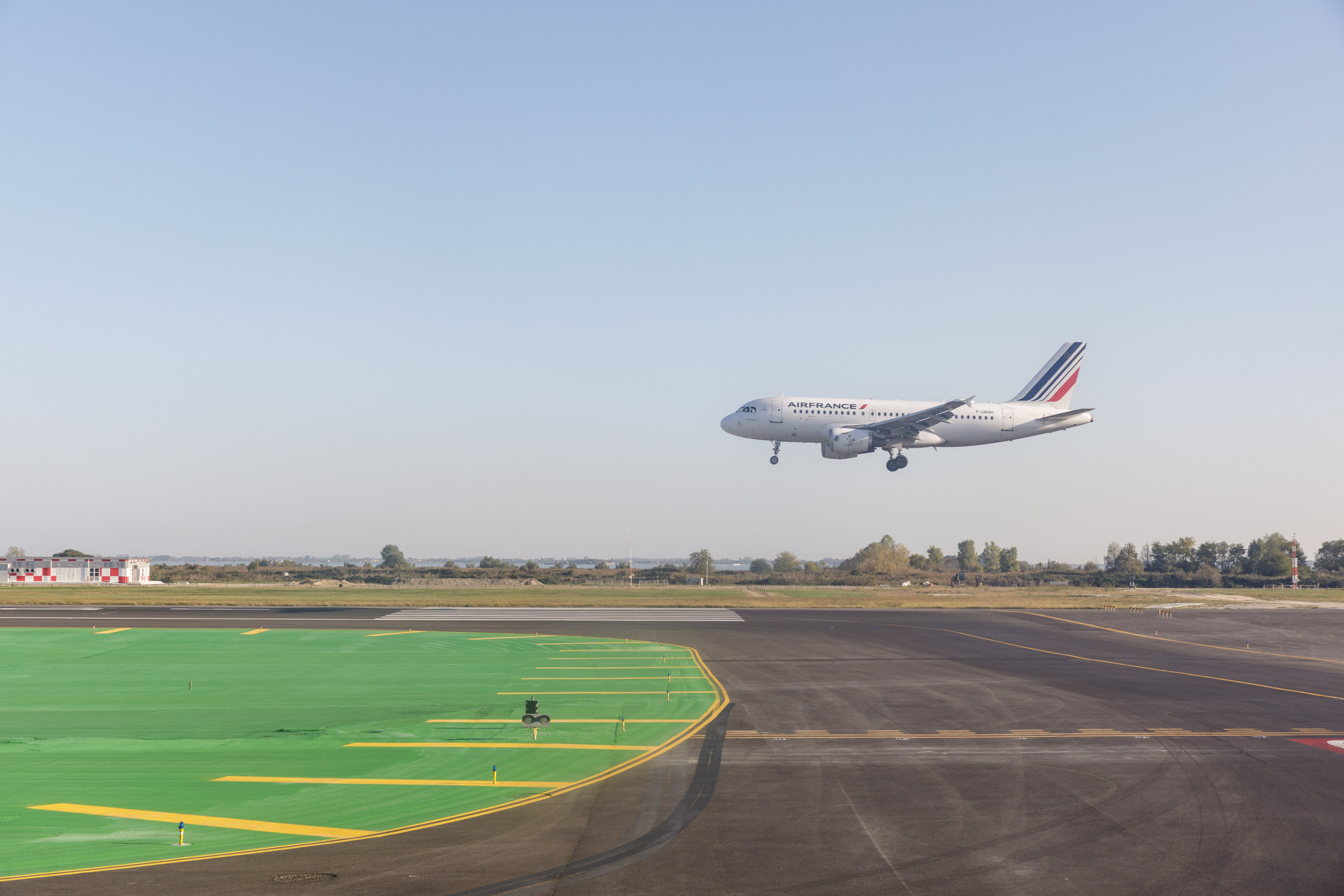
Every client who comes on my photo tours to the Italian Dolomites arrives at Venice Marco Polo (VCE) airport. We all meet up around lunchtime before starting our journey to the Val Gardena.
If you’re coming from the UK, then you’re looking at a flight time of around 2 hours from London Gatwick (LGW) or London Heathrow (LHR) airport. There’s an average of 6 flights a day, with the majority of them being operated by British Airways. Out of London Gatwick, you’ll likely be flown by EasyJet.
Coming from the USA, you’ll likely be going through New York (JFK) or Newark (EWR). Each of these airports offers daily flights with an average time of 8 hours to reach Venice Marco Polo (VCE) Airport.
For Canadians, Toronto (YYZ) airport has half a dozen direct flights a week to Venice. Montreal (YUL) has 3 direct flights a week. Each of them averages out to around 8 hours of flight time.
Australasians? You’re not going to be as lucky as North America, Europe or the UK with direct flights. You’ll have to take a connecting flight either through the Middle East, Singapore or Bangkok.
We noticed you're visiting from United Kingdom (UK). We've updated our prices to Pound sterling for your shopping convenience. Use Euro instead. Dismiss